AP®︎ Physics 1: Topic 2.2 Practice Test
Prepare for your quiz, test, or the AP exam with focused practice questions on Topic 2.2 of AP Physics 1 – Forces and Free-Body Diagrams.
Questions List
Topic 2.2
Question 1 Easy
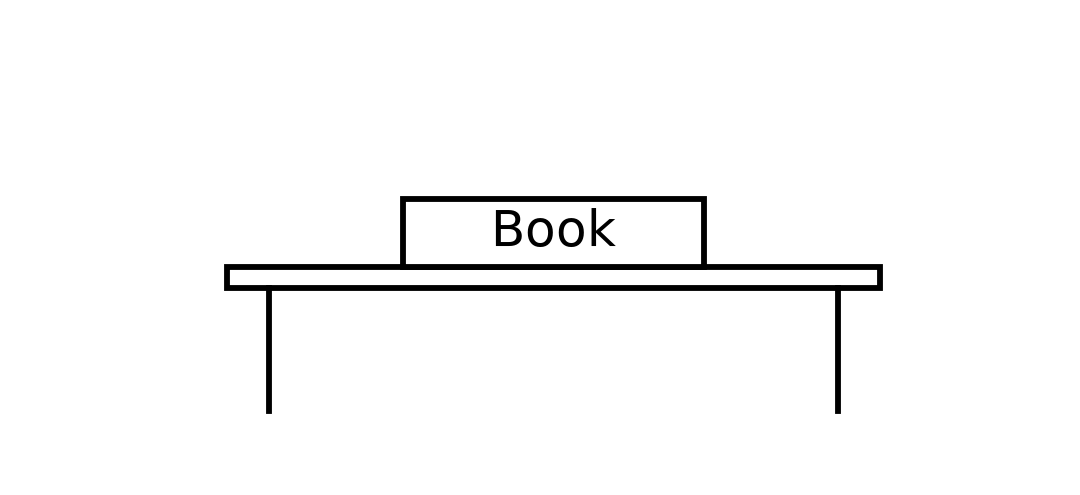
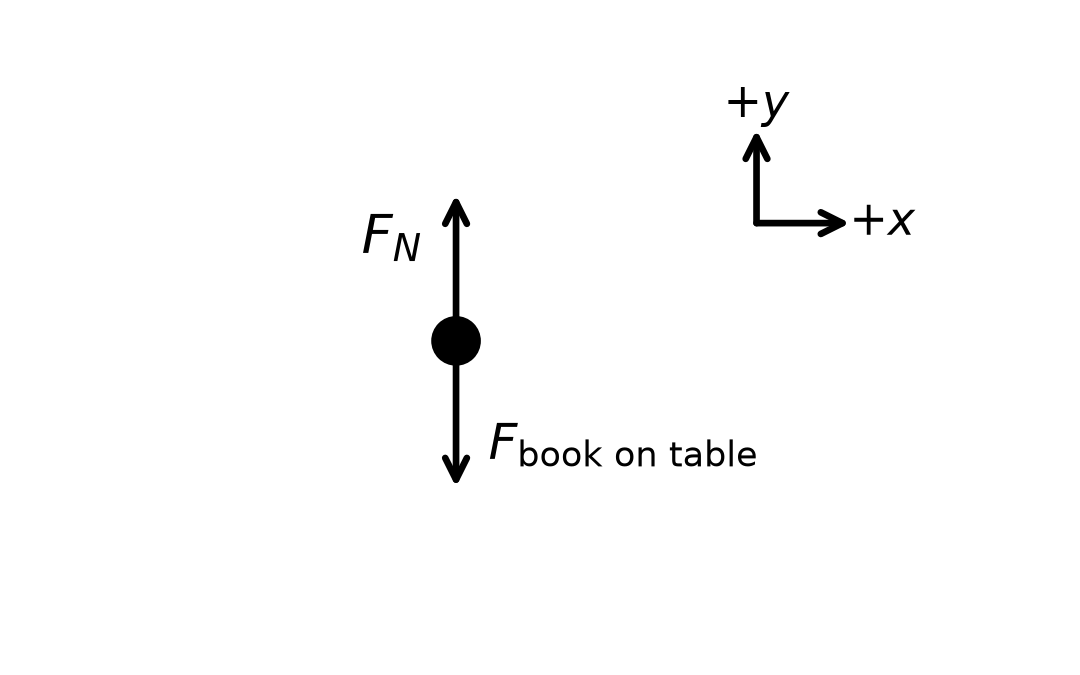
Which of the following could represent the forces exerted on the book?
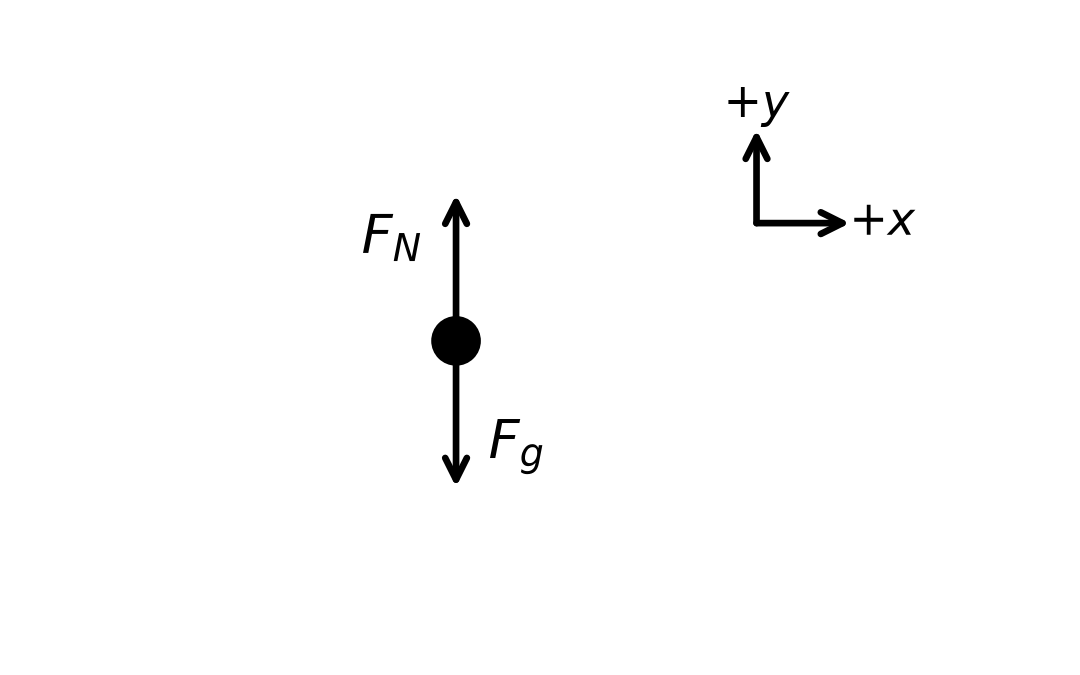
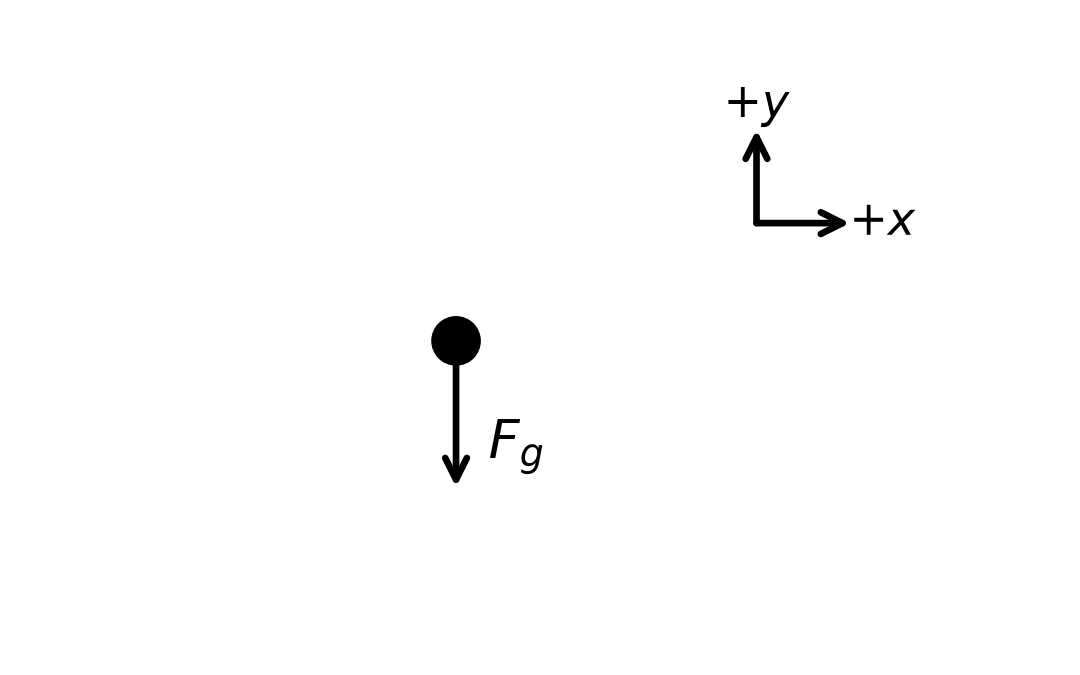
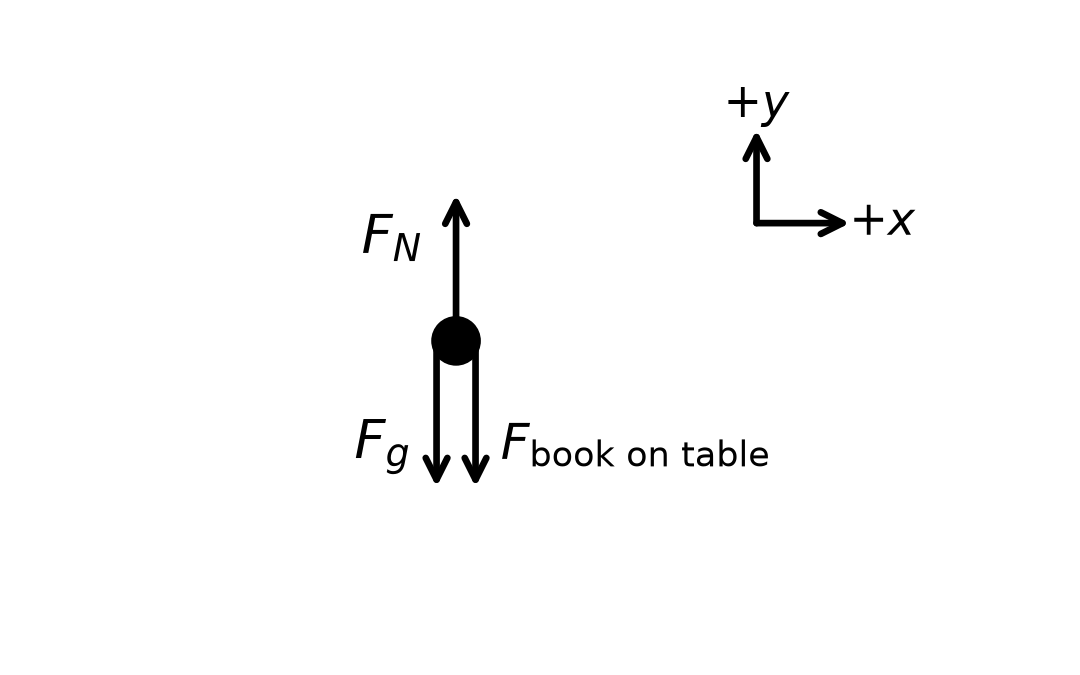
What You’re Being Tested On:
Explore the learning objectives taken directly from the College Board’s AP® Physics 1 Curriculum. Ensure you’re prepared for the exact topics covered on the AP® exam, in-class tests, and quizzes, and gain confidence in your mastery of the material.

Topic 2.2: Forces and Free-Body Diagrams
Boundary Statements official exam scope notes
- AP Physics 1 only expects students to depict the forces exerted on objects, not the force components on free-body diagrams. On the AP Physics exams, individual forces represented on a free-body diagram must be drawn as individual straight arrows, originating on the dot and pointing in the direction of the force. Individual forces that are in the same direction must be drawn side by side, not overlapping.
Learning Objective: 2.2.A
Describe a force as an interaction between two objects or systems.
Essential Knowledge: 2.2.A.1
Forces are vector quantities that describe the interactions between objects or systems.
Essential Knowledge: 2.2.A.1.i
A force exerted on an object or system is always due to the interaction of that object with another object or system.
Essential Knowledge: 2.2.A.1.ii
An object or system cannot exert a net force on itself.
Essential Knowledge: 2.2.A.2
Contact forces describe the interaction of an object or system touching another object or system and are macroscopic effects of interatomic electric forces.
Learning Objective: 2.2.B
Describe the forces exerted on an object or system using a free-body diagram.
Essential Knowledge: 2.2.B.1
Free-body diagrams are useful tools for visualizing forces being exerted on a single object or system and for determining the equations that represent a physical situation.
Essential Knowledge: 2.2.B.2
The free-body diagram of an object or system shows each of the forces exerted on the object by the environment.
Essential Knowledge: 2.2.B.3
Forces exerted on an object or system are represented as vectors originating from the representation of the center of mass, such as a dot. A system is treated as though all of its mass is located at the center of mass.
Essential Knowledge: 2.2.B.4
A coordinate system with one axis parallel to the direction of acceleration of the object or system simplifies the translation from free-body diagram to algebraic representation. For example, in a free-body diagram of an object on an inclined plane, it is useful to set one axis parallel to the surface of the incline.
