Topic 2.2 Notes – Comparing Parliamentary, Presidential, and Semi-Presidential Systems
How the Three Systems Allocate Power
These systems can look similar on paper because they all have executives and legislatures. The key difference is how tightly those institutions are linked.
- Parliamentary systems use fusion of powers. Voters elect the legislature, and the legislative majority or coalition forms the executive.
- The prime minister comes from the majority party or coalition.
- The cabinet is usually drawn from the legislature.
- The executive stays in office only as long as it has legislative support.
- United Kingdom is the course example.
- Presidential systems use separation of powers. The president and legislature are elected separately, so each has its own democratic mandate.
- The president is both head of state and head of government.
- The cabinet answers mainly to the president, not to legislative confidence.
- The legislature does not form the government.
- Mexico and Nigeria are the course examples.
- Semi-presidential systems use a dual executive. A separately elected president exists alongside a prime minister tied to the legislature.
- The president nominates the prime minister, usually with legislative approval.
- The cabinet has some accountability to both president and legislature.
- The real balance depends on who actually controls institutions.
- Russia is the course example.
Quick comparison:
- Parliamentary = fused executive-legislative authority
- Presidential = divided executive-legislative authority
- Semi-presidential = mixed system with two executives
China and Iran do not fit neatly into this comparison for this topic, so don’t try to force them into one of these three boxes.
How Each System Shapes Policy Making and Conflict
Once you know how power is arranged, you can predict how policy gets made and where fights happen.
- In a parliamentary system, there are usually fewer institutional veto points. If the governing party has a solid majority and strong party discipline, it can pass policy fast.
- Conflict often happens inside the governing party or coalition. A small majority, coalition disagreement, or backbench rebellion can still stop policy.
- In a presidential system, there are more independent obstacles because branches are separate. The president cannot just rely on a legislative majority automatically.
- This can encourage bargaining, but it can also create gridlock, where government action stalls.
- Gridlock is more likely with:
- divided government
- party polarization
- fragmented legislatures
- both branches claiming democratic legitimacy
- Important nuance: presidential systems are not always deadlocked. If the president has a supportive majority, passing policy gets easier.
- In a semi-presidential system, policy depends on the relationship among the president, prime minister, and legislature.
- Conflict can happen inside the executive itself.
- Cohabitation means the president and prime minister come from opposing political camps. That’s a major concept even though it is not common in contemporary Russia.
Parliamentary Checks on the Executive
Fusion does not mean the executive can do whatever it wants. Parliamentary systems use ongoing legislative accountability.
Censure
Censure is a formal statement of legislative disapproval of a minister or government. It creates political pressure and can damage credibility or lead to resignation. It does not automatically remove someone from office. That is the difference from a vote of no confidence.
Refusing to pass government legislation
Parliament can reject, amend, delay, or ignore executive proposals. That proves fusion still leaves room for legislative independence.
- Named example: the House of Commons repeatedly rejected Theresa May’s Brexit withdrawal agreement in 2019.
Questioning ministers
Legislatures can require the prime minister and cabinet to answer publicly for their decisions.
- Named example: Prime Minister’s Questions in the UK.
This creates scrutiny and gives the opposition a public chance to challenge the government. The House of Commons chamber is the setting for both public questioning and high-stakes votes on government policy.
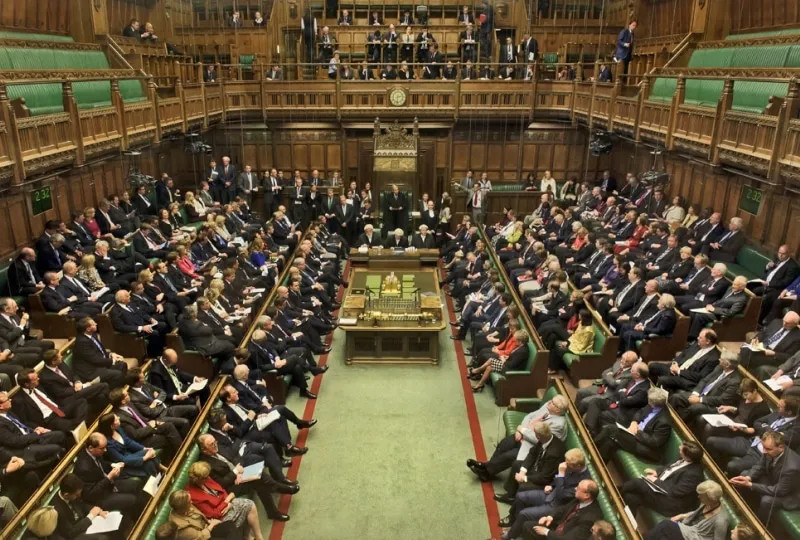
UK House of Commons chamber
Deadlines for elections
Executives cannot postpone elections forever. Legal maximum terms limit that power.
- Named example: the Fixed-term Parliaments Act 2011 in the UK, repealed in 2022.
The exam point is the principle. Election timing is legally constrained even if the exact rules change.
Country Patterns and Best Comparison Moves
- United Kingdom
Parliamentary system. The House of Commons majority forms the government. Policy usually moves efficiently when the majority is cohesive, but accountability still exists through questioning, censure, legislative rejection, and election timing rules. - Mexico and Nigeria
Presidential systems. Presidents and legislatures are elected separately, so branch independence is stronger. Divided government can slow policy and increase conflict. In Mexico, PRI dominance once reduced practical obstacles even though the formal system was still presidential. - Russia
Formally semi-presidential. It has a president, prime minister, and Duma. In practice, presidential dominance and weak opposition reduce real balance.
The best comparison line on an FRQ names the institutional feature causing the outcome. Talk about fusion vs separation, continuous legislative accountability vs independent executive tenure, or one executive vs dual executive. Party discipline, regime type, and competition also matter.
Key Takeaways
Parliamentary System
A system in which the legislative majority or coalition forms the executive, which depends on continued parliamentary support; the United Kingdom is the course example
Presidential System
A system in which the president and legislature are elected separately and possess independent mandates and divided powers; Mexico and Nigeria are the course examples
Semi-Presidential System
A mixed system with a popularly elected president and a prime minister and cabinet accountable in some form to both the president and legislature; Russia is the course example
Fusion of Powers vs. Separation of Powers
Fusion joins the executive to the legislative majority; separation gives independently elected executive and legislative institutions their own mandates and powers
Censure
A formal legislative expression of disapproval that may politically weaken or pressure a minister or government but does not automatically remove anyone from office
Unified Government
A condition in which the president’s party controls the legislature, generally reducing practical obstacles between the branches
Divided Government
A condition in which a party or coalition opposing the president controls enough legislative seats to resist the president
Gridlock
Disagreement among political institutions that prevents or substantially delays government action
Cohabitation
A semi-presidential arrangement in which the president and prime minister come from opposing political camps and must share executive authority
Questioning Ministers
Parliamentary questioning requires the executive and cabinet ministers to answer publicly for their decisions, providing scrutiny and information
Refusal to Pass Government Legislation
Parliament may check the executive by rejecting, amending, delaying, or declining to consider its proposed legislation
Deadlines for Elections
Legal limits on election timing prevent the executive from postponing electoral accountability indefinitely
Notes
Parliamentary System
A system in which the legislative majority or coalition forms the executive, which depends on continued parliamentary support; the United Kingdom is the course example
Presidential System
A system in which the president and legislature are elected separately and possess independent mandates and divided powers; Mexico and Nigeria are the course examples
Semi-Presidential System
A mixed system with a popularly elected president and a prime minister and cabinet accountable in some form to both the president and legislature; Russia is the course example
Fusion of Powers vs. Separation of Powers
Fusion joins the executive to the legislative majority; separation gives independently elected executive and legislative institutions their own mandates and powers
Censure
A formal legislative expression of disapproval that may politically weaken or pressure a minister or government but does not automatically remove anyone from office
Unified Government
A condition in which the president’s party controls the legislature, generally reducing practical obstacles between the branches
Divided Government
A condition in which a party or coalition opposing the president controls enough legislative seats to resist the president
Gridlock
Disagreement among political institutions that prevents or substantially delays government action
Cohabitation
A semi-presidential arrangement in which the president and prime minister come from opposing political camps and must share executive authority
Questioning Ministers
Parliamentary questioning requires the executive and cabinet ministers to answer publicly for their decisions, providing scrutiny and information
Refusal to Pass Government Legislation
Parliament may check the executive by rejecting, amending, delaying, or declining to consider its proposed legislation
Deadlines for Elections
Legal limits on election timing prevent the executive from postponing electoral accountability indefinitely
