Topic 5.4 Notes – Policies and Economic Liberalization
What Economic and Political Liberalization Are
Economic liberalization means the state pulls back from directly running the economy and relies more on markets. That gives domestic and foreign actors more freedom to own property, invest, set prices, compete, import and export, and decide what to produce.
This is a matter of degree. A government can liberalize and still keep control over strategic sectors, regulate business, or provide welfare.
Neoliberalism is the ideology most tied to this. It favors competition, private ownership, freer trade, foreign direct investment, and a smaller direct state role.
Political liberalization is different. It means fewer restrictions on political activity, such as:
- more civil liberties and political rights
- less censorship
- more freedom of speech, press, assembly, and association
- more space for opposition parties and civil society
- more open or competitive elections
- stronger legal protections against arbitrary state action
The test loves the distinction here. Economic liberalization does not automatically mean political liberalization.
- China opened its economy in major ways after 1978, but the CCP kept tight political control. Tiananmen Square showed the limit of political opening.
- Russia had both economic and political opening in the 1990s, then saw reversals under Putin.
China is the clearest example to remember. Its growth record after 1978 helps explain why the CCP could embrace market reforms without giving up one-party rule.
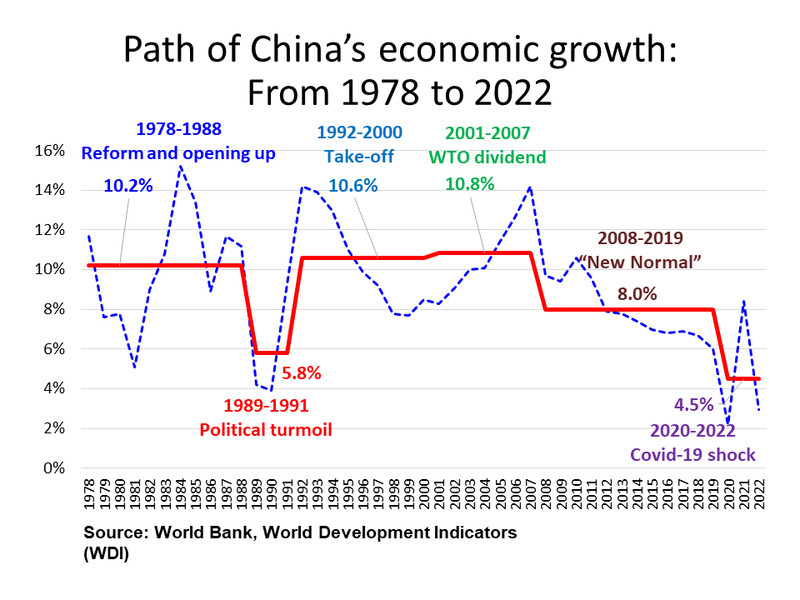
China’s economic growth, 1978-2022
Main Economic Liberalization Policies
These policies all shift decisions from the state to markets, but each one changes a different part of the economy.
- Reducing subsidies cuts government financial support and exposes people to market prices. This can reduce state spending and improve efficiency, but it can also make fuel or food more expensive and spark protest. Nigeria’s fuel subsidy cuts are the classic example.
- Reducing tariffs and trade barriers lowers taxes on imports and opens the economy to more competition. Consumers and export sectors often win; protected industries and workers often lose. Mexico joined GATT in 1986 and NAFTA in 1994.
- Privatization transfers state-owned enterprises to private owners. Governments hope for efficiency, investment, revenue, and competition. If institutions are weak, privatization can create corruption or oligarchs.
- Russia used voucher privatization and loans-for-shares, helping create oligarchs.
- The UK privatized British Telecom and British Gas under Thatcher.
- In Iran, privatization often shifted assets to bonyads or the IRGC, so control stayed state-linked.
- Deregulation loosens rules on business activity, prices, licensing, investment, and competition. It can boost innovation, but it can also weaken labor or environmental protections.
- Opening to FDI invites foreign firms to make lasting investments in production. Benefits include capital, jobs, technology, and export access. Costs include dependence and profit flowing abroad. China’s SEZs, especially Shenzhen, are the key example, and the image below gives you a quick sense of how dramatic that transformation was.
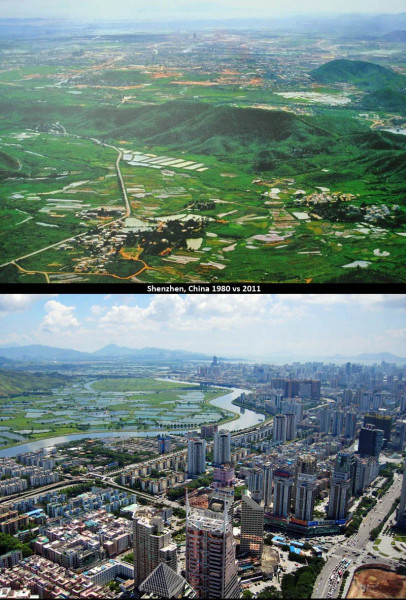
Shenzhen, China, 1980 vs. 2011
Why Governments Liberalize and How to Measure the Results
Governments usually liberalize because the old system is not delivering. Domestic pressures include unemployment, low productivity, stagnant growth, inflation, inefficient SOEs, and budget pressure. External pressures include trade deficits, falling demand for exports, lower prices for oil, gas, or raw materials, foreign exchange shortages, and pressure from global markets or lenders. Political motives matter too, like satisfying business elites, weakening labor, boosting legitimacy, or rewarding allies.
You measure outcomes with several indicators together:
| Indicator | What it shows |
|---|---|
| Real GDP growth | economic growth over time |
| GDP per capita | average wealth/income per person |
| Economic development | broader long-term gains in infrastructure, technology, health, education, living standards |
| HDI | human development through health, education, income |
| Gini coefficient | inequality |
A common exam move is combining them. High growth plus a rising Gini plus slow HDI improvement means growth is happening, but the gains are uneven. National averages can also hide regional divides, like coastal vs. interior China or north vs. south Mexico.
Mixed Effects and Course-Country Patterns
Liberalization can reduce inflation and increase growth, productivity, trade, investment, and national income. It can also bring inequality, corruption, social tension, weak diversification, uneven regional development, pollution, urban sprawl, and infrastructure strain.
Migration patterns matter because growth concentrates in certain places:
- China saw migration west to east and rural to urban
- Mexico saw migration south to north and rural to urban
China
Deng Xiaoping’s reforms from 1978 included the household responsibility system, SEZs, export manufacturing, and FDI. Growth was huge and strengthened CCP performance legitimacy, but coastal regions gained more than the interior, and pollution and urbanization surged.
Mexico
After the 1982 debt crisis, de la Madrid and Salinas pushed reform. Export growth and maquiladoras expanded in the north. The rural south was hurt more, and uneven outcomes weakened PRI legitimacy.
Russia
After 1991, Yeltsin’s shock therapy brought inflation, inequality, corruption, and oligarchs. Under Putin, the state reasserted control in strategic sectors.
UK, Nigeria, Iran
- UK under Thatcher pursued neoliberalism, with deindustrialization and more inequality, and party coalitions shifted.
- Nigeria adopted a SAP under Babangida in 1986. Subsidy cuts brought hardship, and oil dependence remained.
- Iran liberalized selectively, but sanctions and regime-linked ownership limited market competition.
Key Takeaways
Economic Liberalization
Reducing the state's direct control of the economy and relying more on market mechanisms, private ownership, trade, competition, and foreign investment
Neoliberalism / Neoliberal Policies
Policies that remove barriers on domestic and foreign economic actors and favor competition, private ownership, freer trade, foreign investment, and a smaller direct state role
Political Liberalization
Reducing restrictions on political activity by expanding rights, civil liberties, political competition, independent organization, and protections against arbitrary government action
Subsidy
Government financial support for an industry, producer, consumer, or activity, often used to lower prices, preserve employment, or protect an industry
Tariff
A tax on imported goods that raises their domestic price, protects domestic producers, and may provide government revenue
Privatization
The transfer of an enterprise, asset, or service from state ownership to private ownership
Deregulation
The removal or relaxation of government rules governing prices, licensing, competition, hiring, investment, or production
Foreign Direct Investment (FDI)
Investment by a person or company from one country in productive activity in another country with lasting influence or control
Shock Therapy
Russia's rapid post-Soviet transition to markets through price liberalization, open trade, and privatization, followed by inflation, hardship, corruption, and concentrated wealth
Thatcherism
Margaret Thatcher's British neoliberal program of privatization, deregulation, reduced support for uncompetitive industries, and restrictions on trade unions
Economic Growth
An increase in the production of goods and services, usually measured by the percentage change in real GDP.
Gross Domestic Product (GDP)
The market value of final goods and services produced within a country during a given period
Real Gross Domestic Product (Real GDP)
GDP adjusted for inflation so that changes reflect production rather than changing price levels
GDP Per Capita
GDP divided by population, providing an approximate measure of average economic output or income per person
Economic Development
Long-term improvement in productive capacity, infrastructure, technology, education, health, occupational patterns, and standards of living
Human Development Index (HDI)
An index from 0 to 1 combining life expectancy, education, and gross national income per capita, with higher values indicating greater human development
Gini Coefficient
A measure of income or wealth inequality from 0 to 1, or 0 to 100, where 0 is perfect equality and the highest value is maximum inequality
Notes
Economic Liberalization
Reducing the state's direct control of the economy and relying more on market mechanisms, private ownership, trade, competition, and foreign investment
Neoliberalism / Neoliberal Policies
Policies that remove barriers on domestic and foreign economic actors and favor competition, private ownership, freer trade, foreign investment, and a smaller direct state role
Political Liberalization
Reducing restrictions on political activity by expanding rights, civil liberties, political competition, independent organization, and protections against arbitrary government action
Subsidy
Government financial support for an industry, producer, consumer, or activity, often used to lower prices, preserve employment, or protect an industry
Tariff
A tax on imported goods that raises their domestic price, protects domestic producers, and may provide government revenue
Privatization
The transfer of an enterprise, asset, or service from state ownership to private ownership
Deregulation
The removal or relaxation of government rules governing prices, licensing, competition, hiring, investment, or production
Foreign Direct Investment (FDI)
Investment by a person or company from one country in productive activity in another country with lasting influence or control
Shock Therapy
Russia's rapid post-Soviet transition to markets through price liberalization, open trade, and privatization, followed by inflation, hardship, corruption, and concentrated wealth
Thatcherism
Margaret Thatcher's British neoliberal program of privatization, deregulation, reduced support for uncompetitive industries, and restrictions on trade unions
Economic Growth
An increase in the production of goods and services, usually measured by the percentage change in real GDP.
Gross Domestic Product (GDP)
The market value of final goods and services produced within a country during a given period
Real Gross Domestic Product (Real GDP)
GDP adjusted for inflation so that changes reflect production rather than changing price levels
GDP Per Capita
GDP divided by population, providing an approximate measure of average economic output or income per person
Economic Development
Long-term improvement in productive capacity, infrastructure, technology, education, health, occupational patterns, and standards of living
Human Development Index (HDI)
An index from 0 to 1 combining life expectancy, education, and gross national income per capita, with higher values indicating greater human development
Gini Coefficient
A measure of income or wealth inequality from 0 to 1, or 0 to 100, where 0 is perfect equality and the highest value is maximum inequality
