Topic 3.6 Notes – Forces that Impact Political Participation
What Political Participation Is
Political participation means actions citizens use to influence government, public policy, leaders, or the regime.
You already saw the two broad forms in the last topic. Here the point is what those forms can actually do.
- Formal participation works through official state institutions.
- Voting lets citizens choose leaders.
- Running for office lets citizens try to become leaders.
- Campaigning and party activity help shape elections and policy.
- Informal participation happens outside official institutions.
- Protests, demonstrations, strikes, boycotts, petitions
- Public criticism and social media activism
The main question is not whether participation exists. The question is whether it is meaningful, independent, and able to change leaders or policy.
That gives you the regime continuum for this course:
- United Kingdom = most democratic
- Mexico and Nigeria = democratic, but with weaknesses
- Russia = competitive authoritarian
- Iran = mixed system with strong clerical control
- China = one-party authoritarian
Formal Participation and Meaningful Elections
Elections happen in democracies and authoritarian regimes, so an election by itself proves very little.
Open and competitive elections
You need both pieces together:
- Open elections mean people can register, vote, organize, get information, and support alternatives without major interference.
- Competitive elections mean real opposition can campaign, win, take office, and actually use power.
In democracies, meaningful elections do four big things:
- Remove incumbents
- Create accountability even between elections
- Reward or punish policy performance
- Make leadership turnover and policy change possible
Democratic examples
| Country | What shows meaningful participation |
|---|---|
| United Kingdom | Regular multiparty House of Commons elections. Opposition parties can openly campaign and become the government. |
| Mexico | After decades of PRI dominance, reforms made elections fairer. Vicente Fox of PAN won in 2000, ending 71 years of PRI presidential control. |
| Nigeria | Since the return to civilian rule in 1999, elections have allowed competition. In 2015, Muhammadu Buhari defeated incumbent Goodluck Jonathan, showing credible turnover. |
How authoritarian regimes manage elections
Authoritarian governments often keep elections but control them.
- Ban or weaken opposition parties
- Vet or disqualify candidates
- Arrest or harass opponents
- Dominate media
- Use state resources to help incumbents
- Manipulate election administration or vote counts
- Weaken offices the opposition might win
Authoritarian and hybrid examples
- China has only lowest-level direct elections. The CCP monopolizes national power, so there is no meaningful opposition competition.
- Iran elects the president and Majles, but the Guardian Council vets candidates. The supreme leader and clerical institutions limit what elections can change.
- Russia has direct elections, but the playing field is unequal. Media control, repression, and administrative advantage protect incumbents. Alexei Navalny was barred from the 2018 election.
A common exam trap is this: high turnout does not equal democracy, and broad suffrage does not equal real choice.
Informal Participation and Protest
Informal participation matters because it can raise issue salience, pressure officials, mobilize support, and challenge regime legitimacy.
Social media
Social media matters because it:
- Spreads information fast
- Helps citizens coordinate
- Documents abuses
- Threatens authoritarian regimes because it is decentralized and harder to control
Democracies and authoritarian regimes
Democracies usually treat peaceful criticism and assembly as legitimate opposition. Authoritarian regimes are much less tolerant when criticism becomes organized, national, sustained, or aimed at the regime itself.
Both regime types regulate participation.
- Both can restrict violence, property destruction, and severe disruption.
- Both may require permits or regulate time, place, and manner.
- The difference is that authoritarian regimes go much further and put order and regime survival ahead of liberty.
Protest and repression examples
- United Kingdom allows peaceful protest, though it is regulated for safety and order.
- Mexico has more protest space after democratization, but activists and journalists still face violence.
- Nigeria saw the 2020 End SARS protests against police abuse. Repression showed democratic limits in practice.
- China crushed the 1989 Tiananmen Square protests with martial law and military force, and still uses censorship and online monitoring.
- Iran repressed the 2009 Green Movement after Ahmadinejad’s reelection and also heavily repressed the 2022 Mahsa Amini protests.
- Russia faced major 2011-2012 protests, then passed harsher laws and penalties for unsanctioned demonstrations.
The Tiananmen Square crackdown is one of the clearest examples of an authoritarian regime using military force to crush organized protest.
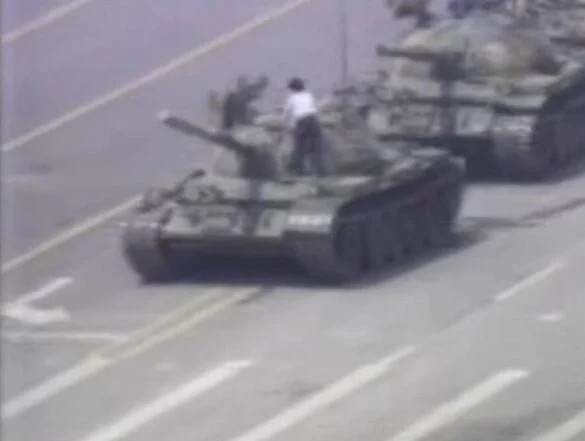
Tiananmen Square protests, 1989
How Participation Shapes Regimes and How Regimes Shape Participation
In democracies, participation:
- Increases accountability and responsiveness
- Helps set the political agenda
- Strengthens legitimacy when people believe participation is fair and consequential
- Channels conflict into institutions instead of violence
Authoritarian regimes face a dilemma. They need participation for legitimacy, mobilization, information, and controlled pressure release. Independent participation can also coordinate dissent and threaten elite control.
So the usual authoritarian strategy is simple. Allow managed participation and repress independent participation.
Repression has a tradeoff:
- Short term it can deter mobilization.
- Long term it can deepen grievances, reduce legitimacy, and create more opposition.
Key Takeaways
Open Election
An election in which eligible citizens can register, vote, obtain information, organize, and support alternatives without unreasonable interference
Competitive Election
An election with meaningful alternatives in which opposition candidates can realistically campaign, win, take office, and exercise power
Electoral Accountability
Leaders’ responsibility to voters, created by the possibility that citizens can reward, punish, or remove them through elections
Voter Turnout
The proportion of eligible voters who cast ballots; it does not by itself indicate electoral freedom or competitiveness
Voting Access vs. Electoral Competition
Voting access concerns who can cast a ballot; electoral competition concerns whether voters have meaningful alternatives capable of winning power
Meaningful vs. Managed Political Participation
Meaningful participation is independent and capable of changing leaders or policy; managed participation is state-channeled to preserve ruling-elite control
Competitive Authoritarian Regime
A regime with formally contested elections whose unfair, state-controlled conditions are designed to preserve the ruling elite
Public Order vs. Individual Liberty in Protest Regulation
Democracies generally protect peaceful dissent while imposing limited order-based rules; authoritarian regimes prioritize control and suppress peaceful opposition more extensively
2000 Mexican Presidential Election
PAN candidate Vicente Fox won the presidency, ending 71 years of PRI presidential control and demonstrating genuine electoral turnover
2015 Nigerian Presidential Election
Opposition candidate Muhammadu Buhari defeated incumbent Goodluck Jonathan, producing Nigeria’s first opposition victory over a sitting president
End SARS Movement
A 2020 Nigerian movement against police abuses that broadened into governance protests and faced force from security authorities
Tiananmen Square Demonstrations
The 1989 Chinese reform and anticorruption demonstrations that the CCP suppressed with martial law and military force
Green Movement
The Iranian protest movement challenging the announced 2009 reelection of Mahmoud Ahmadinejad, suppressed through arrests, censorship, communication restrictions, and force
Notes
Open Election
An election in which eligible citizens can register, vote, obtain information, organize, and support alternatives without unreasonable interference
Competitive Election
An election with meaningful alternatives in which opposition candidates can realistically campaign, win, take office, and exercise power
Electoral Accountability
Leaders’ responsibility to voters, created by the possibility that citizens can reward, punish, or remove them through elections
Voter Turnout
The proportion of eligible voters who cast ballots; it does not by itself indicate electoral freedom or competitiveness
Voting Access vs. Electoral Competition
Voting access concerns who can cast a ballot; electoral competition concerns whether voters have meaningful alternatives capable of winning power
Meaningful vs. Managed Political Participation
Meaningful participation is independent and capable of changing leaders or policy; managed participation is state-channeled to preserve ruling-elite control
Competitive Authoritarian Regime
A regime with formally contested elections whose unfair, state-controlled conditions are designed to preserve the ruling elite
Public Order vs. Individual Liberty in Protest Regulation
Democracies generally protect peaceful dissent while imposing limited order-based rules; authoritarian regimes prioritize control and suppress peaceful opposition more extensively
2000 Mexican Presidential Election
PAN candidate Vicente Fox won the presidency, ending 71 years of PRI presidential control and demonstrating genuine electoral turnover
2015 Nigerian Presidential Election
Opposition candidate Muhammadu Buhari defeated incumbent Goodluck Jonathan, producing Nigeria’s first opposition victory over a sitting president
End SARS Movement
A 2020 Nigerian movement against police abuses that broadened into governance protests and faced force from security authorities
Tiananmen Square Demonstrations
The 1989 Chinese reform and anticorruption demonstrations that the CCP suppressed with martial law and military force
Green Movement
The Iranian protest movement challenging the announced 2009 reelection of Mahmoud Ahmadinejad, suppressed through arrests, censorship, communication restrictions, and force
