Topic 4.5 Notes – Impact of Social Movements and Interest Groups
Social Movements vs Interest Groups
Both try to shape politics, but they do it in different ways.
- A social movement is a broad collective push for major change. It usually includes many people, local networks, community groups, organizations, and even unaffiliated supporters. Its goals are wide, like fair elections, indigenous rights, or environmental justice.
- An interest group is a formal organization built to represent a specific interest or policy. It usually has leaders, members, funding, and regular strategies for influencing officials.
- A political party is different from both because parties try to win government office. Interest groups usually do not run the government. They try to influence the people already in office.
That line can blur. A formal group can exist inside a bigger movement.
- MOSOP in Nigeria is the clearest example. It is an organized group, but it operates within the broader Niger Delta movement for Ogoni rights, environmental protection, and fairer oil revenue.
A lot of these movements are grassroots, which means power starts in local communities and grows upward to regional, national, and even international attention.
How They Influence Politics
These groups matter even when they do not win a law change right away.
- Agenda setting puts ignored problems into public debate.
- Participation brings in people who were previously inactive.
- Pressure on elites raises the political cost of ignoring demands.
- Legitimacy challenges expose corruption, unfair elections, exclusion, or abuse.
- Negotiation and concessions can force talks or partial reforms.
- Internationalization brings in foreign media, NGOs, and outside pressure.
Common methods
| Actor | Common methods |
|---|---|
| Interest groups | lobbying, consultation, policy expertise, publicity campaigns, ties to officials, litigation where possible |
| Social movements | marches, protests, strikes, boycotts, civil disobedience, occupations, online organizing, sometimes armed resistance |
Regime type changes what is possible.
- In democracies, protest and lobbying usually have more legal space.
- In authoritarian states, activists face censorship, surveillance, arrest, and repression.
The standard interest group example here is the UK Trades Union Congress, a formal labor organization that uses consultation, lobbying, and public campaigns rather than mass revolutionary change.
Why Grassroots Structure Helps and Hurts
Loose grassroots structure can keep a movement alive under pressure.
- It is harder for the state to destroy a movement by arresting one leader or shutting one office.
- Local networks can survive repression and regroup.
The same structure creates problems.
- Demands and tactics are harder to unify.
- Expansion beyond the local base is harder.
- Splinter groups or violent factions are harder to control.
- Negotiation is messy because no one leader can commit everyone.
You can see the mass participation side of social movements in large street protests like this one in Tehran, where broad mobilization does not necessarily mean tight centralized control.
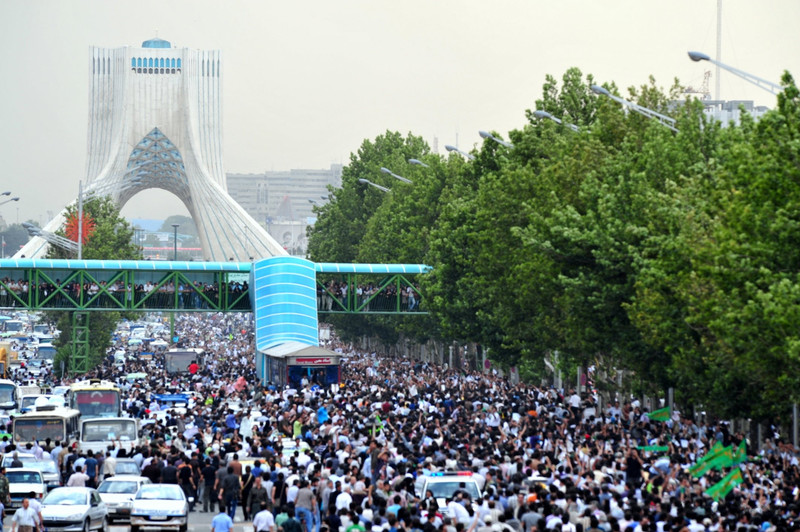
Mass protest in Tehran
The best illustration is MEND in Nigeria. Its loose factional networks made suppression difficult, but agreements were also hard to negotiate and enforce.
Course Country Social Movements
- Iran, Green Movement after the disputed 2009 election. Slogan was “Where is my vote?” It demanded electoral transparency and accountability. It used mass protest and mobile/online communication. It exposed legitimacy problems but was repressed. Mousavi and Karroubi were put under house arrest.
- Mexico, Zapatistas/EZLN in Chiapas began in 1994 as NAFTA took effect. The movement grew from indigenous inequality, land conflict, exclusion, and opposition to NAFTA’s effects. Its goals expanded to indigenous rights, autonomy, representation, and social justice. The 1996 San Andrés Accords were not fully implemented.
- Nigeria, MOSOP pushed for Ogoni rights, environmental justice, and fairer oil revenue distribution. It was mainly nonviolent. Ken Saro-Wiwa was executed in 1995 under Sani Abacha.
- Nigeria, MEND used attacks on oil infrastructure and kidnappings to demand more local control and oil wealth. The 2009 amnesty reduced some violence.
- Nigeria, Boko Haram is separate from the Niger Delta movements. It seeks an Islamic state, rejects secularism and Western education, and used violent insurgency. The 2014 Chibok schoolgirls kidnapping is the key example.
- Russia saw protests against the 2013 law against “propaganda of nontraditional sexual relations.” LGBTQ activists challenged unequal treatment and limits on expression. The law was not repealed, but the protests drew strong domestic and international attention.
Measuring Impact and Government Response
Governments can answer movements with concession, negotiation, accommodation, co-optation, repression, avoidance, or delegitimation by calling activists criminals, extremists, or foreign agents.
Effectiveness depends on participants, unity, leadership, resources, public sympathy, media access, leverage, international support, and the state’s coercive power.
Democratization and citizen organization reinforce each other. Strong organizations can push for accountability and fair elections, and freer speech and protest make organizing easier. But movements are not always democratic. Boko Haram is the clearest reminder of that.
Key Takeaways
Social Movement
Large numbers of people, organizations, and informal networks acting collectively for broad political, social, or cultural change, often without formal membership or centralized leadership
Interest Group
A formally organized body that represents a specific interest or policy concern and seeks to influence public officials rather than win control of government
Grassroots Movement
A movement that builds power from affected local communities upward; its limited hierarchy can make suppression harder but coordination, mobilization, and negotiation more difficult
Green Movement
Iranian mass movement that challenged alleged manipulation of the 2009 presidential election and demanded electoral transparency; repression prevented it from overturning the result but publicized electoral grievances
Zapatistas / Chiapas Uprising / Zapatista Army of National Liberation (EZLN)
Mexican movement begun in Chiapas in 1994 against indigenous exclusion, inequality, land problems, and NAFTA’s effects; it promoted indigenous rights, autonomy, and social justice
Movement for the Survival of the Ogoni People (MOSOP)
Predominantly nonviolent Niger Delta movement for Ogoni rights, environmental justice, and fair oil-revenue distribution, associated with Ken Saro-Wiwa and international publicity
Movement for the Emancipation of the Niger Delta (MEND)
Loose, militant Nigerian movement seeking greater local control and a fairer share of Niger Delta oil wealth, using attacks, kidnappings, and disruption of petroleum production
Boko Haram
Violent insurgent movement in northern and northeastern Nigeria that rejects the secular state and Western-influenced education and seeks an Islamic state under its interpretation of Islamic law
Russian LGBTQ Rights Protests
Domestic protests against Russia’s 2013 restriction on LGBTQ expression that faced arrests and dispersal but drew public and international attention to unequal treatment
Notes
Social Movement
Large numbers of people, organizations, and informal networks acting collectively for broad political, social, or cultural change, often without formal membership or centralized leadership
Interest Group
A formally organized body that represents a specific interest or policy concern and seeks to influence public officials rather than win control of government
Grassroots Movement
A movement that builds power from affected local communities upward; its limited hierarchy can make suppression harder but coordination, mobilization, and negotiation more difficult
Green Movement
Iranian mass movement that challenged alleged manipulation of the 2009 presidential election and demanded electoral transparency; repression prevented it from overturning the result but publicized electoral grievances
Zapatistas / Chiapas Uprising / Zapatista Army of National Liberation (EZLN)
Mexican movement begun in Chiapas in 1994 against indigenous exclusion, inequality, land problems, and NAFTA’s effects; it promoted indigenous rights, autonomy, and social justice
Movement for the Survival of the Ogoni People (MOSOP)
Predominantly nonviolent Niger Delta movement for Ogoni rights, environmental justice, and fair oil-revenue distribution, associated with Ken Saro-Wiwa and international publicity
Movement for the Emancipation of the Niger Delta (MEND)
Loose, militant Nigerian movement seeking greater local control and a fairer share of Niger Delta oil wealth, using attacks, kidnappings, and disruption of petroleum production
Boko Haram
Violent insurgent movement in northern and northeastern Nigeria that rejects the secular state and Western-influenced education and seeks an Islamic state under its interpretation of Islamic law
Russian LGBTQ Rights Protests
Domestic protests against Russia’s 2013 restriction on LGBTQ expression that faced arrests and dispersal but drew public and international attention to unequal treatment
