Topic 5.7 Notes – Impact of Industrialization and Economic Development
How Industrialization Changes Government Policy
Industrialization means rapid growth of mechanized production, fossil-fuel use, transport, and urban life. Economic development is broader. It includes more productive capacity, infrastructure, trade, and usually higher living standards.
What matters is the chain connecting economic change to politics:
- Industrialization and development increase production and consumption.
- That creates new pressures such as pollution, health risks, strained infrastructure, exposure to global trade, and fiscal stress.
- Citizens, firms, and regions push for action, or resist paying the costs.
- Governments change policy.
- Those policy choices affect legitimacy and regime stability.
This topic stays at the policy level. China and the UK both adapt policy, even though one is authoritarian and one is democratic. The exam usually wants cause → policy response → political consequence.
Government Responses to Pollution and Industrial Damage
Industrial growth creates visible harm, so governments usually mix several tools instead of using just one.
Relocating factories
Moving factories can clean up dense cities, but it often just shifts pollution somewhere else.
- China example: the Shougang steel complex moved from Beijing to Hebei. That helped Beijing’s air, but pollution did not disappear.
Environmental regulation
Governments can set emissions limits, inspect plants, fine violators, require pollution controls, or shut noncompliant factories. This only works with strong state capacity. Rules on paper mean little without enforcement.
Subsidies for green technology
Subsidies lower the cost of cleaner production. Governments may fund renewables, EVs, batteries, filtration systems, and R&D. This can help firms comply and build competitive industries, but it is expensive and can reward politically connected businesses.
Vehicle conversion and transport policy
As car ownership rises, states try to cut vehicle emissions through standards, subsidies, charging stations, state purchasing, and limits on high-emission cars.
- United Kingdom: shift away from new petrol/diesel-only cars.
- China: support for new-energy vehicles and battery production.
Infrastructure and public health
Pollution becomes a health issue, so governments build public transit, electric grids, water treatment, sewage systems, waste disposal, air monitoring, hospitals, clinics, and emergency response systems. Pollution often causes respiratory and cardiovascular disease, plus unsafe water.
China as the full case
China’s rapid growth, coal dependence, and rising car use produced severe air and water pollution. The image below captures the kind of urban smog that made pollution such a visible political problem. The state responded with factory relocation, plant closures, tighter standards, renewables, EV support, mass transit, and infrastructure. Politically, these policies help protect health and preserve performance legitimacy.
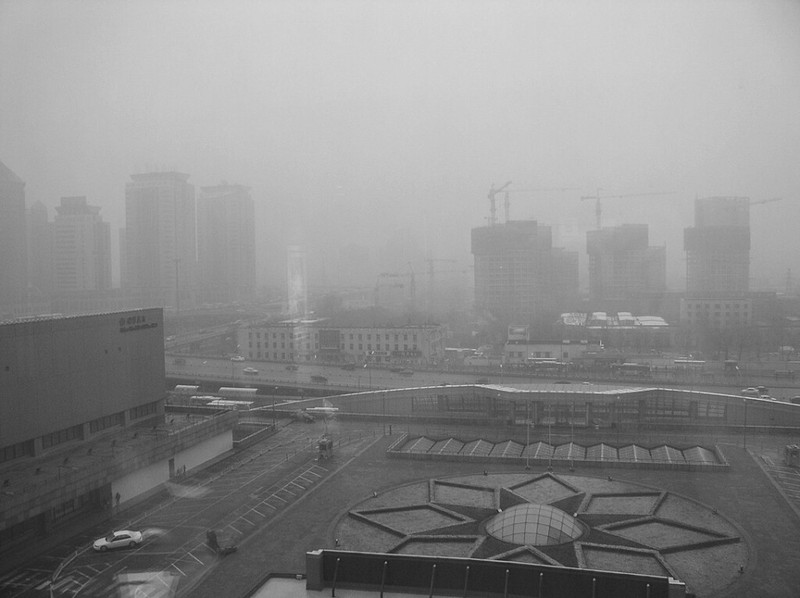
Urban smog in Beijing
Trade Liberalization and Tariff Tradeoffs
Trade liberalization means reducing barriers like tariffs, quotas, and restrictions on foreign economic activity. It creates winners and losers, which is exactly how AP questions tend to frame it.
| Effect | What to know |
|---|---|
| Business growth | Exporters and import-dependent firms may expand; protected industries may shrink |
| FDI | Lower barriers can attract foreign direct investment and multinational production |
| Exchange rates | Trade and capital flows change currency demand; no automatic one-way effect |
| Population movement | Jobs pull workers toward industrial/export regions |
| Environment | More production can worsen pollution, though newer technology can sometimes help |
- Mexico example: maquiladoras expanded in northern Mexico, pulling people away from poorer rural and southern regions.
- That same export growth also strained water, sanitation, transport, and environmental enforcement.
Tariffs are taxes on imports.
- Lower tariffs mean cheaper imports, lower prices, more competition, and weaker protection for domestic firms.
- Higher tariffs protect domestic producers and jobs, but consumers pay more and get less choice.
Budget Deficits, Austerity, and Political Stability
A budget deficit happens when government spending is higher than revenue. World market swings can cut export earnings and tax income, which makes deficits worse.
Austerity means cutting spending to reduce the deficit. That can include cuts to public jobs, welfare, local grants, education, health, and infrastructure.
Why governments do it:
- reduce borrowing
- reassure lenders and investors
- preserve fiscal capacity
Why people fight over it:
- weaker public services
- more unemployment
- slower recovery
- heavier burden on lower-income groups
- protests and backlash
- United Kingdom example: after the 2008 financial crisis, the 2010 Conservative-Liberal Democrat coalition pursued deficit reduction through spending cuts and restraint. Supporters said it restored fiscal stability. Critics said it weakened services and hurt vulnerable groups.
Industrial, trade, and fiscal policy all involve tradeoffs. Governments gain legitimacy when they manage growth, health, and costs well. They lose legitimacy when harms are ignored or dumped unevenly onto weaker groups.
Key Takeaways
Industrialization
Expansion of mechanized manufacturing, industrial production, and associated transportation and energy systems
Economic Development
Increasing productive capacity and material development through changes such as industrial growth, improved infrastructure, new technology, greater trade, and rising living standards
Systemic Pollution
Widespread, persistent pollution rooted in an economy’s systems of production, energy, transportation, and land use
Factory Relocation
Moving heavily polluting factories away from populated areas, reducing local exposure but potentially transferring pollution elsewhere
Environmental Regulation
Legally enforceable limits or requirements governing pollution, emissions, fuels, equipment, environmental review, and industrial operation
Green-Technology Subsidies
Government assistance that lowers the cost of cleaner technologies or production, encouraging firms to reduce emissions and meet environmental standards
Vehicle Conversion Policies
National laws, standards, incentives, and deadlines that shift transportation from gasoline- and diesel-only vehicles toward hybrid or battery-powered vehicles
Infrastructure Development
Expansion of physical systems such as transit, electrical grids, water treatment, waste disposal, monitoring networks, and health facilities
Public-Health Responses to Systemic Pollution
Government measures such as expanding health facilities, monitoring disease, issuing warnings, providing clean water, and preparing for severe pollution episodes
Trade Liberalization
Reduction of tariffs, quotas, and other barriers to international trade and foreign economic activity
Foreign Direct Investment (FDI)
Investment in which a foreign investor establishes or acquires a lasting business interest, such as a factory, in another country
Exchange Rate
The value of one currency in terms of another, affected by trade, capital flows, expectations, and government or central-bank policy
Tariff
A tax on imports; lowering it reduces import costs but exposes domestic producers to competition, while raising it protects producers but increases consumer and input prices
Budget Deficit
A situation in which government expenditures exceed government revenues during a given period
Austerity
Policies intended to reduce a budget deficit through spending restraint and cuts in funding for state programs
Notes
Industrialization
Expansion of mechanized manufacturing, industrial production, and associated transportation and energy systems
Economic Development
Increasing productive capacity and material development through changes such as industrial growth, improved infrastructure, new technology, greater trade, and rising living standards
Systemic Pollution
Widespread, persistent pollution rooted in an economy’s systems of production, energy, transportation, and land use
Factory Relocation
Moving heavily polluting factories away from populated areas, reducing local exposure but potentially transferring pollution elsewhere
Environmental Regulation
Legally enforceable limits or requirements governing pollution, emissions, fuels, equipment, environmental review, and industrial operation
Green-Technology Subsidies
Government assistance that lowers the cost of cleaner technologies or production, encouraging firms to reduce emissions and meet environmental standards
Vehicle Conversion Policies
National laws, standards, incentives, and deadlines that shift transportation from gasoline- and diesel-only vehicles toward hybrid or battery-powered vehicles
Infrastructure Development
Expansion of physical systems such as transit, electrical grids, water treatment, waste disposal, monitoring networks, and health facilities
Public-Health Responses to Systemic Pollution
Government measures such as expanding health facilities, monitoring disease, issuing warnings, providing clean water, and preparing for severe pollution episodes
Trade Liberalization
Reduction of tariffs, quotas, and other barriers to international trade and foreign economic activity
Foreign Direct Investment (FDI)
Investment in which a foreign investor establishes or acquires a lasting business interest, such as a factory, in another country
Exchange Rate
The value of one currency in terms of another, affected by trade, capital flows, expectations, and government or central-bank policy
Tariff
A tax on imports; lowering it reduces import costs but exposes domestic producers to competition, while raising it protects producers but increases consumer and input prices
Budget Deficit
A situation in which government expenditures exceed government revenues during a given period
Austerity
Policies intended to reduce a budget deficit through spending restraint and cuts in funding for state programs
