Topic 4.7 Notes – Emotion
What Emotion Is
Emotion (also called affect) is a psychological process. It’s different from reasoning or just knowing something. You can know a dog is barking, but feeling fear is a different event.
Emotion is shaped by both:
- Internal factors like bodily arousal, memories, thoughts, expectations
- External factors like the situation, other people, and cultural norms
An emotional episode usually includes five interacting parts.
Physiological arousal
Your body reacts. Heart rate rises, muscles tense, breathing changes, palms sweat.Cognitive appraisal or labeling
You interpret what’s happening. “This is dangerous” or “This is exciting.”Subjective feeling
Your private experience of the emotion, like feeling afraid, angry, or happy.Expressive behavior
What others can see or hear, like facial expressions, tone of voice, posture.Action tendencies
The response the emotion pushes you toward, like running away, confronting, hugging, freezing.
A common test idea is that the same bodily arousal can mean different emotions depending on context. A racing heart before a speech might become fear or excitement depending on how you interpret it.
Keep these three separate:
- Feeling an emotion
- Expressing an emotion
- Interpreting someone else’s expression
Those are related, but they are not the same thing.
How Emotion Happens
For AP, the key is the order of events, not memorizing theory names. Prompts usually describe a sequence, and you identify which pattern it matches.
This quick comparison helps you see the three patterns side by side.
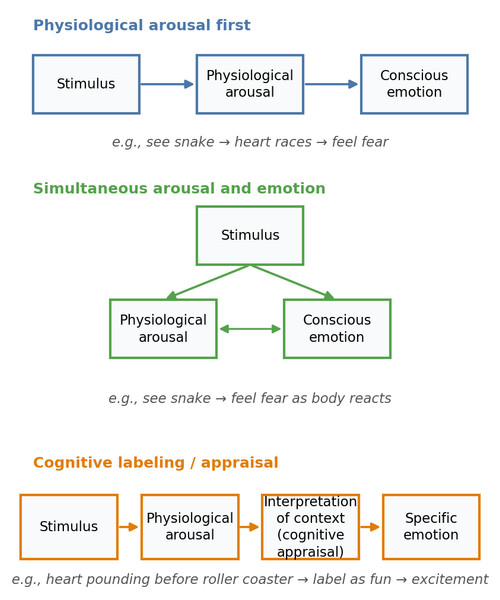
Three major theories of emotion
Physiological arousal first
Here the pattern is:
stimulus → bodily response → conscious emotion
Example:
- You see a snake
- Your heart races
- You then feel fear
The idea is that bodily changes help produce the emotion.
Physiological arousal and emotion at the same time
Here the pattern is:
stimulus → bodily response and conscious emotion simultaneously
Example:
- You see the snake
- You feel fear as your body reacts
The emotion and arousal happen together, not one after the other.
Cognitive labeling of arousal
Here the pattern is:
stimulus → bodily arousal → interpretation of context → specific emotion
Example:
- Your heart is pounding before a roller coaster
- You label the situation as fun
- You feel excitement
That same arousal in a dark alley could be labeled as fear. This is the one to watch for when the question stresses meaning, interpretation, or appraisal.
Facial Feedback and What It Suggests
The facial-feedback hypothesis says that facial expressions can influence what you feel. So expression is not only the result of emotion. It can also feed back into it.
- Smiling may slightly increase positive affect
- Frowning or tensing facial muscles may support more negative feeling
This fits better with explanations where bodily responses can come before or shape emotion.
A classic study pattern looks like this:
- Researchers manipulate facial-muscle position
- Participants rate amusement or emotion afterward
Here, the image shows a neutral expression next to increasingly stronger smiles, which is the kind of facial-muscle manipulation these studies use.
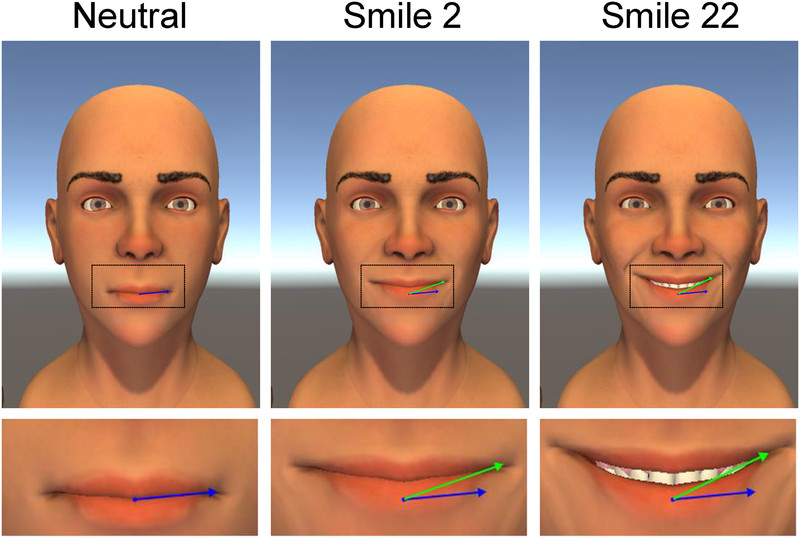
Neutral expression and stronger smile positions
The evidence here is mixed. Some studies support the effect. Others find weak effects or fail to replicate. The result may depend on:
- whether people know the study’s purpose
- whether the expression feels natural or posed
- whether other people are present
- how emotion is measured
What Positive and Negative Emotions Do
The broaden-and-build theory explains how emotions affect thinking and behavior over time.
Positive emotions
Emotions like joy, interest, contentment, and curiosity tend to broaden awareness. They widen the range of thoughts and actions you consider.
They are linked to:
- creativity
- play
- exploration
- flexible thinking
- social connection
Over time, they help build lasting resources such as:
- knowledge
- coping skills
- resilience
- relationships
- confidence
Negative emotions
Emotions like fear, anger, and disgust tend to narrow awareness. They focus attention on an immediate problem or threat.
- Fear supports escape or avoidance
- Anger supports confrontation
- Disgust supports rejection or withdrawal
That narrowing can be useful. In danger, a tight focus can help you act fast.
Culture, Social Norms, and Emotional Expression
Emotion is not just biological. Culture helps shape both what people show and what triggers emotion.
Emotions across cultures
Six emotions often studied across cultures are:
- anger
- disgust
- sadness
- happiness
- surprise
- fear
Research, including work by Paul Ekman, often uses posed facial expressions like the ones below to test whether people recognize these emotions across cultures. The results suggest some cross-cultural commonality in recognition or experience. But the findings are mixed, so avoid saying emotions are expressed identically everywhere.
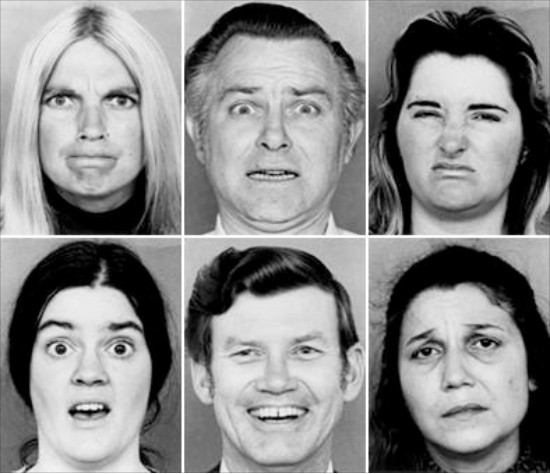
Posed facial expressions used in emotion research
Recognizing a posed face in a study is not the same as identical real-life expression in every culture.
Display rules
Display rules are socially learned norms for whether, when, where, and how strongly to show emotion.
They can lead people to:
- intensify expression
- minimize it
- hide it
- replace it with another expression
- stay neutral
So your public expression may not match your private feeling. Display rules vary across cultures and also within cultures by gender, age, status, and social role.
Elicitors
Elicitors are the events, objects, memories, or situations that trigger emotion.
Culture shapes what counts as:
- insulting
- shameful
- joyful
- threatening
- admirable
So the same event can produce different emotions in different people or groups.
The exam loves this distinction:
- Display rules shape expression
- Elicitors shape what triggers the emotion
Key Takeaways
Emotion (Affect)
A complex psychological response to internal and external conditions involving physiological activity, cognition, subjective feeling, expression, and action tendencies
Physiological-First Account of Emotion
An emotion-producing stimulus causes physiological arousal, which precedes and helps produce the conscious emotional experience
Simultaneous Account of Emotion
An emotion-producing stimulus causes physiological arousal and conscious emotional experience at approximately the same time
Cognitive-Labeling Account of Emotion
A stimulus produces physiological arousal, whose context-dependent interpretation or cognitive label determines the specific emotion experienced
Facial-Feedback Hypothesis
The proposal that forming a facial expression can influence the corresponding emotional experience; research findings are mixed
Broaden-and-Build Theory of Emotion
Positive emotions tend to broaden awareness and possible actions, building lasting resources over time, while negative emotions tend to narrow attention and immediate responses
Universality of Emotions
The qualified proposal that anger, disgust, sadness, happiness, surprise, and fear show some cross-cultural commonality, although expression and recognition vary and findings are mixed
Display Rules
Socially learned norms governing whether, when, where, and how strongly emotions should be outwardly expressed
Emotional Elicitor
An event, object, condition, memory, or social situation that triggers an emotional response
Notes
Emotion (Affect)
A complex psychological response to internal and external conditions involving physiological activity, cognition, subjective feeling, expression, and action tendencies
Physiological-First Account of Emotion
An emotion-producing stimulus causes physiological arousal, which precedes and helps produce the conscious emotional experience
Simultaneous Account of Emotion
An emotion-producing stimulus causes physiological arousal and conscious emotional experience at approximately the same time
Cognitive-Labeling Account of Emotion
A stimulus produces physiological arousal, whose context-dependent interpretation or cognitive label determines the specific emotion experienced
Facial-Feedback Hypothesis
The proposal that forming a facial expression can influence the corresponding emotional experience; research findings are mixed
Broaden-and-Build Theory of Emotion
Positive emotions tend to broaden awareness and possible actions, building lasting resources over time, while negative emotions tend to narrow attention and immediate responses
Universality of Emotions
The qualified proposal that anger, disgust, sadness, happiness, surprise, and fear show some cross-cultural commonality, although expression and recognition vary and findings are mixed
Display Rules
Socially learned norms governing whether, when, where, and how strongly emotions should be outwardly expressed
Emotional Elicitor
An event, object, condition, memory, or social situation that triggers an emotional response
