Topic 4.1 Notes – Attribution Theory and Person Perception
What Attributions Are
An attribution is your explanation for a behavior, outcome, or even a mental process. If someone seems nervous, you might explain it by saying they are shy, or by saying the room is stressful.
There are two core types:
- Dispositional attribution means the cause is inside the person.
- This includes traits, motives, attitudes, intelligence, effort, and emotional tendencies.
- Example: “She did well because she is hardworking.”
- Situational attribution means the cause is outside the person.
- This includes social pressure, luck, task difficulty, authority, other people, and circumstances.
- Example: “She did well because the test was easy.”
Most behavior comes from both person and situation. AP questions love this point. A good score might reflect both hard work and an easy test. Attribution theory, linked to Fritz Heider, asks which cause people emphasize.
Patterns in How People Explain Events
Explanatory style
Your explanatory style is your usual way of explaining good and bad events. It is a pattern, not just one excuse.
It uses three dimensions:
- Internal vs. external
Did I cause it, or did the situation? - Stable vs. unstable
Will this cause last, or can it change? - Global vs. specific
Does this affect many parts of life, or just this one area?
Optimistic explanatory style
An optimistic explanatory style treats bad events as temporary, limited, and changeable. Good events are more likely to be tied to lasting strengths.
- Bad grade → “I didn’t study the right way this time.”
- This style tends to support persistence and resilience.
Pessimistic explanatory style
A pessimistic explanatory style treats bad events as internal, stable, and global. Good events get brushed off as luck or something temporary.
- Bad grade → “I’m just bad at school.”
- This style can lower motivation and increase discouragement.
Locus of control
Locus of control is broader than one attribution. It is your general belief about what determines outcomes in life. The name to know is Julian Rotter.
| Type | Belief | Likely effect |
|---|---|---|
| Internal locus of control | Outcomes come from effort, choices, skills, decisions | More persistence and action after setbacks |
| External locus of control | Outcomes come from luck, fate, powerful others, institutions, circumstances | Less persistence if effort feels pointless |
A dispositional attribution is one explanation for one event. An internal locus of control is a general worldview.
Attribution Biases You Must Distinguish
Fundamental attribution error
The fundamental attribution error means overestimating dispositional causes and underestimating situational causes for other people’s behavior.
- “He cut me off because he’s rude.”
- You may ignore traffic, stress, or road conditions.
The classic study is Jones and Harris. People read essays and still inferred the writer’s true attitude even when the writer was assigned a position.
Actor-observer bias
The actor-observer bias compares self vs. others.
- Your behavior → more situational
“I was late because of traffic.” - Other person’s similar behavior → more dispositional
“She was late because she’s irresponsible.”
Self-serving bias
The self-serving bias means:
- success → internal cause
- failure → external cause
Example: “I aced it because I’m smart” versus “I failed because the test was unfair.” This often protects self-esteem.
Cultural influence on attribution
- Individualist cultures tend to focus more on personal traits and responsibility.
- Collectivist cultures tend to notice context, roles, and relationships more.
How We Form Impressions of Ourselves and Others
Mere exposure effect
The mere exposure effect means repeated exposure increases liking, especially for neutral things. A common explanation is processing fluency, which means familiar things feel easier for your brain to process.
Research name to know: Robert Zajonc.
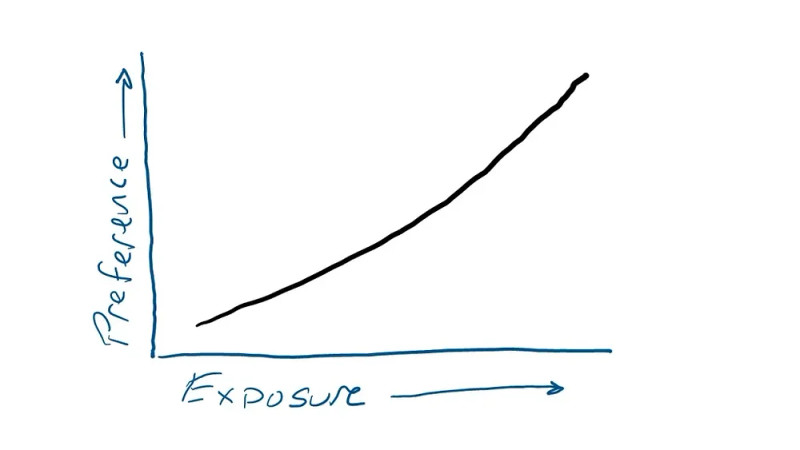
Mere exposure effect
Self-fulfilling prophecy
A self-fulfilling prophecy happens when an expectation helps cause the outcome.
- An expectation forms.
- That expectation changes behavior.
- The behavior affects others or the situation.
- The outcome confirms the original expectation.
Think of it as a loop. Beliefs shape actions, actions affect other people, and their responses can end up reinforcing the original belief.
Example: a teacher expects strong performance, gives more attention and challenge, and the student improves. That links to Rosenthal and Jacobson.
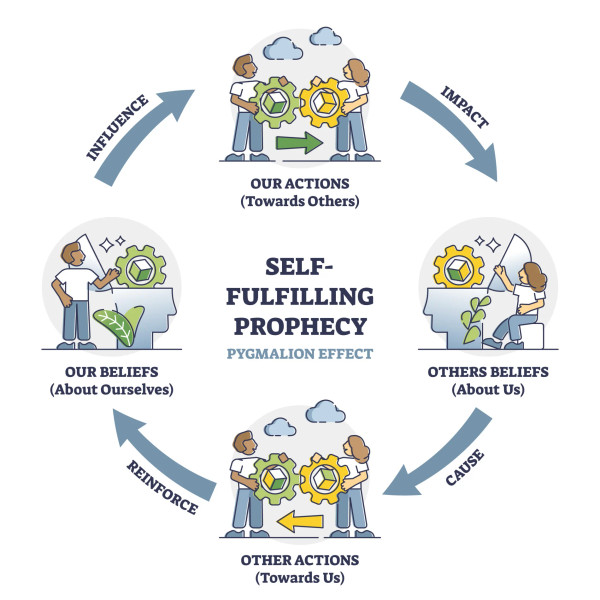
Self-fulfilling prophecy
Social comparison
Social comparison means judging yourself by comparing yourself to others. The key name is Leon Festinger.
- Upward comparison means comparing to someone better off or more skilled.
- Can inspire you or discourage you.
- Downward comparison means comparing to someone worse off.
- Can comfort you or make you complacent.
Why Person Perception Matters
Relative deprivation means feeling deprived compared with a relevant person or group. It is about comparison, not just actual conditions. You can feel unfairly disadvantaged even if your situation has not objectively changed.
These ideas affect relationships, self-esteem, motivation, expectations, and judgment. A useful chain is this:
person or event → attribution → bias or explanatory pattern → expectation → behavior
A few AP traps show up a lot:
- Dispositional attribution does not equal internal locus of control.
- Situational attribution does not equal external locus of control in every case.
- An accurate prediction is not a self-fulfilling prophecy unless the expectation helped produce the outcome.
Key Takeaways
Attribution Theory
The study of how people explain the causes of their own and others’ behavior and mental processes
Attribution
An explanation for why a behavior, outcome, or mental process occurred
Dispositional Attribution / Internal Attribution
An explanation that attributes behavior or a mental process to qualities within the person, such as personality, ability, motives, or effort
Situational Attribution / External Attribution
An explanation that attributes behavior or a mental process to circumstances outside the person
Explanatory Style
A person’s recurring pattern of explaining good and bad events, including whether causes seem internal or external, stable or unstable, and global or specific
Optimistic Explanatory Style
A pattern that treats negative events as temporary, limited, and changeable while connecting positive events to more enduring strengths or conditions
Pessimistic Explanatory Style
A pattern that treats negative events as internal, stable, and global while dismissing positive events as external, temporary, or specific
Fundamental Attribution Error
The tendency to overemphasize dispositional causes and underestimate situational causes when explaining another person’s behavior
Actor-Observer Bias
The tendency to explain one’s own behavior situationally but another person’s similar behavior dispositionally
Self-Serving Bias
The tendency to attribute personal successes to internal causes and personal failures to external causes
Locus of Control
A generalized belief about whether life outcomes are controlled mainly by one’s own actions or by outside forces
Internal Locus of Control
The belief that outcomes are substantially influenced by one’s own actions, decisions, skills, and effort
External Locus of Control
The belief that outcomes are mainly determined by luck, fate, powerful others, institutions, or circumstances beyond personal control
Person Perception
The process of forming impressions and judgments about oneself and other people
Mere Exposure Effect
The tendency for repeated exposure to a stimulus to increase liking for it
Self-Fulfilling Prophecy
An expectation that changes behavior in ways that help produce and confirm the expected outcome
Social Comparison
Evaluating oneself by comparing one’s abilities, achievements, opinions, appearance, possessions, or circumstances with those of others
Upward Social Comparison
Comparing oneself with someone perceived as better off, more successful, more skilled, or otherwise superior
Downward Social Comparison
Comparing oneself with someone perceived as worse off, less successful, or less skilled
Relative Deprivation
The perception that one is deprived or disadvantaged compared with a relevant person or group
Notes
Attribution Theory
The study of how people explain the causes of their own and others’ behavior and mental processes
Attribution
An explanation for why a behavior, outcome, or mental process occurred
Dispositional Attribution / Internal Attribution
An explanation that attributes behavior or a mental process to qualities within the person, such as personality, ability, motives, or effort
Situational Attribution / External Attribution
An explanation that attributes behavior or a mental process to circumstances outside the person
Explanatory Style
A person’s recurring pattern of explaining good and bad events, including whether causes seem internal or external, stable or unstable, and global or specific
Optimistic Explanatory Style
A pattern that treats negative events as temporary, limited, and changeable while connecting positive events to more enduring strengths or conditions
Pessimistic Explanatory Style
A pattern that treats negative events as internal, stable, and global while dismissing positive events as external, temporary, or specific
Fundamental Attribution Error
The tendency to overemphasize dispositional causes and underestimate situational causes when explaining another person’s behavior
Actor-Observer Bias
The tendency to explain one’s own behavior situationally but another person’s similar behavior dispositionally
Self-Serving Bias
The tendency to attribute personal successes to internal causes and personal failures to external causes
Locus of Control
A generalized belief about whether life outcomes are controlled mainly by one’s own actions or by outside forces
Internal Locus of Control
The belief that outcomes are substantially influenced by one’s own actions, decisions, skills, and effort
External Locus of Control
The belief that outcomes are mainly determined by luck, fate, powerful others, institutions, or circumstances beyond personal control
Person Perception
The process of forming impressions and judgments about oneself and other people
Mere Exposure Effect
The tendency for repeated exposure to a stimulus to increase liking for it
Self-Fulfilling Prophecy
An expectation that changes behavior in ways that help produce and confirm the expected outcome
Social Comparison
Evaluating oneself by comparing one’s abilities, achievements, opinions, appearance, possessions, or circumstances with those of others
Upward Social Comparison
Comparing oneself with someone perceived as better off, more successful, more skilled, or otherwise superior
Downward Social Comparison
Comparing oneself with someone perceived as worse off, less successful, or less skilled
Relative Deprivation
The perception that one is deprived or disadvantaged compared with a relevant person or group
