Topic 5.1 Notes – Introduction to Health Psychology
Health Psychology and Stress
Health psychology studies how behavior and mental processes connect to health, illness, and wellness. The big idea is that health usually does not come from one cause.
That is the biopsychosocial model. It says health is shaped by several influences working together:
- Biological influences include genetics, the nervous system, hormones from the endocrine system, and immune function.
- Psychological influences include thoughts, emotions, appraisals, and coping style.
- Behavioral influences include sleep, exercise, nutrition, substance use, and whether someone follows treatment directions.
- Sociocultural influences include relationships, culture, discrimination, socioeconomic status, and access to health care.
A good AP-style point here is that these factors interact. Stress can raise blood pressure, and having a chronic illness can create more stress.
A stressor is the event or demand. Stress is your psychological and physiological response to it. That difference gets tested a lot.
How stressful something feels depends on cognitive appraisal, which means how you interpret the situation. The same exam can look like:
- a challenge if you feel prepared
- a threat if you feel overwhelmed
- unimportant if it does not matter much to you
Appraisal depends on perceived control, past experience, support, and expectations. This is why stress is personal.
Stress is not always bad. Acute stress can sharpen attention and mobilize energy. Chronic stress, or stress repeated over time, is much more likely to damage health.
Types of Stress and Why They Matter
Eustress and distress
- Eustress is manageable, motivating stress.
- Distress is harmful, overwhelming stress.
The key difference is appraisal, not the event itself. A competition might energize one person and crush another.
Traumatic stress
This comes from actual or threatened serious harm, such as violence, severe accidents, or disasters. It can overwhelm normal coping resources.
Daily hassles
These are smaller recurring stressors like traffic, arguments, heavy workload, or money worries. Each one seems minor, but they build up over time.
Adverse childhood experiences
ACEs include abuse, neglect, household dysfunction, and exposure to violence. They are linked to higher long-term risk for physical and psychological problems across the lifespan.
Important AP point: ACEs are a risk factor, not destiny. Protective relationships and interventions can reduce harm.
How the Body Responds to Stress
When you face a stressor, the sympathetic nervous system activates. This produces the fight-flight-freeze response.
- Fight prepares you to confront the threat.
- Flight prepares you to escape.
- Freeze involves temporary immobility or hyperfocus.
The adrenal glands release epinephrine and norepinephrine, which increase heart rate, respiration, blood pressure, and available energy. At the same time, the diagram below also shows the HPA axis, which leads to cortisol release for a longer-lasting stress response.
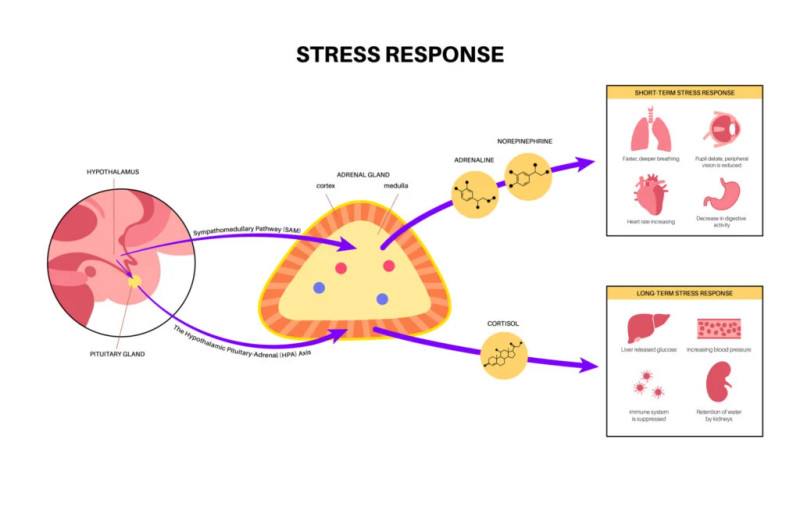
Short-term and long-term stress response pathways
These responses help in the short term. Over time, chronic stress can raise illness risk, including:
- hypertension
- headaches
- immune suppression
- greater susceptibility to disease
Stress also hurts health indirectly by causing poor sleep, worse concentration, and worse health habits.
The General Adaptation Syndrome
Hans Selye’s General Adaptation Syndrome (GAS) describes a general pattern of prolonged stress response. The graph traces how stress resistance changes over time across the three stages.
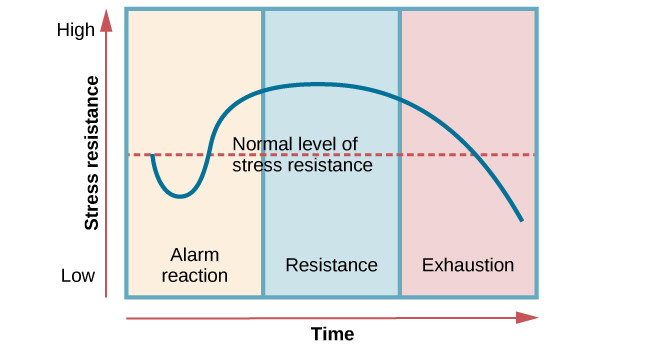
General Adaptation Syndrome
Alarm reaction
This is the immediate encounter with the stressor. Fight, flight, or freeze begins, and the body quickly mobilizes resources.
Resistance
The body stays activated while coping with the ongoing stressor. You may seem functional, but your resources are still being used. This is not recovery.
Exhaustion
The stressor continues long enough that your coping resources get depleted. Fatigue and lowered resistance show up here, and this is when vulnerability to illness is highest.
GAS is a general pattern, not an exact timeline for every person.
The tend-and-befriend theory adds another response. Some people cope with stress by caring for others and seeking social connection. It is associated mostly with women, but it is not universal and can happen alongside fight-flight-freeze.
Coping with Stress
Problem-focused coping
This targets the stressor itself. You try to solve the problem.
Examples include:
- planning
- gathering information
- changing the situation
- seeking practical help
This works best when the stressor is at least partly controllable.
Emotion-focused coping
This targets your emotional or physical response to stress.
Examples include:
- deep breathing
- meditation
- relaxation
- emotional support
- reframing
- medication that reduces anxiety or stress response
This helps when the stressor cannot be changed, or when you need emotional control before solving the problem.
People often use both kinds together. Their effectiveness depends on controllability, resources, and social context. Limited money, unsafe housing, discrimination, or poor access to care can raise stress and shrink coping options.
Key Takeaways
Health Psychology
The study of how biological, psychological, behavioral, and sociocultural influences interact to affect physical health, illness, and wellness
Stressor
An event, demand, or circumstance that requires adjustment
Stress
The psychological and physiological process through which a person responds to a stressor
Cognitive Appraisal
A person's interpretation of a stressor and evaluation of the resources available to handle it
Eustress
Stress experienced as motivating, beneficial, or manageable
Distress
Stress experienced as debilitating, overwhelming, or harmful
Traumatic Events
Events involving actual or threatened serious harm that can overwhelm ordinary coping resources
Daily Hassles
Recurring minor irritations and demands whose accumulated stress can have substantial effects over time
Adverse Childhood Experiences (ACEs)
Stressful or traumatic childhood experiences that can affect development and physical and psychological health across the lifespan
General Adaptation Syndrome (GAS)
Hans Selye's three-stage model of the bodily response to sustained stress: alarm reaction, resistance, and exhaustion
Alarm Reaction
The first GAS phase, when encountering a stressor triggers immediate bodily mobilization through a fight-flight-freeze response
Fight-Flight-Freeze Response
Automatic physiological and behavioral readiness to confront a threat, escape it, or become temporarily immobile and highly attentive
Resistance
The GAS phase in which the body remains activated and continues using resources to confront or adapt to an ongoing stressor
Exhaustion
The GAS phase in which stress subsides or prolonged demands deplete coping resources, producing fatigue, reduced resistance, and the greatest susceptibility to illness
Tend-and-Befriend Theory
The theory that some people respond to stress by caring for themselves or others and seeking social connection and support, a pattern observed mostly in women
Coping
Cognitive and behavioral efforts to manage the demands created by stress
Problem-Focused Coping
Coping that treats the source of stress as a problem to be changed or solved through practical action
Emotion-Focused Coping
Coping that manages emotional and physiological reactions to a stressor rather than directly changing the stressor
Notes
Health Psychology
The study of how biological, psychological, behavioral, and sociocultural influences interact to affect physical health, illness, and wellness
Stressor
An event, demand, or circumstance that requires adjustment
Stress
The psychological and physiological process through which a person responds to a stressor
Cognitive Appraisal
A person's interpretation of a stressor and evaluation of the resources available to handle it
Eustress
Stress experienced as motivating, beneficial, or manageable
Distress
Stress experienced as debilitating, overwhelming, or harmful
Traumatic Events
Events involving actual or threatened serious harm that can overwhelm ordinary coping resources
Daily Hassles
Recurring minor irritations and demands whose accumulated stress can have substantial effects over time
Adverse Childhood Experiences (ACEs)
Stressful or traumatic childhood experiences that can affect development and physical and psychological health across the lifespan
General Adaptation Syndrome (GAS)
Hans Selye's three-stage model of the bodily response to sustained stress: alarm reaction, resistance, and exhaustion
Alarm Reaction
The first GAS phase, when encountering a stressor triggers immediate bodily mobilization through a fight-flight-freeze response
Fight-Flight-Freeze Response
Automatic physiological and behavioral readiness to confront a threat, escape it, or become temporarily immobile and highly attentive
Resistance
The GAS phase in which the body remains activated and continues using resources to confront or adapt to an ongoing stressor
Exhaustion
The GAS phase in which stress subsides or prolonged demands deplete coping resources, producing fatigue, reduced resistance, and the greatest susceptibility to illness
Tend-and-Befriend Theory
The theory that some people respond to stress by caring for themselves or others and seeking social connection and support, a pattern observed mostly in women
Coping
Cognitive and behavioral efforts to manage the demands created by stress
Problem-Focused Coping
Coping that treats the source of stress as a problem to be changed or solved through practical action
Emotion-Focused Coping
Coping that manages emotional and physiological reactions to a stressor rather than directly changing the stressor
