Topic 1.2 Notes – Resource Allocation and Economic Systems
1. The Three Economic Questions
Scarcity forces trade-offs. That’s the foundation. Because we can’t produce everything, every society must answer three core questions.
a. What to produce?
This means which goods and services and how much of each.
- More hospitals or more shopping malls?
- More consumer goods or more capital goods?
- More military spending or more education?
Choosing more of one usually means less of another. In a market economy, producers respond to consumer demand. If people want electric cars, rising prices and profits signal firms to produce more. In a command economy, central planners decide output targets.
This connects directly to the production possibilities curve you learned earlier. Every point reflects a choice about what to produce.
b. How to produce?
This is about the method of production.
- Labor-intensive (more workers, fewer machines)
- Capital-intensive (more machines, fewer workers)
- High-tech vs low-tech
- Large corporations vs small firms
In market systems, firms try to minimize costs to maximize profit. That profit incentive pushes efficiency and innovation. In command systems, planners decide which techniques and firms operate.
You’ll see this question show up later when we study firm behavior and costs.
c. For whom to produce?
This is about distribution.
- In market systems → based on income and ability to pay
- In command systems → based on government decisions, equality goals, or need
- In traditional systems → based on family, status, or customs
This ties into equity and income distribution. A system might be efficient but unequal.
When a question asks how resources are allocated, think: Who answers these three questions, and what mechanism do they use?
2. What an economic system is
An economic system is the set of institutions and rules that a society uses to answer those three questions.
Two key pieces:
- Institutions → property rights, firms, courts, government agencies
- Coordinating mechanism → how decisions get made
- Prices and profit
- Government directives
- Customs and tradition
The coordinating mechanism determines how scarce resources are allocated and how output is distributed.
3. Types of economic systems
Here’s how the main systems compare.
| System | Who owns resources? | How decisions are made | Strengths | Weaknesses | Examples |
|---|---|---|---|---|---|
| Traditional | Often family or tribe | Customs and rituals | Stability, strong community | Little growth or innovation | Isolated, pre‑industrial societies |
| Command | Government | Central planning | Can pursue national goals, reduce inequality | Inefficiency, shortages/surpluses, weak incentives | Soviet Union, North Korea |
| Market | Private individuals and firms | Supply and demand, price system | Efficiency, innovation, consumer sovereignty | Inequality, market failures, instability | United States (mostly market-based) |
| Mixed | Mostly private with some public | Markets + government intervention | Balances efficiency and equity | Risk of overregulation or government inefficiency | United States, most modern economies |
Command economy in action
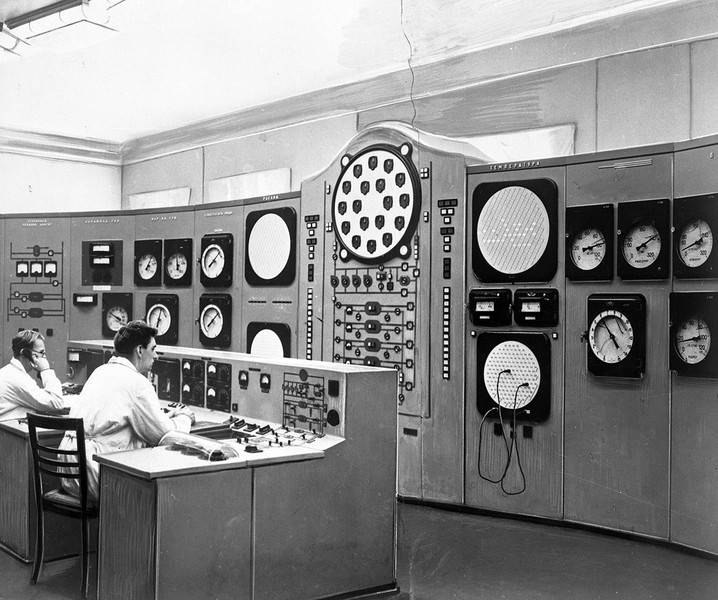
Central planning in a command economy
In the Soviet Union, planners set production quotas for steel, grain, and other goods. Without price signals, they often produced too much of some goods and too little of others. That’s why shortages were common.
Market economy in action
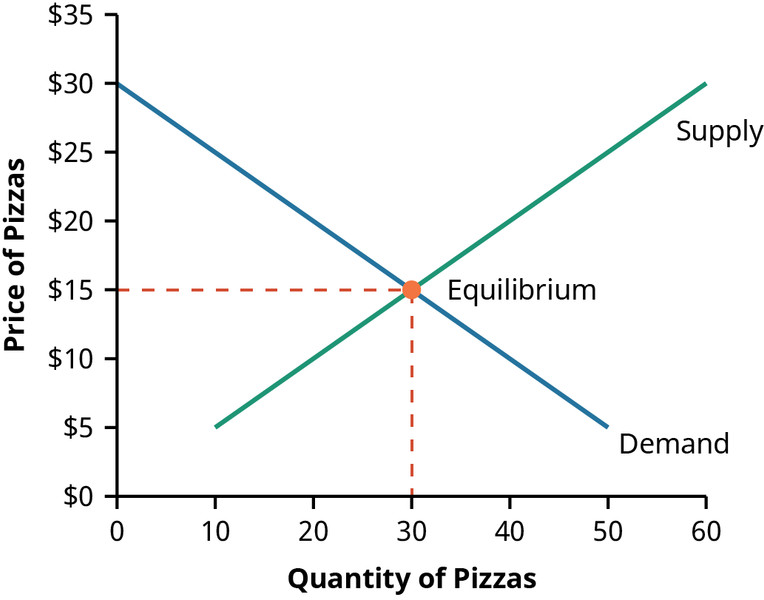
Supply and demand determining market equilibrium
In a market system, prices are determined by the interaction of supply and demand, like the graph shown here. The equilibrium price and quantity occur where the two curves intersect. If demand rises, price increases. That higher price signals producers to expand output. Adam Smith called this the invisible hand.
Markets encourage innovation. The U.S. tech sector grew because firms chase profit. But markets also experienced instability, like the Great Depression, which led to more government involvement.
Mixed economy reality
Most countries today are mixed economies.
The United States has:
- Private firms and profit motive
- Government regulation
- Public goods like roads and schools
- Redistribution through programs like Social Security
Markets allocate most resources, but government steps in for market failures and equity concerns.
4. How the system shapes resource allocation
The economic system influences:
- Incentives → profit motive vs government mandate
- Efficiency → markets tend toward productive and allocative efficiency
- Equity → command and mixed systems often redistribute income
- Innovation → stronger with private property and profit incentives
- Stability → governments may intervene to reduce recessions
Every society faces scarcity. The difference is who makes the decisions and how they coordinate them.
Key Takeaways
Resource Allocation
The process of deciding how scarce resources are used to produce and distribute goods and services.
Economic System
A society's rules, institutions, and incentives for answering the three basic economic questions.
Traditional Economy
An economy guided by customs, inherited roles, and long-standing community practices.
Market Economy
An economy where households and firms make choices through voluntary exchange and prices.
Mixed Economy
An economy combining market decision-making with government regulation and public provision.
Invisible Hand
The idea that self-interested market choices can coordinate economic activity through prices.
Prices as Signals
Changes in prices communicate shortages, surpluses, and consumer preferences to producers and buyers.
Institutional Arrangements
The laws, property rights, organizations, and rules that shape economic decision-making.
Coordinating Mechanism
The method an economy uses to organize production and distribute output, such as prices or government orders.
Three Basic Economic Questions
What goods and services to produce, how to produce them, and who consumes them.
Command Economy / Central Planning
An economy where government planners decide production, resource use, and distribution.
Notes
Resource Allocation
The process of deciding how scarce resources are used to produce and distribute goods and services.
Economic System
A society's rules, institutions, and incentives for answering the three basic economic questions.
Traditional Economy
An economy guided by customs, inherited roles, and long-standing community practices.
Market Economy
An economy where households and firms make choices through voluntary exchange and prices.
Mixed Economy
An economy combining market decision-making with government regulation and public provision.
Invisible Hand
The idea that self-interested market choices can coordinate economic activity through prices.
Prices as Signals
Changes in prices communicate shortages, surpluses, and consumer preferences to producers and buyers.
Institutional Arrangements
The laws, property rights, organizations, and rules that shape economic decision-making.
Coordinating Mechanism
The method an economy uses to organize production and distribute output, such as prices or government orders.
Three Basic Economic Questions
What goods and services to produce, how to produce them, and who consumes them.
Command Economy / Central Planning
An economy where government planners decide production, resource use, and distribution.
