Topic 3.3 Notes – Accounting and Financial Management
What Financial Data Shows
Every financial transaction changes someone’s financial position. That applies to a business and to a household. A paycheck, a loan, a rent payment, a car purchase, or owner investment all change the mix of assets, liabilities, and what’s left over for the owner.
The core measures
Here are the four terms everything else sits on.
- Assets are things of value you own or control.
- Business examples include cash, accounts receivable, inventory, equipment, and investments.
- Consumer examples include cash, checking and savings balances, a car, and investments.
- Liabilities are debts or financial obligations.
- Business examples include loans and unpaid bills.
- Consumer examples include credit card debt, auto loans, and student loans.
- Owners’ equity is the owner’s share of the business after debts are subtracted.
- Net worth is the personal or household version of owners’ equity.
These ideas are tied together by the basic accounting equation.
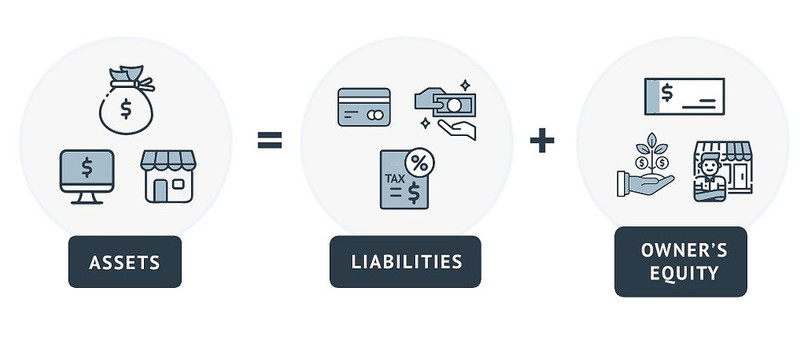
Basic accounting equation
The test loves this idea because students often confuse cash with wealth. Cash is only one asset. A business can have low cash but still own equipment and inventory. It can also have lots of cash because it borrowed money, which means liabilities went up too.
What common transactions do
A fast way to think about transactions is to ask, what changed?
- Borrowing money increases assets and liabilities.
- You got cash, but you also created debt.
- By itself, this does not increase owners’ equity or net worth.
- Buying equipment or a car with cash swaps one asset for another.
- Cash goes down, equipment or the car goes up.
- Total assets may stay the same at first.
- Earning revenue or receiving income usually increases assets and equity/net worth.
- Paying for consumed expenses decreases assets and equity/net worth.
- Rent, utilities, groceries, and used-up supplies fit here.
- Moving money from checking to savings changes where the asset sits.
- Total assets stay the same.
- Equity or net worth stays the same.
- Distributing profits to owners decreases cash and owners’ equity.
- This is not an operating expense.
Fast transaction sequence to remember
This sequence is worth memorizing because it shows up in scenario questions.
- Owner invests cash → assets up, equity up
- Business borrows → assets up, liabilities up
- Business earns customer revenue → assets up, equity up
- Business pays rent or utilities → assets down, equity down
- Business transfers cash to savings → no total change
- Business pays owner distribution → assets down, equity down
Why cash alone is not enough
Cash tells you very little by itself.
- A business can have a lot of cash because it borrowed heavily.
- A business can have low cash and still be valuable because it owns equipment, inventory, or receivables.
- Real financial health depends on the relationship among assets, liabilities, and equity or net worth.
Recording and Reporting Financial Information
For financial data to mean anything, the transactions have to be recorded correctly and in the right time period.
Recording transactions
Accounting keeps track of:
- what happened
- when it happened
- the amount
- which accounts or categories changed
- proof such as receipts, invoices, bank records, and loan documents
Errors create bad decisions. Common examples include:
- omitted sales
- double-counted expenses
- personal spending recorded as business spending
- loans recorded as revenue
That last one is a classic trap. Loans are not revenue. Borrowing raises cash and liabilities.
Reporting periods and reports
A reporting period is the span of time covered by a report.
Common periods are:
- monthly
- quarterly
- annually
The three main financial statements
Each statement answers a different question.
| Statement | What it shows | Time idea |
|---|---|---|
| Income statement | revenue, costs, profit or loss | over a period |
| Balance sheet | assets, liabilities, owners’ equity | at a point in time |
| Cash flow statement | cash inflows and outflows | over a period |
It helps to think of them as a sequence. You start with a beginning balance sheet, the income statement and cash flow statement show what happened during the period, and the ending balance sheet shows where the business stands at the end.
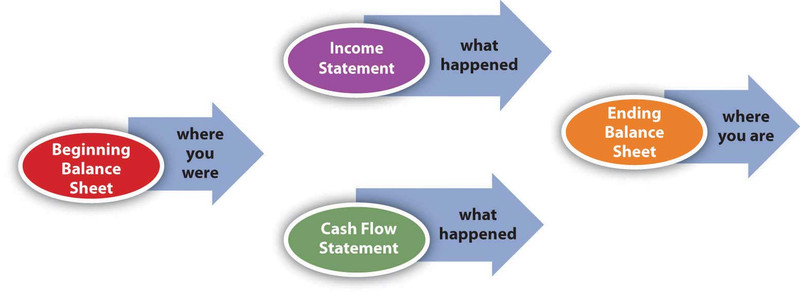
How the three financial statements connect
Why all three matter together
One statement never gives the full picture.
- A business can be profitable but short on cash.
- A business can have many assets but also heavy debt.
- That’s why exam questions often make you compare more than one piece of information before choosing the best answer.
Why Businesses and Consumers Track Financial Data
The reason for tracking data is decision-making.
Why businesses track it
Businesses use financial data to answer questions like:
- Is revenue covering costs?
- Is debt too high?
- Is there enough cash to pay current obligations?
- Are profits improving or getting worse?
- Is actual performance matching the budget or plan?
- Can the business afford expansion, more workers, or more inventory?
- Does it need a loan or investor money?
How businesses use it for decisions
They use the data to:
- control spending
- compare actual results to budgets
- allocate limited resources
- judge whether a project or expansion is realistic
- evaluate borrowing, investing, and risk
Why outside stakeholders care
- Shareholders want to know value and performance.
- Prospective investors compare expected return with risk.
- Lenders care about repayment ability and financial stability.
- Government and regulators care about compliance with reporting rules and laws.
Why consumers track it
Consumers usually do not prepare formal financial statements, but tracking still matters because it helps you:
- monitor income and spending
- see whether saving goals are being met
- manage debt
- make choices that fit your financial goals
Budget as the main consumer tool
A budget organizes expected income and planned spending. Comparing budgeted and actual results shows whether your behavior matches your goals.
Cram note you might see in class wording:
- businesses use formal accounting systems
- households often use budgets, bank records, and credit records
Accounting, Finance, and GAAP
This section is about who does what with financial information.
The full set of roles
- Accounting department records transactions and prepares financial statements.
- Managerial accounting provides information for internal decision-making.
- Financial accounting provides information mainly for external stakeholders.
- Finance department analyzes accounting data and recommends strategies.
- Consumer professionals include financial advisors and accountants.
Managerial accounting
The audience is managers and other internal stakeholders.
Managerial accountants help with:
- comparing actual vs. budgeted results
- spotting cost increases
- estimating the effects of decisions
- evaluating product or service performance
- planning future needs
Financial accounting
The audience is mainly shareholders, investors, and lenders.
Financial accountants:
- prepare statements and reports for outside evaluation
- support lending and investment decisions
Same transaction data, different audience and purpose. That distinction gets tested a lot.
What finance does
Finance uses accounting information rather than creating the records. It asks questions like:
- how much cash should stay on hand
- whether to expand now
- whether to borrow, seek investors, or wait
- how a choice affects future profit and risk
- how to improve weak performance
GAAP and public companies
GAAP stands for Generally Accepted Accounting Principles.
It applies especially to corporations that sell ownership shares to the public. GAAP requires:
- consistent reporting
- disclosure of positive and negative information
- regular reporting, usually quarterly or annually
GAAP matters because it helps people compare one company to another and one time period to another. It improves reporting quality, but it does not guarantee the business is strong.
Consumer professional help
- Financial advisor helps with planning, saving, borrowing, investing, and retirement decisions.
- Accountant helps with records, tax effects, and tax preparation.
Both need complete and accurate information from the consumer.
Key Takeaways
Accounting
The process of identifying, recording, organizing, and reporting financial transactions
Financial Management
Using financial information to plan and recommend actions that maintain or improve financial performance
Financial Transaction
An event involving money or another item of financial value that affects financial position
Asset
A resource of value owned or controlled by a business or consumer
Liability
A debt or other financial obligation owed by a business or consumer
Owners' Equity
The value of a business attributable to its owners: owners' equity = assets − liabilities
Personal Net Worth
The value of a consumer’s assets remaining after liabilities are subtracted: net worth = personal assets − personal liabilities
Reporting Period
The span of time covered by a financial report, such as a month, quarter, or year
Financial Statement
A report summarizing a business’s financial activity, performance, or condition
Generally Accepted Accounting Principles (GAAP)
Common financial accounting and reporting standards requiring publicly held corporations to disclose positive and negative information consistently for each reporting period
Accounting Department
The business unit that identifies and records financial transactions and prepares financial statements
Managerial Accounting / Managerial Accountant
Accounting that provides information and analysis to managers and other internal stakeholders for planning, control, and decision making
Financial Accounting / Financial Accountant
Accounting that provides financial information and analysis primarily to external stakeholders such as shareholders, investors, and lenders
Finance Department
The business unit that analyzes accounting data and recommends strategies to maintain or improve financial performance
Financial Advisor
A professional who helps consumers evaluate their financial position and plan decisions about saving, borrowing, investing, retirement, and other uses of money
Accountant
A professional who may organize consumers’ financial records, explain the financial or tax effects of transactions, and prepare tax filings
Income Statement
A financial statement summarizing revenue, costs, and profit or loss over a period
Balance Sheet
A financial statement summarizing assets, liabilities, and owners’ equity at a specific point in time
Cash Flow Statement
A financial statement summarizing cash inflows and outflows over a period
Notes
Accounting
The process of identifying, recording, organizing, and reporting financial transactions
Financial Management
Using financial information to plan and recommend actions that maintain or improve financial performance
Financial Transaction
An event involving money or another item of financial value that affects financial position
Asset
A resource of value owned or controlled by a business or consumer
Liability
A debt or other financial obligation owed by a business or consumer
Owners' Equity
The value of a business attributable to its owners: owners' equity = assets − liabilities
Personal Net Worth
The value of a consumer’s assets remaining after liabilities are subtracted: net worth = personal assets − personal liabilities
Reporting Period
The span of time covered by a financial report, such as a month, quarter, or year
Financial Statement
A report summarizing a business’s financial activity, performance, or condition
Generally Accepted Accounting Principles (GAAP)
Common financial accounting and reporting standards requiring publicly held corporations to disclose positive and negative information consistently for each reporting period
Accounting Department
The business unit that identifies and records financial transactions and prepares financial statements
Managerial Accounting / Managerial Accountant
Accounting that provides information and analysis to managers and other internal stakeholders for planning, control, and decision making
Financial Accounting / Financial Accountant
Accounting that provides financial information and analysis primarily to external stakeholders such as shareholders, investors, and lenders
Finance Department
The business unit that analyzes accounting data and recommends strategies to maintain or improve financial performance
Financial Advisor
A professional who helps consumers evaluate their financial position and plan decisions about saving, borrowing, investing, retirement, and other uses of money
Accountant
A professional who may organize consumers’ financial records, explain the financial or tax effects of transactions, and prepare tax filings
Income Statement
A financial statement summarizing revenue, costs, and profit or loss over a period
Balance Sheet
A financial statement summarizing assets, liabilities, and owners’ equity at a specific point in time
Cash Flow Statement
A financial statement summarizing cash inflows and outflows over a period
