Topic 1.6 Notes – Business Ethics
What Business Ethics Are
Business ethics means behavior that fits a company’s values and basic moral standards. In this topic, ethical behavior is conduct that is honest, fair, transparent, responsible, reliable, and consistent with the business’s core values.
One thing teachers love to test here is the difference between legal and ethical.
- Something can be legal and still be unethical
- Example: leaving out important product limits so a customer buys anyway
- Ethics asks whether the action misleads, hides important information, or causes avoidable harm
Unethical behavior
Unethical behavior can happen at any level of a business.
- Owners can design bad policies or hide problems
- Managers can pressure teams or ignore misconduct
- Employees can lie, misuse property, or harm customers
The common forms you need to know are these:
- Falsifying information
- Putting false information into records or reports
- Examples:
- changing a sales record
- reporting work that was not completed
- Concealing information
- Hiding relevant facts or creating a misleading impression by leaving things out
- Misusing company property
- This includes more than stealing physical items
- It can mean using company funds, equipment, software, confidential information, customer data, or work time for unauthorized personal benefit
- Causing or disregarding harm
- Harm can be:
- physical
- financial
- psychological
- reputational
- Harm can be:
Why unethical behavior happens
Personal choice matters, but business systems matter too. The big system here is incentives.
- Incentives include:
- commissions
- bonuses
- promotions
- recognition
- quotas
- discipline
Incentives are not unethical by themselves. The problem comes when a business rewards results and ignores how those results were achieved.
A classic line to remember is what gets rewarded gets repeated.
If employees only get praised for hitting sales numbers, some may lie, hide facts, or pressure customers to get the reward.
Core values
These values show up again when you analyze dilemmas:
- Transparency
- Fairness
- Empathy
- Responsibility
- Honesty
- Reliability
How Businesses Encourage Ethical Behavior
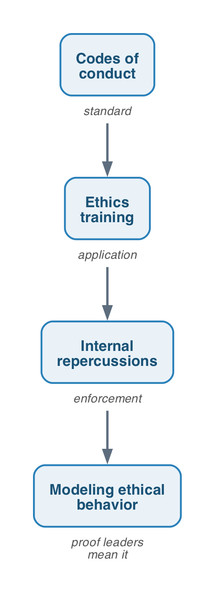
Businesses usually rely on four tools together. Think of it like this:
- Code = standard
- Training = application
- Repercussions = enforcement
- Modeling = proof leaders mean it
That sequence is what the diagram summarizes.
Codes of conduct
A code of conduct is a formal statement of expected behavior.
It usually covers:
- honesty in records and communication
- fair treatment of customers and coworkers
- protection of confidential information
- proper use of company property
- conflicts of interest
- reporting misconduct
A code works best when it is:
- specific enough to guide real decisions
- clearly communicated
- consistently enforced
A code nobody follows is just paper.
Ethics training
Ethics training helps employees spot ethical issues and apply the code in real situations.
It helps people tell the difference between:
- persuasion and deception
- authorized use and misuse
- mistake and deliberate falsification
This matters most in customer-facing jobs, high-pressure roles, and jobs involving sensitive information.
Internal repercussions
Internal repercussions are consequences for ethical violations.
Examples include:
- warning
- loss of bonus
- reassignment
- suspension
- termination
These consequences must be fair and consistent. If top performers get protected, employees learn that results matter more than ethics, and trust in management drops fast.
Modeling ethical behavior
Employees watch what leaders do more than what leaders say.
Modeling ethical behavior means managers and leaders:
- tell the truth
- admit mistakes
- protect data
- follow the same rules as everyone else
If leaders break the rules, the whole ethical system weakens.
Why Ethics Matter to Business Performance
Ethics is not just about being “nice.” It affects business performance.
Ethical practices can help a business:
- attract customers
- build customer trust
- create brand loyalty
- attract employees who share the company’s values
- improve retention, morale, and commitment
- protect reputation
- strengthen company culture
- support long-term profitability
Brand loyalty and trust
Brand loyalty means customers keep choosing the same brand over time. Trust is a huge reason why.
Unethical behavior can lead to:
- complaints
- bad publicity
- lost sales
- customer departures
Reputation and company culture
- Reputation is how customers, employees, and the public see the business
- Company culture is the internal pattern of what behavior is rewarded, tolerated, or punished
These connect closely.
- Internal misconduct can become public and hurt reputation
- Public backlash can force changes inside the company
Why the response matters
Sometimes the response to misconduct matters as much as the original wrongdoing.
A strong response:
- investigates quickly
- communicates honestly
- corrects harm
- holds people accountable
A weak response:
- conceals the issue
- blames others
- tolerates repeat misconduct
These examples help connect the big idea to real business cases.
- Johnson & Johnson Tylenol recall shows protecting safety and trust
- Volkswagen emissions scandal shows deception damaging reputation, trust, and profitability
- Wells Fargo fake accounts scandal shows harmful incentives pushing unethical behavior
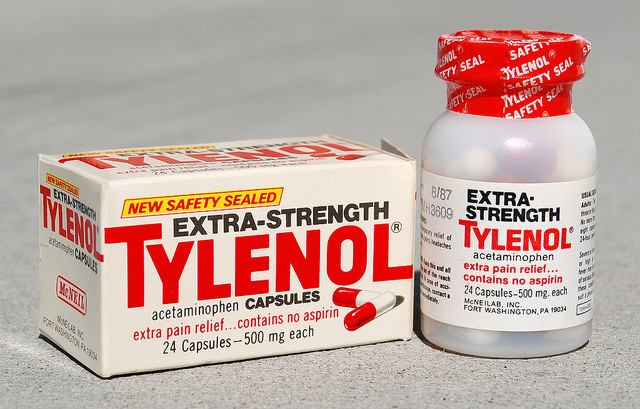
Tylenol recall and tamper-evident packaging

Volkswagen “clean diesel” marketing
Ethical Dilemmas and Stakeholders
An ethical dilemma happens when one core value conflicts with another core value or with a business goal.
This is more than a hard choice. It has to involve competing values, duties, harms, or fairness concerns.
Common patterns:
- transparency vs confidentiality
- fairness to one group vs harm prevention for another
- empathy for an employee vs consistent rule enforcement
- customer safety vs cost or delayed sales
- honesty vs short-term profitability or reputation protection
To judge the dilemma, leaders consider stakeholders, meaning people or groups affected by the decision.
- Internal stakeholders
- owners
- managers
- employees
- External stakeholders
- customers
- government agencies
- community members
For each stakeholder, leaders look at:
- benefits
- costs
- risks
- severity and duration of effects
- impact on reputation
- impact on company culture
A strong ethical answer usually includes tradeoffs. Everyone does not need to win.
How Leaders Respond to Ethical Dilemmas
Leaders usually move through a clear decision process:
- Identify the decision and the ethical conflict.
- Identify which values, goals, or practices are in conflict.
- Identify the relevant stakeholders.
- List realistic response options.
- Compare benefits and costs for each stakeholder group.
- Consider reputation and company culture.
- Choose and justify the best response.
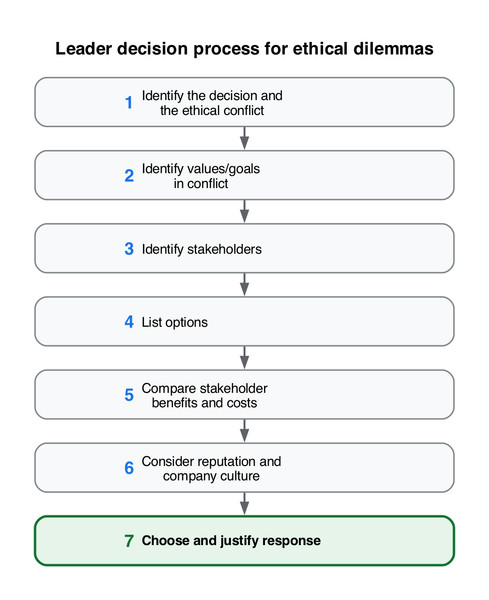
Ethical decision-making process
Once leaders work through those steps, they still need to justify the final choice.
There are two main ways to justify the final choice:
- Greatest total benefit or least total harm
- Look across stakeholder groups
- Pay attention to how serious the effects are, not just how many people are affected
- Most consistent with the business’s vision and goals
- This matters a lot when the company has clear stated values
Defective or unsafe product case
This is the application example you should know cold.
If a product may be unsafe, leaders might:
- keep selling it
- disclose the issue but continue selling
- pause sales
- recall units
The strongest ethical response usually puts customer safety, transparency, and long-term trust ahead of short-term profit.
The likely justification is:
- least total harm
- consistency with stated values
This is a common exam move. You usually need to explain what leaders should do and why, using stakeholder effects, tradeoffs, and the impact on reputation and culture.
Key Takeaways
Business Ethics
Principles and standards that guide honest, fair, transparent, responsible, and value-consistent behavior and decision making in a business, beyond merely obeying the law
Ethical Behavior vs. Unethical Behavior
Ethical behavior follows accepted moral principles and business values; unethical behavior violates them through conduct such as dishonesty, unfairness, misuse of resources, or avoidable harm
Falsification vs. Concealment
Falsification introduces false information; concealment withholds relevant information or creates a misleading impression through omission
Misuse of Company Property
Unauthorized personal use of resources entrusted to a business, including its money, equipment, software, confidential information, customer data, or work time
Incentive Structure
The arrangement of rewards and consequences attached to actions or results, which can encourage ethical conduct or make misconduct more attractive
Code of Conduct
A formal statement that translates a business’s values into specific standards of expected workplace behavior
Ethics Training
Instruction that helps employees recognize ethical issues, apply the code of conduct, and follow procedures for questions or reporting concerns
Internal Repercussions
Consequences imposed by a business for ethical transgressions, such as warnings, loss of bonuses, reassignment, suspension, or termination
Modeling Ethical Behavior
Leaders and managers demonstrating the honest, fair, transparent, and responsible conduct they expect from employees
Brand Loyalty
A customer’s continued preference for and repeated support of a brand
Ethical Dilemma
A choice in which a core value conflicts with another core value or with a business goal or practice
Stakeholder
An individual or group with an interest in a business’s decisions and outcomes
Internal Stakeholder
An individual or group directly involved in a business’s operations, decisions, and outcomes, such as an owner, manager, or employee
External Stakeholder
An individual or group outside the business’s operations that has a vested interest in its decisions and outcomes, such as customers, government agencies, or community members
Evaluating Responses to an Ethical Dilemma
Identify the conflict, values, stakeholders, and options; compare each option’s benefits, costs, and effects on reputation and culture; then choose the greatest total benefit, least total harm, or best alignment with vision and goals
Reputation
The perception that customers, employees, community members, and other stakeholders hold of a business
Company Culture
The shared pattern of expectations and behavior within a business, shaped by what leaders communicate, model, reward, punish, and tolerate
Notes
Business Ethics
Principles and standards that guide honest, fair, transparent, responsible, and value-consistent behavior and decision making in a business, beyond merely obeying the law
Ethical Behavior vs. Unethical Behavior
Ethical behavior follows accepted moral principles and business values; unethical behavior violates them through conduct such as dishonesty, unfairness, misuse of resources, or avoidable harm
Falsification vs. Concealment
Falsification introduces false information; concealment withholds relevant information or creates a misleading impression through omission
Misuse of Company Property
Unauthorized personal use of resources entrusted to a business, including its money, equipment, software, confidential information, customer data, or work time
Incentive Structure
The arrangement of rewards and consequences attached to actions or results, which can encourage ethical conduct or make misconduct more attractive
Code of Conduct
A formal statement that translates a business’s values into specific standards of expected workplace behavior
Ethics Training
Instruction that helps employees recognize ethical issues, apply the code of conduct, and follow procedures for questions or reporting concerns
Internal Repercussions
Consequences imposed by a business for ethical transgressions, such as warnings, loss of bonuses, reassignment, suspension, or termination
Modeling Ethical Behavior
Leaders and managers demonstrating the honest, fair, transparent, and responsible conduct they expect from employees
Brand Loyalty
A customer’s continued preference for and repeated support of a brand
Ethical Dilemma
A choice in which a core value conflicts with another core value or with a business goal or practice
Stakeholder
An individual or group with an interest in a business’s decisions and outcomes
Internal Stakeholder
An individual or group directly involved in a business’s operations, decisions, and outcomes, such as an owner, manager, or employee
External Stakeholder
An individual or group outside the business’s operations that has a vested interest in its decisions and outcomes, such as customers, government agencies, or community members
Evaluating Responses to an Ethical Dilemma
Identify the conflict, values, stakeholders, and options; compare each option’s benefits, costs, and effects on reputation and culture; then choose the greatest total benefit, least total harm, or best alignment with vision and goals
Reputation
The perception that customers, employees, community members, and other stakeholders hold of a business
Company Culture
The shared pattern of expectations and behavior within a business, shaped by what leaders communicate, model, reward, punish, and tolerate
