Topic 1.3 Notes – PESTEL Factors and the Business Environment
What PESTEL Is and Why It Matters
PESTEL is a framework for analyzing external factors that shape a market:
- Political
- Economic
- Social
- Technological
- Environmental
- Legal
These factors all feed into business viability, which means a business can operate successfully over time. A viable business has to:
- get the resources it needs
- operate legally
- reach customers
- earn enough revenue compared to costs
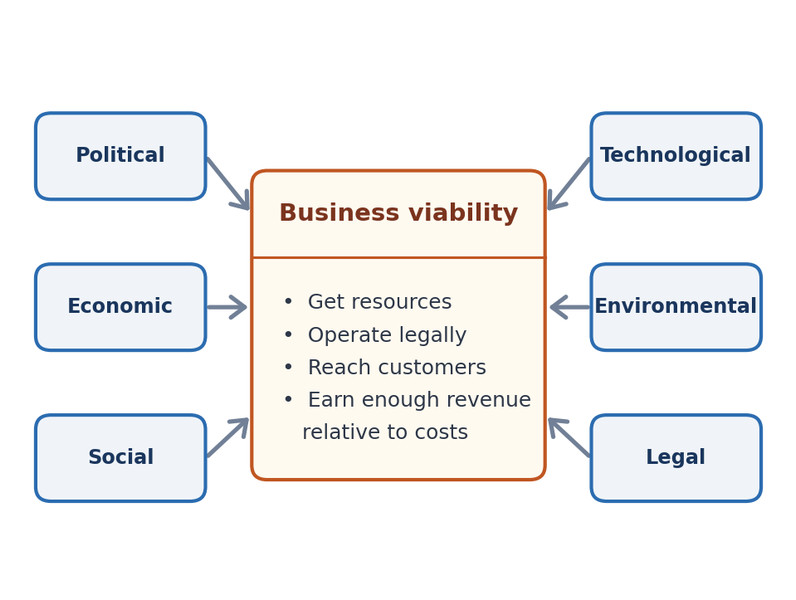
PESTEL and business viability
So when you use PESTEL, you’re asking two main questions:
- Is this market attractive for this specific business?
- What outside risks could make success harder?
That word specific matters a lot. PESTEL is about conditions the business usually cannot control, and your answer has to fit the:
- business or product
- location
- time period
A factor is never just “good” or “bad.” Its effect depends on the business model.
- High-speed internet helps a tech business
- Preference for locally grown food helps a farm-to-table restaurant
- A weak economy can hurt luxury brands but help discount stores, repair services, or debt-management services
The Six PESTEL Factors
Each category gives you a different lens on the market.
Political
Political factors are government policies and political dynamics that affect markets. These include:
- trade policy: tariffs or trade restrictions can raise input costs
- taxes: may raise costs or discourage an activity
- subsidies: support activity and can lower effective costs
- mandates: can create demand for businesses that help people comply
- bans: can restrict or wipe out a market
- political stability: makes planning and investment less risky
Economic
Economic factors are broader economy conditions that affect spending, costs, labor, and borrowing.
- economic stability usually supports spending and planning
- household income affects ability to buy, especially premium goods
- inflation raises input costs and can shrink purchasing power
- unemployment affects both customer spending and worker availability
- interest rates affect business borrowing and big-ticket consumer purchases
A common test idea is that a weak economy does not hurt every business. Some firms grow by helping stressed customers spend less.
Social
Social factors are trends in society and culture that shape consumer behavior.
- consumer demographics change who the customers are
- cultural norms affect product acceptance
- lifestyle trends shift demand
- population growth rate can expand the customer base and workforce
This category matters most when customer needs and wants drive success.
Technological
Technological factors are about the availability and development of technology needed for operations and customers.
- internet access
- automation of production processes
- distribution and communication technology
- rate of technological innovation
Technology affects production, distribution, communication, and efficiency. Rapid innovation creates opportunity, but also obsolescence risk if products or skills become outdated.
Environmental
Environmental factors are natural and external environmental conditions that affect business activity.
- geography
- climate
- access to renewable and nonrenewable resources
- natural disasters
- waste management policies or conditions
- consumer environmental perspectives
This is about the natural environment, not “everything around the business.”
Legal
Legal factors are specific laws, rules, and regulations that affect what firms can do and what compliance costs.
- employment laws
- consumer protection laws
- health and safety laws
- environmental regulations
- intellectual property protection
- antitrust laws
Legal factors affect two huge things:
- legality of the business activity
- cost of compliance
Political vs Legal and Other Category Overlap
This trips people up a lot.
- Political means government priorities, policy direction, debate, and stability.
- Legal means laws and rules already in force.
An easy shortcut:
- proposed rule = usually more political
- enforced rule already in effect = more legal
Overlap can happen, but use the most precise category and don’t double-count the same exact effect.
Examples:
- water scarcity = environmental
- limits on water use = legal
- public concern about conservation = environmental perspective and can also connect to social
How PESTEL Affects Viability and Careers
PESTEL shapes a business in three main ways.
Customers
External factors affect:
- needs and wants
- size and traits of the target market
- ability to pay
- willingness to buy
Be careful here. Ability to pay and willingness to buy are different.
Operations
External factors also affect:
- access to labor, materials, energy, facilities, and financing
- production methods and costs
- distribution and communication systems
- legality and compliance costs
Risk and change
PESTEL also captures uncertainty:
- instability
- downturns and inflation
- changing preferences
- obsolescence
- disasters and shortages
- new laws and regulations
Those same forces affect career opportunities. Job availability depends on which businesses are viable in that market.
- population growth and construction can raise demand for plumbers, electricians, inspectors, and real estate roles
- strong internet infrastructure can raise demand for software developers, tech support, and data roles
- environmental regulation can raise demand for compliance specialists, engineers, and waste-management services
- an economic downturn can cause layoffs in some sectors but growth in repair, discount, or workforce-training services
How to Do a PESTEL Analysis
A strong PESTEL analysis follows a clear chain.
-
Define the exact opportunity
What business or product? Which customers? What location? What time period? -
Identify the relevant factors
You do not list everything. Include factors that affect customers, resources, production, distribution, costs, legality, or uncertainty. -
Explain the causal chain
For each factor:- identify it
- explain what part of the business it affects
- say whether it is an opportunity, a risk, or both
- explain how it changes attractiveness or viability
-
Weigh the factors
Don’t count positives versus negatives. One major legal barrier can outweigh several small advantages. -
Reach a business-specific conclusion
“Attractive if...” is often stronger than a blanket yes or no.
Think of the process as a simple five-step sequence you can apply to almost any business idea.
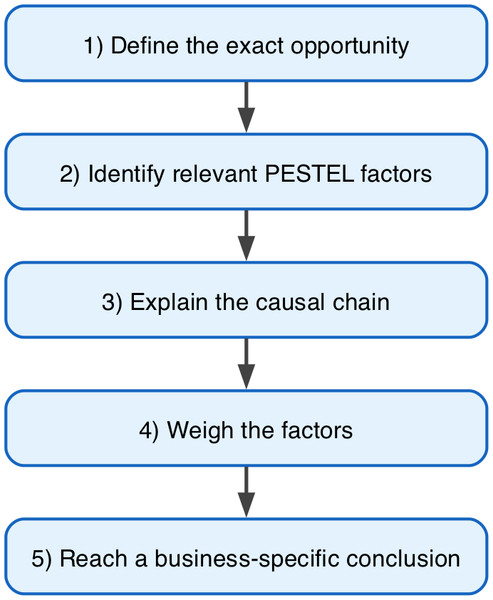
Five-step PESTEL analysis process
Corley Plumbing
Corley Plumbing is a good example because a local service business is affected by all six categories at once.
- Political: infrastructure priorities, taxes, workforce-training support
- Economic: household income, construction activity, inflation, interest rates, unemployment
- Social: population growth, customer expectations for fast and reliable service
- Technological: scheduling software, mobile internet, electronic payments, diagnostic tools
- Environmental: storms, freezing weather, water scarcity, service-area geography
- Legal: occupational licensing, building codes, safety rules, consumer protection
A common conclusion would be that the market is attractive if demand is strong and the firm can hire qualified workers and operate efficiently. Risks include labor shortages, rising material costs, weather disruption, and compliance costs.
Common mistakes
- naming a factor without explaining its effect
- saying something is just “bad for business”
- confusing customer preference with ability to pay
- assuming all businesses are affected the same way
- ignoring change over time
Key Takeaways
Business Environment
The external political, economic, social, technological, environmental, and legal conditions that affect businesses and markets
PESTEL Framework (PESTEL Analysis)
A framework for evaluating how political, economic, social, technological, environmental, and legal factors affect a particular market or business
Business Viability
A business’s ability to obtain resources, operate legally, reach customers, and generate enough revenue relative to costs to continue over time
Market Attractiveness
The extent to which a market’s external conditions create favorable opportunities relative to risks for a particular business model
PESTEL Risk
An existing external condition or possible external change that could harm a business’s ability to operate or meet its goals
Political Factors
Government policies and political dynamics that affect market activity, including trade policy, taxes, subsidies, mandates, bans, and political stability
Subsidy
Government financial support that encourages an activity by lowering effective costs or increasing customer demand
Mandate
A government requirement for an activity or outcome that may create compliance-related demand while raising costs for affected businesses
Ban
A government prohibition or restriction that can eliminate a legal market or require changes to products, materials, or operations
Taxes
Government charges that fund public activities and can raise costs, increase customer prices, or discourage taxed activities
Trade Policy
Government policy affecting cross-border trade, including tariffs, restrictions, and agreements that change the cost or availability of goods and resources
Political Stability
The predictability and continuity of government and public institutions, which generally make long-term planning and investment less risky
Economic Factors
Conditions in the broader economy that affect market activity, including economic stability, household income, inflation, unemployment, and interest rates
Economic Stability
Predictable economic performance that supports confidence, purchasing, planning, and long-term commitments by households, businesses, and governments
Inflation
A broad increase in prices that can raise business input costs and reduce consumers’ purchasing power
Unemployment
An economic condition that can reduce household spending when high while increasing worker availability; low unemployment can make hiring costlier
Interest Rates
The cost of borrowing; higher rates make business financing and financed customer purchases more expensive, while lower rates make borrowing more affordable
Social Factors
Trends in society and culture that affect consumers and market activity, including demographics, cultural norms, lifestyle trends, and population growth
Consumer Demographics
Population characteristics such as age, household composition, education, occupation, and income distribution that shape customer groups and their needs
Cultural Norms
Shared expectations and accepted patterns of behavior that influence which products consumers consider appropriate, valuable, or trustworthy
Lifestyle Trends
Changes in how people live, work, spend time, and make purchases that can create opportunities for some businesses and reduce demand for others
Population Growth Rate
The pace at which a population grows or declines, affecting the potential number of customers and workers in a market
Technological Factors
Market features involving the availability and development of technology for production, distribution, communication, and other business activities
Automation
The use of technology to perform production or operational tasks, potentially increasing efficiency while changing labor, investment, training, and maintenance needs
Technological Obsolescence
The loss of value or usefulness of equipment, skills, or products when newer technology emerges
Environmental Factors
Natural and external environmental conditions affecting markets, including geography, climate, resources, disasters, waste management, and environmental perspectives
Waste Management
The systems and policies for handling by-products, packaging, hazardous materials, and discarded products, which affect operating costs and feasibility
Consumer Environmental Perspectives
Customers’ environmental values, such as preferences for lower emissions, recyclable packaging, local sourcing, or reduced waste, that influence purchasing decisions
Legal Factors
Specific binding laws, rules, and regulations that determine whether business activities are legal and what compliance costs they create
Employment Laws
Laws governing hiring, compensation, scheduling, workplace treatment, and other employer responsibilities
Consumer Protection Laws
Laws requiring fair transactions, accurate information, product safety, or customer remedies in the marketing and sale of products
Health and Safety Laws
Laws establishing safety standards for workplaces, products, facilities, and services, often requiring training, inspections, sanitation, or protective procedures
Environmental Regulations
Binding rules limiting pollution, resource use, waste disposal, or other environmental effects of business activity
Intellectual Property Protection
Legal protection for inventions, original works, brands, and other intellectual assets against unauthorized use or copying
Antitrust Laws
Laws intended to protect competition by restricting business conduct that improperly eliminates rivals or controls a market
PESTEL Analysis Process
Define the business opportunity, identify relevant PESTEL facts, explain their causal effects, consider interactions and changes, and reach a business-specific conclusion
Household Income
Consumers’ ability to buy products; higher or rising income can support premium and discretionary purchases, while lower or falling income can shift demand toward lower-cost alternatives
Internet Access
The availability, reliability, and cost of internet service needed for communication, transactions, digital services, and coordination with employees and suppliers
Rate of Technological Innovation
How quickly products and operating methods change, creating opportunities for new products and efficiency while increasing the risk of obsolescence
Geography
A location’s physical position and features, which affect access to customers, suppliers, workers, transportation, water, energy, and other resources
Climate
A location’s temperature, rainfall, storms, and seasonal conditions, which can affect operations, demand, transportation, and business costs
Access to Renewable and Nonrenewable Resources
The availability of replenishable resources and finite resources needed to support particular industries and production processes
Natural Disasters
Environmental events that can damage facilities, interrupt production and distribution, restrict customer access, and create shortages or new demand
Notes
Business Environment
The external political, economic, social, technological, environmental, and legal conditions that affect businesses and markets
PESTEL Framework (PESTEL Analysis)
A framework for evaluating how political, economic, social, technological, environmental, and legal factors affect a particular market or business
Business Viability
A business’s ability to obtain resources, operate legally, reach customers, and generate enough revenue relative to costs to continue over time
Market Attractiveness
The extent to which a market’s external conditions create favorable opportunities relative to risks for a particular business model
PESTEL Risk
An existing external condition or possible external change that could harm a business’s ability to operate or meet its goals
Political Factors
Government policies and political dynamics that affect market activity, including trade policy, taxes, subsidies, mandates, bans, and political stability
Subsidy
Government financial support that encourages an activity by lowering effective costs or increasing customer demand
Mandate
A government requirement for an activity or outcome that may create compliance-related demand while raising costs for affected businesses
Ban
A government prohibition or restriction that can eliminate a legal market or require changes to products, materials, or operations
Taxes
Government charges that fund public activities and can raise costs, increase customer prices, or discourage taxed activities
Trade Policy
Government policy affecting cross-border trade, including tariffs, restrictions, and agreements that change the cost or availability of goods and resources
Political Stability
The predictability and continuity of government and public institutions, which generally make long-term planning and investment less risky
Economic Factors
Conditions in the broader economy that affect market activity, including economic stability, household income, inflation, unemployment, and interest rates
Economic Stability
Predictable economic performance that supports confidence, purchasing, planning, and long-term commitments by households, businesses, and governments
Inflation
A broad increase in prices that can raise business input costs and reduce consumers’ purchasing power
Unemployment
An economic condition that can reduce household spending when high while increasing worker availability; low unemployment can make hiring costlier
Interest Rates
The cost of borrowing; higher rates make business financing and financed customer purchases more expensive, while lower rates make borrowing more affordable
Social Factors
Trends in society and culture that affect consumers and market activity, including demographics, cultural norms, lifestyle trends, and population growth
Consumer Demographics
Population characteristics such as age, household composition, education, occupation, and income distribution that shape customer groups and their needs
Cultural Norms
Shared expectations and accepted patterns of behavior that influence which products consumers consider appropriate, valuable, or trustworthy
Lifestyle Trends
Changes in how people live, work, spend time, and make purchases that can create opportunities for some businesses and reduce demand for others
Population Growth Rate
The pace at which a population grows or declines, affecting the potential number of customers and workers in a market
Technological Factors
Market features involving the availability and development of technology for production, distribution, communication, and other business activities
Automation
The use of technology to perform production or operational tasks, potentially increasing efficiency while changing labor, investment, training, and maintenance needs
Technological Obsolescence
The loss of value or usefulness of equipment, skills, or products when newer technology emerges
Environmental Factors
Natural and external environmental conditions affecting markets, including geography, climate, resources, disasters, waste management, and environmental perspectives
Waste Management
The systems and policies for handling by-products, packaging, hazardous materials, and discarded products, which affect operating costs and feasibility
Consumer Environmental Perspectives
Customers’ environmental values, such as preferences for lower emissions, recyclable packaging, local sourcing, or reduced waste, that influence purchasing decisions
Legal Factors
Specific binding laws, rules, and regulations that determine whether business activities are legal and what compliance costs they create
Employment Laws
Laws governing hiring, compensation, scheduling, workplace treatment, and other employer responsibilities
Consumer Protection Laws
Laws requiring fair transactions, accurate information, product safety, or customer remedies in the marketing and sale of products
Health and Safety Laws
Laws establishing safety standards for workplaces, products, facilities, and services, often requiring training, inspections, sanitation, or protective procedures
Environmental Regulations
Binding rules limiting pollution, resource use, waste disposal, or other environmental effects of business activity
Intellectual Property Protection
Legal protection for inventions, original works, brands, and other intellectual assets against unauthorized use or copying
Antitrust Laws
Laws intended to protect competition by restricting business conduct that improperly eliminates rivals or controls a market
PESTEL Analysis Process
Define the business opportunity, identify relevant PESTEL facts, explain their causal effects, consider interactions and changes, and reach a business-specific conclusion
Household Income
Consumers’ ability to buy products; higher or rising income can support premium and discretionary purchases, while lower or falling income can shift demand toward lower-cost alternatives
Internet Access
The availability, reliability, and cost of internet service needed for communication, transactions, digital services, and coordination with employees and suppliers
Rate of Technological Innovation
How quickly products and operating methods change, creating opportunities for new products and efficiency while increasing the risk of obsolescence
Geography
A location’s physical position and features, which affect access to customers, suppliers, workers, transportation, water, energy, and other resources
Climate
A location’s temperature, rainfall, storms, and seasonal conditions, which can affect operations, demand, transportation, and business costs
Access to Renewable and Nonrenewable Resources
The availability of replenishable resources and finite resources needed to support particular industries and production processes
Natural Disasters
Environmental events that can damage facilities, interrupt production and distribution, restrict customer access, and create shortages or new demand
