Topic 6.5 Notes – Changes in the Foreign Exchange Market and Net Exports
1. How Currency Appreciation and Depreciation Work
In a flexible exchange rate system, exchange rates are determined by supply and demand in the foreign exchange (FOREX) market.
- Demand for a currency comes from foreigners who want:
- That country’s exports
- That country’s financial assets (stocks, bonds, real estate)
- Supply of a currency comes from domestic residents who want:
- Imports
- To invest abroad
Appreciation
Appreciation means a currency becomes stronger relative to another currency.
- It takes more foreign currency to buy it.
- Caused by:
- ↑ Demand for the currency (rightward shift of demand)
- ↓ Supply of the currency (leftward shift of supply)
Example: If the U.S. raises interest rates, foreign investors buy more U.S. Treasury bonds. They need dollars to do that → demand for dollars rises → the dollar appreciates.
Depreciation
Depreciation means a currency becomes weaker.
- It takes less foreign currency to buy it.
- Caused by:
- ↓ Demand for the currency
- ↑ Supply of the currency
Example: During a trade war with tariffs on Canadian goods, foreigners may buy fewer Canadian exports. Demand for the Canadian dollar falls → the Canadian dollar depreciates.
The graph below shows an appreciation caused by an increase in demand.
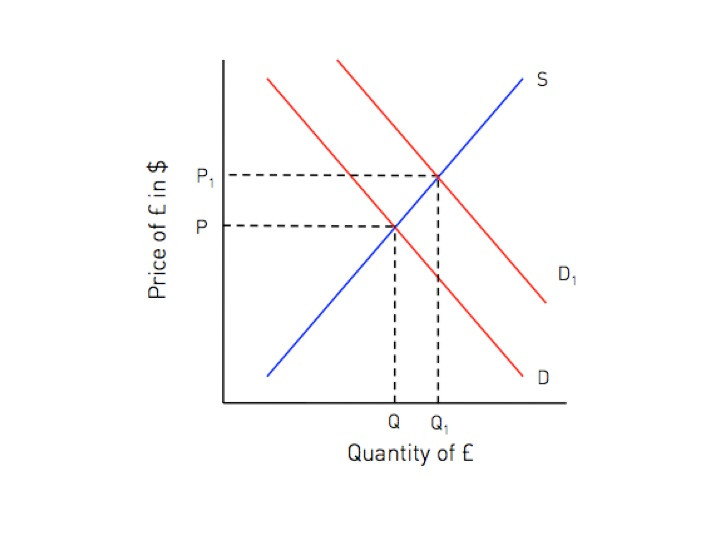
FOREX market: demand increase causing appreciation
Notice the rightward shift of the demand curve from D to D1. The equilibrium price rises from P to P1 and quantity increases from Q to Q1, which represents the currency appreciating.
Always describe shifts of curves, not movements along curves. The AP graders look for that language.
2. How Exchange Rates Affect Exports, Imports, and Net Exports
Remember:
Exchange rates change relative prices between countries.
When a Currency Appreciates
- Domestic goods become more expensive to foreigners
→ Exports decrease - Foreign goods become cheaper to domestic consumers
→ Imports increase - Result: Net Exports decrease
Real-world anchor: When the U.S. dollar is strong, American goods are more expensive abroad. U.S. consumers buy more imported goods. The U.S. trade deficit often widens.
Tourism example: If the Mexican peso appreciates, vacations in Mexico become more expensive for foreigners → fewer tourists → exports of services fall.
When a Currency Depreciates
- Domestic goods become cheaper to foreigners
→ Exports increase - Foreign goods become more expensive to domestic consumers
→ Imports decrease - Result: Net Exports increase
This is why many developing countries sometimes prefer a weaker currency. It makes their exports more competitive globally.
Quick summary:
| Currency Change | Exports | Imports | Net Exports |
|---|---|---|---|
| Appreciation | ↓ | ↑ | ↓ |
| Depreciation | ↑ | ↓ | ↑ |
Memorize this pattern. It shows up constantly in multiple choice and FRQs.
3. From Net Exports to Aggregate Demand
Aggregate demand is:
That last term is net exports. So any change in exports or imports shifts the entire AD curve.
If Net Exports Decrease (from appreciation)
- AD shifts left
- Real GDP falls
- Employment falls
- Unemployment rises
- Downward pressure on the price level
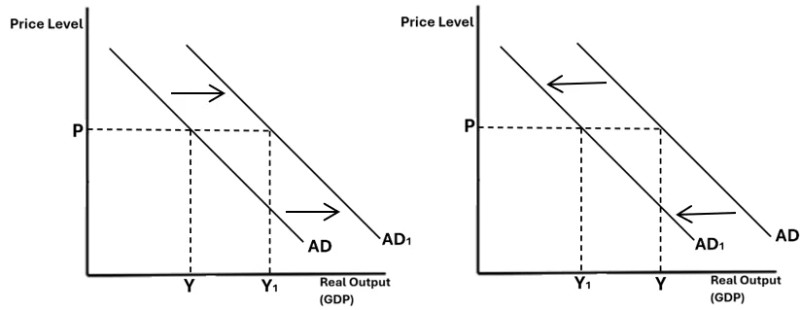
Leftward shift of aggregate demand
If Net Exports Increase (from depreciation)
- AD shifts right
- Real GDP rises
- Employment rises
- Unemployment falls
- Upward pressure on the price level (demand-pull inflation)
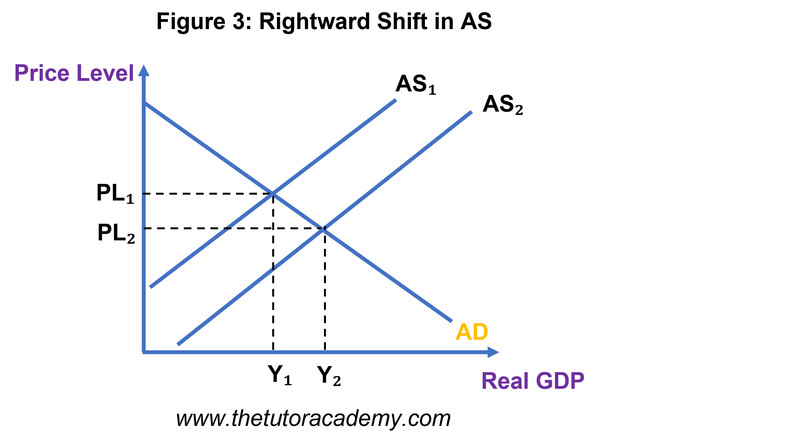
Rightward shift of aggregate demand
Think through the chain. Exchange rate → exports/imports → net exports → AD → output and price level.
4. Connecting FOREX and AD-AS on the Exam
You’re often asked to show this as a sequence.
Appreciation Chain
- Demand for currency increases
- Currency appreciates
- Exports fall, imports rise
- Net exports decrease
- AD shifts left
- Output decreases, unemployment increases
Depreciation Chain
- Demand for currency decreases
- Currency depreciates
- Exports rise, imports fall
- Net exports increase
- AD shifts right
- Output increases, unemployment decreases
If interest rates rise due to contractionary monetary policy, capital inflows can cause appreciation. That can partially offset the policy by reducing net exports. That connection sometimes appears in more challenging questions.
Key Takeaways
Exchange Rate Changes and Aggregate Demand
Higher net exports shift aggregate demand right; lower net exports shift aggregate demand left.
Currency Appreciation Effects
A stronger currency reduces exports, increases imports, and lowers net exports.
Currency Depreciation Effects
A weaker currency increases exports, decreases imports, and raises net exports.
Net Exports and Aggregate Demand
Higher net exports increase aggregate demand, while lower net exports decrease aggregate demand.
Foreign Exchange Market Shifts and Currency Value
Higher currency demand or lower supply causes appreciation; lower demand or higher supply causes depreciation.
Notes
Exchange Rate Changes and Aggregate Demand
Higher net exports shift aggregate demand right; lower net exports shift aggregate demand left.
Currency Appreciation Effects
A stronger currency reduces exports, increases imports, and lowers net exports.
Currency Depreciation Effects
A weaker currency increases exports, decreases imports, and raises net exports.
Net Exports and Aggregate Demand
Higher net exports increase aggregate demand, while lower net exports decrease aggregate demand.
Foreign Exchange Market Shifts and Currency Value
Higher currency demand or lower supply causes appreciation; lower demand or higher supply causes depreciation.
