Topic 3.9 Notes – Amendments: Due Process and the Right to Privacy
What Substantive Due Process Protects
The due process clauses appear in two places:
- Fifth Amendment limits the national government.
- Fourteenth Amendment limits state and local governments. This is the one that matters most in privacy cases because those cases usually challenge state laws.
The word due process can mean two different things, and students mix them up all the time.
- Procedural due process asks whether the government used fair steps, like notice, a hearing, and neutral decision-makers.
- Substantive due process asks whether the government should be allowed to limit the liberty at all.
So a law can be enforced fairly and still be unconstitutional if it invades a protected liberty. That is the core idea here.
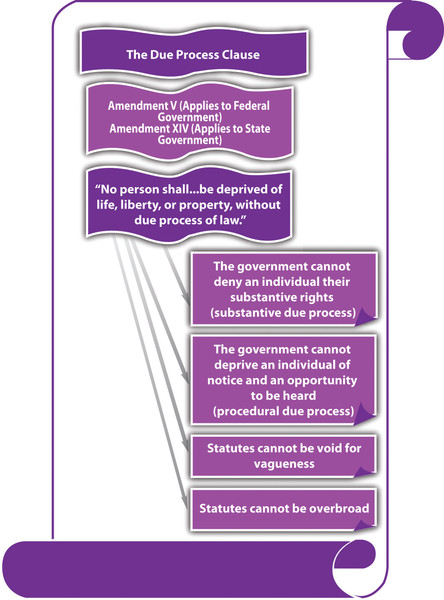
Due process overview
Courts usually ask:
- Is this claimed liberty a fundamental right?
- If yes, does the government have a strong enough reason to limit it?
If the right is fundamental, courts use heightened scrutiny. If it is not, the law usually survives rational basis review, which is very deferential to the government.
Under the Fourteenth Amendment, liberty has been read to include some deeply personal choices about family, marriage, contraception, and bodily autonomy.
Unenumerated Rights and the Right to Privacy
Some rights are written directly into the Constitution. Those are enumerated rights. Unenumerated rights are not listed word-for-word but may still be protected.
The Court has used a few main arguments for those rights:
- First Amendment suggests a private sphere of belief and association.
- Third Amendment protects the home from forced quartering.
- Fourth Amendment protects against unreasonable searches.
- Fifth Amendment protects against self-incrimination.
- Ninth Amendment says listing some rights does not deny others retained by the people.
- Fourteenth Amendment liberty can include rights not specifically named.
In this topic, privacy means decisional privacy. It means freedom to make certain intimate personal or family choices without unjustified government interference.
That privacy is limited:
- It does not protect every private action.
- Government can still regulate for health, safety, children, and other legitimate interests.
One distinction matters a lot on tests:
- Intimate decision-making privacy usually uses substantive due process.
- Search-and-seizure privacy usually uses the Fourth Amendment.
The Main Cases on Privacy and Liberty
Pierce v. Society of Sisters 1925
Oregon tried to require almost all children to attend public school. The Court struck that down and recognized parental liberty to direct children’s upbringing and education. This is an early unenumerated-rights case under the Fourteenth Amendment.
Griswold v. Connecticut 1965
Connecticut banned contraceptives for married couples. The Court struck the law down and recognized marital privacy. The reasoning drew from Bill of Rights penumbras, the Ninth Amendment, and Fourteenth Amendment liberty.
Roe v. Wade 1973
The Court held that abortion was part of the privacy/liberty protected by substantive due process. It created the trimester framework, which limited how much states could regulate or ban abortion.
Dobbs v. Jackson Women’s Health Organization 2022
The Court overruled Roe and held that the Constitution does not confer a right to abortion. The majority emphasized history and tradition when judging unenumerated rights and returned abortion policy mainly to state lawmakers.
Board of Education v. Earls 2002
The Court upheld random drug testing for students in extracurricular activities. This is a Fourth Amendment case, not substantive due process. That distinction is very testable.
These cases all reached the Supreme Court, which is why students often connect privacy and liberty debates with the Court itself.
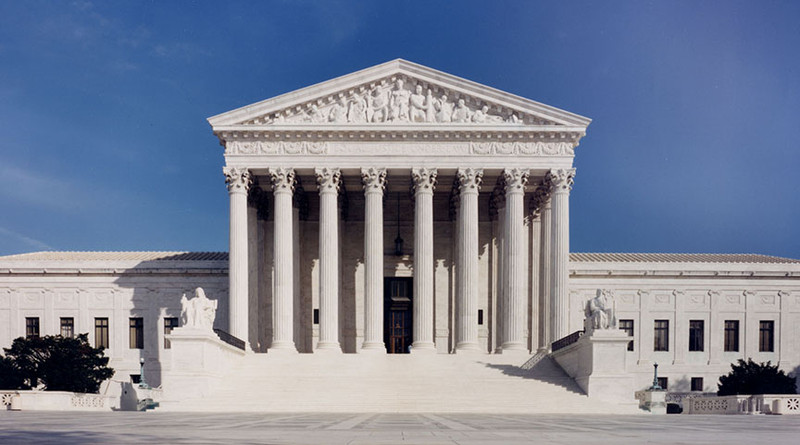
U.S. Supreme Court building
Limits, Debates, and Why This Matters
The Hyde Amendment of 1976 barred certain federal funding for abortions, with exceptions such as rape, incest, or danger to the life of the pregnant woman. This shows a key difference between freedom from government interference and a right to government funding.
The debate over substantive due process never goes away:
- Supporters say liberty must protect important rights that are not fully listed.
- Critics say judges get too much power when they recognize unenumerated rights.
Keep these distinctions straight:
| Idea | Meaning |
|---|---|
| Substantive due process | Whether government may restrict a liberty at all |
| Procedural due process | Whether government used fair methods |
| Selective incorporation | Applying Bill of Rights protections to the states through the Fourteenth Amendment |
| Privacy rights | Specific protected interests, not one unlimited general right |
Key Takeaways
Fifth vs. Fourteenth Amendment Due Process Clauses
Both prohibit deprivation of life, liberty, or property without due process of law; the Fifth limits the national government, while the Fourteenth limits state and local governments
Substantive Due Process
The principle that government may not unjustifiably restrict a protected liberty, regardless of how fairly it enacts or enforces the restriction
Fundamental Right
A basic component of constitutional liberty whose restriction receives heightened scrutiny and requires a sufficiently strong government justification
Unenumerated Right
A constitutionally protected right not explicitly listed in the constitutional text but recognized through interpretation of broader language, history, structure, or principles
Ninth Amendment
Provides that listing certain constitutional rights does not deny or disparage other rights retained by the people
Right to Privacy (Decisional Privacy)
An unenumerated right protecting certain intimate personal and family decisions from unjustified government interference
Constitutional Penumbras
Zones of protection implied by overlapping constitutional guarantees, used in Griswold to support a right of marital privacy
Pierce v. Society of Sisters (1925)
Invalidated Oregon’s public-school attendance mandate and held that Fourteenth Amendment liberty protects parents’ authority to direct their children’s education
Griswold v. Connecticut (1965)
Struck down Connecticut’s contraceptive ban and recognized constitutional protection for marital privacy and married couples’ use of contraception
Roe v. Wade (1973)
Held that Fourteenth Amendment substantive due process protected a qualified right to choose abortion; Dobbs overruled the decision in 2022
Hyde Amendment
A recurring federal appropriations restriction generally barring certain federal funds, especially Medicaid funds, from paying for abortions, subject to limited exceptions
Dobbs v. Jackson Women’s Health Organization (2022)
Overruled Roe and Casey, held that the Constitution does not confer a right to abortion, and returned primary abortion-policy authority to elected lawmakers
Rational-Basis Review
Deferential review under which a law generally survives if it is rationally related to a legitimate government interest
Board of Education v. Earls (2002)
Upheld random drug testing of students in competitive extracurricular activities as a reasonable Fourth Amendment search given reduced privacy expectations and school interests
Notes
Fifth vs. Fourteenth Amendment Due Process Clauses
Both prohibit deprivation of life, liberty, or property without due process of law; the Fifth limits the national government, while the Fourteenth limits state and local governments
Substantive Due Process
The principle that government may not unjustifiably restrict a protected liberty, regardless of how fairly it enacts or enforces the restriction
Fundamental Right
A basic component of constitutional liberty whose restriction receives heightened scrutiny and requires a sufficiently strong government justification
Unenumerated Right
A constitutionally protected right not explicitly listed in the constitutional text but recognized through interpretation of broader language, history, structure, or principles
Ninth Amendment
Provides that listing certain constitutional rights does not deny or disparage other rights retained by the people
Right to Privacy (Decisional Privacy)
An unenumerated right protecting certain intimate personal and family decisions from unjustified government interference
Constitutional Penumbras
Zones of protection implied by overlapping constitutional guarantees, used in Griswold to support a right of marital privacy
Pierce v. Society of Sisters (1925)
Invalidated Oregon’s public-school attendance mandate and held that Fourteenth Amendment liberty protects parents’ authority to direct their children’s education
Griswold v. Connecticut (1965)
Struck down Connecticut’s contraceptive ban and recognized constitutional protection for marital privacy and married couples’ use of contraception
Roe v. Wade (1973)
Held that Fourteenth Amendment substantive due process protected a qualified right to choose abortion; Dobbs overruled the decision in 2022
Hyde Amendment
A recurring federal appropriations restriction generally barring certain federal funds, especially Medicaid funds, from paying for abortions, subject to limited exceptions
Dobbs v. Jackson Women’s Health Organization (2022)
Overruled Roe and Casey, held that the Constitution does not confer a right to abortion, and returned primary abortion-policy authority to elected lawmakers
Rational-Basis Review
Deferential review under which a law generally survives if it is rationally related to a legitimate government interest
Board of Education v. Earls (2002)
Upheld random drug testing of students in competitive extracurricular activities as a reasonable Fourth Amendment search given reduced privacy expectations and school interests
