Topic 5.10 Notes – Modern Campaigns
What Modern Campaigns Are
Modern campaigns are candidate-centered. That means the candidate is not just the party’s messenger. They usually build their own campaign staff, brand, fundraising system, and strategy.
Parties still matter. They recruit candidates, provide money and voter data, and help turn out voters. But primaries and caucuses weakened party elites’ control over nominations, so candidates now appeal directly to voters in their party.
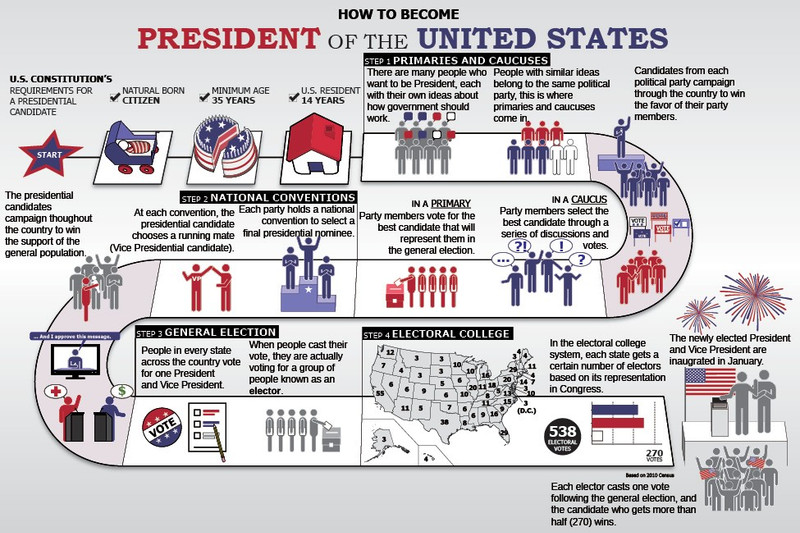
Presidential campaign process
That basic flow from primaries to the general election helps explain why campaigns are built to win votes directly from the public at each stage.
A campaign organization exists to win one election, and it has a lot of jobs:
- Strategy means deciding where limited time, money, staff, and candidate attention will have the biggest payoff.
- Message means the story the campaign wants voters to hear over and over.
- Fundraising keeps the whole operation running.
- Polling and data help the campaign figure out what voters care about.
- Media and advertising spread the message and answer attacks.
- Volunteer coordination powers the ground game.
Campaigns usually work toward three voter goals:
- Voter identification means figuring out who supports you, who opposes you, and who is undecided.
- Persuasion means changing minds or reinforcing support.
- Mobilization means getting supporters registered and to the polls. This is often called GOTV.
A presidential campaign often pours resources into swing states because most states use winner-take-all Electoral College rules. A House campaign does the same thing inside a district by targeting key neighborhoods or demographic groups.
The Main Features of Modern Campaigns
These features work together. Consultants use data, data costs money, long campaigns require even more money, and social media plus fieldwork help campaigns contact voters fast.
Professional consultants
Modern campaigns rely on specialists:
- Campaign manager runs the whole operation.
- Communications director shapes the message.
- Press secretary handles reporters and breaking news.
- Pollster measures support and tests messages.
- Media consultant creates and places ads.
- Finance director raises money.
- Field director runs canvassing, phone banking, and GOTV.
- Digital consultant manages online outreach.
- Data analysts use voter files and past results to guide strategy.
Benefits include expertise, message discipline, rapid response, and smarter use of polling. Drawbacks include high cost, scripted and less authentic candidates, weaker grassroots influence, and more negative ads.
Rising costs and intensive fundraising
Campaigns need money for staff, travel, polling, ads, offices, tech, mail, legal work, and field operations. They raise it through events, direct mail, emails, texts, websites, social media, and personal asks.
Money helps candidates build name recognition and look viable. Small-dollar donations can widen participation. But nonstop fundraising pulls time away from governing and talking to voters, helps wealthy or connected candidates, and raises worries about donor influence.
Long election cycles
Campaigns now start very early, especially for president. That gives unknown candidates time to build support and gives voters more time to evaluate them. It also raises costs, tires voters out, extends partisan conflict, and can leave parties divided after primaries.
This helps explain the permanent campaign, where governing and campaigning blur together.
Social media
Social media lets candidates communicate directly, respond quickly, recruit volunteers, raise money, and run targeted ads. A standard example is Barack Obama in 2008, whose campaign used online tools for small donations, volunteer coordination, and offline organizing.
The downsides are misinformation, echo chambers, polarization, privacy concerns, and narrow targeting with less public scrutiny.
Ground game
The ground game is direct voter contact.
- Canvassing means door-to-door conversations, issue discussion, literature, registration help, and data collection.
- Phone banking means calling voters to identify support, deliver messages, recruit volunteers, ask for donations, and remind people to vote.
Personal contact can increase turnout and political efficacy. It also takes strong coordination and accurate data, and too much contact can annoy voters.
How Campaign Targeting Works
Campaigns do not talk to everyone equally. Consultants and data analysts use polling, voter files, past results, and consumer data to decide where to spend resources.
Targeting means focusing messages on groups most likely to be persuaded or mobilized. Microtargeting goes even narrower by dividing voters into small groups and tailoring messages to each.
- One group might get a small-business message.
- Another might get a college affordability message.
This saves money and avoids wasting effort on committed opponents. The risk is fragmented messaging, privacy concerns, and less accountability when candidates present different faces to different audiences.
How Modern Campaigns Affect Elections
Modern campaigns shape elections in a few big ways:
- They can increase participation through information, volunteer opportunities, small donations, registration help, and turnout drives.
- They change political communication by letting candidates bypass traditional media gatekeepers and party leaders.
- They make elections more candidate-centered.
- They shape competition because money, staff, and data can help challengers, but unequal resources still favor incumbents or well-funded candidates.
The exam loves this point. Campaign tools create advantages, not guarantees. Outcomes still depend on candidate quality, incumbency, party identification, issues, the economy, and major events.
Key Takeaways
Modern Campaign
A candidate-centered effort using specialized staff, extensive fundraising, voter data, mass communication, and direct outreach to win an election
Candidate-Centered Campaign
A campaign focused on a candidate who controls a personal organization, message, donor network, and brand partly independent of the political party
Campaign Organization
The staff and infrastructure assembled to develop strategy, raise money, communicate, analyze voters, and mobilize supporters for a candidate
Campaign Strategy
A campaign’s plan for allocating limited time, money, personnel, and candidate attention to win an election
Voter Persuasion
Campaign activity intended to change or reinforce voters’ candidate preferences
Voter Identification
Determining which voters are likely supporters, opponents, or undecided
Voter Mobilization / Get-Out-the-Vote (GOTV)
Campaign efforts to ensure likely supporters register when necessary and cast their ballots
Professional Campaign Consultants
Specialists who make campaigns more efficient through expertise in strategy, messaging, polling, fundraising, media, data, and fieldwork but increase costs and may encourage scripted or short-term tactics
Targeting
Directing campaign resources toward voters or groups most likely to be persuaded or mobilized
Microtargeting
Using detailed data to divide voters into narrow groups and deliver messages tailored to their characteristics or interests
Rising Campaign Costs and Intensive Fundraising
Growing campaign expenses produce nearly continuous fundraising, increasing campaign capacity but favoring well-connected candidates and diverting candidates’ time
Lengthy Election Cycle
An extended campaign period that allows organization and candidate evaluation but raises costs, fundraising pressure, conflict, and voter fatigue
Permanent Campaign
The continuous use by officeholders of campaign-style messaging, fundraising, polling, and public relations throughout their terms
Social Media Campaigning
Using digital platforms for rapid direct communication, targeted advertising, fundraising, and volunteer organization, with risks including misinformation, echo chambers, and privacy concerns
Ground Game / Field Operation
A campaign’s organized effort to identify, persuade, and mobilize voters through personal or localized contact
Canvassing
Direct voter outreach, usually door to door, used to identify preferences, persuade voters, provide information, and mobilize supporters
Phone Banking
Calling lists of voters to identify preferences, deliver messages, recruit volunteers, request donations, provide voting information, or mobilize supporters
Notes
Modern Campaign
A candidate-centered effort using specialized staff, extensive fundraising, voter data, mass communication, and direct outreach to win an election
Candidate-Centered Campaign
A campaign focused on a candidate who controls a personal organization, message, donor network, and brand partly independent of the political party
Campaign Organization
The staff and infrastructure assembled to develop strategy, raise money, communicate, analyze voters, and mobilize supporters for a candidate
Campaign Strategy
A campaign’s plan for allocating limited time, money, personnel, and candidate attention to win an election
Voter Persuasion
Campaign activity intended to change or reinforce voters’ candidate preferences
Voter Identification
Determining which voters are likely supporters, opponents, or undecided
Voter Mobilization / Get-Out-the-Vote (GOTV)
Campaign efforts to ensure likely supporters register when necessary and cast their ballots
Professional Campaign Consultants
Specialists who make campaigns more efficient through expertise in strategy, messaging, polling, fundraising, media, data, and fieldwork but increase costs and may encourage scripted or short-term tactics
Targeting
Directing campaign resources toward voters or groups most likely to be persuaded or mobilized
Microtargeting
Using detailed data to divide voters into narrow groups and deliver messages tailored to their characteristics or interests
Rising Campaign Costs and Intensive Fundraising
Growing campaign expenses produce nearly continuous fundraising, increasing campaign capacity but favoring well-connected candidates and diverting candidates’ time
Lengthy Election Cycle
An extended campaign period that allows organization and candidate evaluation but raises costs, fundraising pressure, conflict, and voter fatigue
Permanent Campaign
The continuous use by officeholders of campaign-style messaging, fundraising, polling, and public relations throughout their terms
Social Media Campaigning
Using digital platforms for rapid direct communication, targeted advertising, fundraising, and volunteer organization, with risks including misinformation, echo chambers, and privacy concerns
Ground Game / Field Operation
A campaign’s organized effort to identify, persuade, and mobilize voters through personal or localized contact
Canvassing
Direct voter outreach, usually door to door, used to identify preferences, persuade voters, provide information, and mobilize supporters
Phone Banking
Calling lists of voters to identify preferences, deliver messages, recruit volunteers, request donations, provide voting information, or mobilize supporters
