Topic 5.7 Notes – Groups Influencing Policy Outcomes
How Groups and Other Actors Shape Policy
A policy outcome is a negotiated result. Elected officials matter, but so do groups, movements, agencies, parties, and voters. Each actor is stronger at some stages than others.
The policy process usually gets broken into these stages:
- Agenda setting means getting government to pay attention to an issue.
- Policy formulation means shaping the details of proposals.
- Adoption means an institution with legal power actually approves it.
- Budgeting decides whether money will back the policy.
- Implementation turns law into day-to-day action.
- Enforcement decides how strongly rules are applied.
Different resources matter at different moments:
- Formal authority lets Congress, the president, and agencies make binding decisions.
- Money helps with ads, staff, lobbying, and campaigns.
- Expertise matters a lot when policy is technical.
- Access gives actors more chances to shape details behind the scenes.
- Media attention can push an issue onto the agenda.
- Coalition-building combines weak actors into a stronger force.
- Voter mobilization scares officials who want reelection.
- Intensity matters because highly committed people donate, monitor votes, and punish defections.
This fits the pluralist idea that many groups compete. The catch is that resources and access are unequal, so some voices are louder than others. On the exam, keep this clear: groups influence government, but institutions still make the final decision.
Types of Groups and What They Do
Single-issue groups
These groups organize around one narrow goal or a tightly connected set of goals. Club for Growth is one. It supports limits on taxation, plus lower spending and limited government. Its power comes from intensity. Members care enough to donate, track votes, and pressure candidates, especially in primaries.
Ideological and social movements
These are broader and more long-term. They try to change values, institutions, and multiple policies. They use education, lobbying, litigation, coalitions, and candidate support. The civil rights movement is the standard example. It helped create pressure for the Civil Rights Act of 1964 and Voting Rights Act of 1965.
Protest movements
Protest is visible collective action such as marches, rallies, boycotts, strikes, sit-ins, and civil disobedience. Protest usually works indirectly. It gets attention, shows intensity, and pressures officials. The 1963 March on Washington for Jobs and Freedom was a protest within the broader civil rights movement.
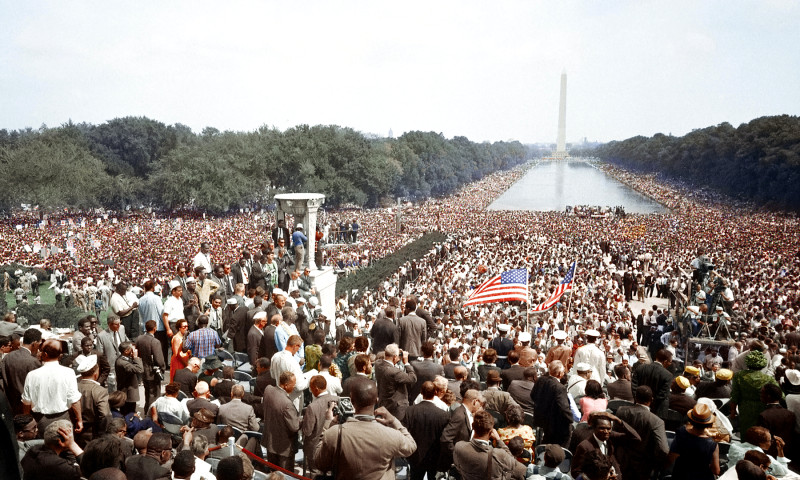
1963 March on Washington for Jobs and Freedom
Interest groups and professional organizations
Interest groups try to influence policy without mainly trying to win office themselves. Professional organizations represent occupations and bring technical expertise too. Think doctors, lawyers, teachers, and engineers. Their testimony and research often shape bill details.
Government and Institutional Actors in the Policy Process
The government itself contains actors competing over policy.
- Military leaders influence defense and national security through expertise, readiness information, and budget requests. Senior officers testify, but civilian control remains. The president and Congress decide.
- Bureaucratic agencies shape both formulation and implementation. They draft proposals, estimate costs, testify, issue regulations, inspect, distribute resources, and set enforcement priorities.
- The EPA is the standard example. Congress may pass a broad environmental law, and the Environmental Protection Agency gives it specific meaning through regulations.
Budgeting is one of the biggest battlegrounds.
- Agencies develop requests.
- OMB reviews them for the president.
- The president proposes a budget.
- Congress authorizes and appropriates.
Congress has the power of the purse, but many actors shape what gets funded.
Elections, Parties, and Major Policy Shifts
Elections can open the door to major policy change because they change who holds office. Parties organize policy through platforms, campaigns, leaders, and governing coalitions.
A mandate is a claim that voters supported a program. It is not a separate constitutional power.
The classic example is the election of 1932. Franklin D. Roosevelt and the Democrats gained power during the Great Depression. The New Deal expanded the federal role in relief, recovery, regulation, and social welfare.
A political realignment is a durable shift in party loyalties. The New Deal coalition included urban and working-class voters, labor unions, immigrants, African American voters, and white Southern voters. Later, many white Southern voters shifted toward Republicans, while African American voters became strongly Democratic.
How to Trace Influence on an AP Gov Question
- Name the actor, such as a single-issue group, movement, protest, military, bureaucracy, party, or voters.
- Name the stage, such as agenda setting, formulation, adoption, budgeting, implementation, or enforcement.
- Name the resource being used, such as expertise, money, visibility, organization, electoral pressure, or formal authority.
- Name the limit. Another actor still has to approve, fund, or carry it out.
- Connect it to an example such as Club for Growth, the civil rights movement, the March on Washington, the EPA, the election of 1932, or the New Deal coalition.
Key Takeaways
Policy Outcome
The result of policymaking, including agenda attention, adoption, funding, implementation, enforcement, alteration, or repeal
Agenda Setting
The stage in which actors influence which conditions government recognizes and addresses as public problems
Policy Formulation
The stage in which officials and outside actors develop proposals, often using specialized information and expertise
Policy Adoption
Formal approval of a policy by an institution with legal authority, such as Congress and the president
Policy Budgeting
The stage in which government determines the funding that allows an authorized policy or program to operate
Policy Implementation and Enforcement
The stage in which agencies turn laws into regulations, administrative practices, and enforcement priorities
Federal Budget Process
Agencies submit requests, OMB and the president assemble a proposed budget, Congress authorizes and appropriates funds, and agencies implement funded programs
Single-Issue Group
An organized group focused on one narrow policy concern or closely connected set of concerns
Ideological Movement
A movement seeking political change based on a broad set of ideas about government or society
Social Movement
Sustained collective action seeking to change or resist changes to social practices, attitudes, institutions, and public policy
Protest Movement
A movement using visible collective action, such as marches, boycotts, strikes, sit-ins, or civil disobedience, to pressure officials or the public
Professional Organization
An organization representing an occupation or field that uses member interests and specialized expertise to influence public policy
Electoral Mandate
A winning party's claim that an election result demonstrates public support for its policy program, not a separate constitutional power
Political Realignment
A durable shift in important groups' party loyalties that changes party coalitions and can redirect policy for an extended period
Military as a Policy Actor
Uses defense expertise, spending requests, and testimony to influence national-security and budget policy while remaining subject to civilian authority
Bureaucratic Agencies as Policy Actors
Shape policy through expertise during formulation and through discretion in rulemaking, administration, and enforcement after enactment
Notes
Policy Outcome
The result of policymaking, including agenda attention, adoption, funding, implementation, enforcement, alteration, or repeal
Agenda Setting
The stage in which actors influence which conditions government recognizes and addresses as public problems
Policy Formulation
The stage in which officials and outside actors develop proposals, often using specialized information and expertise
Policy Adoption
Formal approval of a policy by an institution with legal authority, such as Congress and the president
Policy Budgeting
The stage in which government determines the funding that allows an authorized policy or program to operate
Policy Implementation and Enforcement
The stage in which agencies turn laws into regulations, administrative practices, and enforcement priorities
Federal Budget Process
Agencies submit requests, OMB and the president assemble a proposed budget, Congress authorizes and appropriates funds, and agencies implement funded programs
Single-Issue Group
An organized group focused on one narrow policy concern or closely connected set of concerns
Ideological Movement
A movement seeking political change based on a broad set of ideas about government or society
Social Movement
Sustained collective action seeking to change or resist changes to social practices, attitudes, institutions, and public policy
Protest Movement
A movement using visible collective action, such as marches, boycotts, strikes, sit-ins, or civil disobedience, to pressure officials or the public
Professional Organization
An organization representing an occupation or field that uses member interests and specialized expertise to influence public policy
Electoral Mandate
A winning party's claim that an election result demonstrates public support for its policy program, not a separate constitutional power
Political Realignment
A durable shift in important groups' party loyalties that changes party coalitions and can redirect policy for an extended period
Military as a Policy Actor
Uses defense expertise, spending requests, and testimony to influence national-security and budget policy while remaining subject to civilian authority
Bureaucratic Agencies as Policy Actors
Shape policy through expertise during formulation and through discretion in rulemaking, administration, and enforcement after enactment
