Topic 2.4 Notes – Roles and Powers of the President
What Presidential Power Is
A president’s policy agenda is the set of issues and goals the administration wants to move. Think health care, immigration, taxes, climate, war, appointments, and so on.
Article II gives the president executive power and says the president must “take Care that the Laws be faithfully executed.” That means enforcing and carrying out laws. It does not mean the president can just make any law they want.
That’s the core AP Gov point here. Presidential power is both legal and political. A president may have a tool, but that does not guarantee policy success.
Presidential roles
These role names help organize what the president does.
- Chief executive means running the executive branch and enforcing laws.
- Chief legislator means proposing ideas, negotiating with Congress, and signing or vetoing bills.
- Commander in chief means directing the military.
- Chief diplomat means dealing with foreign countries.
- Head of state means symbolic national leadership.
- Party leader means helping build support inside the president’s party.
- Formal powers are written in the Constitution.
- Informal powers grew through practice, precedent, or laws passed by Congress.
The People and Offices That Help the President
Modern presidents cannot do this alone, so they rely on a support system.
Vice President
The vice president’s constitutional job is narrow:
- President of the Senate and breaks tie votes
- Succeeds to the presidency if needed
In practice, the vice president may also be a close adviser, messenger to Congress, diplomat, or policy advocate. That depends on the president.
Cabinet
The Cabinet includes heads of the 15 executive departments and some other officials with Cabinet rank.
Examples you should know:
- State handles foreign affairs
- Defense handles the military
- Treasury handles financial policy
- Justice enforces federal law
- Homeland Security handles domestic security
Most Cabinet secretaries are nominated by the president and need Senate confirmation.
Executive Office of the President
The EOP gives the president day-to-day policy and management support.
- White House Office includes closest advisers, communications staff, and strategists
- Office of Management and Budget prepares the budget and reviews agency plans
- National Security Council advises on foreign policy and security
- Council of Economic Advisers gives economic analysis
Legislative Powers and Influence
Domestic policy usually needs Congress, so this is where students often miss the difference between power and results.
- Sign bills and they become law.
- Regular veto rejects a bill and sends it back with objections. Congress can override with two-thirds in both chambers.
- Pocket veto happens if Congress adjourns during the 10-day period and the president cannot return the bill. The bill dies, and Congress cannot override it.
- The president has no federal line-item veto.
A veto threat can change a bill before it even reaches the president. Nixon’s veto of the War Powers Resolution was overridden in 1973.
Bargaining and persuasion
This is an informal power. Presidents negotiate, pressure, trade support, work with party leaders, and use public approval to win votes. Lyndon Johnson did this effectively for the Civil Rights Act of 1964.
It works better under unified government, high approval, or a strong election mandate. It gets harder under divided government and polarization.
Signing statements
A signing statement is a written comment issued when signing a bill. It explains how the president interprets or plans to enforce the law. It is not a veto and cannot rewrite the law. George W. Bush used one with the Detainee Treatment Act in 2005.
Foreign Policy and Administrative Action
Foreign policy often gives presidents more room to act quickly, but Congress still matters.
- Commander in chief lets the president direct the military. Congress still declares war and funds the military. Truman sending forces to Korea is the classic example.
- Treaties are negotiated by the president but need two-thirds Senate approval. Wilson negotiated the Treaty of Versailles, but the Senate refused consent.
- Executive agreements are international deals that do not need two-thirds Senate approval. FDR’s Destroyers-for-Bases Agreement with Britain in 1940 is a classic one.
- Executive orders direct executive agencies. They come from Article II authority or power delegated by Congress. Truman’s Executive Order 9981 desegregated the military.
The treaty process can take several steps, from negotiation through Senate review and final approval.
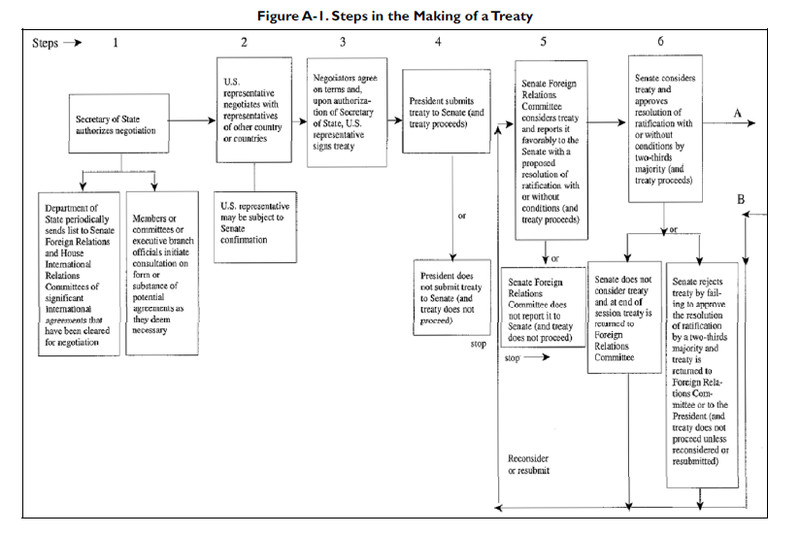
Treaty approval process
Courts can review executive orders, Congress can respond with laws or funding limits, and later presidents can reverse them.
How Presidents Put It All Together
Presidents usually combine powers.
- Recommend a proposal
- Use the EOP and Cabinet to develop details
- Bargain with Congress
- Use public appeals and party leadership
- Sign or veto the bill
- Direct implementation through executive action
In foreign policy, presidents direct military and diplomatic personnel, negotiate abroad, and choose between a treaty and an executive agreement depending on what support they need.
Key Takeaways
Presidential Policy Agenda
The issues, programs, and policy changes an administration identifies as priorities
Formal Powers
Presidential powers expressly granted by the Constitution
Informal Powers
Presidential tools developed through political practice, precedent, or statutory delegation rather than separately named in the Constitution
Chief Executive
The presidential role of supervising the executive branch and directing the implementation of federal law
Chief Legislator (Legislative Leader)
The presidential role of recommending legislation, negotiating with Congress, and signing or vetoing bills
Commander in Chief
The presidential role of directing the armed forces, while Congress retains powers such as declaring war and providing military funding
Chief Diplomat
The presidential role of representing the United States abroad and directing diplomacy, including negotiating international agreements
Head of State
The presidential role of performing ceremonial and symbolic functions as the national representative
Party Leader
The informal presidential role of advancing the electoral and policy goals of the president's political party
Appointment Power
The president's power to nominate ambassadors, federal judges, and principal executive officials, generally subject to Senate confirmation
Vice President
The official who presides over the Senate, casts tie-breaking votes, succeeds the president when required, and may perform advisory or policy assignments
Cabinet
The executive department heads, vice president, and other officials given Cabinet rank who advise the president and administer federal agencies
Executive Office of the President
Organizations and advisers—including the White House Office, OMB, NSC, and CEA—that directly help the president develop policy, coordinate priorities, and manage the executive branch
Regular Veto (Veto)
The president's return of a bill with written objections; Congress can override it with a two-thirds vote in both chambers
Pocket Veto
The defeat of an unsigned bill when congressional adjournment prevents its return during the 10-day period; it cannot be overridden
Bargaining and Persuasion
Informal presidential efforts to secure voluntary congressional support through negotiation, coalition building, incentives, and political pressure
Treaty
A formal international agreement negotiated by the president that requires approval by two-thirds of the Senate
Executive Agreement
An international arrangement made by the president without the two-thirds Senate approval required for a treaty
Executive Order
A presidential directive to executive officers or agencies based on Article II authority or authority delegated by Congress
Signing Statement
A written statement issued when the president signs a bill that explains the president's interpretation of the law or guides its implementation
Notes
Presidential Policy Agenda
The issues, programs, and policy changes an administration identifies as priorities
Formal Powers
Presidential powers expressly granted by the Constitution
Informal Powers
Presidential tools developed through political practice, precedent, or statutory delegation rather than separately named in the Constitution
Chief Executive
The presidential role of supervising the executive branch and directing the implementation of federal law
Chief Legislator (Legislative Leader)
The presidential role of recommending legislation, negotiating with Congress, and signing or vetoing bills
Commander in Chief
The presidential role of directing the armed forces, while Congress retains powers such as declaring war and providing military funding
Chief Diplomat
The presidential role of representing the United States abroad and directing diplomacy, including negotiating international agreements
Head of State
The presidential role of performing ceremonial and symbolic functions as the national representative
Party Leader
The informal presidential role of advancing the electoral and policy goals of the president's political party
Appointment Power
The president's power to nominate ambassadors, federal judges, and principal executive officials, generally subject to Senate confirmation
Vice President
The official who presides over the Senate, casts tie-breaking votes, succeeds the president when required, and may perform advisory or policy assignments
Cabinet
The executive department heads, vice president, and other officials given Cabinet rank who advise the president and administer federal agencies
Executive Office of the President
Organizations and advisers—including the White House Office, OMB, NSC, and CEA—that directly help the president develop policy, coordinate priorities, and manage the executive branch
Regular Veto (Veto)
The president's return of a bill with written objections; Congress can override it with a two-thirds vote in both chambers
Pocket Veto
The defeat of an unsigned bill when congressional adjournment prevents its return during the 10-day period; it cannot be overridden
Bargaining and Persuasion
Informal presidential efforts to secure voluntary congressional support through negotiation, coalition building, incentives, and political pressure
Treaty
A formal international agreement negotiated by the president that requires approval by two-thirds of the Senate
Executive Agreement
An international arrangement made by the president without the two-thirds Senate approval required for a treaty
Executive Order
A presidential directive to executive officers or agencies based on Article II authority or authority delegated by Congress
Signing Statement
A written statement issued when the president signs a bill that explains the president's interpretation of the law or guides its implementation
