Topic 5.3 Notes – Political Parties
What Political Parties Are
A political party is an organization that tries to influence public policy by electing candidates and then organizing those officials once they hold office. That goal of winning control of government is what separates parties from interest groups.
- Parties run candidates, build broad coalitions, and try to govern.
- Interest groups push specific causes through lobbying and advocacy.
- Elections let citizens choose leaders and judge their performance.
- Media carries information, messages, and issue attention between the public and government.
Those four are the linkage institutions. They are the channels that connect people to policymakers.
Three parts of a party
Political parties make more sense when you see them as three connected pieces:
- Party in the electorate means voters who identify with the party.
- Party organization means the committees, activists, staff, volunteers, and local/state/national networks.
- Party in government means elected officials serving under the party label.
U.S. parties are decentralized. National, state, and local parties are connected, but no single leader tightly controls all of them.
What Political Parties Do for Voters
Parties help voters by making politics easier to navigate. They do this through mobilization, education, platforms, and coalition building.
- Mobilization means getting people to register, vote, donate, volunteer, and show up.
- Common tools include canvassing, phone banks, text messages, rallies, voter-registration drives, and GOTV efforts.
- Parties use voter files and turnout history to target likely supporters and persuadable voters.
- Education means giving voters information about candidates, issues, and government performance.
- A party label works as an informational shortcut. If you know a candidate is a Democrat or Republican, you get a rough idea of their likely positions.
- That message is persuasive, though. Parties inform you and try to shape how you interpret facts.
Party platforms and planks
A platform is the party’s formal statement of goals and policy priorities. Planks are the individual positions inside it. National conventions adopt them.
Platforms matter because they:
- signal priorities,
- unify different groups inside the party,
- guide candidates,
- help voters judge promises.
They are not legally binding. Candidates and officeholders can still depart from them.
A standard example is the 2012 platforms:
- Democrats backed the ACA, stronger social programs, progressive taxes, abortion rights, and marriage equality.
- Republicans backed lower taxes, less regulation, repeal of the ACA, strong defense, and traditional social values.
Parties also practice interest aggregation. They pull many groups and concerns into one broad coalition, so voters choose between broad governing alternatives instead of one single-issue party after another.
How Parties Help Candidates Win Elections
Before you ever vote, parties shape who appears on the ballot and how those campaigns run.
- Candidate recruitment means parties identify and encourage viable candidates.
- They look for experience, name recognition, fundraising skill, ideology, and electability.
- Campaign management means coordinating the strategy and resources needed to win.
- Fundraising provides money for staff, ads, travel, research, and voter contact.
- Media strategy defines the candidate positively, ties them to party issues, contrasts them with opponents, and keeps the message consistent.
- Campaign organization includes volunteer training, field offices, canvassing, phone banks, and data sharing across races.
How Parties Organize Government
Parties matter after elections because they organize lawmaking, especially in Congress. The basic leadership structure in each chamber helps explain how the majority and minority parties operate once members take office.
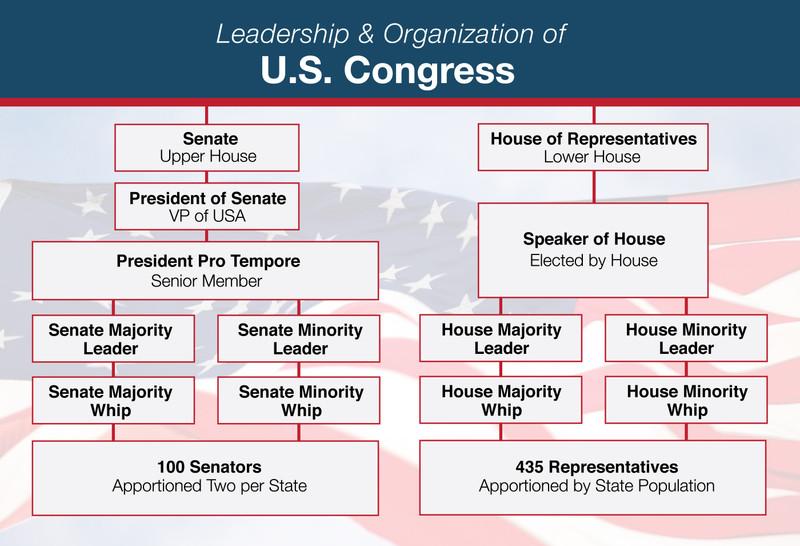
Congressional party leadership in the House and Senate
- The majority party controls more of the chamber’s agenda and organization.
- The minority party coordinates opposition and offers alternatives.
- In the House, key leaders are the Speaker, majority leader, minority leader, and whips.
- In the Senate, key leaders are the majority leader, minority leader, and whips.
- Whips count votes and try to keep members together.
Committees are where much of the real work happens.
- The majority party usually gets committee chairs and more committee seats.
- Committees hold hearings, revise bills, and decide what moves forward.
Party cohesion means how often members of a party vote together. It rises when members share ideology and leaders apply pressure, but lawmakers still answer to their districts and states. That is why majority status gives agenda-setting power, not total control.
Why Political Parties Matter
For voters, parties simplify choices, lower information costs, encourage participation, and create lasting political identities. For government, they turn election results into working coalitions that can lead, assign committees, and push policy.
Key Takeaways
Linkage Institution
A channel through which individuals communicate political preferences to policymakers; principal examples are political parties, interest groups, elections, and the media
Political Party
An organization that seeks to influence public policy by electing candidates under its label and organizing those officials in government
Interest Group
An organization that advances shared interests by influencing officials and policy, ordinarily without nominating candidates to control government
Party in the Electorate
Citizens who identify with a political party
Party Organization
The national, state, and local committees, officers, staff, activists, and volunteers who conduct party activity
Party in Government
Elected officials who identify with a party and seek to translate its priorities into government action
Voter Mobilization
Party efforts to encourage political action, especially registration and voting, usually among likely supporters
Voter Education
Providing selective, persuasive information about candidates, issues, government performance, policy alternatives, and voting
Party Identification
A citizen’s identification with a party, which can provide an informational shortcut and influence political judgments and voting
Party Platform
A party’s formal statement of policy goals, principles, and priorities; it is politically influential but not legally binding
Party Plank
An individual policy position or section within a party platform
Interest Aggregation and Coalition Building
Combining diverse interests and demands into a broad policy program and electoral coalition capable of winning office
Candidate Recruitment
The process by which parties identify, encourage, and support people who can run for public office
Campaign Management
Coordinating the people, money, messages, data, and activities needed to help candidates win elections
Party Fundraising
Raising money from supporters and allocating financial resources to candidates and strategically important electoral contests
Media Strategy
A campaign plan for communicating with voters and presenting a candidate through advertising, messaging, research, and responses to events
Majority Party vs. Minority Party
The majority party holds more seats and generally controls chamber organization and agenda setting; the minority party holds fewer seats and organizes opposition
Legislative Party Leadership
Party leaders’ coordination of members, legislative strategy, agenda priorities, negotiations, and public messaging
Party Whip
A legislative party leader who counts votes, communicates leadership priorities, and encourages members to vote together
Committee System
The legislative arrangement in which committees perform detailed work on bills, with the majority party generally controlling membership ratios and chairs
Legislative Agenda
The set of issues and proposals that legislative leaders prioritize for action
Party Cohesion
The extent to which legislators from the same political party vote together
Notes
Linkage Institution
A channel through which individuals communicate political preferences to policymakers; principal examples are political parties, interest groups, elections, and the media
Political Party
An organization that seeks to influence public policy by electing candidates under its label and organizing those officials in government
Interest Group
An organization that advances shared interests by influencing officials and policy, ordinarily without nominating candidates to control government
Party in the Electorate
Citizens who identify with a political party
Party Organization
The national, state, and local committees, officers, staff, activists, and volunteers who conduct party activity
Party in Government
Elected officials who identify with a party and seek to translate its priorities into government action
Voter Mobilization
Party efforts to encourage political action, especially registration and voting, usually among likely supporters
Voter Education
Providing selective, persuasive information about candidates, issues, government performance, policy alternatives, and voting
Party Identification
A citizen’s identification with a party, which can provide an informational shortcut and influence political judgments and voting
Party Platform
A party’s formal statement of policy goals, principles, and priorities; it is politically influential but not legally binding
Party Plank
An individual policy position or section within a party platform
Interest Aggregation and Coalition Building
Combining diverse interests and demands into a broad policy program and electoral coalition capable of winning office
Candidate Recruitment
The process by which parties identify, encourage, and support people who can run for public office
Campaign Management
Coordinating the people, money, messages, data, and activities needed to help candidates win elections
Party Fundraising
Raising money from supporters and allocating financial resources to candidates and strategically important electoral contests
Media Strategy
A campaign plan for communicating with voters and presenting a candidate through advertising, messaging, research, and responses to events
Majority Party vs. Minority Party
The majority party holds more seats and generally controls chamber organization and agenda setting; the minority party holds fewer seats and organizes opposition
Legislative Party Leadership
Party leaders’ coordination of members, legislative strategy, agenda priorities, negotiations, and public messaging
Party Whip
A legislative party leader who counts votes, communicates leadership priorities, and encourages members to vote together
Committee System
The legislative arrangement in which committees perform detailed work on bills, with the majority party generally controlling membership ratios and chairs
Legislative Agenda
The set of issues and proposals that legislative leaders prioritize for action
Party Cohesion
The extent to which legislators from the same political party vote together
