Topic 4.4 Notes – Influence of Political Events on Ideology
How Major Political Events Shape Ideology
You already know political socialization is lifelong. That matters here because a war, scandal, recession, or court case can affect you long after childhood.
- A political attitude is a view about one issue or institution, like trust in the president or support for welfare.
- A political ideology is your broader set of beliefs about government, policy, rights, and power.
- The usual chain is event → attitude change or reinforcement → political socialization → broader ideology.
- Most events do not flip someone from liberal to conservative overnight. They often deepen, redirect, or confirm beliefs already forming.
A student who loses faith in executive honesty after a scandal has changed one attitude first. If that distrust sticks and becomes part of a larger belief in tighter limits on government power, that becomes ideological.
What Kinds of Events Matter
Major events matter because they force people to judge what government should do and how well it is doing it.
- Wars and national-security crises such as Vietnam or 9/11
- Economic crises such as the Great Depression or Great Recession
- Political scandals such as Watergate
- Major elections and leadership shifts
- Major policy changes and government programs
- Social movements over civil rights and liberties
- Consequential Supreme Court decisions
- Public-health emergencies or disasters when government response becomes politically central
What makes these important:
- They get broad public attention
- They make people evaluate government performance
- They raise the salience of issues like security, economy, liberty, and accountability
The Great Depression is a classic example. Economic collapse pushed millions of people to judge whether government should take a more active role in providing relief and managing the economy.
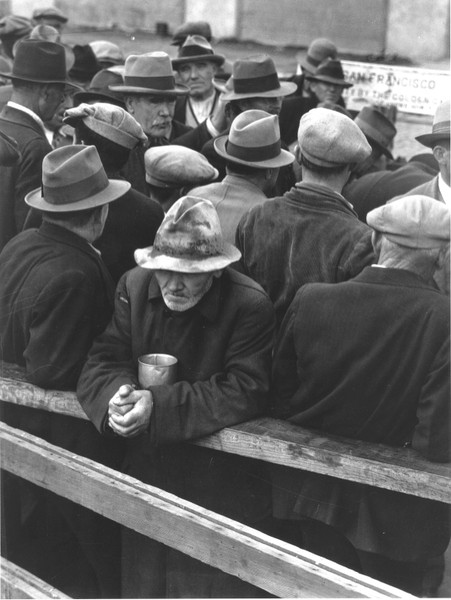
Great Depression breadline
How Events Influence Political Attitudes
Events become politically powerful when they make abstract ideas feel personal.
- Direct experience matters. Unemployment, military service, protest participation, or receiving aid can change how you see policy.
- Evaluation of government performance matters. People judge whether leaders are competent, honest, responsive, and legitimate.
- Political trust means confidence government acts competently and in the public interest.
- Political efficacy means belief that participation matters and government responds.
- Competing elite interpretations matter. Presidents, parties, activists, interest groups, and media all tell you what an event means.
- Issue salience matters. One issue suddenly becomes central. After 9/11, security mattered more. After a financial collapse, regulation mattered more.
- Emotional and symbolic effects matter. Fear, anger, hope, solidarity, or a sense of injustice can make attitudes stick.
Events can do three socialization jobs:
- Create a new belief
- Reinforce an existing belief
- Challenge an old belief and change it
Why the Same Event Produces Different Ideological Results
The event is the same. The interpretation is not.
- People filter events through age, family, race, religion, gender, region, class, party ID, ideology, trust, and media sources.
- Direct exposure changes things too. A bailout can feel like protection to one person and unfair favoritism to another.
Generational effect
A generational effect happens when a cohort shares a formative event and keeps that political mark over time.
Life-cycle effect
A life-cycle effect happens when attitudes shift because of age or life stage, not because that generation is permanently distinct.
That distinction shows up on AP questions a lot.
Must-Know Event Examples and Exam Moves
Great Depression and New Deal
Many Americans became more supportive of federal relief, regulation, and Social Security. Others reacted by defending free enterprise and limited government. Franklin D. Roosevelt’s First Inaugural Address argued for vigorous national action.
Vietnam War
For many, Vietnam increased skepticism about military intervention and executive credibility. For others, it reinforced anticommunism, order, and strong national defense.
Watergate
Richard Nixon’s resignation is the key fact. Watergate lowered trust in government and raised concern about ethics, transparency, oversight, and limits on presidential power.
September 11
9/11 increased the salience of national security. Many supported forceful government action. Later debates over surveillance, detention, and war pushed people toward different ideological lessons about liberty and security.
Great Recession
Some saw market failure and wanted more regulation and aid. Others saw bailouts and deficits as proof of excessive or unfair government.
What not to confuse
- A rally effect is a short-term approval spike, not automatically ideological change.
- Vote choice and party ID can reflect ideology, but they are not the same thing.
Source or data question move
- Identify the event
- Identify the attitude being shaped
- Explain the socialization process
- Connect it to a broader ideological belief about government
Key Takeaways
Major Political Event
An event that focuses broad public attention on government, political conflict, or public policy and can reinforce or change political attitudes and ideology
Political Attitude
A judgment about a specific political institution, policy, leader, or issue; changed attitudes can gradually reinforce or alter a broader ideology
Political Trust
Confidence that government and public officials generally act competently and in the public interest
Political Efficacy
The belief that political participation matters and that government can respond to citizens
Issue Salience
The importance or prominence a person attaches to an issue, often increased when a major event makes that issue immediate
Rally Effect
A temporary rise in presidential approval following a national emergency, not necessarily an enduring ideological change
Notes
Major Political Event
An event that focuses broad public attention on government, political conflict, or public policy and can reinforce or change political attitudes and ideology
Political Attitude
A judgment about a specific political institution, policy, leader, or issue; changed attitudes can gradually reinforce or alter a broader ideology
Political Trust
Confidence that government and public officials generally act competently and in the public interest
Political Efficacy
The belief that political participation matters and that government can respond to citizens
Issue Salience
The importance or prominence a person attaches to an issue, often increased when a major event makes that issue immediate
Rally Effect
A temporary rise in presidential approval following a national emergency, not necessarily an enduring ideological change
