Topic 7.8 Notes – Continuing Evolution
Evolution as Ongoing Change in Populations
In AP Bio terms, evolution = change in allele frequencies in a population over time.
Break that apart:
- Allele frequency = how common a version of a gene is in a population
- Population = a group of individuals of the same species in the same area
- Over time = across generations
Individual organisms do not evolve. A bacterium doesn’t “become resistant.” Instead, the population’s genetic makeup shifts as some individuals leave more offspring than others.
For evolution to happen, three things must exist:
- Genetic variation (different alleles)
- Inheritance (traits passed to offspring)
- Differential reproductive success (some individuals reproduce more)
As long as mutations occur and environments change, allele frequencies will keep shifting. That means no species is “done evolving.” Adaptations only work relative to the current environment.
This framing shows up constantly in questions that give you allele frequency data over generations and ask what happened. If the frequency changed, evolution occurred. Period.
Sources of Ongoing Genetic Change
Evolution continues because genetic variation continues. These mechanisms either create new alleles or shuffle existing ones.
Mutation
- Random change in DNA sequence
- Ultimate source of new alleles
- Can be beneficial, neutral, or harmful
- Happens constantly in all organisms
Mutation does not happen “because it’s needed.” It happens randomly. Selection decides what sticks.
Recombination
- Crossing over in meiosis
- Independent assortment of chromosomes
- Creates new allele combinations every generation
No new alleles, but new combinations = new variation for selection to act on.
Gene Flow
- Movement of alleles between populations
- Happens through migration and interbreeding
- Introduces new genetic variation into a population
This can prevent populations from becoming too genetically different.
Genetic Drift
- Random change in allele frequency
- Strongest in small populations
- Can cause alleles to be fixed (frequency = 1) or lost by chance
Drift does not “care” whether an allele is helpful.
Natural Selection
- Acts on existing variation
- Individuals with advantageous traits leave more offspring
- Causes adaptive evolution
Mutation creates variation. The other mechanisms change allele frequencies. That cycle repeats every generation.
Evidence That Evolution Is Continuous
You’re expected to recognize modern, measurable examples.
Genomic Changes Over Time
DNA sequencing lets us directly observe evolutionary change.
Scientists see:
- Accumulated mutations
- Gene duplications
- Horizontal gene transfer (common in bacteria)
- Increasing genetic differences between diverging species
Molecular comparisons show common ancestry and gradual divergence.
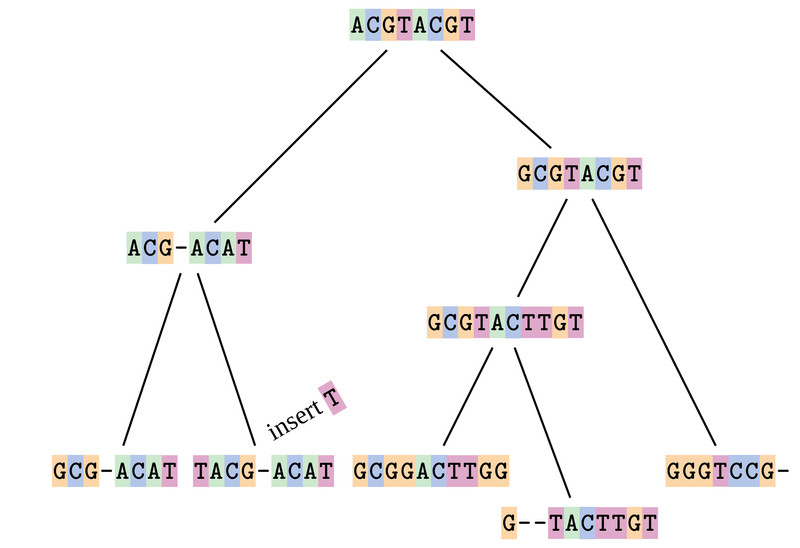
DNA sequence changes accumulating along a phylogenetic tree
In the diagram, notice how sequences become more different as you move farther from the common ancestor. The more recently two species shared a common ancestor, the more similar their DNA sequences.
Continuous Change in the Fossil Record
Fossils show:
- Transitional forms
- Gradual anatomical change
- Extinction and emergence of species
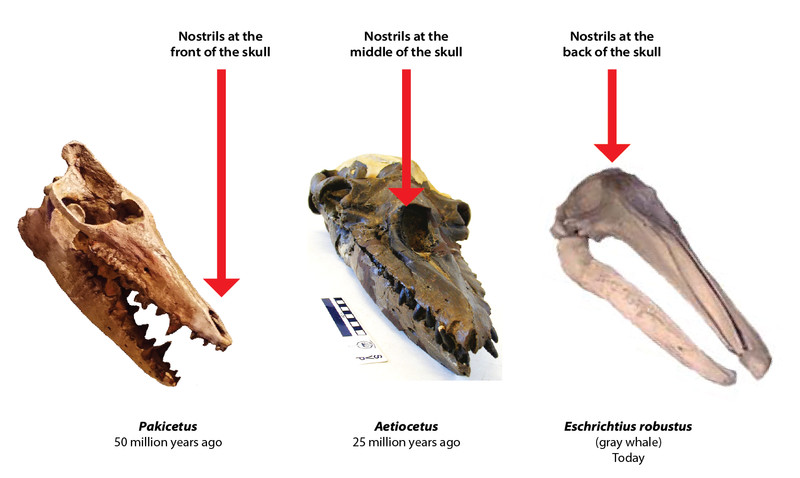
Whale fossil series showing nostril position shifting over time
In this classic whale example, the nostrils shift from the front of the skull to the top over millions of years. The fossil record matches genetic evidence. Species change. Some disappear. New ones arise.
Evolution of Resistance in Real Time
This is one of the clearest modern examples.
Here’s the pattern:
- A population has genetic variation.
- A few individuals already carry a resistance allele.
- An antibiotic, pesticide, herbicide, or chemotherapy drug is applied.
- Susceptible individuals die.
- Resistant individuals survive and reproduce.
- The resistance allele increases in frequency.
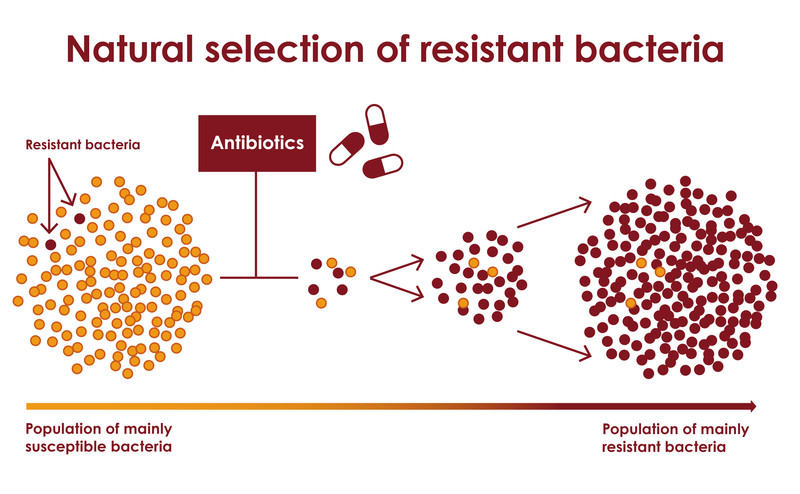
Natural selection of antibiotic-resistant bacteria
The diagram shows this shift clearly, from mostly susceptible bacteria to mostly resistant bacteria after antibiotic treatment.
Key idea: The drug does not cause the mutation. The mutation already existed. The drug selects for it.
Examples you should recognize:
- Antibiotic-resistant bacteria
- Pesticide-resistant insects
- Herbicide-resistant weeds
- Chemotherapy-resistant cancer cells
On exams, they often hide this in data tables. If survival differs by genotype and allele frequencies shift, that’s natural selection in action.
Pathogen Evolution and Emergent Diseases
Viruses and bacteria evolve quickly because they have:
- Short generation times
- Large populations
- High mutation rates
This leads to:
- New viral variants
- Immune evasion
- Reemergence of controlled diseases
Vaccines and treatments sometimes need updating because the pathogen population has evolved.
When you see a new strain spreading more effectively, think allele frequency change.
Environmental Change Drives Continued Evolution
When the environment changes, selection pressures change.
Examples:
- Climate shifts
- New predators
- Introduction of chemicals or drugs
- Habitat destruction
- Food source changes
A trait that was once neutral might suddenly increase survival. Allele frequencies shift in a new direction.
Populations may:
- Adapt
- Migrate
- Decline
- Go extinct
Evolution allows populations to respond to environmental change, but only if enough genetic variation exists.
Key Takeaways
Genomic Changes Over Time
Changes in a population's DNA over generations through mutation, recombination, and other evolutionary mechanisms.
Continuous Change in the Fossil Record
Successive fossils show organisms changing over geologic time, with appearances, transitions, and extinctions.
Pathogen Evolution and Emergent Disease
Rapid genetic change in pathogens can produce new diseases or revive previously controlled ones.
Natural Selection in Ongoing Evolution
Individuals with heritable traits that improve survival or reproduction leave more offspring over time.
Population-Level Evolution
Evolution is a change in allele frequencies in a population, not a change within one individual.
Evolution of Resistance to Drugs and Chemicals
Natural selection spreads heritable traits that let organisms survive antibiotics, pesticides, herbicides, or chemotherapy drugs.
Notes
Genomic Changes Over Time
Changes in a population's DNA over generations through mutation, recombination, and other evolutionary mechanisms.
Continuous Change in the Fossil Record
Successive fossils show organisms changing over geologic time, with appearances, transitions, and extinctions.
Pathogen Evolution and Emergent Disease
Rapid genetic change in pathogens can produce new diseases or revive previously controlled ones.
Natural Selection in Ongoing Evolution
Individuals with heritable traits that improve survival or reproduction leave more offspring over time.
Population-Level Evolution
Evolution is a change in allele frequencies in a population, not a change within one individual.
Evolution of Resistance to Drugs and Chemicals
Natural selection spreads heritable traits that let organisms survive antibiotics, pesticides, herbicides, or chemotherapy drugs.
