Topic 5.5 Notes – Environmental Effects on Phenotype
1. Genotype, Phenotype, and Gene Expression
Let’s ground this in the basics.
- Genotype = the specific alleles an organism has (its DNA sequence).
- Phenotype = observable traits (appearance, physiology, behavior).
- Gene expression = the process of turning genes on or off to make proteins.
Genes code for proteins. Proteins build structures, act as enzymes, send signals, and regulate other genes. So:
Environment → gene expression → protein activity → phenotype
A key point students miss:
The DNA sequence does not have to change for the phenotype to change. Regulation alone can do it.
That’s the foundation for understanding how one genotype can produce multiple phenotypes.
2. Phenotypic Plasticity
Phenotypic plasticity is the ability of one genotype to produce different phenotypes in response to environmental conditions.
Core features:
- The genotype stays the same.
- The environment alters gene expression.
- Traits that can change include:
- Physical traits (color, size)
- Physiological traits (enzyme levels, hormone production)
- Behavioral traits (mating signals)
Plasticity allows individuals to adjust within their lifetime. No mutation required. No evolution required.
This matters in variable environments. If conditions change seasonally or unpredictably, plasticity can increase survival immediately.
On a quiz, if you see a scenario where the trait changes but there is no mention of allele frequency change in a population, think plasticity, not natural selection.
3. Environmental Factors That Influence Phenotype
The College Board expects you to recognize specific types of environmental influences and understand how gene expression connects to each.
Nutrition
Genes set a range of possible growth, but environment determines where within that range an individual ends up.
- Human height and body weight are both influenced by genotype.
- Poor nutrition during development can prevent someone from reaching their genetic height potential.
- Calorie intake and activity level similarly shape weight without changing the underlying DNA sequence.
- The genotype is unchanged, but protein production related to growth is affected.
This is a classic gene-environment interaction.
Temperature
Temperature can influence enzyme activity and developmental pathways.
Temperature-dependent sex determination in reptiles:
- Eggs incubated at different temperatures develop into different sexes.
- Same genotype.
- Temperature affects gene expression during embryonic development.
- Results in male or female phenotype.
Sex chromosomes are not determining sex here. The environment is.
Light and UV Exposure
Environmental light cues regulate hormones and pigments.
UV exposure and melanin production:
- UV radiation stimulates skin cells to increase melanin production.
- More melanin → darker skin (tanning).
- Melanin protects against DNA damage.
Different individuals tan to different degrees because of genetic differences, but the tanning response itself is plastic.
Chemical Environment
External chemistry can affect pigment expression.
Hydrangea flower color depends on soil pH:
- Acidic soil → blue flowers
- Basic soil → pink flowers
Soil pH changes aluminum availability, which affects pigment production. Same plant genotype. Different flower colors.
Seasonal and Social Cues
Environmental signals can trigger hormonal and genetic responses.
Seasonal fur color in arctic animals:
- Changing daylight alters hormone levels.
- Coat shifts from brown/gray in summer to white in winter.
- Improves camouflage.
Yeast pheromone production:
- Yeast detect the presence of the opposite mating type.
- Signal transduction activates genes for pheromone production.
- Increases mating success.
In both cases, environmental detection leads to changes in gene expression.
4. How Environmental Changes Affect Gene Expression
Here’s the general pathway from an external signal to a change in phenotype:
- Environmental stimulus (temperature, UV, nutrients, social signal)
- Detection by receptors or cellular sensors
- Signal transduction pathway activated
- Transcription factors activated or repressed
- Target genes transcribed
- Protein levels change
- Phenotype changes
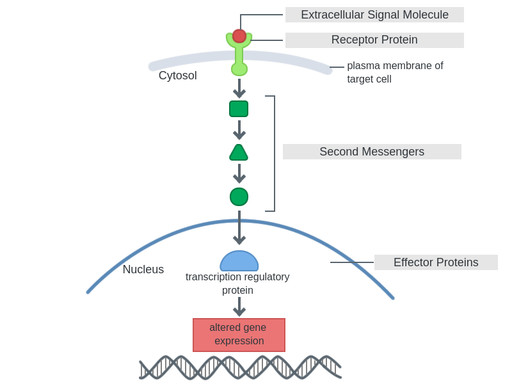
Overview of a signal transduction pathway leading to altered gene expression
The diagram shows a signal molecule binding to a receptor in the plasma membrane, triggering second messengers inside the cell. That cascade activates a transcription regulatory protein in the nucleus, which changes gene expression.
This is a systems interaction. The external environment interacts with cellular regulatory systems to produce a complex outcome.
When the AP exam gives you a stimulus passage about a signaling molecule or environmental trigger, they often want you to connect it all the way to altered protein production.
5. Environmental Effects and Natural Selection
Now separate two ideas clearly.
Phenotypic plasticity
- Same genotype
- Different phenotypes
- Happens within an individual’s lifetime
Natural selection
- Different genotypes
- Differential survival and reproduction
- Allele frequencies change over generations
The environment does both:
- It can directly alter phenotype through gene regulation.
- It can act as a selective pressure favoring certain heritable traits.
If a question describes a population shifting genetically over many generations, that’s evolution.
If it describes one organism changing because conditions changed, that’s plasticity.
Students mix these up constantly. Always ask yourself:
Did the DNA sequence change? Did allele frequencies shift? Or did gene expression change?
Key Takeaways
Environmental Factors That Influence Gene Expression
Temperature, light, nutrition, hormones, chemicals, and social cues can activate or silence genes.
Human Height and Weight
Nutrition and lifestyle affect growth and body mass, modifying genetically influenced trait expression.
Flower Color and Soil pH
Soil acidity or alkalinity changes pigment-related chemistry, producing different flower colors.
Seasonal Fur Color in Arctic Animals
Seasonal cues such as day length trigger coat color changes without altering genotype.
Temperature-Dependent Sex Determination
Incubation temperature determines sex in some reptiles instead of sex chromosomes.
UV Exposure and Melanin Production
Increased ultraviolet radiation stimulates melanin synthesis, causing darker skin pigmentation.
Pheromone Production in Yeast and Other Fungi
Detection of the opposite mating type activates genes for pheromone production.
Phenotypic Plasticity
Environmental conditions alter gene expression, allowing one genotype to produce different phenotypes.
Notes
Environmental Factors That Influence Gene Expression
Temperature, light, nutrition, hormones, chemicals, and social cues can activate or silence genes.
Human Height and Weight
Nutrition and lifestyle affect growth and body mass, modifying genetically influenced trait expression.
Flower Color and Soil pH
Soil acidity or alkalinity changes pigment-related chemistry, producing different flower colors.
Seasonal Fur Color in Arctic Animals
Seasonal cues such as day length trigger coat color changes without altering genotype.
Temperature-Dependent Sex Determination
Incubation temperature determines sex in some reptiles instead of sex chromosomes.
UV Exposure and Melanin Production
Increased ultraviolet radiation stimulates melanin synthesis, causing darker skin pigmentation.
Pheromone Production in Yeast and Other Fungi
Detection of the opposite mating type activates genes for pheromone production.
Phenotypic Plasticity
Environmental conditions alter gene expression, allowing one genotype to produce different phenotypes.
