Topic 4.3 Notes – Signal Transduction Pathways
1. What Signal Transduction Is
A signal transduction pathway is the process by which a cell converts an external signal into a specific internal response.
At its simplest, the flow looks like this:
- Reception - a signaling molecule binds to a receptor
- Transduction - the signal is relayed and often amplified inside the cell
- Response - the cell changes its behavior
This overview shows how the signal moves from outside the cell to a final response inside.
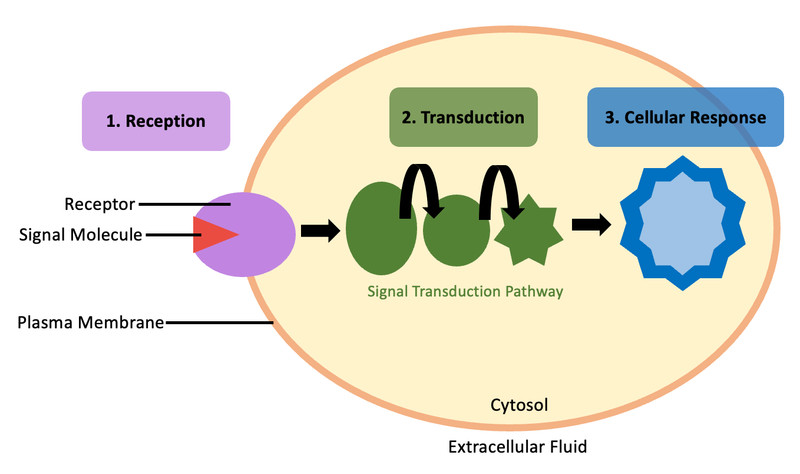
Overview of a signal transduction pathway
The basic players
Ligand (signal molecule)
A chemical messenger such as a hormone, cytokine, or pheromone.Receptor protein
Specifically binds the ligand. Binding depends on shape, so structure determines function.Relay proteins / signaling molecules
Pass the message along inside the cell.Target protein
Produces the final cellular response.
If any one of these changes shape due to a mutation or chemical interaction, the pathway’s outcome can change. That structure → function relationship is a recurring theme on tests.
2. The Three Stages of a Signaling Pathway
Reception
Reception begins when a ligand binds to its specific receptor.
- Binding causes a conformational change in the receptor.
- That structural change activates the receptor.
Receptors can be:
- Membrane receptors
For large or polar molecules that cannot cross the membrane. - Intracellular receptors
For small, nonpolar molecules that diffuse through the membrane.
If the receptor’s binding site is altered by mutation, the ligand may not bind at all, or the receptor may stay permanently active.
Transduction
After the receptor is activated, the signal moves through a series of intracellular steps.
Common features:
- Protein modifications (often phosphorylation)
- Activation of multiple relay proteins
- Signal amplification (one receptor can activate many downstream molecules)
Because this is a cascade, one activated molecule can activate many others. That amplification explains how a small amount of hormone can cause a large cellular effect.
Mutations in any protein in this cascade can:
- Block the pathway
- Reduce the response
- Keep the pathway constantly “on”
Growth signaling pathways stuck in the “on” position are commonly linked to cancer.
Response
The final step is the cellular response. This depends on:
- The type of cell
- The receptors present
- The genes available to be expressed
The same signal can cause different responses in different cell types. That idea shows up often in data-based questions.
3. Types of Cellular Responses
All responses fall into a few major categories.
Changes in Gene Expression
The signal activates transcription factors, which turn genes on or off.
Results:
- New proteins are made
- Long-term changes in cell behavior
- Possible changes in phenotype
Examples you should recognize:
- Cytokines stimulate immune cells to divide by activating genes for replication.
- Yeast mating pheromones trigger mating gene expression.
- HOX genes regulate animal body plans during development.
- Quorum sensing in bacteria allows microbes to detect population density and activate specific genes together.
When you see a question about development or long-term cell differentiation, think gene expression.
Changes in Cell Function
Some signals modify proteins that already exist.
This leads to:
- Enzyme activation or inactivation
- Metabolic shifts
- Rapid physiological changes
Example:
- Epinephrine released during stress binds receptors on mammal liver cells.
- A phosphorylation cascade activates enzymes that break down glycogen.
- Glucose is released into the bloodstream.
This response is fast because it modifies existing enzymes rather than waiting to make new ones.
Programmed Cell Death (Apoptosis)
Some pathways activate apoptosis, a controlled and organized cell death process.
Roles of apoptosis:
- Removing damaged cells
- Shaping tissues during development
- Preventing uncontrolled growth
If apoptosis signaling fails, damaged cells may survive and divide, contributing to cancer.
4. How Structural Changes Affect Signaling Pathways
Signal transduction depends entirely on molecular structure.
Mutations in receptors
- Ligand cannot bind → no response
- Receptor always active → constant signaling
Even a change in one domain of the receptor protein can alter downstream effects.
Mutations in relay proteins
If a signaling protein in the cascade changes shape:
- The signal may not be passed on.
- The wrong target may be activated.
- Amplification may fail.
Remember that effects are downstream. One mutation can influence every step after it.
Changes in the signaling molecule
If the ligand’s structure changes, binding efficiency changes.
Example:
- Ethylene in plants regulates fruit ripening.
- Altered ethylene signaling changes enzyme production and affects ripening rate.
Chemical activators and inhibitors
Chemicals can interact with any component of a pathway.
- Agonists mimic the natural ligand and activate the pathway.
- Antagonists block receptors or signaling components.
Many drugs work this way. Environmental toxins can also disrupt pathways unintentionally.
On exams, if a chemical is added and a pathway stops working, think about which step it might be blocking.
Key Takeaways
Signal Transduction
Conversion of an external signal into specific intracellular responses through a signaling pathway.
Cellular Responses to Signals
Include changes in gene expression, cell function, phenotype, or programmed cell death.
Apoptosis
Programmed cell death triggered when cells are damaged, unnecessary, or signaled to self-destruct.
Quorum Sensing
Microbial communication using secreted signals to coordinate gene expression by population density.
Epinephrine and Glycogen Breakdown
A hormone signal that triggers liver cells to convert glycogen into glucose.
Cytokines
Signaling proteins that regulate gene expression, cell replication, and immune cell division.
Yeast Mating Pheromones
Chemical signals that bind receptors and activate genes required for yeast mating.
Ethylene
A plant hormone gas that triggers enzyme production and fruit ripening responses.
HOX Genes
Developmental regulatory genes that specify body regions and organize animal body plans.
Mutation Effects on Signaling Pathways
Changes in receptors or pathway proteins can weaken, block, or overactivate downstream responses.
Receptor Protein Domains
Specific structural regions whose alteration can change ligand binding or signal transmission.
Chemical Activators and Inhibitors of Signaling
Molecules that bind pathway components and either stimulate or block signal transduction.
Cellular Responses to Signals
Signals can change gene expression or alter cell activities such as metabolism, movement, or shape.
Signal Reception
Detection of a signaling molecule when it binds to a specific receptor protein.
Ligand
A signaling molecule that binds specifically to a receptor and starts a response.
Notes
Signal Transduction
Conversion of an external signal into specific intracellular responses through a signaling pathway.
Cellular Responses to Signals
Include changes in gene expression, cell function, phenotype, or programmed cell death.
Apoptosis
Programmed cell death triggered when cells are damaged, unnecessary, or signaled to self-destruct.
Quorum Sensing
Microbial communication using secreted signals to coordinate gene expression by population density.
Epinephrine and Glycogen Breakdown
A hormone signal that triggers liver cells to convert glycogen into glucose.
Cytokines
Signaling proteins that regulate gene expression, cell replication, and immune cell division.
Yeast Mating Pheromones
Chemical signals that bind receptors and activate genes required for yeast mating.
Ethylene
A plant hormone gas that triggers enzyme production and fruit ripening responses.
HOX Genes
Developmental regulatory genes that specify body regions and organize animal body plans.
Mutation Effects on Signaling Pathways
Changes in receptors or pathway proteins can weaken, block, or overactivate downstream responses.
Receptor Protein Domains
Specific structural regions whose alteration can change ligand binding or signal transmission.
Chemical Activators and Inhibitors of Signaling
Molecules that bind pathway components and either stimulate or block signal transduction.
Cellular Responses to Signals
Signals can change gene expression or alter cell activities such as metabolism, movement, or shape.
Signal Reception
Detection of a signaling molecule when it binds to a specific receptor protein.
Ligand
A signaling molecule that binds specifically to a receptor and starts a response.
