Topic 2.1 Notes – Cell Structure and Function
What Cell Structure and Function Means
A cell is not just a bag of molecules. It has specialized parts, and each part has a shape or membrane setup that helps it do a specific job.
A quick grounding point helps here:
- All cells have a plasma membrane, cytoplasm, DNA, and ribosomes.
- Eukaryotic cells also have membrane-bound organelles like the nucleus, ER, Golgi, mitochondria, and chloroplasts.
- Prokaryotic cells do not have membrane-bound organelles, but they still have ribosomes.
The AP move here is more than naming an organelle. You need to explain how its structure helps the cell function. For example, “mitochondria make ATP” is incomplete. “The folded inner membrane increases surface area for ATP-producing reactions” earns the point.
The Main Organelles and Subcellular Components
Start with this plant cell diagram as a quick visual map of the organelles you need to know. The sections below focus on what each structure does and why its structure matters.
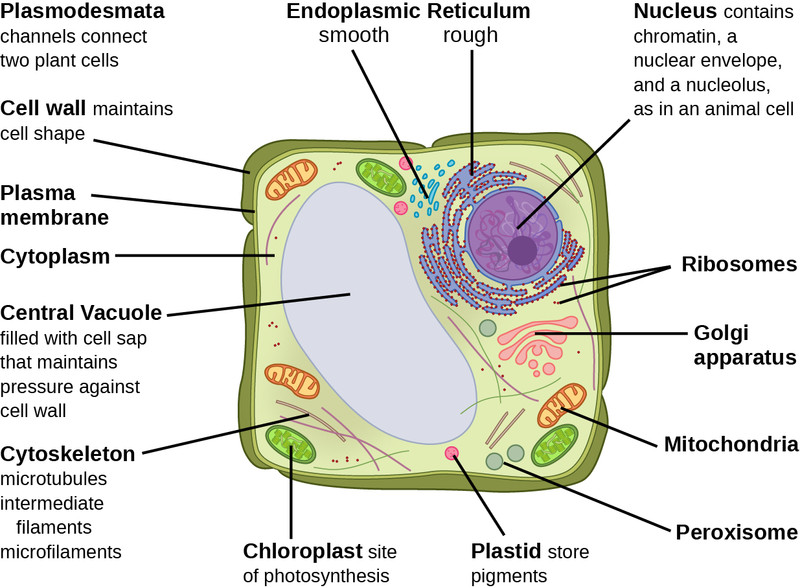
Labeled plant cell
Ribosomes
Ribosomes are non-membrane-bound structures made of rRNA and protein. They read mRNA during translation to build proteins.
- Found in all forms of life, which supports common ancestry
- Free ribosomes usually make proteins that stay in the cytosol
- Bound ribosomes on the rough ER usually make proteins for membranes or export
A common trap is thinking free and bound ribosomes are different kinds. They are the same kind. The difference is location and protein destination.
Nucleus and Nuclear Envelope
The nucleus stores DNA and helps direct cell activities. Inside it, the nucleolus makes rRNA and assembles ribosomal subunits.
The nuclear envelope is a double membrane with pores that regulate what enters and leaves the nucleus. It is also continuous with the ER, which helps connect gene instructions to protein processing.
Endoplasmic Reticulum
The ER is a membrane network involved in intracellular transport and support.
- Rough ER
- Has ribosomes attached
- Helps synthesize proteins
- Keeps protein processing compartmentalized
- Smooth ER
- Synthesizes lipids
- Detoxifies harmful substances
You do not need the specialized smooth ER roles from certain cell types for AP.
Golgi Complex
The Golgi is a stack of flattened membrane sacs. It modifies, folds, sorts, and packages cell products.
- A key example is glycosylation, where sugars are added to proteins
- These chemical changes can affect a protein’s function or where it gets sent
Lysosomes and Vacuoles
- Lysosomes
- Membrane sacs with hydrolytic enzymes
- Digest macromolecules, old organelles, and ingested material
- Help with apoptosis or programmed cell death
- Vacuoles
- Membrane-bound storage sacs
- In plant cells, the large central vacuole stores water and nutrients and maintains turgor pressure
- In animal cells, vacuoles are smaller and more numerous
Energy Organelles
- Mitochondria
- Double membrane
- Inner membrane folded into cristae
- Site of aerobic cellular respiration and efficient ATP production
- Chloroplasts
- Double membrane
- Site of photosynthesis
- Found in plants and photosynthetic algae, not all eukaryotes
The Endomembrane System
This system includes the nuclear envelope, ER, Golgi, lysosomes, vacuoles, transport vesicles, and plasma membrane. These parts work together to modify, package, and transport proteins, lipids, and polysaccharides.
A typical protein pathway looks like this, which is the main route shown in the diagram:
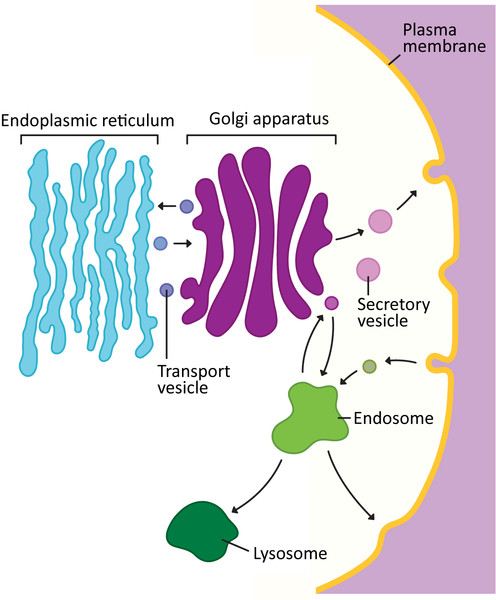
- DNA stays in the nucleus, and mRNA leaves through nuclear pores.
- A ribosome on rough ER builds the protein.
- The protein enters the ER for initial processing.
- A transport vesicle carries it to the Golgi apparatus.
- The Golgi apparatus modifies, sorts, and packages it.
- Another vesicle sends it to the plasma membrane, lysosome, vacuole, or outside the cell.
This is why compartmentalization matters. Different reactions happen in different places, so the cell stays organized and efficient.
How Structure Supports Cell Jobs
This whole topic comes back to one idea. Structure supports function.
- Membranes create separate environments for specific reactions.
- Double membranes in mitochondria and chloroplasts create compartments for energy-related processes.
- Cristae increase surface area, which helps ATP production happen more efficiently.
- Ribosome location helps determine where the protein will be used.
- The large central vacuole helps plant cells stay rigid through turgor pressure.
- Lysosome membranes keep digestive enzymes contained, so digestion is controlled.
Cell Type Differences and High-Yield Comparisons
| Cell type | Key features |
|---|---|
| Prokaryote | Ribosomes present, no membrane-bound organelles |
| Eukaryote | Nucleus and membrane-bound organelles |
| Plant cell | Chloroplasts, cell wall, large central vacuole |
| Animal cell | No chloroplasts, no cell wall, smaller more numerous vacuoles |
A few comparisons show up all the time:
- Ribosomes are not membrane-bound.
- Free vs bound ribosomes differ by destination of protein, not structure.
- Cristae increase efficiency by increasing surface area.
- Chloroplasts are only in plants and photosynthetic algae.
- Naming an organelle is not enough. You need the structure-to-function link.
Key Takeaways
Plasma Membrane
A selectively permeable phospholipid bilayer that surrounds the cell and regulates transport.
Nucleus and Nuclear Envelope
The DNA-containing control center enclosed by a double membrane with pores continuous with the ER.
Ribosomes
Nonmembranous rRNA-protein complexes that translate mRNA sequences into polypeptides.
Free vs. Bound Ribosomes
Free make cytosolic proteins; bound on rough ER make secreted or membrane proteins.
Endomembrane System
A network of membranes that modifies, packages, and transports proteins, lipids, and polysaccharides.
Transport Vesicles
Small membrane sacs that move materials between organelles in the endomembrane system.
Golgi Apparatus
A stack of flattened sacs that modifies, sorts, folds, and packages cellular products.
Mitochondria
Double-membraned organelles that carry out aerobic respiration and produce most cellular ATP.
Lysosomes
Membrane-bound sacs of hydrolytic enzymes that digest materials and recycle cell components.
Chloroplasts
Double-membraned organelles in plants and algae where photosynthesis converts light energy to chemical energy.
Prokaryotic vs. Eukaryotic Cells
Prokaryotes lack membrane-bound organelles and a nucleus; eukaryotes contain both.
Plant vs. Animal Cells
Plant cells have cell walls and chloroplasts; animal cells lack them and typically have centrioles.
Endoplasmic Reticulum (Rough and Smooth)
A membrane network that supports cell shape, transports materials, and synthesizes proteins or lipids.
Vacuoles
Membrane-bound sacs that store materials; plant central vacuoles maintain turgor pressure.
Notes
Plasma Membrane
A selectively permeable phospholipid bilayer that surrounds the cell and regulates transport.
Nucleus and Nuclear Envelope
The DNA-containing control center enclosed by a double membrane with pores continuous with the ER.
Ribosomes
Nonmembranous rRNA-protein complexes that translate mRNA sequences into polypeptides.
Free vs. Bound Ribosomes
Free make cytosolic proteins; bound on rough ER make secreted or membrane proteins.
Endomembrane System
A network of membranes that modifies, packages, and transports proteins, lipids, and polysaccharides.
Transport Vesicles
Small membrane sacs that move materials between organelles in the endomembrane system.
Golgi Apparatus
A stack of flattened sacs that modifies, sorts, folds, and packages cellular products.
Mitochondria
Double-membraned organelles that carry out aerobic respiration and produce most cellular ATP.
Lysosomes
Membrane-bound sacs of hydrolytic enzymes that digest materials and recycle cell components.
Chloroplasts
Double-membraned organelles in plants and algae where photosynthesis converts light energy to chemical energy.
Prokaryotic vs. Eukaryotic Cells
Prokaryotes lack membrane-bound organelles and a nucleus; eukaryotes contain both.
Plant vs. Animal Cells
Plant cells have cell walls and chloroplasts; animal cells lack them and typically have centrioles.
Endoplasmic Reticulum (Rough and Smooth)
A membrane network that supports cell shape, transports materials, and synthesizes proteins or lipids.
Vacuoles
Membrane-bound sacs that store materials; plant central vacuoles maintain turgor pressure.
