Topic 1.5 Notes – State Building in Africa
How African States Built and Used Power from 1200 to 1450
African states were states even when they did not have a huge written bureaucracy. A ruler could control the capital directly and rule farther-out areas indirectly through chiefs and local elites.
- Tributary systems were common. Local leaders stayed in place, but they sent goods, labor, or soldiers to a stronger ruler.
- Kinship and lineage mattered because people saw rulers as connected to the community through family lines, ancestry, and sacred tradition.
- Customary law stayed important. Bigger states usually built on local traditions instead of wiping them out.
- Productive populations were the base of power. Farming, herding, and crafts fed cities, armies, and elites.
- Trade control gave rulers wealth. If you controlled routes, markets, or valuable goods, you could tax them and reward supporters.
- Religious authority made rule look legitimate, whether through sacred kingship, Christianity, or Islam.
The map below gives you a quick way to place these patterns across the continent, from West African trade states to Christian Ethiopia and Great Zimbabwe in the south.
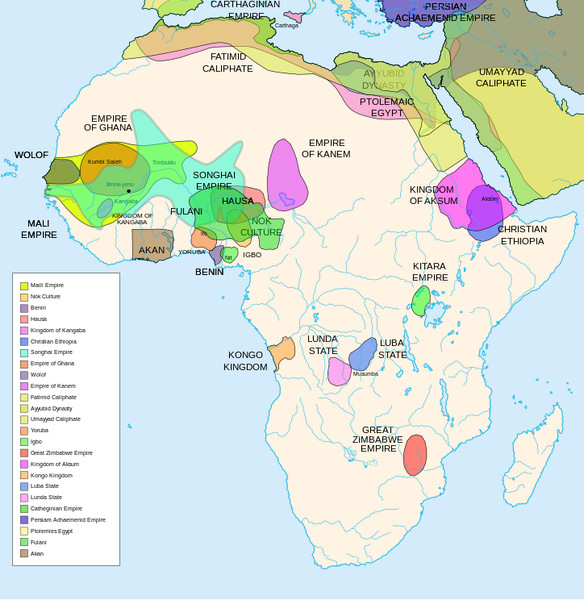
Major African states and cultures, c. 1200 to 1450
What stayed the same and what changed can show up in one SAQ sentence:
| Continuity | Innovation | Diversity |
|---|---|---|
| local chiefs, tribute, customary law, agriculture, sacred rulership | larger capitals, monumental buildings, wider trade links, dynastic claims, selective use of Christianity or Islam | centralized kingdoms, tributary states, and independent city-states all existed together |
Great Zimbabwe
Great Zimbabwe shows how an inland African state could become powerful by tying local production to long-distance trade.
- Who and when: a Shona-speaking state in southern Africa, strongest in the 1200s and 1300s.
- Power base:
- sorghum and millet farming supported the population
- cattle meant wealth, status, and political influence
- tribute came from subordinate communities
- rulers controlled gold regions and routes to the Swahili coast
- Trade links: gold and ivory moved through African networks to Indian Ocean ports. Imported Chinese ceramics, Persian pottery, and glass beads have been found there.
- Exam trap: those imports prove trade connections. They do not prove foreigners built Great Zimbabwe.
Government and architecture
The ruler governed the core area more directly and the wider region through tributary relationships and elites.
- Hill Complex and Great Enclosure are the key sites.
- The stone walls were built without mortar.
- The buildings showed rulers could mobilize huge labor forces and also marked social hierarchy.
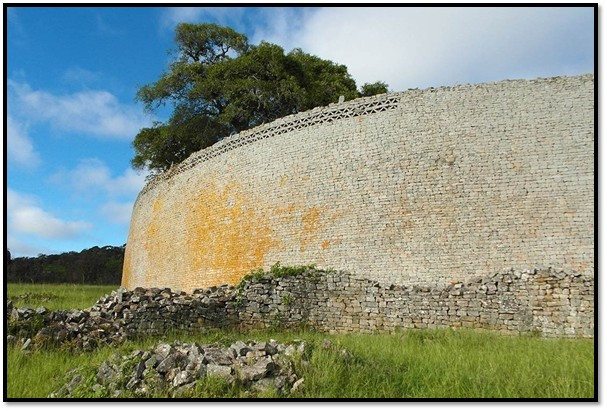
Great Enclosure, Great Zimbabwe
This view of the Great Enclosure highlights the massive dry-stone construction that made Great Zimbabwe famous. Its decline in the 1400s probably came from a mix of environmental strain, resource depletion, political shifts, and changing trade routes. Power later shifted toward states like Mutapa.
Christian Ethiopia
Ethiopia followed a different path. It kept a long Christian tradition from Aksum and used religion to strengthen monarchy.
Zagwe dynasty
- Lalibela is tied to the famous 11 rock-hewn churches.
- These churches were carved from solid rock, not built from stacked blocks.
- The Church of Saint George is the best-known example.
- The churches showed devotion, but also royal power and control of labor.
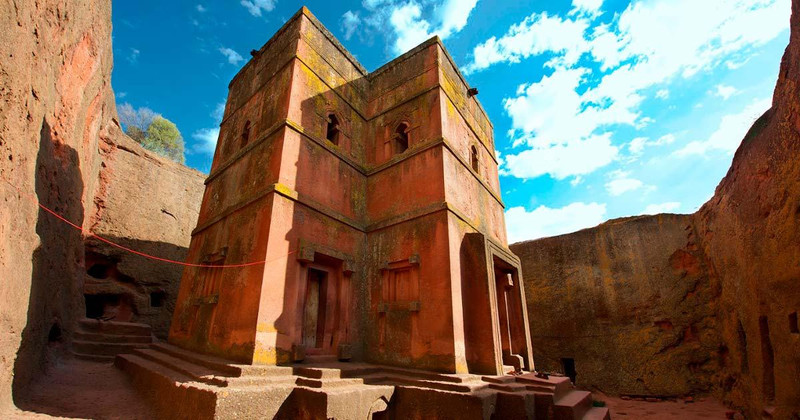
Church of Saint George, Lalibela
Solomonic dynasty
In 1270, Yekuno Amlak overthrew the Zagwe and started the Solomonic dynasty.
- Rulers claimed descent from King Solomon and the Queen of Sheba.
- The Kebra Nagast supported this claim.
- This sacred genealogy made monarchy look divinely legitimate.
Church and state
- The Ethiopian Orthodox Tewahedo Church was linked to the Coptic Church of Alexandria.
- Geʽez served as a liturgical and literary language.
- Churches and monasteries preserved manuscripts, trained clergy, owned land, and reinforced royal authority.
Ethiopian power rested on highland farming, tribute, nobles, and mobile royal courts. Mountain terrain helped defense but made administration harder. Amda Seyon I expanded the kingdom through campaigns against neighboring Muslim states.
The Hausa Kingdoms
The Hausa case shows that state building did not require one unified empire. These were independent but connected city-states.
Hausa Bakwai
Biram, Daura, Gobir, Kano, Katsina, Rano, Zazzau (Zaria)
Political and economic life
Each state had a fortified city, villages, markets, and a ruler called a sarki. Rulers worked with nobles, advisers, military leaders, and local authorities. Rivalry between states blocked lasting unification.
Their strength came from:
- savanna farming and livestock
- urban crafts such as cotton textiles, leatherworking, dyeing, and metalworking
- trade with forest regions, West African networks, and trans-Saharan caravans
- taxation of markets and protection of routes
Islam
Islam spread through merchants and scholars, especially in cities like Kano and Katsina.
- rulers used Islam for legitimacy, literacy, and trade links
- Islam spread first in courts and cities
- indigenous beliefs and customary law remained important, so Islam blended with older traditions
Big Patterns and Comparison
All three cases were built on African foundations, not outside control. Production came first, then trade expanded wealth and reach.
- Religion and legitimacy
- Great Zimbabwe used indigenous sacred traditions
- Ethiopia used Christianity
- Hausa states gradually adopted Islam
- Architecture as evidence of power
- Great Zimbabwe stone enclosures
- Lalibela churches
- Hausa city walls
- Expansion
- Ethiopia expanded by conquest
- Great Zimbabwe expanded through tributary influence
- Hausa states expanded through urban and commercial reach
Key Takeaways
Tributary Government
System in which local leaders retain authority but acknowledge a stronger ruler and provide goods, labor, or military support
Great Zimbabwe
Shona-built tributary state and stone capital supported by farming, cattle, gold, ivory, and trade with the Indian Ocean coast
Great Enclosure
Massive mortarless stone complex at Great Zimbabwe that demonstrated elite wealth, social hierarchy, and the ability to mobilize labor
Aksum
Earlier Ethiopian kingdom whose Christianity, written culture, and highland political traditions continued after its imperial decline
Zagwe Dynasty
Christian Ethiopian dynasty that ruled before 1270 and displayed its authority through projects such as Lalibela's rock-hewn churches
Lalibela
Zagwe ruler traditionally associated with the construction of 11 rock-hewn churches that demonstrated royal support for Ethiopian Christianity
Rock-Hewn Churches of Lalibela
Eleven churches carved downward and inward from solid rock, displaying Zagwe command of skilled labor and protection of Christianity
Yekuno Amlak
Ethiopian ruler who overthrew the Zagwe dynasty in 1270 and founded the Solomonic dynasty
Solomonic Dynasty
Ethiopian dynasty founded in 1270 that claimed descent from Aksum, King Solomon, and the Queen of Sheba to legitimize its rule
Kebra Nagast (Glory of Kings)
Fourteenth-century Ethiopian work that elaborated the Solomonic dynasty's claimed descent from Solomon and the Queen of Sheba
Ethiopian Orthodox Tewahedo Church
Church that preserved manuscripts, trained clergy, owned land, and reinforced the authority of Ethiopia's Christian monarchs
Amda Seyon I
Ethiopian ruler from 1314 to 1344 whose campaigns defeated neighboring Muslim states and expanded land, tribute, and royal power
Hausa Kingdoms (Hausa City-States)
Independent but culturally connected West African city-states supported by farming, crafts, fortified cities, trade, and authority over nearby villages
Sarki
Title for a Hausa ruler who governed with officials, nobles, military leaders, advisers, and local authorities
Christian Ethiopia
Christian highland monarchy that used Aksumite continuity, church institutions, sacred genealogy, tribute, and military expansion to build and legitimize royal power
Islamization of the Hausa States
Gradual, uneven adoption of Islam among Hausa rulers, merchants, scholars, and urban communities while indigenous beliefs and customary practices continued
Notes
Tributary Government
System in which local leaders retain authority but acknowledge a stronger ruler and provide goods, labor, or military support
Great Zimbabwe
Shona-built tributary state and stone capital supported by farming, cattle, gold, ivory, and trade with the Indian Ocean coast
Great Enclosure
Massive mortarless stone complex at Great Zimbabwe that demonstrated elite wealth, social hierarchy, and the ability to mobilize labor
Aksum
Earlier Ethiopian kingdom whose Christianity, written culture, and highland political traditions continued after its imperial decline
Zagwe Dynasty
Christian Ethiopian dynasty that ruled before 1270 and displayed its authority through projects such as Lalibela's rock-hewn churches
Lalibela
Zagwe ruler traditionally associated with the construction of 11 rock-hewn churches that demonstrated royal support for Ethiopian Christianity
Rock-Hewn Churches of Lalibela
Eleven churches carved downward and inward from solid rock, displaying Zagwe command of skilled labor and protection of Christianity
Yekuno Amlak
Ethiopian ruler who overthrew the Zagwe dynasty in 1270 and founded the Solomonic dynasty
Solomonic Dynasty
Ethiopian dynasty founded in 1270 that claimed descent from Aksum, King Solomon, and the Queen of Sheba to legitimize its rule
Kebra Nagast (Glory of Kings)
Fourteenth-century Ethiopian work that elaborated the Solomonic dynasty's claimed descent from Solomon and the Queen of Sheba
Ethiopian Orthodox Tewahedo Church
Church that preserved manuscripts, trained clergy, owned land, and reinforced the authority of Ethiopia's Christian monarchs
Amda Seyon I
Ethiopian ruler from 1314 to 1344 whose campaigns defeated neighboring Muslim states and expanded land, tribute, and royal power
Hausa Kingdoms (Hausa City-States)
Independent but culturally connected West African city-states supported by farming, crafts, fortified cities, trade, and authority over nearby villages
Sarki
Title for a Hausa ruler who governed with officials, nobles, military leaders, advisers, and local authorities
Christian Ethiopia
Christian highland monarchy that used Aksumite continuity, church institutions, sacred genealogy, tribute, and military expansion to build and legitimize royal power
Islamization of the Hausa States
Gradual, uneven adoption of Islam among Hausa rulers, merchants, scholars, and urban communities while indigenous beliefs and customary practices continued
