Topic 9.9 Notes – Continuity and Change in a Globalized World
How Science and Technology Reshaped the World After 1900
This topic is a continuity and change question. You’re judging extent, not just listing inventions.
Before 1900, the world already had railroads, steamships, telegraphs, coal power, factories, imperial trade networks, and commercial agriculture. So post-1900 change often meant acceleration rather than a totally new beginning.
What changed:
- Communication got much faster and more global.
- Productivity rose in industry and farming.
- Life expectancy increased because medicine improved.
- Fertility dropped in many places as birth control spread.
- Global culture spread through mass media.
What continued:
- Inequality stayed strong across class, race, gender, and region.
- State power still shaped outcomes.
- Capitalism and profit-driven production continued.
- Religion, local traditions, and languages remained powerful.
- Access to new technology was uneven.
A strong argument about extent uses these tests:
- Scale How many people were affected?
- Speed How quickly did it spread?
- Depth Did it change daily life?
- Duration Did it last?
- Uneven distribution Who got left out?
Chronology that helps:
- Early 1900s: radio, aviation, petroleum, mass production, antibiotics
- Late 1900s to today: container shipping, commercial air travel, nuclear power, Green Revolution, birth control pill, cell phones, computers, internet, digital media
Communication, Transportation, and Production in a Smaller World
These technologies shrank the practical problem of distance, even though geography and inequality still mattered.
Communication
The modern internet depends on physical infrastructure too. This map of undersea cables is a good reminder that instant communication still travels through real global networks, with especially dense connections linking major economic centers.
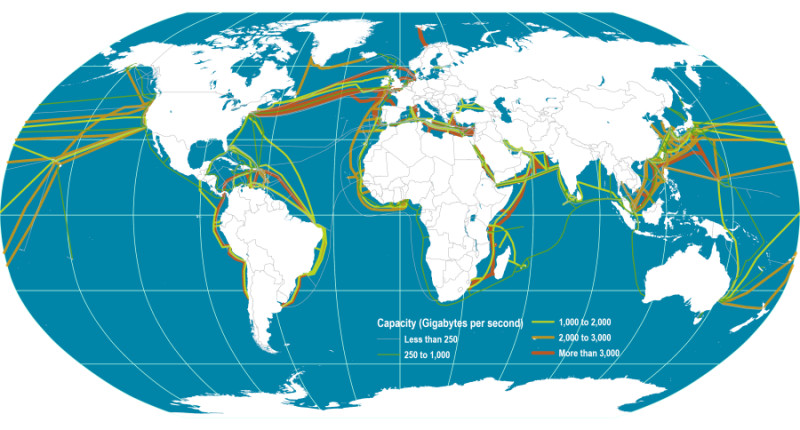
Global undersea internet cable network
- Radio let governments and businesses reach huge audiences for news, propaganda, education, and entertainment.
- Cellular communication spread fast, especially in places that never built many landlines.
- Internet and social media made instant exchange possible for information, shopping, activism, and culture.
- Satellites supported communication, GPS navigation, weather forecasting, and surveillance.
Transportation
- Commercial air travel sped up migration, tourism, diplomacy, and business.
- Air freight moved high-value and perishable goods quickly.
- Shipping containers standardized cargo, cut costs, and made global trade much more efficient.
Production and energy
- Petroleum powered cars, trucks, planes, ships, farm machines, and factories. It also became the raw material for plastics and chemicals.
- Nuclear power generated electricity, and nuclear weapons changed warfare forever.
Named examples you should know:
- Hiroshima and Nagasaki, 1945
- Cold War nuclear arms race
- Chernobyl, 1986
Technology helped multinational corporations split design, manufacturing, assembly, and sales across different countries. A lot of manufacturing shifted to Asia and Latin America. State policy still mattered, which is why Deng Xiaoping’s reforms in China and Reagan/Thatcher style deregulation mattered so much.
Agriculture, Medicine, and Population Change
Science and technology increased humanity’s ability to keep a growing population alive.
Green Revolution
The Green Revolution combined high-yield seeds with irrigation, fertilizers, pesticides, machines, and scientific planning.
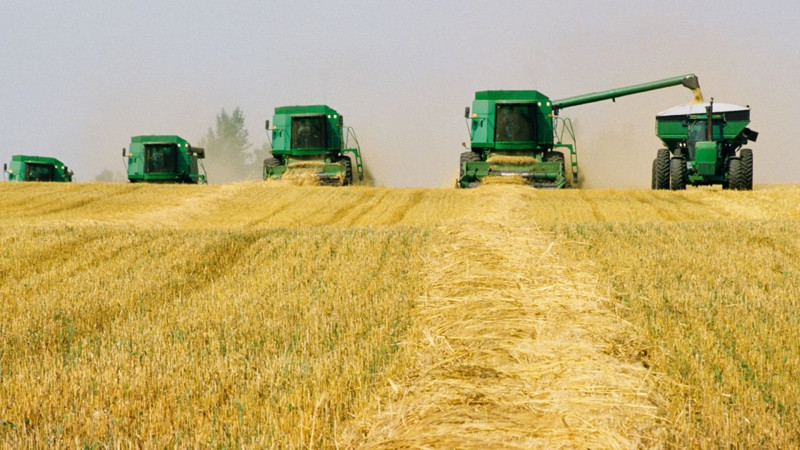
Mechanized grain harvesting
- Early wheat research expanded in Mexico
- It spread strongly to India, especially with high-yield wheat and rice
- Crop yields rose sharply without farmland expanding at the same rate
Limits mattered:
- Benefits depended on land, water, credit, and market access
- Environmental costs included soil depletion, salinization, and chemical runoff
Medicine
- Vaccines, antibiotics, sanitation, and public health increased life expectancy
- Penicillin was discovered in 1928 and mass-produced in the 1940s
- Smallpox was declared eradicated by the WHO in 1980
- Polio was greatly reduced in many places
Disease still persisted. 1918 influenza, HIV/AIDS, Ebola, malaria, tuberculosis, and cholera remind you that medical progress was uneven.
Fertility and reproduction
- Better birth control gave women more control over fertility
- Key example is the oral contraceptive pill, 1960
- This helped lower fertility rates and change family size
Remember the demographic transition. Death rates usually fall first, then birth rates fall later.
Rights, Culture, and What Did Not Change
Changes in technology helped spread new ideas, but people and movements drove the change.
Rights and inclusion
- Universal Declaration of Human Rights, 1948
- Civil rights movements challenged racial discrimination
- Feminist movements pushed for legal equality, education, jobs, and reproductive rights
- Apartheid ended in South Africa, followed by the democratic election of 1994
- Women’s suffrage expanded in the U.S. 1920, Brazil 1932, Turkey 1934, Japan 1945, India 1947, Morocco 1963
Radio, TV, photocopying, cell phones, and the internet helped activists organize and spread messages.
Globalized culture
- Media like radio, film, television, recorded music, internet, and social media spread culture across borders
- Examples include reggae, Bollywood, the BBC, the Olympics, and the FIFA World Cup
- Global brands included Coca-Cola, Toyota, eBay, and Alibaba
The pattern was cultural hybridity. Global culture mixed with local traditions. It was not just Westernization.
Major continuities and limits
- The digital divide kept access unequal
- Class, caste, racial, gender, and regional inequalities persisted
- Local religions, languages, and traditions stayed strong
- New problems appeared, including pollution, greenhouse gases, surveillance, censorship, and radioactive waste
