Topic 3.2 Notes – Empires: Administration
How Land-Based Empires Turned Conquest into Control
A ruler could win territory and still lose control of it. Large empires included different languages, religions, and local elites, so power had to be built, not just seized.
Two goals kept showing up:
- Legitimization means making rule seem rightful. A ruler might claim God chose them, link themselves to an old tradition, or surround themselves with symbols of authority.
- Consolidation means making rule more effective. That usually meant weakening rivals, supervising elites, and building institutions that answered to the center.
Across empires, rulers kept using three methods:
- recruiting bureaucratic elites and professional soldiers
- using religion, art, and monumental architecture
- collecting taxes and tribute
One important AP point: centralization did not mean total control everywhere. Most rulers still relied on local nobles, landholders, or regional officials. On essays, always ask whether a method helped a ruler legitimize power, consolidate power, or both.
Bureaucrats, Soldiers, and Local Elites
Most empires mixed two approaches. They created servants loyal to the ruler, and they also pulled existing elites into imperial service.
The Ottoman example is a good place to start because it shows both recruitment and court service in one system.
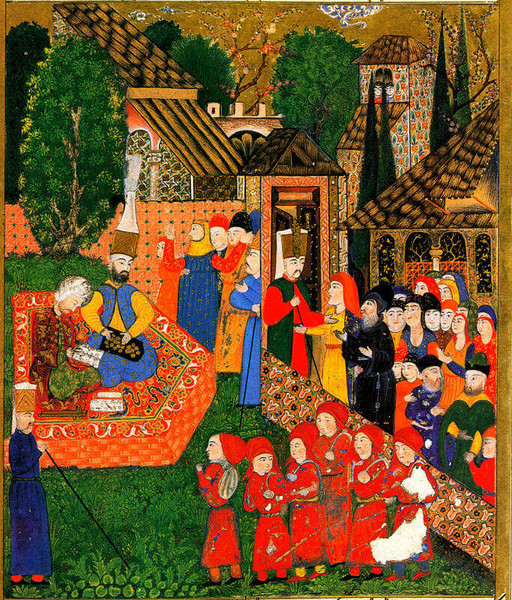
Ottoman court scene associated with devshirme recruitment
- Ottoman Empire
- Devshirme took Christian boys from the Balkans, converted them to Islam, and trained them for state service.
- Many became Janissaries, elite salaried infantry using gunpowder weapons.
- This gave the sultan trained men who depended on him, which weakened hereditary nobles.
- Later, Janissaries became powerful themselves and could block reform. That’s a classic AP pattern. A system that strengthens the state can also create new rivals.
- Tokugawa Japan
- Salaried samurai shifted from warriors into administrators, record keepers, and officials during peacetime.
- Their stipends tied them to the shogun or daimyo.
- Sankin-kōtai forced daimyo to spend alternating years at Edo, while their families stayed there. This kept them under watch and made rebellion expensive.
- Ronin show the limits of the system because masterless samurai could become unstable outsiders.
- Mughal Empire
- The mansabdari system ranked officials by status, salary, and military duty.
- Jagirs gave them revenue assignments, but transfers kept them from building permanent local power.
- Bringing Rajput elites into service reduced resistance and gave the empire local support.
- Safavid Empire
- Shah Abbas I expanded ghulams from the Caucasus to reduce dependence on the Qizilbash tribal warriors.
- Qing Empire
- Kept the Confucian civil service exam and scholar-official bureaucracy from the Ming.
- Also preserved the Eight Banners and reserved major roles for Manchus.
Religion, Art, and Monuments as Political Power
Rulers also needed people to believe their rule fit the moral or cosmic order.
- European divine right said monarchs ruled by God’s will. Under Louis XIV, resisting the king could be framed as resisting God.
- The Qing used the Mandate of Heaven to present Manchu rule as proper dynastic succession. They ruled as Confucian emperors in China and as patrons of Tibetan Buddhism in Inner Asia.
- Songhai rulers like Askia Muhammad promoted Islam through pilgrimage, scholars, judges, and Timbuktu. That tied the empire to trade and learning across the Islamic world.
- The Mexica used human sacrifice to justify conquest and uphold cosmic order. It also increased resentment among subject peoples.
Monuments made power visible. Versailles is a good example of how architecture and display turned royal authority into something people could see and feel.
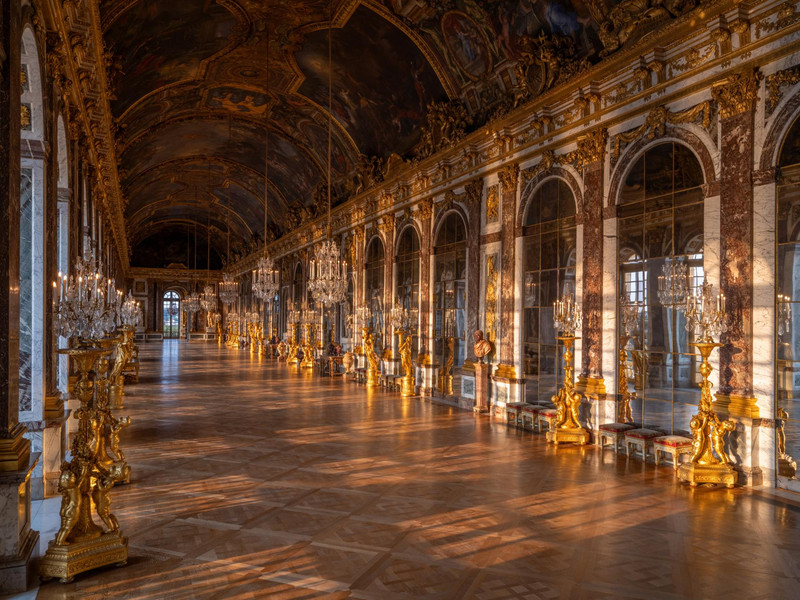
Hall of Mirrors, Palace of Versailles
- Qing imperial portraits showed the emperor as the calm center of order.
- The Inca sun temple at Cuzco linked the Sapa Inca to Inti, the sun god.
- Mughal mausolea and mosques, especially the Taj Mahal, projected piety, wealth, and dynastic greatness.
- Versailles glorified Louis XIV and helped supervise nobles at court.
Taxes and Tribute Paid for Empire
Empires needed money for armies, officials, roads, forts, and palaces.
That revenue came in different forms. Some states taxed through local elites. Others demanded tribute in goods, like the Mexica tribute records shown here.
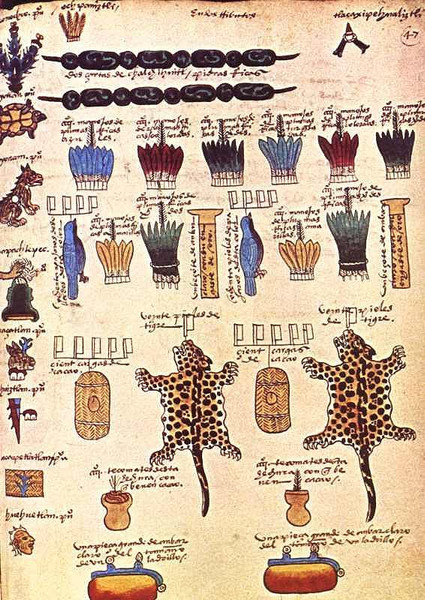
Codex Mendoza tribute page
| System | How it worked | What it did politically |
|---|---|---|
| Mughal zamindars | Local intermediaries collected taxes from cultivators | Raised revenue and incorporated local elites |
| Ottoman tax farming | Iltizam sold tax collection rights for quick cash | Efficient short term, but often abusive and weakened direct control |
| Mexica tribute lists | Conquered provinces sent textiles, cacao, feathers, food, and more | Turned conquest into regular resources and showed imperial reach |
| Ming silver taxation | Single Whip reforms combined obligations into silver payments | Simplified collection and tied China to global silver flows |
The trade-off kept repeating. Direct collection gave rulers more control, but needed more bureaucracy. Indirect collection was cheaper, but gave local intermediaries more power.
The Main Argument to Remember
Empires stayed strong by controlling people, symbols, and resources at the same time.
- Bureaucrats and military professionals enforced rule.
- Religion, art, and architecture justified rule.
- Taxes and tribute financed rule.
The best comparisons show overlap. Devshirme produced soldiers and officials. Versailles legitimized Louis XIV and controlled nobles. Zamindars raised revenue and tied local elites to Mughal rule.
Key Takeaways
Legitimization
Making a ruler’s authority appear lawful, sacred, traditional, or otherwise worthy of obedience
Consolidation
Strengthening effective central control by restraining rivals, supervising elites, building institutions, and securing revenue
Bureaucracy
An organized body of officials who implement policy, keep records, administer laws, and supervise taxation and supplies
Bureaucratic Elites
Privileged, trained officials whose education, office, or ties to the ruler gave them major governing roles
Military Professionals
Soldiers and commanders whose primary occupation was organized state service, often supported by salaries, stipends, and specialized training
Devshirme
Ottoman levy of Christian boys who were converted, trained, and placed in the sultan’s military or household administration
Janissaries
Elite salaried Ottoman infantry, originally recruited largely through devshirme, whose firearms and palace loyalty strengthened the sultan
Salaried Samurai
Tokugawa-era warriors paid stipends who increasingly served as officials, record keepers, managers, and magistrates during peacetime
Alternate Attendance / Sankin-kōtai
Tokugawa system requiring daimyo to alternate residence between their domains and Edo while their families generally remained in Edo
Mansabdari System
Mughal ranked-service system in which a mansabdar’s rank determined status, salary, and military or administrative obligations
Jagirs
Transferable Mughal assignments granting officials the right to collect revenue from designated lands as compensation
Rajput Elites
Hindu regional rulers incorporated into Mughal service in exchange for rank, recognition, and cooperation with the emperor
Ghulams
Safavid military and administrative servants, often Caucasian Christians converted to Islam and trained to depend on the shah
Shah Abbas I
Safavid ruler who expanded the ghulam corps to strengthen the monarchy against the power of Qizilbash tribal elites
Eight Banners
The Qing military and social organization that preserved Manchu identity and supplied the dynasty’s distinct military base
Qing Civil Service Examination System
Confucian examination system retained from the Ming to recruit scholar-officials and gain the cooperation of Chinese elites
Divine Right
European theory that a monarch’s legitimate authority came from God and resistance challenged the divinely established order
Louis XIV
French “Sun King” who joined divine-right monarchy, centralized court ceremony, and control of nobles at Versailles
Jacques-Bénigne Bossuet
French bishop who argued that royal authority was sacred and that kings were accountable to God
Mandate of Heaven
Conditional Chinese belief that a dynasty ruled with cosmic approval but could lose it through misrule and disorder
Askia Muhammad
Songhai ruler who made the pilgrimage to Mecca and supported Muslim judges, scholars, and learning to reinforce royal authority
Mexica Human Sacrifice
Public religious offerings presented as sustaining cosmic order and displaying the ruler’s ability to fulfill obligations to the gods
Qing Imperial Portraits
Formal images using imperial clothing, symbols, and poses to depict the emperor as the stable center of legitimate order
Coricancha / Inca Temple of the Sun
Cuzco temple linking the Sapa Inca to the sun god Inti while displaying imperial labor, wealth, and sacred authority
Taj Mahal
Shah Jahan’s marble mausoleum for Mumtaz Mahal, projecting Mughal piety, wealth, dynastic memory, and command of resources
Shah Jahan
Mughal emperor who commissioned the Taj Mahal as a dynastic mausoleum and display of imperial power
Versailles
Louis XIV’s palace and court, which displayed divine-right monarchy while keeping nobles dependent on royal access and favor
Tax vs. Tribute
A tax is a compulsory government payment; tribute is a payment that more directly acknowledges subordination to a dominant ruler
Tax in Kind
A compulsory payment made in products such as grain, cloth, or livestock rather than currency
Zamindars
Mughal landholders or local intermediaries who collected taxes from cultivators and transmitted an assessed share to the government
Akbar
Mughal emperor under whom officials developed more systematic land measurement and revenue assessment while incorporating diverse elites
Raja Todar Mal
Akbar’s finance minister who developed systematic Mughal land measurement, productivity classification, and revenue assessment
Zabt System
Mughal revenue system that measured cultivated land and used productivity, crop yields, and prices to set assessments
Dahsala Method
Mughal method using ten-year averages of yields and prices to create more standardized revenue assessments, often payable in cash
Tax Farming / Ottoman Iltizam
System in which a collector paid the state for collection rights, then kept revenue collected above the agreed amount
Single Whip Reforms
Ming reforms consolidating numerous land taxes, labor duties, and payments in kind into assessments paid largely in silver
Zhang Juzheng
Ming statesman who widely extended the Single Whip reforms during the 1570s and 1580s
Mexica Tribute Lists / Codex Mendoza
Pictorial records of conquered places and required goods showing how the Mexica converted conquest into tribute; the surviving Codex Mendoza was compiled after the Spanish conquest
Songhai Promotion of Islam
Askia Muhammad patronized Muslim scholars, judges, pilgrimage, and learning to legitimize Songhai rule among commercial and urban elites
Qizilbash
Safavid Turkic tribal warriors whose powerful commanders were counterbalanced by Shah Abbas I through his expansion of the ghulam service elite
Daimyo
Japanese regional lords whose domains the Tokugawa shogunate supervised through measures such as alternate attendance
Hard Currency / Specie
Money whose value rests on its material, such as silver, rather than on an unsupported paper claim
Ming Taxation in Silver
The Ming increasingly assessed major obligations in silver, monetizing taxation and connecting state revenue to markets and global silver flows
Mughal Mausolea and Mosques
Monumental buildings that displayed Mughal wealth and piety while connecting the dynasty to Islamic, Persianate, and South Asian traditions
Notes
Legitimization
Making a ruler’s authority appear lawful, sacred, traditional, or otherwise worthy of obedience
Consolidation
Strengthening effective central control by restraining rivals, supervising elites, building institutions, and securing revenue
Bureaucracy
An organized body of officials who implement policy, keep records, administer laws, and supervise taxation and supplies
Bureaucratic Elites
Privileged, trained officials whose education, office, or ties to the ruler gave them major governing roles
Military Professionals
Soldiers and commanders whose primary occupation was organized state service, often supported by salaries, stipends, and specialized training
Devshirme
Ottoman levy of Christian boys who were converted, trained, and placed in the sultan’s military or household administration
Janissaries
Elite salaried Ottoman infantry, originally recruited largely through devshirme, whose firearms and palace loyalty strengthened the sultan
Salaried Samurai
Tokugawa-era warriors paid stipends who increasingly served as officials, record keepers, managers, and magistrates during peacetime
Alternate Attendance / Sankin-kōtai
Tokugawa system requiring daimyo to alternate residence between their domains and Edo while their families generally remained in Edo
Mansabdari System
Mughal ranked-service system in which a mansabdar’s rank determined status, salary, and military or administrative obligations
Jagirs
Transferable Mughal assignments granting officials the right to collect revenue from designated lands as compensation
Rajput Elites
Hindu regional rulers incorporated into Mughal service in exchange for rank, recognition, and cooperation with the emperor
Ghulams
Safavid military and administrative servants, often Caucasian Christians converted to Islam and trained to depend on the shah
Shah Abbas I
Safavid ruler who expanded the ghulam corps to strengthen the monarchy against the power of Qizilbash tribal elites
Eight Banners
The Qing military and social organization that preserved Manchu identity and supplied the dynasty’s distinct military base
Qing Civil Service Examination System
Confucian examination system retained from the Ming to recruit scholar-officials and gain the cooperation of Chinese elites
Divine Right
European theory that a monarch’s legitimate authority came from God and resistance challenged the divinely established order
Louis XIV
French “Sun King” who joined divine-right monarchy, centralized court ceremony, and control of nobles at Versailles
Jacques-Bénigne Bossuet
French bishop who argued that royal authority was sacred and that kings were accountable to God
Mandate of Heaven
Conditional Chinese belief that a dynasty ruled with cosmic approval but could lose it through misrule and disorder
Askia Muhammad
Songhai ruler who made the pilgrimage to Mecca and supported Muslim judges, scholars, and learning to reinforce royal authority
Mexica Human Sacrifice
Public religious offerings presented as sustaining cosmic order and displaying the ruler’s ability to fulfill obligations to the gods
Qing Imperial Portraits
Formal images using imperial clothing, symbols, and poses to depict the emperor as the stable center of legitimate order
Coricancha / Inca Temple of the Sun
Cuzco temple linking the Sapa Inca to the sun god Inti while displaying imperial labor, wealth, and sacred authority
Taj Mahal
Shah Jahan’s marble mausoleum for Mumtaz Mahal, projecting Mughal piety, wealth, dynastic memory, and command of resources
Shah Jahan
Mughal emperor who commissioned the Taj Mahal as a dynastic mausoleum and display of imperial power
Versailles
Louis XIV’s palace and court, which displayed divine-right monarchy while keeping nobles dependent on royal access and favor
Tax vs. Tribute
A tax is a compulsory government payment; tribute is a payment that more directly acknowledges subordination to a dominant ruler
Tax in Kind
A compulsory payment made in products such as grain, cloth, or livestock rather than currency
Zamindars
Mughal landholders or local intermediaries who collected taxes from cultivators and transmitted an assessed share to the government
Akbar
Mughal emperor under whom officials developed more systematic land measurement and revenue assessment while incorporating diverse elites
Raja Todar Mal
Akbar’s finance minister who developed systematic Mughal land measurement, productivity classification, and revenue assessment
Zabt System
Mughal revenue system that measured cultivated land and used productivity, crop yields, and prices to set assessments
Dahsala Method
Mughal method using ten-year averages of yields and prices to create more standardized revenue assessments, often payable in cash
Tax Farming / Ottoman Iltizam
System in which a collector paid the state for collection rights, then kept revenue collected above the agreed amount
Single Whip Reforms
Ming reforms consolidating numerous land taxes, labor duties, and payments in kind into assessments paid largely in silver
Zhang Juzheng
Ming statesman who widely extended the Single Whip reforms during the 1570s and 1580s
Mexica Tribute Lists / Codex Mendoza
Pictorial records of conquered places and required goods showing how the Mexica converted conquest into tribute; the surviving Codex Mendoza was compiled after the Spanish conquest
Songhai Promotion of Islam
Askia Muhammad patronized Muslim scholars, judges, pilgrimage, and learning to legitimize Songhai rule among commercial and urban elites
Qizilbash
Safavid Turkic tribal warriors whose powerful commanders were counterbalanced by Shah Abbas I through his expansion of the ghulam service elite
Daimyo
Japanese regional lords whose domains the Tokugawa shogunate supervised through measures such as alternate attendance
Hard Currency / Specie
Money whose value rests on its material, such as silver, rather than on an unsupported paper claim
Ming Taxation in Silver
The Ming increasingly assessed major obligations in silver, monetizing taxation and connecting state revenue to markets and global silver flows
Mughal Mausolea and Mosques
Monumental buildings that displayed Mughal wealth and piety while connecting the dynasty to Islamic, Persianate, and South Asian traditions
