Topic 2.1 Notes – The Silk Roads
What the Silk Roads Were
The Silk Roads were a network of linked land routes across Afro-Eurasia, not one long road. They connected China with Central Asia, then branched toward Persia, the Middle East, South Asia, and the Mediterranean.
This map helps you see that network clearly. Focus on the red overland routes stretching from China across Central Asia toward the eastern Mediterranean.
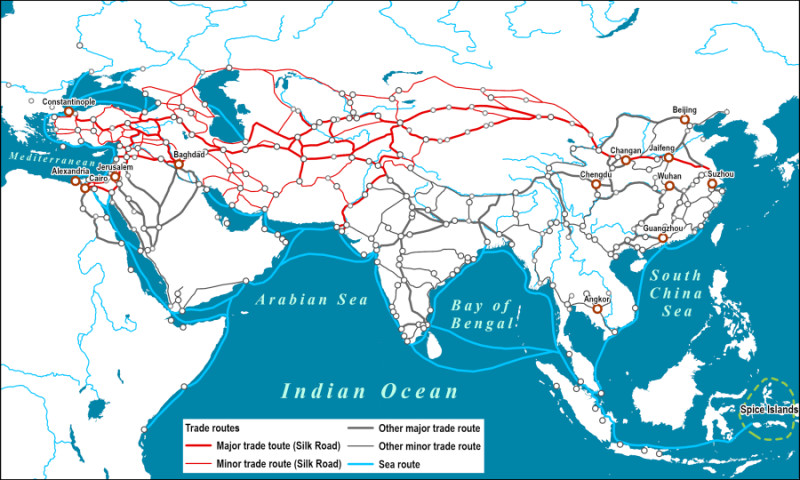
Silk Roads trade network across Afro-Eurasia
Geography shaped everything here.
- Deserts pushed traders toward oasis towns.
- Mountain passes created narrow routes through difficult terrain.
- Crossroads cities became crucial because caravans had to stop, regroup, and trade there.
Most merchants did relay exchange. One person usually did not travel from China all the way to the Mediterranean. Goods passed through many hands, and each stop added transport costs, tolls, and profit.
Major goods included:
- Silk and porcelain from China
- Cotton textiles from India
- Carpets, ceramics, and metal goods from Persia
- Spices, horses, and precious stones from different regions
Luxury goods dominated because overland trade was expensive and risky. High value-to-weight goods stayed profitable even after transport, taxes, and resale. That is why elites, rulers, wealthy city dwellers, and religious institutions were the main buyers.
A common AP move is this phrase: the Silk Roads were not invented after 1200. The key change was intensification. Same network, bigger volume, wider reach.
Why Silk Roads Trade Expanded After 1200
Trade grew because demand rose and commerce got easier.
Rising demand for luxury goods
Elites across Afro-Eurasia wanted imported status goods such as fine cloth, silk, porcelain, carpets, and metalwork. Growing cities also created bigger markets and more merchants chasing profit.
Caravanserai
A caravanserai was a roadside inn and trade compound for caravans. These large stone compounds helped merchants and animals rest, resupply, and protect goods between major stops.
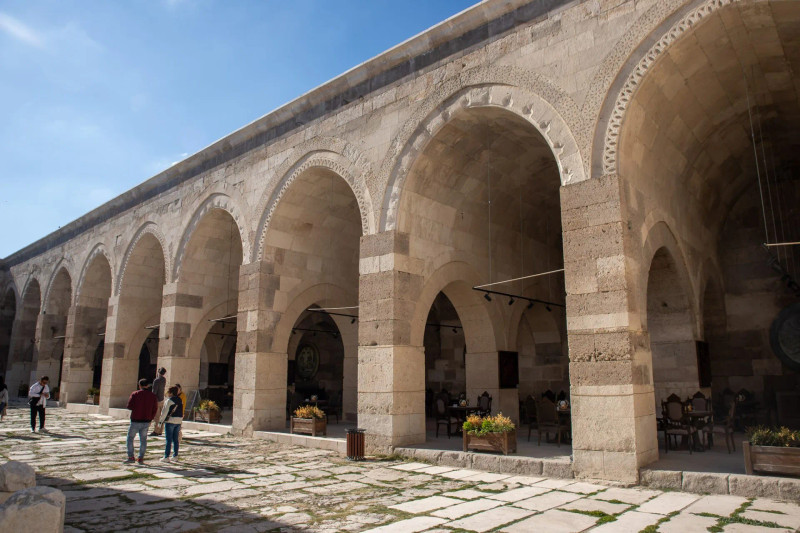
Caravanserai courtyard
They provided:
- shelter and security
- food, water, and supplies
- storage for goods
- animal care
- information about routes, prices, and dangers
That made long trips more regular and predictable.
Credit, banking, and bills of exchange
- Credit let merchants borrow money for expensive long-distance trade.
- Banking houses handled deposits, loans, currency exchange, records, and transfers.
- A bill of exchange was a written order for payment somewhere else, so merchants did not have to carry huge amounts of coin.
This is a common confusion. Paper money is actual currency. A bill of exchange is a document that arranges payment.
Money economies
As money use spread, it became easier to set prices and settle debts across regions. Yuan China used paper money on a large scale. Mongol security also helped trade, but that belongs mainly in Topic 2.2.
How Increased Trade Changed Cities
As trade intensified, cities at oases and route junctions grew rich because they handled exchange, storage, resupply, and redistribution. Trade also supported brokers, translators, money changers, guards, artisans, animal handlers, and tax collectors. Rulers benefited through tolls and customs duties.
Kashgar
Kashgar was an oasis city in western China. Its importance came from location. It linked routes into China, Central Asia, and South Asia, so caravans reorganized there and exchanged goods.
Samarkand
Samarkand, in present-day Uzbekistan, linked China and Central Asia with Persia, India, and the Middle East. It became a major center of storage, exchange, and urban wealth. Under Timur, it gained even more prominence, which shows how trade and political power could strengthen each other.
How Trade Increased Production for Export
Trade changed production, not just movement of goods. Rising demand pushed artisans and merchants to make more for distant markets.
| Region | Expanded production |
|---|---|
| China | silk, textiles, porcelain, iron, steel |
| Persia | textiles, carpets, ceramics, metal goods |
| India | cotton textiles |
Chinese blue-and-white porcelain under the Yuan is a great example because its cobalt pigment connects Chinese production to Islamic world trade. Persia mattered both as a producer and as an intermediary. Indian cotton cloth had wide demand because of its quality and variety.
The Main Cause-and-Effect Chain
- Demand for luxury goods increased.
- Caravanserai, credit, banking, bills of exchange, and money economies lowered risk and cost.
- Merchants traded more goods across greater distances.
- Cities like Kashgar and Samarkand grew wealthier and more powerful.
- Producers in China, Persia, and India expanded output for export.
Key Takeaways
Silk Roads
A network of overland routes linking China and Central Asia with South Asia, Persia, the Middle East, and the Mediterranean
Luxury Goods
High-value, low-bulk goods such as silk, fine textiles, porcelain, spices, and precious stones that could profitably bear high overland transport costs
Caravanserai
Protected roadside inns and commercial compounds that supplied caravans with lodging, storage, animal care, information, and markets, reducing travel risks and costs
Credit
Present access to money or goods in return for later repayment, allowing merchants to finance larger ventures and distribute risk
Banking Houses
Commercial institutions that accepted deposits, made loans, exchanged currencies, kept accounts, and transferred funds between trading centers
Bill of Exchange
A written order or claim arranging payment at a specified place or time, reducing the need to transport coins or bullion
Money Economy
An economy using money widely to exchange goods, state prices, and settle debts and taxes rather than relying mainly on barter or payment in kind
Paper Money
State-issued currency that was lighter than metal coin and supported large transactions, especially across Yuan China, but depended on confidence in the issuer
Trading Cities
Commercial hubs at strategic oases, crossroads, and passes that prospered by providing markets, storage, financing, supplies, and transport services while generating tax revenue
Kashgar
An oasis crossroads in western China where routes toward China, Central Asia, and India met for caravan resupply, exchange, storage, and redistribution
Samarkand
A major Central Asian trading city linking China and Central Asia with Persia, India, the Middle East, and lands farther west
Increased Production for Export
Rising demand expanded Chinese textile, porcelain, iron, and steel production; Persian textiles, carpets, ceramics, and metal goods; and Indian cotton textiles for interregional markets
Caravan
A group of merchants, travelers, pack animals, and goods traveling together for shared protection, labor, and expenses
Notes
Silk Roads
A network of overland routes linking China and Central Asia with South Asia, Persia, the Middle East, and the Mediterranean
Luxury Goods
High-value, low-bulk goods such as silk, fine textiles, porcelain, spices, and precious stones that could profitably bear high overland transport costs
Caravanserai
Protected roadside inns and commercial compounds that supplied caravans with lodging, storage, animal care, information, and markets, reducing travel risks and costs
Credit
Present access to money or goods in return for later repayment, allowing merchants to finance larger ventures and distribute risk
Banking Houses
Commercial institutions that accepted deposits, made loans, exchanged currencies, kept accounts, and transferred funds between trading centers
Bill of Exchange
A written order or claim arranging payment at a specified place or time, reducing the need to transport coins or bullion
Money Economy
An economy using money widely to exchange goods, state prices, and settle debts and taxes rather than relying mainly on barter or payment in kind
Paper Money
State-issued currency that was lighter than metal coin and supported large transactions, especially across Yuan China, but depended on confidence in the issuer
Trading Cities
Commercial hubs at strategic oases, crossroads, and passes that prospered by providing markets, storage, financing, supplies, and transport services while generating tax revenue
Kashgar
An oasis crossroads in western China where routes toward China, Central Asia, and India met for caravan resupply, exchange, storage, and redistribution
Samarkand
A major Central Asian trading city linking China and Central Asia with Persia, India, the Middle East, and lands farther west
Increased Production for Export
Rising demand expanded Chinese textile, porcelain, iron, and steel production; Persian textiles, carpets, ceramics, and metal goods; and Indian cotton textiles for interregional markets
Caravan
A group of merchants, travelers, pack animals, and goods traveling together for shared protection, labor, and expenses
