Topic 8.6 Notes – Newly Independent States
How New States Emerged After Empire
Decolonization turned colonies into sovereign states. A state is a political unit with sovereignty over territory. A nation is a people with a shared identity. A nation-state is when those line up closely. In practice, most new states did not match one nation, because colonial borders had been drawn for imperial convenience.
Two things usually happened when empires withdrew:
- Colonial borders stayed in place and became international borders. That happened in many places because redrawing everything risked even more conflict.
- Partition split one colony into multiple states when rival nationalist claims could not be contained in one government.
Those borders mattered right away because they decided:
- citizenship and who belonged
- minority status and who might be vulnerable
- land ownership and property rights
- political representation and voting power
- security and which army or police protected you
Nationalism changed too. Anti-colonial nationalism had united people against empire. After independence, the harder question was who the new state represented. Some leaders pushed territorial nationalism, meaning everyone inside the borders belonged. Others pushed ethnic, religious, or regional nationalism.
Cambodia
Cambodia shows that partition was not the only path. It gained independence from France in 1953 under Norodom Sihanouk. It emerged from French Indochina, the French colonial region that also included modern Vietnam and Laos.
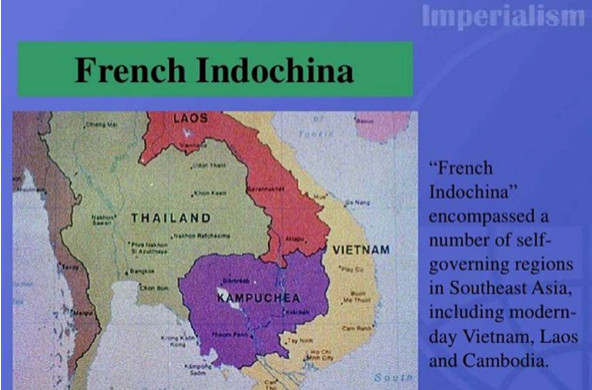
French Indochina
The key point is simple: many new states were just former colonial units becoming sovereign countries.
Partition and Conflict
Partition often followed the same pattern. Empire ends, rival nationalist movements claim the same land, borders are drawn fast, and people move or are forced out.
Partition of India
In 1947, British India became India and Pakistan.
- The Indian National Congress wanted one multi-religious state.
- The Muslim League, led by Muhammad Ali Jinnah, argued Muslims needed a separate homeland.
- The Radcliffe Line split Punjab and Bengal in a matter of weeks.
- Pakistan had two wings, West Pakistan and East Pakistan. East Pakistan became Bangladesh in 1971.
The map below highlights the split between India, West Pakistan, and East Pakistan and the huge refugee movements that followed.
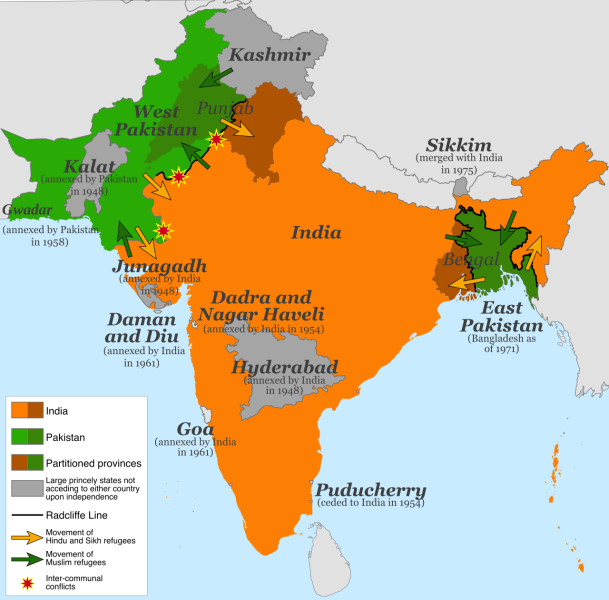
Partition of India, 1947
The human cost was enormous:
- 10 to 15 million people crossed borders
- about 1 million died
- Hindus and Sikhs moved to India
- Muslims moved to Pakistan
Kashmir stayed disputed and triggered war in 1947 to 1948. That is a favorite exam point. Partition did not solve nationalism. It often made it more intense.
Creation of Israel
The end of the British mandate in Palestine produced another major partition conflict.
- Zionism sought a Jewish state.
- Palestinian Arab nationalism sought Arab control of the same land.
- The Holocaust increased support for a Jewish state.
- The UN partition plan of 1947 proposed Jewish and Arab states, with Jerusalem internationalized.
Israel declared independence in 1948. Neighboring Arab states invaded. Israel survived and expanded beyond the UN plan.
Major results:
- about 700,000 Palestinians fled or were expelled in the Nakba
- Jordan controlled the West Bank and East Jerusalem
- Egypt controlled Gaza
- Israel resettled Jewish migrants, including Holocaust survivors and Jews leaving Middle Eastern and North African states
How New Governments Directed the Economy
Political independence did not erase colonial economic patterns. New states inherited commodity dependence, weak industry, port-focused infrastructure, and reliance on foreign capital and technology.
Governments often stepped in heavily:
| Policy | What it meant |
|---|---|
| Five-Year Plans | State set development goals |
| Nationalization | Government took over banks, industries, or resources |
| Land reform | Broke up large holdings to redistribute land |
| Import-substitution industrialization | Made goods at home instead of importing them |
| Public investment | Built roads, dams, schools, and health systems |
State planning did not automatically mean communism. Many new states used mixed economies.
- Egypt under Nasser used land reform and planning, nationalized the Suez Canal in 1956, and tied sovereignty to development through the Aswan High Dam.
- India under Indira Gandhi expanded planning, nationalized 14 major banks in 1969, and used Garibi Hatao rhetoric. The License Raj showed how regulation could also slow growth.
- Tanzania under Julius Nyerere promoted ujamaa, self-reliance, villagization, and nationalization. Literacy improved, but growth stayed weak.
- Sri Lanka under Sirimavo Bandaranaike expanded public control, land reform, welfare, and import restrictions. Social indicators improved, but shortages and export dependence remained.
Egypt is a good example of how development projects became symbols of national independence as well as economic planning.
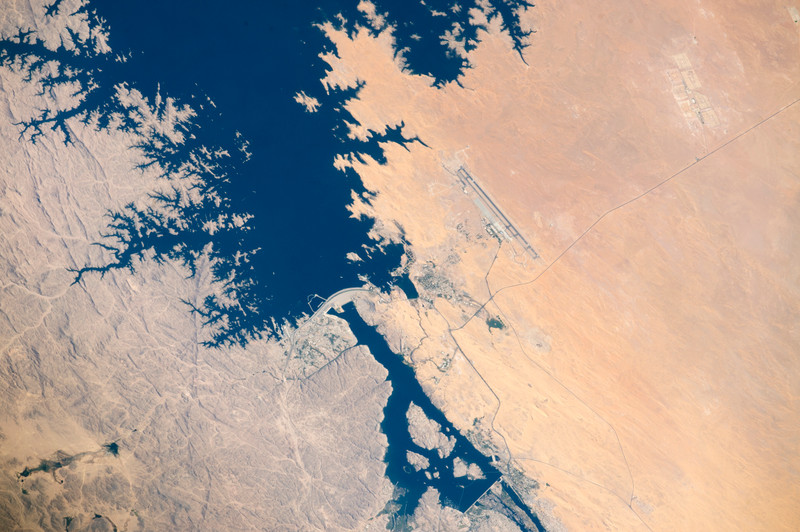
Aswan High Dam and Lake Nasser, Egypt
What Independence Changed and What It Did Not
Independence gave governments control over development and resources. That was a huge change. The continuity was economic dependence on global markets, foreign loans, aid, and former colonial powers. That is where neocolonialism comes in, meaning indirect foreign influence through trade, debt, corporations, or aid.
Migration kept imperial ties alive:
- South Asians in Britain moved into London, Birmingham, and Leicester because of postwar labor demand and the British Nationality Act of 1948.
- Algerians in France settled in Paris, Marseille, and Lyon through labor migration and post-independence movement.
- Filipinos in the United States migrated through English-language colonial education, military links, and expanded migration after 1965.
Key Takeaways
Partition
Political division of one territory into separate states or jurisdictions, often leaving minorities on both sides of the new boundary
Partition of British India
The 1947 division of British India into India and Pakistan, accompanied by communal violence and the migration of roughly 10–15 million people
Muhammad Ali Jinnah
Leader of the Muslim League who argued that South Asian Muslims needed the separate state of Pakistan
Radcliffe Line
The hastily drawn 1947 boundary that divided Punjab and Bengal between India and Pakistan amid mass migration and communal violence
Jammu and Kashmir
Majority-Muslim princely state whose contested accession to India caused the 1947–1948 Indo-Pakistani War and an enduring territorial dispute
Creation of Israel
Israel declared independence in 1948 as Britain ended its Palestine mandate, followed by war, territorial change, and mass Palestinian displacement
United Nations Partition Plan for Palestine
The 1947 proposal for separate Jewish and Arab states with internationally administered Jerusalem; Jewish leaders accepted it, while Arab leaders rejected it
1948 Arab-Israeli War
War following Israel's declaration of independence in which Israel survived and gained territory beyond that allotted by the UN plan; the proposed Palestinian Arab state was not established
Nakba
The Palestinian 'catastrophe' of 1948, when approximately 700,000 Palestinians fled or were expelled and most were not allowed to return
Cambodian Independence
Cambodia gained independence from France in 1953 as its colonial administrative territory became a sovereign state largely within inherited borders
Norodom Sihanouk
Cambodian king under whom Cambodia obtained full independence from France in 1953
State-Led Development
Government direction of economic development through planning, public investment, regulation, land reform, or state ownership
Nationalization
Transfer of a privately or foreign-owned enterprise into state ownership
Mixed Economy
An economy combining private ownership with substantial government regulation, planning, investment, or ownership
Import-Substitution Industrialization
Strategy of replacing imported manufactured goods with domestic production protected by tariffs, import limits, state credit, and public industries
Gamal Abdel Nasser
Egyptian leader who linked sovereignty to land reform, state planning, public industry, and nationalization of the Suez Canal
Suez Crisis
The 1956 conflict caused by Nasser's nationalization of the Suez Canal; Britain, France, and Israel attacked but withdrew under international pressure
Indira Gandhi
Indian prime minister who strengthened the mixed economy by nationalizing major banks and expanding public control over key industries
License Raj
India's extensive system of government licenses and permits regulating private investment and business activity
Julius Nyerere
Tanzanian president who promoted ujamaa, nationalization, rural development, villagization, and national unity
Ujamaa
Nyerere's African socialist program emphasizing familyhood, communal cooperation, self-reliance, nationalization, and collective rural villages
Sirimavo Bandaranaike
Sri Lankan prime minister who expanded state control, land reform, welfare programs, and import restrictions to reduce inequality and foreign influence
Neocolonialism
Claim that formal empire was replaced by indirect foreign control through trade, corporations, finance, debt, aid, or political pressure
Metropole
The central country or city of an empire in relation to its colonies
Migration to Former Imperial Metropoles
Postcolonial movement to former colonizing countries that maintained ties through remittances, family networks, trade, language, and culture
South Asian Migration to Britain
Postwar migration from India, Pakistan, and Bangladesh to British cities for work, sustaining Commonwealth, family, commercial, and cultural ties
Algerian Migration to France
Migration sustained by labor demand, French colonial ties, economic disparities, and family networks before and after Algerian independence
Filipino Migration to the United States
Post-independence migration shaped by U.S. colonial education and labor networks, especially into nursing, military, and service work
State
A political organization claiming sovereignty over a defined territory and population
Nation
A community whose members understand themselves as sharing a common identity based on factors such as history, language, ethnicity, religion, or culture
Nation-State
A sovereign state whose political boundaries correspond closely to those of a nation
Population Displacement
The forced or danger-driven movement of people away from their homes
Resettlement
The relocation and establishment of displaced people in a new place
Indian National Congress
Nationalist organization that generally favored an independent India containing multiple religious communities
Muslim League
Political organization led by Muhammad Ali Jinnah that demanded a separate homeland for South Asian Muslims
Zionism
Nationalist movement advocating a Jewish national home or state in Palestine
Palestinian Arab Nationalism
Movement asserting Arab Palestinian self-determination and opposing arrangements that threatened Arab control of Palestine
Notes
Partition
Political division of one territory into separate states or jurisdictions, often leaving minorities on both sides of the new boundary
Partition of British India
The 1947 division of British India into India and Pakistan, accompanied by communal violence and the migration of roughly 10–15 million people
Muhammad Ali Jinnah
Leader of the Muslim League who argued that South Asian Muslims needed the separate state of Pakistan
Radcliffe Line
The hastily drawn 1947 boundary that divided Punjab and Bengal between India and Pakistan amid mass migration and communal violence
Jammu and Kashmir
Majority-Muslim princely state whose contested accession to India caused the 1947–1948 Indo-Pakistani War and an enduring territorial dispute
Creation of Israel
Israel declared independence in 1948 as Britain ended its Palestine mandate, followed by war, territorial change, and mass Palestinian displacement
United Nations Partition Plan for Palestine
The 1947 proposal for separate Jewish and Arab states with internationally administered Jerusalem; Jewish leaders accepted it, while Arab leaders rejected it
1948 Arab-Israeli War
War following Israel's declaration of independence in which Israel survived and gained territory beyond that allotted by the UN plan; the proposed Palestinian Arab state was not established
Nakba
The Palestinian 'catastrophe' of 1948, when approximately 700,000 Palestinians fled or were expelled and most were not allowed to return
Cambodian Independence
Cambodia gained independence from France in 1953 as its colonial administrative territory became a sovereign state largely within inherited borders
Norodom Sihanouk
Cambodian king under whom Cambodia obtained full independence from France in 1953
State-Led Development
Government direction of economic development through planning, public investment, regulation, land reform, or state ownership
Nationalization
Transfer of a privately or foreign-owned enterprise into state ownership
Mixed Economy
An economy combining private ownership with substantial government regulation, planning, investment, or ownership
Import-Substitution Industrialization
Strategy of replacing imported manufactured goods with domestic production protected by tariffs, import limits, state credit, and public industries
Gamal Abdel Nasser
Egyptian leader who linked sovereignty to land reform, state planning, public industry, and nationalization of the Suez Canal
Suez Crisis
The 1956 conflict caused by Nasser's nationalization of the Suez Canal; Britain, France, and Israel attacked but withdrew under international pressure
Indira Gandhi
Indian prime minister who strengthened the mixed economy by nationalizing major banks and expanding public control over key industries
License Raj
India's extensive system of government licenses and permits regulating private investment and business activity
Julius Nyerere
Tanzanian president who promoted ujamaa, nationalization, rural development, villagization, and national unity
Ujamaa
Nyerere's African socialist program emphasizing familyhood, communal cooperation, self-reliance, nationalization, and collective rural villages
Sirimavo Bandaranaike
Sri Lankan prime minister who expanded state control, land reform, welfare programs, and import restrictions to reduce inequality and foreign influence
Neocolonialism
Claim that formal empire was replaced by indirect foreign control through trade, corporations, finance, debt, aid, or political pressure
Metropole
The central country or city of an empire in relation to its colonies
Migration to Former Imperial Metropoles
Postcolonial movement to former colonizing countries that maintained ties through remittances, family networks, trade, language, and culture
South Asian Migration to Britain
Postwar migration from India, Pakistan, and Bangladesh to British cities for work, sustaining Commonwealth, family, commercial, and cultural ties
Algerian Migration to France
Migration sustained by labor demand, French colonial ties, economic disparities, and family networks before and after Algerian independence
Filipino Migration to the United States
Post-independence migration shaped by U.S. colonial education and labor networks, especially into nursing, military, and service work
State
A political organization claiming sovereignty over a defined territory and population
Nation
A community whose members understand themselves as sharing a common identity based on factors such as history, language, ethnicity, religion, or culture
Nation-State
A sovereign state whose political boundaries correspond closely to those of a nation
Population Displacement
The forced or danger-driven movement of people away from their homes
Resettlement
The relocation and establishment of displaced people in a new place
Indian National Congress
Nationalist organization that generally favored an independent India containing multiple religious communities
Muslim League
Political organization led by Muhammad Ali Jinnah that demanded a separate homeland for South Asian Muslims
Zionism
Nationalist movement advocating a Jewish national home or state in Palestine
Palestinian Arab Nationalism
Movement asserting Arab Palestinian self-determination and opposing arrangements that threatened Arab control of Palestine
