Topic 1.7 Notes – Comparison in the Period from c. 1200 to c. 1450
How States Formed Between c. 1200 and c. 1450
This topic is a comparison of states you already studied. The point is to see the shared pattern across regions, not learn a brand-new list.
State formation means how rulers gained, justified, organized, and maintained power. In every region, states had to deal with the same problems:
- Legitimacy meant convincing people that rule was rightful, often through religion, dynasty, or sacred tradition.
- Administration meant getting orders, records, and officials across territory.
- Resource extraction meant taking taxes, tribute, labor, or trade wealth to support the state.
- Military power and expansion meant defending land and conquering more of it.
- Governing diverse peoples meant ruling communities with different languages, customs, or local elites.
The major pattern ties all the examples together:
- Continuity means older institutions stayed important. Song China kept Confucian bureaucracy.
- Innovation means new dynasties and ruling groups emerged. The Delhi Sultanate and Mamluks are good examples.
- Diversity means states did not all end up looking alike. Some were centralized empires, some were city-states, and some were loose tributary systems.
On the exam, comparison works best by category. Compare administration to administration, legitimacy to legitimacy, and so on.
The Main Ways States Were Similar and Different
States often differed more in how they ruled than in whether they ruled.
| Category | More centralized | More fragmented or indirect |
|---|---|---|
| Centralization | Song China, Inca Empire | Feudal Europe, Maya city-states, Hausa kingdoms, post-Abbasid Islamic world |
| Direct vs indirect rule | Song used appointed officials | Mali, Majapahit, Mexica relied more on tribute and local rulers |
| Political relationships | Song bureaucracy used offices and records | Europe relied on feudal loyalty; Islamic sultanates mixed both |
| Extraction | Song taxes in goods or money; Inca mit’a labor tax | Mexica tribute; Europe rents/labor; Mali and Great Zimbabwe used trade wealth |
| Legitimacy | China used Mandate of Heaven and Confucian order | Islamic states used Islam, Europe/Ethiopia used Christianity, South/Southeast Asia used Hindu or Buddhist kingship, Mexica/Inca used divine ancestry and ritual |
A common mistake is treating centralized as automatically “stronger.” The course does not do that. Centralized and fragmented states both had strengths and weaknesses.
Regional Patterns You Need to Be Able to Compare
East Asia
Song China is the clearest example of centralized bureaucracy. The emperor ruled through officials chosen with civil service exams, and legitimacy rested on the Mandate of Heaven and Confucian order. After 1279, the Yuan Dynasty showed innovation because Mongol rulers took over but still used Chinese administrative traditions.
Dar al-Islam
Here the main pattern was fragmentation with continuity. Abbasid unity weakened, but Islamic law, scholars, and political culture stayed important. Mamluks in Egypt and the Delhi Sultanate in India were Turkic-led or military-led states using Islam for legitimacy without recreating one giant empire.
South and Southeast Asia
This region shows political and religious diversity. Delhi Sultanate was Muslim, Vijayanagara was Hindu, Khmer used sacred kingship and built Angkor Wat, Sukhothai was Theravada Buddhist, and Majapahit was a maritime state built on tributary and commercial networks.
The Americas
The Maya were city-states, not one empire. The Mexica Triple Alliance formed in 1428 and built a tributary empire centered at Tenochtitlan. The Inca, expanding under Pachacuti around 1438, used roads, quipu, local leaders, and mit’a labor.
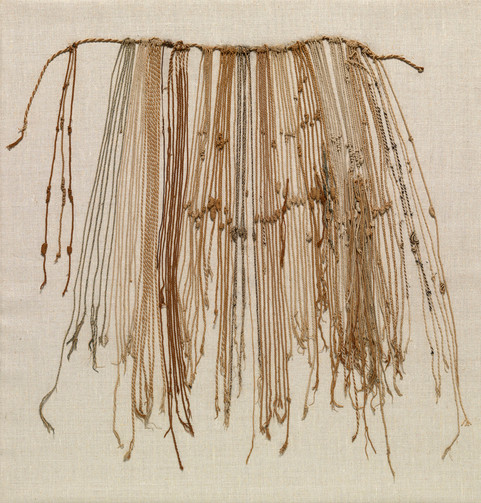
Inca quipu
Cahokia was a major Mississippian urban center, but not a territorial empire like the Mexica or Inca.
Africa and Europe
Mali used gold-salt trade, Islam, and indirect rule. Great Zimbabwe built power through trade, cattle, and stone architecture. Ethiopia used Christian legitimacy under the Solomonic dynasty after 1270. The Hausa kingdoms were commercial city-states. Europe stayed decentralized, shaped by feudalism, manorialism, Church power, the Holy Roman Empire, and growing royal administration in England and France.
The Best Comparison Claims to Know for the Test
- Song China vs Europe: both used belief systems to legitimize rule, but Song was more centralized and bureaucratic, while Europe was more fragmented and feudal.
- Inca vs Mexica: both conquered and extracted resources, but Inca rule was more direct and administrative, while Mexica rule depended more on tribute.
- Islamic states vs Song China: both had administrators and legitimation traditions, but the post-Abbasid world was politically fragmented and Song stayed more unified.
- South/Southeast Asia vs Europe: both used religion to support rulers, but South/Southeast Asia was more religiously diverse, while Europe was more uniformly Christian and politically fragmented.
Why These Patterns Developed
Different state systems grew from different conditions:
- Political inheritance mattered. China kept imperial bureaucracy. Europe did not keep a unified Roman-style state.
- Geography mattered. The Andes encouraged roads and storehouses. Maritime Southeast Asia depended on ports and sea trade.
- Economic base mattered. Agrarian taxes, tribute, labor systems, and trade wealth pushed states in different directions.
- Conquest mattered. Mongols, Turkic rulers, Mexica, and Inca all built new systems on top of older ones.
- Religion mattered, but the same religion did not create the same state everywhere.
The bottom line is simple. States faced the same problems, but history, geography, and conquest gave them different solutions.
