Topic 7.7 Notes – Conducting World War II
What Total War Was in World War II
World War II built on World War I, but on a bigger and more destructive scale. Total war meant governments used the full resources of society for victory, not just armies.
The home front became part of the battlefield because war depended on:
- Factories making tanks, planes, guns, and ships
- Farms feeding soldiers and workers
- Transport moving oil, food, weapons, and troops
- Science producing radar, codebreaking, medicine, and new weapons
- Media and morale keeping civilians working, sacrificing, and believing
Different methods worked together:
- Military mobilization through conscription and mass armies
- Economic mobilization through war production, rationing, taxes, price controls, and war bonds
- Labor mobilization through women’s work, colonial labor, migration, POW labor, and forced labor
- Political and cultural mobilization through propaganda, censorship, nationalism, and ideology
- Scientific mobilization through weapons research, medicine, radar, and intelligence
- Imperial mobilization through colonial troops and resources
Both democracies and totalitarian states did this. The big difference was how far control went. Totalitarian states had fewer legal limits and used repression more openly.
It also helps to remember that this was a truly global war. Mobilization reached across empires, alliances, and occupied territories on nearly every continent.
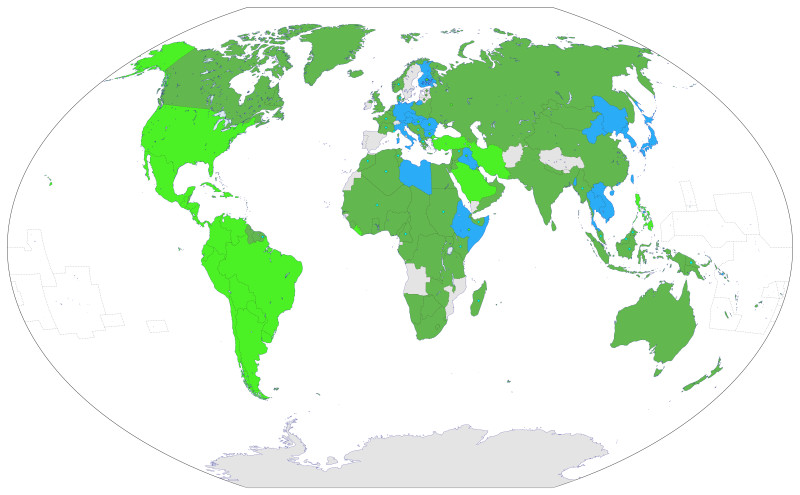
World War II participants and wartime alignments
How Governments Mobilized People and Resources
This war needed millions of people in uniform and even more people behind them.
Conscription and war economies
- Conscription drafted millions into the armed forces.
- Civilians were pulled into factory work, farming, transport, and government jobs that kept armies supplied.
- Civilian factories were converted to military production. Car plants made tanks and trucks.
- Governments used rationing, taxes, war bonds, and wage and price controls to direct resources into war.
- Black markets grew when rationed goods were scarce.
- The United States became the “arsenal of democracy” because its industrial output supplied both itself and its allies.
- The Lend-Lease Act let the U.S. support Allied countries before formally entering the war.
Labor mobilization
- Women entered industrial and support work in huge numbers. In the U.S., Rosie the Riveter became the symbol.
- In Britain and the Soviet Union, women worked in factories and farms.
- Soviet women also fought directly as snipers and pilots.
- Colonies mattered too. British India supplied troops, labor, food, and raw materials. About 2.5 million Indians served in the British Indian Army.
- Coercion mattered as much as patriotism in many places:
- Nazi Germany used foreign civilians, POWs, and concentration-camp inmates as forced labor.
- Japan used coerced labor in occupied territories.
- The Soviet Union used harsh labor discipline and Gulag labor.
That mix of labor, propaganda, and sacrifice is captured in the famous Rosie the Riveter poster.
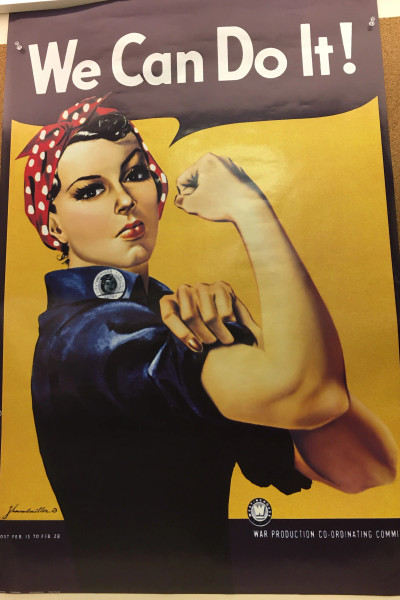
Rosie the Riveter poster
Propaganda, Nationalism, and Control of Daily Life
Propaganda was organized communication meant to shape beliefs and behavior. Governments used posters, radio, speeches, films, songs, schools, and youth groups because winning required civilians to obey, work, sacrifice, and keep believing.
Common messages were simple:
- Sacrifice was patriotic
- The enemy threatened national survival
- Workers and soldiers were heroes
- Civilians should buy bonds, accept rationing, and keep secrets
Censorship worked with propaganda by hiding defeats, controlling morale, and suppressing dissent.
Country examples
- Britain used Churchill’s speeches during the Blitz and the Ministry of Information to frame endurance as national strength.
- United States used Roosevelt’s messaging and the Office of War Information. Democratic ideals sat beside racial stereotypes and Japanese American incarceration under Executive Order 9066.
- Nazi Germany used Joseph Goebbels and the Ministry of Propaganda to glorify Hitler, militarism, and racial nationalism.
- Soviet Union mixed communism with patriotism in the Great Patriotic War.
- Japan promoted emperor-centered nationalism and the Greater East Asia Co-Prosperity Sphere, even though occupation was often brutal.
Soviet wartime propaganda often used emotionally charged images like the famous "The Motherland Calls" poster.
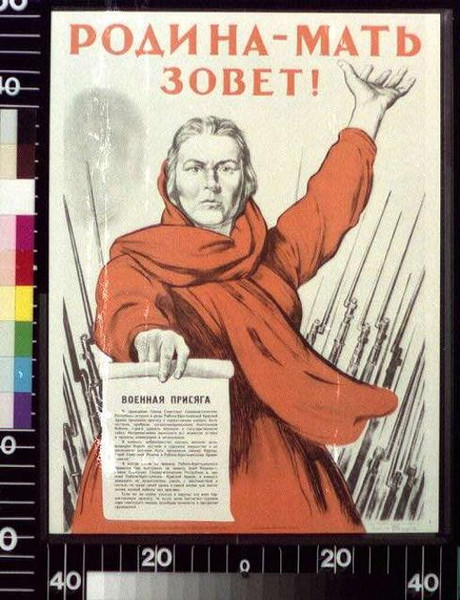
Soviet propaganda poster, "The Motherland Calls"
A propaganda source shows what a government wanted people to believe. It does not prove people actually believed it. That shows up a lot on AP questions.
How Different Regimes Conducted the War
All major powers used conscription, rationing, propaganda, censorship, economic direction, and nationalism. Industrial war pushed everyone in that direction.
- Democracies like Britain under Churchill and the U.S. under Roosevelt expanded state power but kept elections, opposition parties, and constitutional systems.
- They still used coercion and limited civil liberties during wartime.
- Totalitarian states like Nazi Germany under Hitler and the Soviet Union under Stalin had one-party rule, heavy censorship, and broader control over society.
- Germany mobilized through fascism, racial ideology, conquest, and forced labor.
- The Soviet Union mobilized through central planning, communist institutions, repression, and patriotic defense.
- Japan’s authoritarian military state used emperor worship, militarism, and imperial extraction.
The best comparison line is this. All major powers made society serve war, but totalitarian states did it with fewer legal restraints and more systematic repression.
New Tactics, Technology, and Why Casualties Were So High
The war got deadlier because industrial power, new tactics, and new technology all hit at once.
- Blitzkrieg used tanks, aircraft, artillery, motorized infantry, and radio coordination for fast breakthroughs in Poland and France.
- The Eastern Front turned into attrition warfare, where victory depended on replacing men and machines. Stalingrad was a major turning point.
- In the Pacific, aircraft carriers, submarines, and island-hopping made naval-air warfare central.
- Amphibious operations like D-Day required massive coordination of ships, planes, troops, and supplies.
Strategic bombing pushed war deep into civilian life:
- Germany’s Blitz hit Britain
- Allied bombing devastated Hamburg and Dresden
- Tokyo firebombing killed huge numbers of civilians
Science and logistics mattered constantly:
- Radar, sonar, radio, and codebreaking gave major advantages
- The Manhattan Project showed state-directed science at its extreme
- Oil, trucks, railways, shipping, and repair systems often decided what armies could actually do
The atomic bombs dropped on Hiroshima and Nagasaki helped force Japanese surrender, along with Soviet entry into the war against Japan.
Civilian and military life blurred together. That is why WWII casualties were so high. The scale came from total war + ideology + occupation + bombing + atomic weapons.
Key Takeaways
Total War
War in which governments mobilize society’s full human, economic, political, cultural, and technological resources, making the home front part of the battlefield
Imperial Mobilization
Use of colonies and dependent territories for soldiers, labor, food, money, and raw materials needed for war
British Indian Army
Force in which roughly 2.5 million Indians volunteered, strengthening the Allied war effort while wartime service intensified demands for independence
Conscription
Compulsory military service used to create the mass armies required by industrial warfare
War Economy
Government-directed economy that converts civilian industry to military production and controls materials, prices, wages, labor, and consumption
Rationing
Government limits on civilian consumption that redirected scarce food, fuel, clothing, and materials to the armed forces
War Bonds
Loans purchased by civilians to finance government war spending and presented as a form of patriotic service
Lend-Lease
1941 American program that supplied weapons and other materials to Allied governments before and during direct U.S. participation
Arsenal of Democracy
Roosevelt’s phrase presenting American industrial production and aid to the Allies as weapons in the defense of democracy
Rosie the Riveter
American propaganda symbol of women entering industrial war work as male workers entered military service
Forced Labor
Compelled wartime labor by civilians, prisoners, colonial subjects, or camp inmates, used extensively by Germany, Japan, and the Soviet Union
Propaganda
Organized communication using information, symbolism, emotion, or falsehood to shape beliefs and behavior in support of the war
Censorship
Government restriction of news and dissent to protect military information, sustain morale, and suppress criticism
Winston Churchill
British prime minister who directed wartime production and civil defense while using speeches and radio to inspire resistance and national unity
Franklin D. Roosevelt
U.S. president who expanded aid to the Allies and directed conscription, industrial conversion, rationing, propaganda, taxation, and war-bond drives
Adolf Hitler
Nazi dictator who mobilized Germany through fascism, racial nationalism, one-party rule, propaganda, repression, conquest, and forced labor
Joseph Stalin
Soviet dictator who used central planning, factory relocation, mass conscription, patriotism, strict labor discipline, and repression to mobilize the USSR.
Joseph Goebbels
Nazi propaganda minister who controlled press, radio, film, rallies, art, and education to glorify Hitler and promote racial nationalism and war
Executive Order 9066
Roosevelt’s order that led to the forced removal and incarceration of about 120,000 people of Japanese ancestry, most of them U.S. citizens
Great Patriotic War
Soviet framing of the war against Germany as defense of the motherland, combining communist ideology with Russian history and patriotism
Greater East Asia Co-Prosperity Sphere
Japanese claim that its expansion would liberate and unite Asia, masking military domination, resource extraction, coercion, and violence
Blitzkrieg
German “lightning war” using rapidly coordinated tanks, motorized infantry, aircraft, artillery, and radio to break through and encircle enemies
Battle of Stalingrad
1942–1943 Soviet victory that destroyed a major German army and marked a turning point on the Eastern Front
Island-Hopping
U.S. Pacific strategy of capturing selected islands for bases while bypassing some heavily defended Japanese positions
D-Day / Normandy Landings
June 6, 1944 Allied invasion of France combining naval support, air superiority, deception, amphibious forces, and extensive logistics
Kamikaze
Japanese tactic in which pilots deliberately crashed explosive-laden aircraft into Allied ships as defeat approached
Strategic Bombing
Long-range attacks on factories, oil facilities, transportation, government centers, and cities to weaken an enemy’s capacity or will to fight
The Blitz
German bombing campaign against British cities in 1940–1941 after Germany failed to gain air superiority in the Battle of Britain
Firebombing
Use of incendiary bombs to create rapidly spreading urban fires and firestorms, causing extensive destruction and civilian deaths
Manhattan Project
Secret U.S.-led scientific and industrial program, aided by British and refugee scientists, that developed the atomic bomb
Radar
Detection technology using radio waves to locate incoming aircraft and ships
Sonar
Sound-based technology used to detect submarines underwater
Codebreaking
Secret analysis of enemy communications that revealed plans and movements, including German and Japanese military operations
Logistics
The production, transportation, fueling, maintenance, supply, and replacement needed to keep armed forces operating
Axis Powers
World War II coalition led by Germany, Italy, and Japan
Allied Powers
World War II coalition led principally by Great Britain, the Soviet Union, China, and the United States, together with their partners and imperial possessions
Nationalism
Appeals to national survival, unity, duty, and sacrifice used to mobilize soldiers, workers, and civilians for war
Fascism
Authoritarian ultranationalist ideology used by Nazi Germany to support one-party rule, militarism, expansion, and total mobilization
Communism
Ideology centered on class struggle that the Soviet state combined with central planning, one-party rule, and patriotic appeals to mobilize for war
Combined-Arms Warfare
Coordinated use of tanks, infantry, artillery, aircraft, and communications so that each arm supports the others
Attritional Warfare
Warfare intended to wear down an enemy through sustained losses of personnel, equipment, and resources
Aircraft Carriers
Warships that made naval aviation central by launching aircraft against enemy fleets beyond the range of naval guns
Amphibious Warfare
Coordinated attacks launched from sea onto land using ships, aircraft, landing craft, troops, engineers, and supply systems
Atomic Bomb
Nuclear-fission weapon developed by the Manhattan Project and used on Hiroshima and Nagasaki, devastating both cities and helping bring Japan’s surrender
Notes
Total War
War in which governments mobilize society’s full human, economic, political, cultural, and technological resources, making the home front part of the battlefield
Imperial Mobilization
Use of colonies and dependent territories for soldiers, labor, food, money, and raw materials needed for war
British Indian Army
Force in which roughly 2.5 million Indians volunteered, strengthening the Allied war effort while wartime service intensified demands for independence
Conscription
Compulsory military service used to create the mass armies required by industrial warfare
War Economy
Government-directed economy that converts civilian industry to military production and controls materials, prices, wages, labor, and consumption
Rationing
Government limits on civilian consumption that redirected scarce food, fuel, clothing, and materials to the armed forces
War Bonds
Loans purchased by civilians to finance government war spending and presented as a form of patriotic service
Lend-Lease
1941 American program that supplied weapons and other materials to Allied governments before and during direct U.S. participation
Arsenal of Democracy
Roosevelt’s phrase presenting American industrial production and aid to the Allies as weapons in the defense of democracy
Rosie the Riveter
American propaganda symbol of women entering industrial war work as male workers entered military service
Forced Labor
Compelled wartime labor by civilians, prisoners, colonial subjects, or camp inmates, used extensively by Germany, Japan, and the Soviet Union
Propaganda
Organized communication using information, symbolism, emotion, or falsehood to shape beliefs and behavior in support of the war
Censorship
Government restriction of news and dissent to protect military information, sustain morale, and suppress criticism
Winston Churchill
British prime minister who directed wartime production and civil defense while using speeches and radio to inspire resistance and national unity
Franklin D. Roosevelt
U.S. president who expanded aid to the Allies and directed conscription, industrial conversion, rationing, propaganda, taxation, and war-bond drives
Adolf Hitler
Nazi dictator who mobilized Germany through fascism, racial nationalism, one-party rule, propaganda, repression, conquest, and forced labor
Joseph Stalin
Soviet dictator who used central planning, factory relocation, mass conscription, patriotism, strict labor discipline, and repression to mobilize the USSR.
Joseph Goebbels
Nazi propaganda minister who controlled press, radio, film, rallies, art, and education to glorify Hitler and promote racial nationalism and war
Executive Order 9066
Roosevelt’s order that led to the forced removal and incarceration of about 120,000 people of Japanese ancestry, most of them U.S. citizens
Great Patriotic War
Soviet framing of the war against Germany as defense of the motherland, combining communist ideology with Russian history and patriotism
Greater East Asia Co-Prosperity Sphere
Japanese claim that its expansion would liberate and unite Asia, masking military domination, resource extraction, coercion, and violence
Blitzkrieg
German “lightning war” using rapidly coordinated tanks, motorized infantry, aircraft, artillery, and radio to break through and encircle enemies
Battle of Stalingrad
1942–1943 Soviet victory that destroyed a major German army and marked a turning point on the Eastern Front
Island-Hopping
U.S. Pacific strategy of capturing selected islands for bases while bypassing some heavily defended Japanese positions
D-Day / Normandy Landings
June 6, 1944 Allied invasion of France combining naval support, air superiority, deception, amphibious forces, and extensive logistics
Kamikaze
Japanese tactic in which pilots deliberately crashed explosive-laden aircraft into Allied ships as defeat approached
Strategic Bombing
Long-range attacks on factories, oil facilities, transportation, government centers, and cities to weaken an enemy’s capacity or will to fight
The Blitz
German bombing campaign against British cities in 1940–1941 after Germany failed to gain air superiority in the Battle of Britain
Firebombing
Use of incendiary bombs to create rapidly spreading urban fires and firestorms, causing extensive destruction and civilian deaths
Manhattan Project
Secret U.S.-led scientific and industrial program, aided by British and refugee scientists, that developed the atomic bomb
Radar
Detection technology using radio waves to locate incoming aircraft and ships
Sonar
Sound-based technology used to detect submarines underwater
Codebreaking
Secret analysis of enemy communications that revealed plans and movements, including German and Japanese military operations
Logistics
The production, transportation, fueling, maintenance, supply, and replacement needed to keep armed forces operating
Axis Powers
World War II coalition led by Germany, Italy, and Japan
Allied Powers
World War II coalition led principally by Great Britain, the Soviet Union, China, and the United States, together with their partners and imperial possessions
Nationalism
Appeals to national survival, unity, duty, and sacrifice used to mobilize soldiers, workers, and civilians for war
Fascism
Authoritarian ultranationalist ideology used by Nazi Germany to support one-party rule, militarism, expansion, and total mobilization
Communism
Ideology centered on class struggle that the Soviet state combined with central planning, one-party rule, and patriotic appeals to mobilize for war
Combined-Arms Warfare
Coordinated use of tanks, infantry, artillery, aircraft, and communications so that each arm supports the others
Attritional Warfare
Warfare intended to wear down an enemy through sustained losses of personnel, equipment, and resources
Aircraft Carriers
Warships that made naval aviation central by launching aircraft against enemy fleets beyond the range of naval guns
Amphibious Warfare
Coordinated attacks launched from sea onto land using ships, aircraft, landing craft, troops, engineers, and supply systems
Atomic Bomb
Nuclear-fission weapon developed by the Manhattan Project and used on Hiroshima and Nagasaki, devastating both cities and helping bring Japan’s surrender
