Topic 2.3 Notes – Exchange in the Indian Ocean
How Indian Ocean Trade Expanded After 1200
This trade network did not suddenly appear after 1200. What changed was intensification. Older routes became busier, reached farther, and moved more goods.
Indian Ocean trade worked as a chain of connected regional routes. Merchants usually did relay trade, which means one merchant carried goods partway, then another merchant moved them farther. That made entrepôts crucial. An entrepôt is a port where goods were imported, stored, exchanged, and reexported.
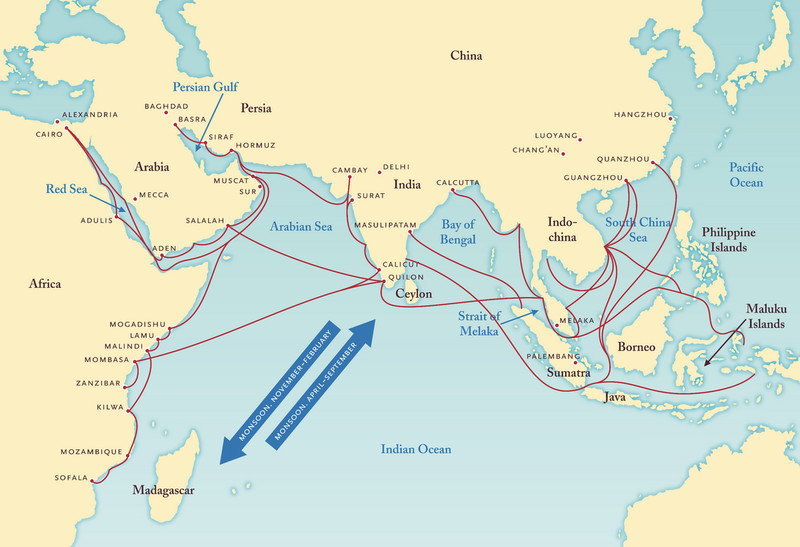
Indian Ocean trade routes and monsoon winds
The map helps you see that pattern. Trade linked East Africa, the Middle East, South Asia, Southeast Asia, and coastal China through connected sea lanes rather than one single route.
Common goods included:
- Spices from Southeast Asia, prized for flavor and preservation
- Indian cotton textiles, one of the most widely traded products
- Chinese silk and porcelain, high-value luxury goods
- African gold and ivory, brought from the interior to coastal ports
- Incense, precious stones, timber, foodstuffs, and enslaved people
Sea trade mattered because ships could carry bulkier cargo more cheaply than overland caravans on the Silk Roads.
The whole pattern fits this chain
monsoon knowledge + better ships/navigation + better business practices = more long-distance trade = richer port cities and stronger states
What Made Indian Ocean Trade Grow
Monsoon winds
The key environmental factor was the monsoon system. These were predictable seasonal winds, and sailors learned how to use them for round-trip voyages.
- In the summer monsoon, winds blew toward South Asia
- In the winter monsoon, winds blew back toward Arabia and East Africa
Because merchants often had to wait months for the winds to reverse, they stayed in port for long stretches. That helped foreign merchant communities form.
A very common AP mistake is saying monsoons were a new discovery after 1200. They were already known. The change was that sailors used this knowledge more effectively in a growing trade network.
Transportation and navigation
Ship design also helped expand trade. The image below shows a dhow with its large triangular lateen sails, one of the ship types associated with Indian Ocean commerce.
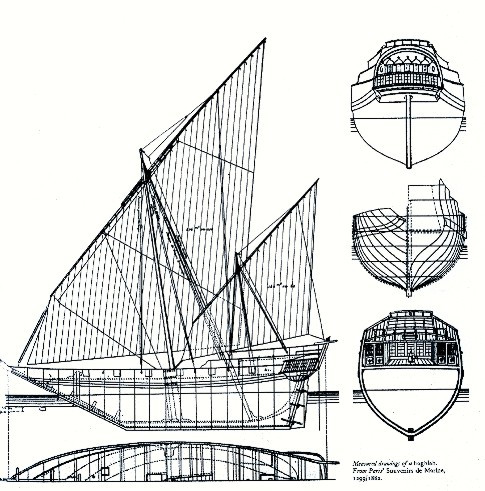
Dhow with lateen sails
- Dhow ships used lateen sails, which helped with maneuverability in the western Indian Ocean.
- Chinese junks had multiple masts, sternpost rudders, and watertight bulkheads, so they could carry large cargoes more safely.
- The magnetic compass helped sailors keep direction in open water.
- The astrolabe helped estimate latitude by using the position of celestial bodies.
Commercial practices and merchant networks
Trade also grew because merchants got better at handling risk.
- Credit let merchants finance voyages without carrying all their wealth in cash.
- Partnerships spread risk across several investors.
- Written contracts and agents helped merchants do business in distant ports.
- Trust came from family ties, religion, ethnicity, and repeated dealings.
Muslim merchants were especially important across the western Indian Ocean and into Southeast Asia, but the network was never only Muslim. It was multi-religious.
Port Cities and States That Grew from Trade
Trade made rulers and merchants wealthier, and that wealth helped states grow stronger. Ports that attracted merchants could collect customs taxes, fund security, and improve harbors. That brought in even more trade.
Swahili Coast city-states
On the Swahili Coast, that wealth is visible in places like Kilwa, where trade supported Islamic architecture and urban growth.
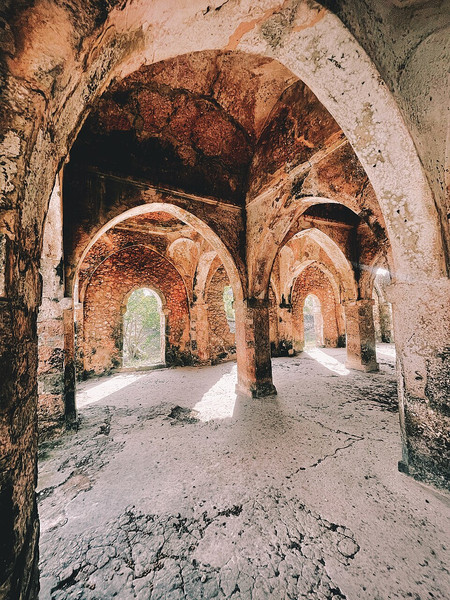
Great Mosque at Kilwa Kisiwani
- Kilwa and Mombasa linked the African interior to ocean trade.
- They exported gold and ivory and imported textiles, porcelain, and luxury goods.
- Islamic influence showed up in mosques and coral stone architecture.
- The key nuance is that Swahili culture remained deeply African and Bantu-speaking, even with strong outside influence.
Gujarat
- Ports such as Cambay (Khambhat) connected inland Indian production to overseas markets.
- Gujarat became famous for cotton textiles traded across the Indian Ocean.
- This commercial wealth supported the Gujarat Sultanate.
Sultanate of Malacca
Malacca mattered because it sat on one of the most strategic sea lanes in Afro-Eurasia. On the map, focus on the narrow waterway between Sumatra and the Malay Peninsula.
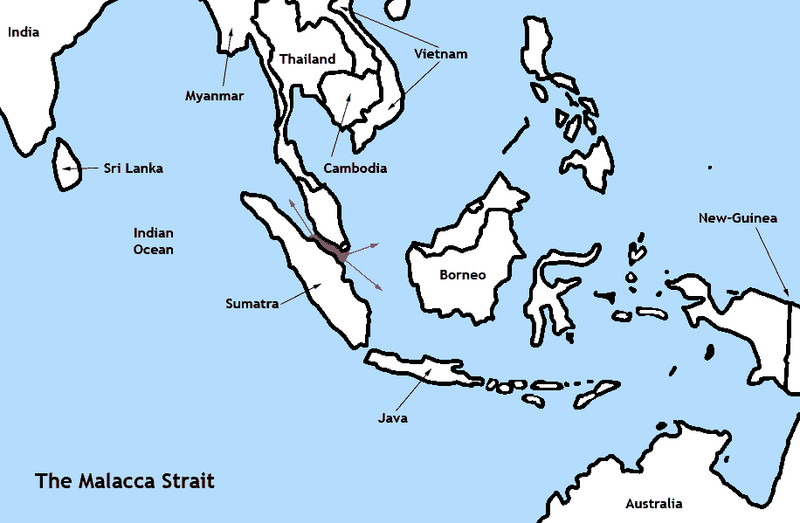
Map of the Strait of Malacca
- Malacca controlled the Strait of Malacca, a major chokepoint.
- It became a huge entrepôt linking Indian Ocean and South China Sea trade.
- Its rulers protected merchants and taxed commerce.
- Malacca’s power came from controlling exchange, not from producing everything itself.
Diasporic merchant communities
Because merchants stayed in ports for months, many settled there. These diasporic communities lived outside their homeland but kept ties to it.
The AP pattern here is reciprocal exchange. Merchants changed local cultures, and local cultures changed the merchants too.
- Arab and Persian communities in East Africa spread Islam and helped create Swahili culture through settlement and intermarriage. Kiswahili stayed a Bantu language but absorbed lots of Arabic vocabulary.
- Chinese merchant communities in Southeast Asia acted as middlemen between Chinese and local markets and adapted to local languages and politics.
- Malay communities spread Malay as a trade language and shared regional commercial knowledge.
Zheng He and the Indian Ocean at Its Height
Zheng He, a Ming admiral, led seven voyages from 1405 to 1433 under the Yongle emperor. His fleets traveled through Southeast Asia to India, Sri Lanka, Hormuz, Arabia, and East Africa.
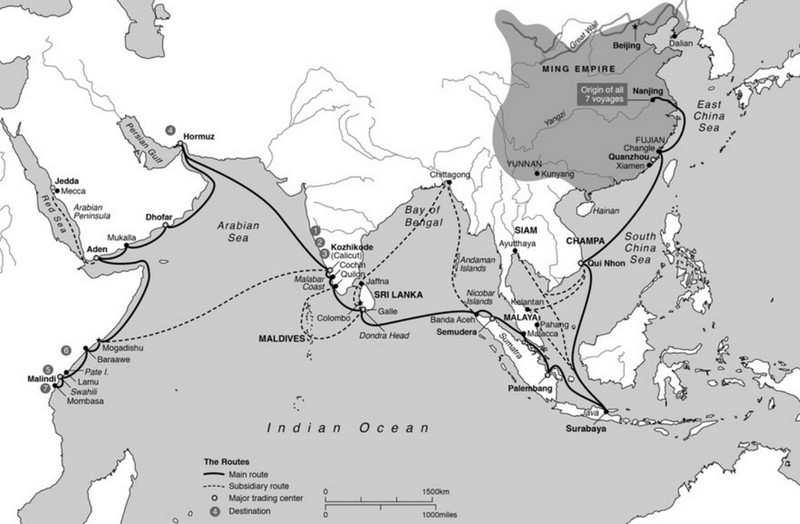
Zheng He’s Indian Ocean voyages
His voyages aimed to:
- display Ming power
- expand tribute relationships
- promote trade
- carry envoys
- secure favorable conditions on routes
The fleets brought silk and porcelain and returned with goods, animals, diplomatic missions, and information. They also spread geographic knowledge and diplomatic practices. Zheng He sometimes used force, including action against pirates and intervention in Sri Lanka.
The big exam point is that Zheng He entered an already thriving network. He did not create Indian Ocean trade. When the voyages ended after 1433, the network kept going, which shows it did not depend on Ming backing alone.
Key Takeaways
Indian Ocean Trading Network
Interconnected maritime routes linking East Africa, Southwest Asia, South Asia, Southeast Asia, and China; existing trade intensified and widened from c. 1200–1450
Monsoon Winds
Predictable seasonal winds that reversed direction, allowing sailors to schedule voyages and return trips across the Indian Ocean
Entrepôt
Commercial center where goods were imported, stored, exchanged, and reexported
Relay Trade
System in which goods and information passed through multiple merchants and ports instead of one merchant making the entire journey
Dhow
Western Indian Ocean vessel used by Arab, Persian, Indian, and East African sailors, commonly equipped with maneuverable lateen sails
Lateen Sail
Triangular sail mounted at an angle that allowed ships to use crosswinds effectively and maneuver more easily
Chinese Junk
Large Chinese ship with features such as multiple masts, sternpost rudders, and watertight compartments, capable of carrying substantial cargo
Magnetic Compass
Chinese-developed navigational tool that indicated direction and helped sailors maintain a course away from visible landmarks
Astrolabe
Navigational instrument that measured the angle of the sun or stars to estimate a ship’s latitude
Commercial Credit
Financing that allowed merchants to obtain goods or fund voyages without carrying or supplying the full value in coin
Merchant Partnerships
Arrangements in which several investors financed a voyage and divided its profits or losses
Merchant Networks
Trusted webs of relatives, agents, and religious or ethnic communities that supplied credit, information, storage, and contacts in distant ports
Swahili Coast City-States
Independent East African port polities such as Kilwa and Mombasa that prospered by connecting inland gold and ivory with Indian Ocean trade
Sultanate of Malacca
Commercial state founded around 1400 that grew wealthy by protecting and taxing trade through the Strait of Malacca
Strait of Malacca
Narrow maritime passage between the Malay Peninsula and Sumatra linking the Indian Ocean with the South China Sea
Diasporic Communities
Communities living outside their ancestral homelands while retaining connections to them, producing mutual cultural influence with host societies
Arab and Persian Communities in East Africa
Merchant communities that spread Islam and Indian Ocean customs while adopting African languages and practices through settlement and intermarriage
Chinese Merchant Communities in Southeast Asia
Settled traders who linked Southeast Asian markets to China while learning local languages, cooperating with rulers, and often intermarrying
Malay Merchant Communities
Trading communities spread across maritime Southeast Asia and the Indian Ocean that transmitted Malay language, regional knowledge, and commercial customs
Kiswahili / Swahili Language
Bantu language with substantial Arabic and other borrowed vocabulary, reflecting East Africa’s African foundations and Indian Ocean contacts
Zheng He / Zheng He’s Voyages
Ming admiral who led seven state-sponsored expeditions from 1405–1433 to display Chinese power and reinforce tributary and commercial ties; the voyages facilitated cultural and technological exchange
Gujarat
Northwestern Indian trading region whose ports connected inland cotton-textile production with markets throughout the Indian Ocean
Larger Ship Designs
Sturdier, higher-capacity vessels that lowered transportation costs and made longer, more profitable voyages possible
Kilwa
Wealthy Swahili city-state that prospered by connecting Indian Ocean merchants with the southeastern African gold trade
Notes
Indian Ocean Trading Network
Interconnected maritime routes linking East Africa, Southwest Asia, South Asia, Southeast Asia, and China; existing trade intensified and widened from c. 1200–1450
Monsoon Winds
Predictable seasonal winds that reversed direction, allowing sailors to schedule voyages and return trips across the Indian Ocean
Entrepôt
Commercial center where goods were imported, stored, exchanged, and reexported
Relay Trade
System in which goods and information passed through multiple merchants and ports instead of one merchant making the entire journey
Dhow
Western Indian Ocean vessel used by Arab, Persian, Indian, and East African sailors, commonly equipped with maneuverable lateen sails
Lateen Sail
Triangular sail mounted at an angle that allowed ships to use crosswinds effectively and maneuver more easily
Chinese Junk
Large Chinese ship with features such as multiple masts, sternpost rudders, and watertight compartments, capable of carrying substantial cargo
Magnetic Compass
Chinese-developed navigational tool that indicated direction and helped sailors maintain a course away from visible landmarks
Astrolabe
Navigational instrument that measured the angle of the sun or stars to estimate a ship’s latitude
Commercial Credit
Financing that allowed merchants to obtain goods or fund voyages without carrying or supplying the full value in coin
Merchant Partnerships
Arrangements in which several investors financed a voyage and divided its profits or losses
Merchant Networks
Trusted webs of relatives, agents, and religious or ethnic communities that supplied credit, information, storage, and contacts in distant ports
Swahili Coast City-States
Independent East African port polities such as Kilwa and Mombasa that prospered by connecting inland gold and ivory with Indian Ocean trade
Sultanate of Malacca
Commercial state founded around 1400 that grew wealthy by protecting and taxing trade through the Strait of Malacca
Strait of Malacca
Narrow maritime passage between the Malay Peninsula and Sumatra linking the Indian Ocean with the South China Sea
Diasporic Communities
Communities living outside their ancestral homelands while retaining connections to them, producing mutual cultural influence with host societies
Arab and Persian Communities in East Africa
Merchant communities that spread Islam and Indian Ocean customs while adopting African languages and practices through settlement and intermarriage
Chinese Merchant Communities in Southeast Asia
Settled traders who linked Southeast Asian markets to China while learning local languages, cooperating with rulers, and often intermarrying
Malay Merchant Communities
Trading communities spread across maritime Southeast Asia and the Indian Ocean that transmitted Malay language, regional knowledge, and commercial customs
Kiswahili / Swahili Language
Bantu language with substantial Arabic and other borrowed vocabulary, reflecting East Africa’s African foundations and Indian Ocean contacts
Zheng He / Zheng He’s Voyages
Ming admiral who led seven state-sponsored expeditions from 1405–1433 to display Chinese power and reinforce tributary and commercial ties; the voyages facilitated cultural and technological exchange
Gujarat
Northwestern Indian trading region whose ports connected inland cotton-textile production with markets throughout the Indian Ocean
Larger Ship Designs
Sturdier, higher-capacity vessels that lowered transportation costs and made longer, more profitable voyages possible
Kilwa
Wealthy Swahili city-state that prospered by connecting Indian Ocean merchants with the southeastern African gold trade
