Topic 5.6 Notes – Industrialization: Government’s Role from 1750 to 1900
What State-Sponsored Industrialization Was
Some governments tried to speed up industrialization instead of waiting for private business to do it. They usually did this because they did not have Britain’s capital, machines, or industrial networks.
State-sponsored industrialization meant government-directed economic development. The state might:
- build model factories and arsenals so industry could get started
- import machinery and hire foreign experts to teach new methods
- fund railroads, shipyards, telegraphs, and schools that private investors could not build alone
- reform taxation, labor systems, and the military so the whole state could support industry
- support chosen private firms instead of leaving everything to the market
The reason was never just “make more stuff.” Governments wanted to:
- strengthen the military
- raise tax revenue
- reduce dependence on imported goods
- resist European or U.S. pressure
- unify markets and centralize power
The pattern to remember is simple. Industrialization, military reform, and political survival were tied together.
Muhammad Ali’s Egypt
Egypt shows what state-led industrialization looked like when a ruler tried to build power quickly inside a dangerous international system.
Muhammad Ali ruled as Ottoman governor of Egypt from 1805 to 1848, but he built Egypt into an increasingly autonomous state. He wanted economic modernization because it could make Egypt militarily stronger.
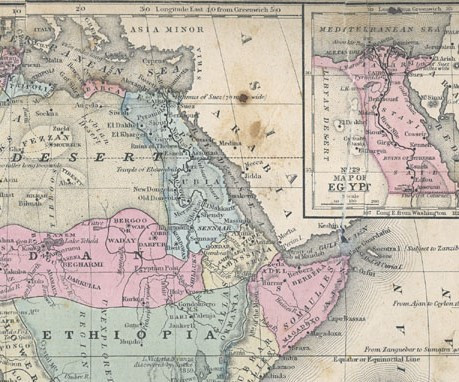
Map of Egypt and the Nile Valley
Cotton and state monopolies
Cotton sat at the center of his plan, and Egypt’s geography helps explain why. The Nile valley and delta supported the agriculture that funded his state-building program.
- Egypt promoted long-staple cotton, which sold well in European markets.
- The state used monopolies to control crop buying and trade.
- Peasants were pushed to grow cash crops instead of just food.
- The government bought crops cheaply, sold them for profit, and used that money for the army, bureaucracy, and industry.
Industry and the military
His factories were closely tied to military needs.
- The state built spinning and weaving mills.
- It imported European machinery and hired foreign technicians.
- It developed shipyards and arsenals to supply the armed forces.
- Conscription, military schools, and European drill methods meant industrial growth and military reform were happening together.
Why Egypt fell short
Egypt industrialized only partially.
- The whole system depended on coercive state control.
- British manufactured goods were cheaper and hard to compete with.
- The Ottoman Empire and European powers pressured Egypt from outside.
- After conflict and intervention, Egypt’s monopolies weakened.
The result matters a lot on the exam. Egypt remained mostly an exporter of raw cotton, not a fully industrial economy.
Meiji Japan and the Internal Reforms That Drove Industrialization
Japan shows the same state-led idea, but with stronger long-term results because reform reached deeper into politics, taxes, education, and infrastructure.
Tokugawa Japan had limited foreign contact, but it already had active commerce, skilled artisans, and relatively high literacy. Then Commodore Matthew Perry arrived in 1853, and the Convention of Kanagawa in 1854 opened Japan under pressure.
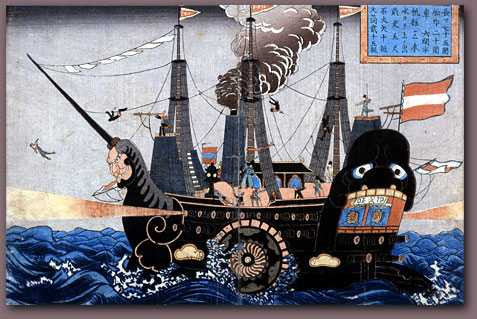
Japanese print of Perry’s “Black Ships”
Unequal treaties exposed military weakness and helped bring down the shogunate. The Meiji Restoration in 1868 restored imperial authority and empowered reformers.
Political centralization
In 1871, the government abolished daimyo domains and replaced them with centrally run prefectures. That gave the national state more control over taxes, law, conscription, and infrastructure.
Tax and revenue reform
The land tax reform of 1873 required taxes in money, which gave the government reliable cash. Silk and tea exports helped fund modernization.
Borrowing foreign knowledge
The Iwakura Mission of 1871-1873 studied Western schools, factories, and governments. Japan also hired foreign engineers and teachers. This was selective adaptation, not copying everything.
Infrastructure and industry
The state also built the infrastructure and model industries that jump-started industrial growth.
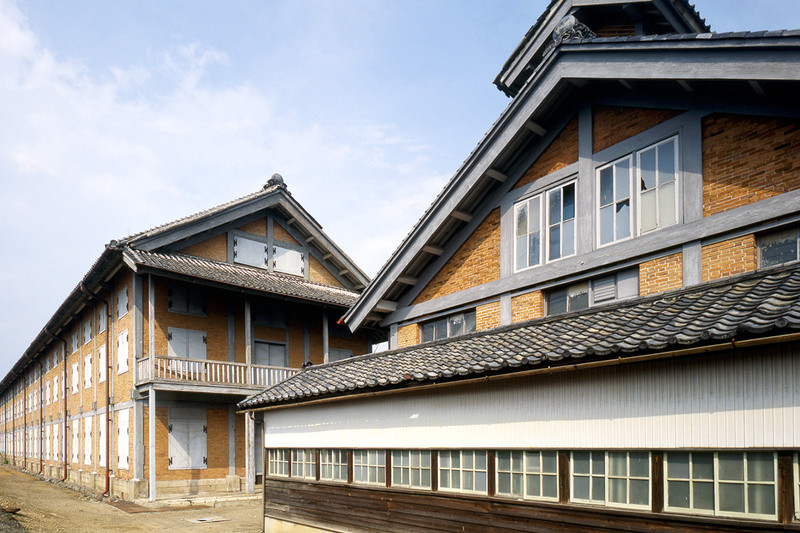
Tomioka Silk Mill
- first railroad Tokyo to Yokohama, 1872
- expansion of railroads, telegraphs, roads, and postal system
- state-built model factories, mines, shipyards, and arsenals
- Tomioka Silk Mill as a famous example
- early industry centered on silk and cotton textiles
Education and military reform
A national education system in the 1870s spread literacy, science, and technical training. Universal male conscription in 1873 weakened samurai privilege and helped break the old feudal order.
Shift to private enterprise
In the 1880s, the state sold some enterprises. Zaibatsu such as Mitsui and Mitsubishi expanded, but the government still guided development through subsidies, contracts, and military demand.
Comparing Egypt and Japan
Both states used government power to push industrialization, imported foreign expertise, promoted textiles, linked industry to military strength, and strengthened central authority.
Japan succeeded more because it had:
| Japan | Egypt |
|---|---|
| durable political autonomy | heavier outside interference |
| stronger central tax system | coercive monopoly system |
| railroads and communications | weaker integrated infrastructure |
| mass education | less broad institutional reform |
| partnership with private business | economy stayed tied to raw cotton exports |
Japan’s success showed in the Sino-Japanese War (1894-1895), influence in Korea, and acquisition of Taiwan. The larger pattern is that state-sponsored industrialization could work, but success depended on autonomy, institutions, revenue, and outside pressure.
Key Takeaways
State-Sponsored Industrialization
Government-directed investment in factories, technology, infrastructure, education, and military industry to accelerate industrial development and strengthen the state
Muhammad Ali
Ottoman governor of Egypt from 1805 to 1848 who used cotton monopolies, factories, foreign technology, and military reform to pursue limited state-sponsored industrialization
Egyptian State Monopoly System
Muhammad Ali’s system of controlling cash-crop production, purchasing cotton at fixed prices, and reselling it to finance the army, bureaucracy, and industry
Commodore Matthew Perry
U.S. naval officer whose steam-powered warships arrived in Japan in 1853, pressuring it to open ports and helping trigger internal reform
Convention of Kanagawa
The 1854 agreement that began opening Japanese ports to the United States after Perry’s arrival
Unequal Treaties
Agreements granting Western powers commercial and legal privileges while limiting Japan’s control over tariffs and foreign residents
Meiji Restoration
The 1868 overthrow of the Tokugawa shogunate that restored formal imperial authority and placed centralizing reformers in power
Meiji Era
The period beginning in 1868 when Japan centralized government, sponsored industry, modernized its military, and became a regional power
Rich Country, Strong Army
Meiji slogan expressing the goal of using economic and industrial modernization to preserve independence and build military power
Abolition of the Domains
The 1871 replacement of daimyo-controlled domains with centrally administered prefectures, enabling uniform taxation, conscription, education, and infrastructure
Land Tax Reform of 1873
Meiji reform requiring landowners to pay taxes in money, providing predictable cash revenue for government modernization
Iwakura Mission
The 1871–1873 Japanese mission that studied Western governments, schools, factories, laws, and military systems for selective adaptation
Zaibatsu
Large family-controlled Japanese conglomerates, such as Mitsui and Mitsubishi, that expanded with government support in banking, shipping, mining, and manufacturing
Sino-Japanese War
The 1894–1895 war in which industrialized Japan defeated Qing China, gained Taiwan, and increased its influence in Korea
Universal Male Conscription of 1873
Meiji policy that created a national conscript army, ended the samurai’s military monopoly, and strengthened central state power
Notes
State-Sponsored Industrialization
Government-directed investment in factories, technology, infrastructure, education, and military industry to accelerate industrial development and strengthen the state
Muhammad Ali
Ottoman governor of Egypt from 1805 to 1848 who used cotton monopolies, factories, foreign technology, and military reform to pursue limited state-sponsored industrialization
Egyptian State Monopoly System
Muhammad Ali’s system of controlling cash-crop production, purchasing cotton at fixed prices, and reselling it to finance the army, bureaucracy, and industry
Commodore Matthew Perry
U.S. naval officer whose steam-powered warships arrived in Japan in 1853, pressuring it to open ports and helping trigger internal reform
Convention of Kanagawa
The 1854 agreement that began opening Japanese ports to the United States after Perry’s arrival
Unequal Treaties
Agreements granting Western powers commercial and legal privileges while limiting Japan’s control over tariffs and foreign residents
Meiji Restoration
The 1868 overthrow of the Tokugawa shogunate that restored formal imperial authority and placed centralizing reformers in power
Meiji Era
The period beginning in 1868 when Japan centralized government, sponsored industry, modernized its military, and became a regional power
Rich Country, Strong Army
Meiji slogan expressing the goal of using economic and industrial modernization to preserve independence and build military power
Abolition of the Domains
The 1871 replacement of daimyo-controlled domains with centrally administered prefectures, enabling uniform taxation, conscription, education, and infrastructure
Land Tax Reform of 1873
Meiji reform requiring landowners to pay taxes in money, providing predictable cash revenue for government modernization
Iwakura Mission
The 1871–1873 Japanese mission that studied Western governments, schools, factories, laws, and military systems for selective adaptation
Zaibatsu
Large family-controlled Japanese conglomerates, such as Mitsui and Mitsubishi, that expanded with government support in banking, shipping, mining, and manufacturing
Sino-Japanese War
The 1894–1895 war in which industrialized Japan defeated Qing China, gained Taiwan, and increased its influence in Korea
Universal Male Conscription of 1873
Meiji policy that created a national conscript army, ended the samurai’s military monopoly, and strengthened central state power
