Topic 5.8 Notes – Reactions to the Industrial Economy from 1750 to 1900
How Industrial Capitalism Created Pressure for Change
Industrial capitalism joined private ownership of production with machines and wage labor. Factory owners controlled the means of production, and workers had to sell their labor for wages.
Industrialization raised output and created wealth, but those gains were uneven. Early factory workers often dealt with:
- Long hours and low pay
- Dangerous machinery and injuries
- Child labor
- Unemployment insecurity during downturns
- Crowded urban housing with poor sanitation
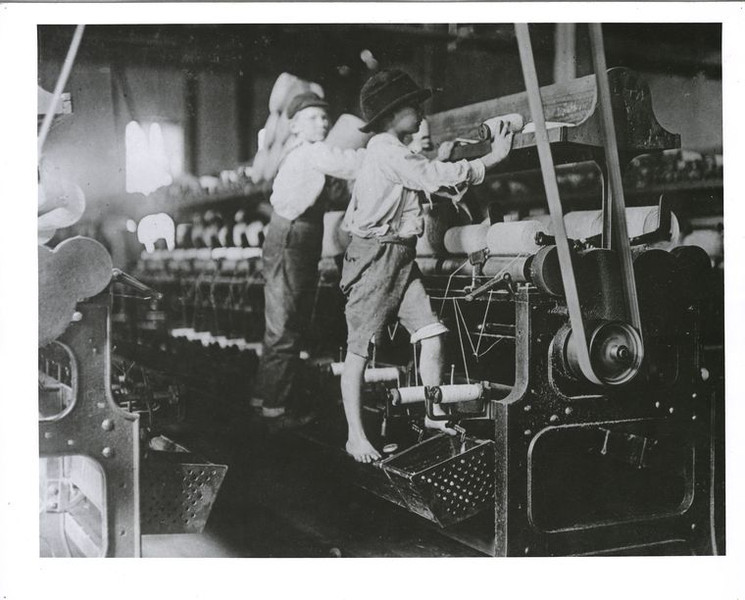
Child labor in a textile mill
The change in work itself mattered. In artisan shops or household production, people had more control over pace and skill. In factories, work ran by the clock, under supervision, with repetitive tasks. That loss of control helped create resistance.
Two classes show up constantly in this topic:
- Bourgeoisie = factory owners and others who owned productive property
- Proletariat = wage-earning working class
Resistance became organized because workers were packed together in cities and factories. That made shared problems visible and made it easier to form associations, print newspapers, strike, and support political parties.
Labor Unions and Workers’ Political Movements
Workers first tried to change industrial society from inside it.
Labor unions
Labor unions organized workers to bargain collectively for:
- Higher wages
- Shorter hours
- Safer conditions
- The right to organize
Common tactics included dues, petitions, strikes, demonstrations, lobbying, and backing political parties. The eight-hour workday became a major symbol of labor demands.
Unions faced serious obstacles:
- Employers used blacklists and replacement workers
- Governments sent police or troops
- Workers were divided by skill, religion, ethnicity, gender, and nationality
Britain’s union laws
- Combination Acts, 1799-1800 banned worker combinations
- Repealed in 1824
- Trade Union Act, 1871 legalized unions in Britain
Workers’ political movements
Some workers wanted more than better pay. They wanted political power too.
Chartism in Britain pushed the People’s Charter of 1838, including:
- Universal male suffrage
- Secret ballot
- Payment for members of Parliament
Later in the century, labor and socialist parties grew. Germany’s Social Democratic Party became one of the strongest working-class mass parties.
Reform Within Industrial Society
Many critics wanted to regulate capitalism, not destroy it. That pushed governments to take on new responsibilities.
| Reform | Example | Why it mattered |
|---|---|---|
| Labor laws | Factory Act of 1833 | Limited child labor and created inspectors |
| Mine reform | Mines and Collieries Act of 1842 | Kept women and young boys out of underground mines |
| Welfare | Bismarck’s insurance laws in 1883, 1884, 1889 | Health, accident, and old-age/disability support |
| Public health | Public Health Act of 1848 | Government role in sanitation |
Bismarck is a favorite test example because he was conservative. He reformed partly to reduce unrest and weaken socialism.
Urban reform grew from obvious city problems. London’s Great Stink of 1858 pushed Joseph Bazalgette to build a major sewer system. Cities added sewers, clean water, paved streets, transport, parks, and housing rules.
Religious and cooperative responses mattered too:
- Charities and mutual-aid societies helped the poor
- Cooperatives offered worker- or consumer-owned alternatives
- Rerum Novarum (1891) defended worker rights but rejected both unrestricted capitalism and revolutionary communism
Socialist and Revolutionary Alternatives
Socialism is the broad label for ideas favoring more equal distribution and social control of production.
Early socialism
- Robert Owen improved conditions at New Lanark and promoted cooperatives
- Charles Fourier imagined planned cooperative communities
Marxism and communism
Karl Marx and Friedrich Engels gave the most influential revolutionary critique.
- Communist Manifesto (1848)
- Capital (1867)
Core Marxist ideas:
- History moves through class struggle
- Historical materialism says material production shapes society
- Workers must develop class consciousness
- The proletariat should overthrow the bourgeoisie
- Goal = abolish private ownership of the means of production and eventually create a classless communist society
“Workers of the world, unite” meant international class solidarity.
Different strategies and anarchism
Some socialists wanted revolution. Social democracy wanted gradual change through elections, unions, and laws.
Anarchism, tied to Mikhail Bakunin, opposed both capitalism and coercive state power. The big difference from Marxism is that anarchists wanted the state abolished immediately.
Ottoman and Qing Modernization Under Industrial Pressure
These reforms came from outside pressure more than worker protest. Ottoman and Qing rulers were trying to survive in a world dominated by industrial powers.
Ottoman Empire and the Tanzimat
The Tanzimat reforms ran from the Gülhane Edict of 1839 to the constitution of 1876. They reorganized the military, centralized taxes, expanded secular schools, built railroads and telegraphs, created new ministries, codified laws, and promised greater equality for non-Muslims.
Limits mattered. Elites and religious leaders resisted, foreign debt grew, and Abdülhamid II suspended the constitution in 1878. The map below helps show the bigger context. Even as reformers tried to strengthen the state, the empire had already lost large territories by this point.
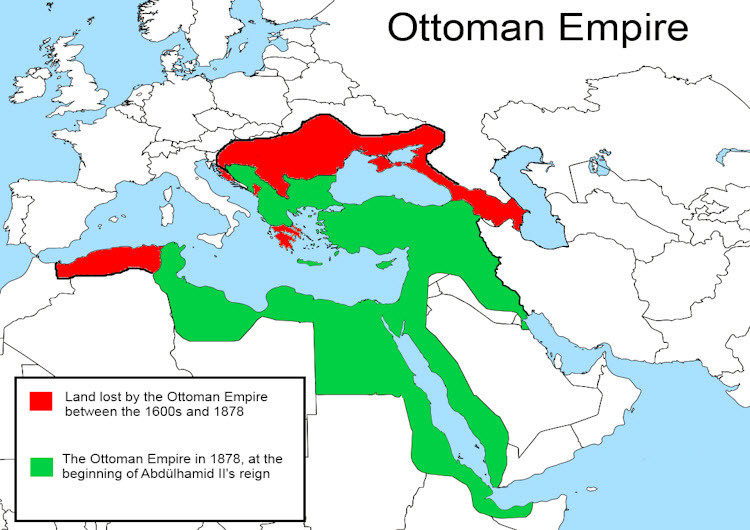
Ottoman territorial losses by 1878
Qing China and Self-Strengthening
After the Opium Wars, unequal treaties, and the Taiping Rebellion, Qing leaders tried Self-Strengthening. Officials like Zeng Guofan and Li Hongzhang built arsenals, shipyards, a navy, technical schools, telegraphs, railroads, mines, and steamship companies, and sent students abroad.
The idea was to keep the Confucian order while borrowing Western technology. Corruption, poor coordination, and conservative opposition weakened the effort. Defeat in the First Sino-Japanese War (1894-1895) exposed those limits, and the Hundred Days’ Reform of 1898 was shut down by Empress Dowager Cixi.
Key Takeaways
Industrial Capitalism
System combining private ownership and profit-seeking investment with mechanized production and wage labor
Labor Union
Organization of workers seeking shared goals such as higher wages, shorter hours, safer conditions, and the right to organize
Collective Bargaining
Negotiation by workers as a group with an employer over wages, hours, rules, and working conditions
Strike
Collective withholding of labor by workers to pressure an employer to meet their demands
Combination Acts
British laws of 1799–1800 that prohibited worker combinations until their repeal in 1824
Trade Union Act of 1871
British law recognizing trade unions as lawful organizations and allowing them to operate more openly
Social Democratic Party of Germany
Mass political party rooted in the German industrial working class that pursued socialist and labor goals through politics
Factory Act of 1833
British law restricting children’s employment and hours in textile factories and creating factory inspectors
Mines and Collieries Act of 1842
British law prohibiting women, girls, and very young boys from working underground in mines
Social Insurance
Government protection against risks such as illness, workplace injury, disability, and old age
Otto von Bismarck
Conservative German chancellor who introduced health, accident, old-age, and disability insurance to aid workers and weaken socialism
Compulsory Public Education
Required schooling intended to expand literacy, prepare skilled and disciplined citizens, and move children out of workplaces
Public Health Act of 1848
Early British national law promoting local sanitary administration in response to urban disease and poor sanitation
Rerum Novarum
Roman Catholic Church’s 1891 encyclical defending private property and workers’ rights while rejecting unrestricted capitalism and revolutionary communism
Cooperative
Enterprise jointly owned by consumers or producers who share its benefits rather than depend entirely on profit-seeking employers or merchants
Socialism
Broad family of ideologies favoring social or collective control of productive resources and a more equal distribution of wealth
Utopian Socialism
Early socialist approach proposing planned cooperative communities as alternatives to competitive capitalism
Robert Owen
British industrialist and utopian socialist who improved conditions at New Lanark and promoted cooperative communities
Charles Fourier
Utopian socialist who envisioned self-sufficient cooperative communities organized around shared labor
Karl Marx
Revolutionary socialist who argued that class struggle would lead the proletariat to overthrow capitalism and establish communism
Friedrich Engels
Marx’s collaborator and coauthor of the Communist Manifesto who helped develop and promote revolutionary socialism
The Communist Manifesto
Marx and Engels’s 1848 revolutionary pamphlet presenting history as class struggle and calling on workers of all countries to unite
Capital
Marx’s analysis of capitalism explaining how private ownership and exploitation of workers produced profit and inequality
Means of Production
Factories, mines, transportation systems, and other productive property used to produce goods and wealth
Bourgeoisie
In Marxism, the capitalist class that owns the means of production
Proletariat
In Marxism, the wage-earning industrial working class that does not own the means of production
Class Struggle
Conflict between economic classes, especially capitalist owners seeking profit and workers seeking better wages and conditions
Historical Materialism
Marxist theory that material production and class relations fundamentally shape political, social, and historical development
Class Consciousness
Workers’ awareness of their shared economic position and common interests as a class
Communism
Revolutionary Marxist goal of common ownership, abolition of capitalist private property, and an ultimately classless society
Social Democracy
Reformist socialist tradition pursuing labor regulation, social insurance, public ownership, and greater equality through elections and legislation
Revolutionary Socialism versus Parliamentary Socialism
Revolutionaries sought to overthrow the capitalist state, while parliamentary socialists pursued gradual change through elections, unions, and legislation
Anarchism
Ideology seeking voluntary associations in place of capitalism and coercive state authority, unlike Marxism’s temporary seizure of state power
Mikhail Bakunin
Anarchist thinker who advocated replacing hierarchical states and capitalist ownership with voluntary associations
Tanzimat
Ottoman reorganization from 1839 to 1876 that centralized administration and modernized the military, taxation, law, education, and infrastructure
Self-Strengthening Movement
Qing reform movement of the 1860s–1890s adopting Western military and industrial techniques while preserving Confucian political foundations
Zeng Guofan
Qing official who sponsored arsenals, military modernization, and other Self-Strengthening projects
Li Hongzhang
Leading Qing Self-Strengthening official who sponsored modern arsenals, shipyards, schools, communications, and state-supervised enterprises
First Sino-Japanese War
War of 1894–1895 in which China’s defeat by Japan exposed the limitations of Qing Self-Strengthening
Hundred Days’ Reform
Brief 1898 Qing program proposing broader educational, administrative, military, and economic reforms before conservative opponents ended it
Guangxu Emperor
Qing emperor who supported the Hundred Days’ Reform and its program of wider institutional modernization
Empress Dowager Cixi
Powerful Qing conservative who ended the Hundred Days’ Reform and removed many reformers from power
Chartist Movement
British mass working-class campaign that used the People’s Charter to demand political reforms and greater worker representation
People’s Charter
British reform program of 1838 demanding measures including universal male suffrage, secret ballots, and payment for members of Parliament
Notes
Industrial Capitalism
System combining private ownership and profit-seeking investment with mechanized production and wage labor
Labor Union
Organization of workers seeking shared goals such as higher wages, shorter hours, safer conditions, and the right to organize
Collective Bargaining
Negotiation by workers as a group with an employer over wages, hours, rules, and working conditions
Strike
Collective withholding of labor by workers to pressure an employer to meet their demands
Combination Acts
British laws of 1799–1800 that prohibited worker combinations until their repeal in 1824
Trade Union Act of 1871
British law recognizing trade unions as lawful organizations and allowing them to operate more openly
Social Democratic Party of Germany
Mass political party rooted in the German industrial working class that pursued socialist and labor goals through politics
Factory Act of 1833
British law restricting children’s employment and hours in textile factories and creating factory inspectors
Mines and Collieries Act of 1842
British law prohibiting women, girls, and very young boys from working underground in mines
Social Insurance
Government protection against risks such as illness, workplace injury, disability, and old age
Otto von Bismarck
Conservative German chancellor who introduced health, accident, old-age, and disability insurance to aid workers and weaken socialism
Compulsory Public Education
Required schooling intended to expand literacy, prepare skilled and disciplined citizens, and move children out of workplaces
Public Health Act of 1848
Early British national law promoting local sanitary administration in response to urban disease and poor sanitation
Rerum Novarum
Roman Catholic Church’s 1891 encyclical defending private property and workers’ rights while rejecting unrestricted capitalism and revolutionary communism
Cooperative
Enterprise jointly owned by consumers or producers who share its benefits rather than depend entirely on profit-seeking employers or merchants
Socialism
Broad family of ideologies favoring social or collective control of productive resources and a more equal distribution of wealth
Utopian Socialism
Early socialist approach proposing planned cooperative communities as alternatives to competitive capitalism
Robert Owen
British industrialist and utopian socialist who improved conditions at New Lanark and promoted cooperative communities
Charles Fourier
Utopian socialist who envisioned self-sufficient cooperative communities organized around shared labor
Karl Marx
Revolutionary socialist who argued that class struggle would lead the proletariat to overthrow capitalism and establish communism
Friedrich Engels
Marx’s collaborator and coauthor of the Communist Manifesto who helped develop and promote revolutionary socialism
The Communist Manifesto
Marx and Engels’s 1848 revolutionary pamphlet presenting history as class struggle and calling on workers of all countries to unite
Capital
Marx’s analysis of capitalism explaining how private ownership and exploitation of workers produced profit and inequality
Means of Production
Factories, mines, transportation systems, and other productive property used to produce goods and wealth
Bourgeoisie
In Marxism, the capitalist class that owns the means of production
Proletariat
In Marxism, the wage-earning industrial working class that does not own the means of production
Class Struggle
Conflict between economic classes, especially capitalist owners seeking profit and workers seeking better wages and conditions
Historical Materialism
Marxist theory that material production and class relations fundamentally shape political, social, and historical development
Class Consciousness
Workers’ awareness of their shared economic position and common interests as a class
Communism
Revolutionary Marxist goal of common ownership, abolition of capitalist private property, and an ultimately classless society
Social Democracy
Reformist socialist tradition pursuing labor regulation, social insurance, public ownership, and greater equality through elections and legislation
Revolutionary Socialism versus Parliamentary Socialism
Revolutionaries sought to overthrow the capitalist state, while parliamentary socialists pursued gradual change through elections, unions, and legislation
Anarchism
Ideology seeking voluntary associations in place of capitalism and coercive state authority, unlike Marxism’s temporary seizure of state power
Mikhail Bakunin
Anarchist thinker who advocated replacing hierarchical states and capitalist ownership with voluntary associations
Tanzimat
Ottoman reorganization from 1839 to 1876 that centralized administration and modernized the military, taxation, law, education, and infrastructure
Self-Strengthening Movement
Qing reform movement of the 1860s–1890s adopting Western military and industrial techniques while preserving Confucian political foundations
Zeng Guofan
Qing official who sponsored arsenals, military modernization, and other Self-Strengthening projects
Li Hongzhang
Leading Qing Self-Strengthening official who sponsored modern arsenals, shipyards, schools, communications, and state-supervised enterprises
First Sino-Japanese War
War of 1894–1895 in which China’s defeat by Japan exposed the limitations of Qing Self-Strengthening
Hundred Days’ Reform
Brief 1898 Qing program proposing broader educational, administrative, military, and economic reforms before conservative opponents ended it
Guangxu Emperor
Qing emperor who supported the Hundred Days’ Reform and its program of wider institutional modernization
Empress Dowager Cixi
Powerful Qing conservative who ended the Hundred Days’ Reform and removed many reformers from power
Chartist Movement
British mass working-class campaign that used the People’s Charter to demand political reforms and greater worker representation
People’s Charter
British reform program of 1838 demanding measures including universal male suffrage, secret ballots, and payment for members of Parliament
