Topic 4.4 Notes – Maritime Empires Established
What Maritime Empires Were
A maritime empire was a state that expanded through ocean travel, connecting colonies, trading posts, and trade routes by sea instead of ruling one continuous land area.
The main European maritime empires were Portugal, Spain, the Dutch Republic, France, and Britain. This became possible because of earlier improvements in navigation, ships, and state support for voyages.
Three motives pushed expansion at the same time:
- Economic rivalry meant competition for spices, silver, gold, plantation crops, and direct access to Asian trade.
- Political rivalry meant rulers wanted prestige, territory, tax revenue, and an edge over other European states.
- Religious rivalry mattered too. Catholic and Protestant states competed, missionaries traveled overseas, and Iberian expansion carried a strong anti-Muslim crusading spirit.
Treaty of Tordesillas
In 1494, Spain and Portugal agreed to divide non-European claims with papal backing. This helps explain why Portugal got Brazil and Spain dominated most of the Americas. The Dutch, English, and French ignored the treaty, which widened imperial rivalry.
The regional pattern is one of the most tested ideas here:
- Africa and Asia usually saw fortified coastal posts and ports.
- The Americas usually saw conquest, settlement, plantations, and territorial colonies.
How Maritime Empires Were Built
European states used several methods together:
- Coastal forts and trading posts gave them storage, repair stations, defenses, and places to collect customs.
- Naval force helped seize chokepoints and attack rival ships.
- Treaties and alliances with local rulers gave Europeans access they could not win alone.
- Conquest mattered most in the Americas.
- Settlement colonies created permanent farms and governments.
- Chartered companies began helping states expand overseas.
Spanish conquest in the Americas
- Cortés defeated the Aztec Empire and captured Tenochtitlán in 1521.
- Pizarro conquered the Inca in the 1530s.
Students often over-credit guns. Spanish success depended on disease, Indigenous allies, and internal divisions inside Indigenous empires.
Major empire patterns
| Empire | Main pattern | Key examples |
|---|---|---|
| Portugal | Trading-post empire in Africa and Asia, plus plantation Brazil | Elmina, Goa, Malacca, Hormuz, Macao; Estado da Índia and cartaz pass system |
| Spain | Territorial American empire | Mexico City, Lima, Potosí; Manila linked Spanish America to Asia in 1571 |
| Dutch | Commercial empire in Asia and strategic colonies | Batavia 1619, spice trade in Indonesia, Cape Colony 1652 |
| British | Atlantic settlements, Caribbean plantations, Indian trading posts | Jamestown 1607 |
| French | Fur trade, alliances, Caribbean colonies, Indian posts | Quebec 1608, Pondicherry |
How African and Asian States Responded
Europeans did not just take over. In Africa, they usually stayed on the coast and relied on African rulers and merchants.
Kingdom of the Kongo
Portuguese contact brought diplomacy, trade, and Christianity. King Afonso I promoted Christianity and wrote to Portugal. Atlantic trade increased Kongo’s influence, but slave trading became deeply destabilizing.
Asante
The Asante rose in the late 1600s under Osei Tutu. Gold, slave trading, and firearms helped them centralize power and expand.
Ming China and Tokugawa Japan
Some Asian states limited European influence instead of opening fully.
- Ming China regulated trade through approved ports. The Portuguese had only a limited authorized base at Macao.
- Tokugawa Japan feared Christianity and foreign influence. In the 1630s it restricted contact and expelled the Portuguese in 1639, but still allowed Dutch and Chinese trade at Nagasaki/Dejima.
Dejima helps show what that policy looked like in practice. Foreign trade continued, but it was tightly contained in a controlled space linked to Nagasaki by a single bridge.
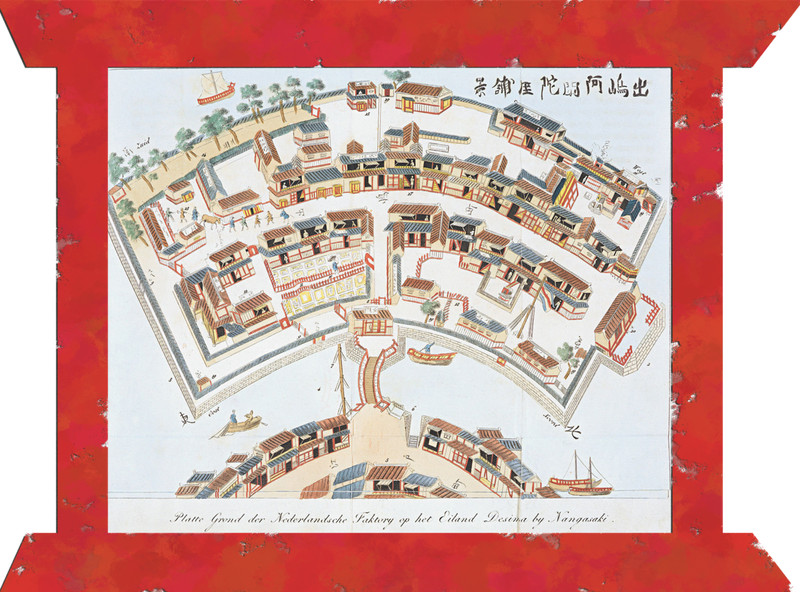
Dejima, the Dutch trading post at Nagasaki
These were selective restrictions, not total isolation.
Trade and Labor Systems That Changed and Stayed the Same
The Indian Ocean did not become a European lake. Monsoon trade, port cities, and intra-Asian trade stayed strong, and merchants such as Gujaratis, Javanese, Swahili Arabs, and Omanis remained central. The Omanis expelled the Portuguese from Muscat in 1650, which proves European control was limited.
In the Americas, colonial economies mixed older and newer labor systems:
- mita = Spanish adaptation of the Inca mit’a, especially at Potosí
- encomienda = right to Indigenous tribute or labor
- hacienda = large landed estate using mixed labor systems
- indentured servitude = temporary contract labor, common in English colonies
- chattel slavery = permanent, hereditary, racialized slavery
Slavery shows both continuity and change. Slavery already existed in Africa, the Mediterranean, and the Indian Ocean world. What changed was the scale and structure. Plantation economies in Brazil and the Caribbean drove massive demand, the Middle Passage sent millions of Africans to the Americas, and slavery became more tightly tied to African ancestry and inherited status.
Key Takeaways
Maritime Empire
An empire whose colonies, trading posts, territories, and commercial routes were connected primarily by sea
Trading-Post Empire
A maritime empire based on fortified coastal ports and control of trade routes rather than extensive inland conquest
Treaty of Tordesillas
The 1494 agreement establishing a papally supported line that divided Spanish and Portuguese overseas claims
Portuguese Maritime Empire
A hybrid empire of fortified trading posts across Africa and Asia and a territorial plantation colony in Brazil
Estado da Índia
Portugal’s network of ports and fortified bases used to regulate parts of Indian Ocean commerce
Cartaz
A Portuguese naval pass that Indian Ocean ships could be required to purchase, generating revenue and pressuring merchants
Spanish Maritime Empire
A territorial empire centered in the Americas, created through Indigenous conquest and colonization, with the Philippines as its major Asian base
Hernán Cortés
Spanish conquistador who used Indigenous allies and the effects of disease to defeat the Aztec Empire and capture Tenochtitlán in 1521
Francisco Pizarro
Spanish conquistador who exploited divisions and disease within the Inca Empire and began its conquest in the 1530s
Dutch Maritime Empire
An empire of selected ports, islands, and colonies centered in Asia on Batavia and aimed partly at controlling the spice trade
English/British Maritime Empire
An empire combining settler colonies in North America, Caribbean plantations, and commercial footholds in India
French Maritime Empire
An empire combining a fur-trading North American network dependent on Indigenous alliances with Caribbean plantations and Indian trading posts
Kingdom of the Kongo
Central African kingdom whose rulers gained influence through Portuguese diplomacy, Christianity, and Atlantic trade but suffered disruption from slave trading
King Afonso I
Early-sixteenth-century Kongo ruler who promoted Christianity and Portuguese relations but protested unauthorized enslavement
Asante State
West African state centered on Kumasi that expanded through centralized rule, control of gold and slave-trading routes, and imported firearms
Osei Tutu
Ruler associated with the late-seventeenth-century centralization and expansion of the Asante state
Ming Restrictions on Maritime Trade
Policies limiting foreign commerce to approved ports and procedures to control piracy, smuggling, unauthorized merchants, and foreign influence
Tokugawa Restrictions on Foreign Contact
Selective policies that suppressed Christianity, expelled the Portuguese, and confined foreign commerce to controlled channels such as Nagasaki
Potosí
Major Spanish American silver-mining center in the Andes that relied heavily on Indigenous labor supplied through the colonial mita
Encomienda
A Spanish Crown grant allowing a colonist to collect tribute or labor from an Indigenous community in exchange for protection and Christian instruction
Hacienda
A large Spanish American landed estate using wage labor, tenancy, coercion, or debt peonage to produce food or commercial crops
Indentured Servitude
Temporary contract labor, often exchanged for Atlantic transportation, used especially in early English colonial economies
Chattel Slavery
A system treating enslaved people as transferable property that became increasingly permanent, hereditary, and racialized in the Americas
Plantation Economy
An agricultural economy based on large-scale production of profitable export crops using extensive coerced labor
Atlantic Slave Trade
The commercial system that bought, sold, and forcibly transported enslaved Africans, chiefly to meet plantation labor demand in the Americas
Middle Passage
The forced transatlantic voyage that transported enslaved Africans to the Americas under brutal and deadly conditions
Earlier African Slavery vs. Atlantic Chattel Slavery
Earlier African slavery was varied and sometimes allowed incorporation into households or communities; Atlantic slavery became more racialized, hereditary, permanent, and plantation-centered
Inca Mit’a vs. Colonial Mita
The Inca mit’a supplied rotational community labor for state projects; the Spanish colonial mita adapted it to compel Indigenous labor for colonial extraction, especially at Potosí.
Indian Ocean Trade
An established commercial system that continued to flourish despite European disruption, with Asian and African merchants remaining central to intra-Asian trade
Notes
Maritime Empire
An empire whose colonies, trading posts, territories, and commercial routes were connected primarily by sea
Trading-Post Empire
A maritime empire based on fortified coastal ports and control of trade routes rather than extensive inland conquest
Treaty of Tordesillas
The 1494 agreement establishing a papally supported line that divided Spanish and Portuguese overseas claims
Portuguese Maritime Empire
A hybrid empire of fortified trading posts across Africa and Asia and a territorial plantation colony in Brazil
Estado da Índia
Portugal’s network of ports and fortified bases used to regulate parts of Indian Ocean commerce
Cartaz
A Portuguese naval pass that Indian Ocean ships could be required to purchase, generating revenue and pressuring merchants
Spanish Maritime Empire
A territorial empire centered in the Americas, created through Indigenous conquest and colonization, with the Philippines as its major Asian base
Hernán Cortés
Spanish conquistador who used Indigenous allies and the effects of disease to defeat the Aztec Empire and capture Tenochtitlán in 1521
Francisco Pizarro
Spanish conquistador who exploited divisions and disease within the Inca Empire and began its conquest in the 1530s
Dutch Maritime Empire
An empire of selected ports, islands, and colonies centered in Asia on Batavia and aimed partly at controlling the spice trade
English/British Maritime Empire
An empire combining settler colonies in North America, Caribbean plantations, and commercial footholds in India
French Maritime Empire
An empire combining a fur-trading North American network dependent on Indigenous alliances with Caribbean plantations and Indian trading posts
Kingdom of the Kongo
Central African kingdom whose rulers gained influence through Portuguese diplomacy, Christianity, and Atlantic trade but suffered disruption from slave trading
King Afonso I
Early-sixteenth-century Kongo ruler who promoted Christianity and Portuguese relations but protested unauthorized enslavement
Asante State
West African state centered on Kumasi that expanded through centralized rule, control of gold and slave-trading routes, and imported firearms
Osei Tutu
Ruler associated with the late-seventeenth-century centralization and expansion of the Asante state
Ming Restrictions on Maritime Trade
Policies limiting foreign commerce to approved ports and procedures to control piracy, smuggling, unauthorized merchants, and foreign influence
Tokugawa Restrictions on Foreign Contact
Selective policies that suppressed Christianity, expelled the Portuguese, and confined foreign commerce to controlled channels such as Nagasaki
Potosí
Major Spanish American silver-mining center in the Andes that relied heavily on Indigenous labor supplied through the colonial mita
Encomienda
A Spanish Crown grant allowing a colonist to collect tribute or labor from an Indigenous community in exchange for protection and Christian instruction
Hacienda
A large Spanish American landed estate using wage labor, tenancy, coercion, or debt peonage to produce food or commercial crops
Indentured Servitude
Temporary contract labor, often exchanged for Atlantic transportation, used especially in early English colonial economies
Chattel Slavery
A system treating enslaved people as transferable property that became increasingly permanent, hereditary, and racialized in the Americas
Plantation Economy
An agricultural economy based on large-scale production of profitable export crops using extensive coerced labor
Atlantic Slave Trade
The commercial system that bought, sold, and forcibly transported enslaved Africans, chiefly to meet plantation labor demand in the Americas
Middle Passage
The forced transatlantic voyage that transported enslaved Africans to the Americas under brutal and deadly conditions
Earlier African Slavery vs. Atlantic Chattel Slavery
Earlier African slavery was varied and sometimes allowed incorporation into households or communities; Atlantic slavery became more racialized, hereditary, permanent, and plantation-centered
Inca Mit’a vs. Colonial Mita
The Inca mit’a supplied rotational community labor for state projects; the Spanish colonial mita adapted it to compel Indigenous labor for colonial extraction, especially at Potosí.
Indian Ocean Trade
An established commercial system that continued to flourish despite European disruption, with Asian and African merchants remaining central to intra-Asian trade
