Topic 9.1 Notes – Advances in Technology and Exchange After 1900
How Technology Reshaped the World After 1900
The core pattern is simple. Technology compressed time and distance. Places did not move closer together, but communication, travel, and shipping got so much faster that the world became more connected.
Earlier periods already had steamships, railroads, telegraphs, and factories. After 1900, the jump was in speed, scale, and reach. These changes supported modern globalization by increasing productivity, survival, and exchange.
The five technologies you need to connect are:
- communication and transportation because they reduced geographic barriers
- petroleum and nuclear power because they increased energy and material output
- birth control because it changed fertility patterns
- the Green Revolution and commercial agriculture because they raised food production
- vaccines and antibiotics because they lowered death rates
On the exam, naming the invention is never enough. You need the effect. Also, the effects were uneven. Wealth, infrastructure, state power, and geography shaped who benefited.
Communication and Transportation Reduced Geographic Distance
Technology mattered here because it made long-distance contact and movement cheaper, faster, and more regular.
Communication technologies
- Radio let one broadcast reach huge audiences without wires. That made it useful for news, entertainment, wartime mobilization, and propaganda. Nazi Germany is the standard example because radio helped spread political messages cheaply, even to nonliterate listeners.
- Cellular communication untied phones from landlines. Mobile phones sped up business, migration networks, and everyday coordination. In some poorer regions, mobile systems spread faster than landlines, a form of technological leapfrogging. Mobile banking in parts of Africa is the classic example.
- The internet allowed near-instant global information transfer. After the World Wide Web spread in the 1990s, businesses could coordinate production across countries, migrants could keep close ties, and finance and e-commerce expanded. Uneven access is the digital divide.
The modern internet depends on physical infrastructure too, especially undersea cables that carry huge volumes of global data between continents.
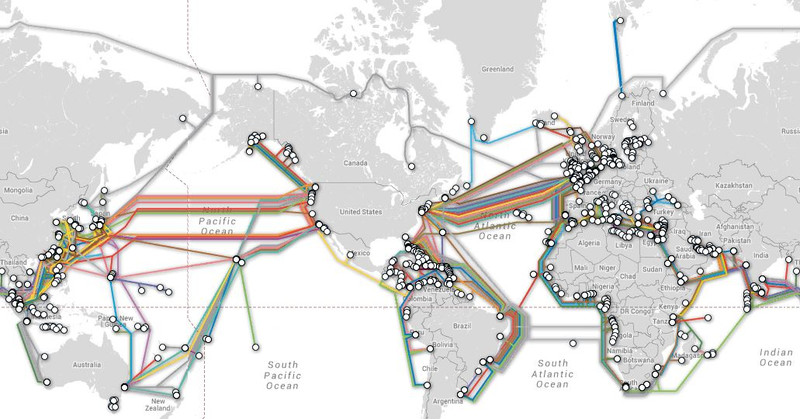
Global submarine cable network
Transportation technologies
- Air travel turned intercontinental trips from weeks into hours. That changed tourism, diplomacy, migration, business travel, and the movement of high-value or perishable goods.
- Shipping containers transformed cargo movement through standardization.
- Goods are packed into a standardized container at the factory.
- The sealed container moves by truck or rail to a port.
- A crane loads it onto a ship.
- At another port, it goes back onto rail or truck.
- It reaches a warehouse with little handling of the contents.
Malcolm McLean’s 1956 container shipping is the standard example. Containerization lowered labor costs, reduced theft and damage, made schedules predictable, and helped create global supply chains. Pair this with digital communication and firms could spread production across many countries.
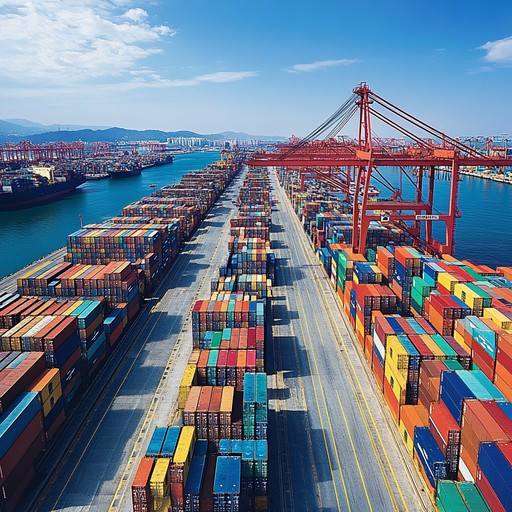
Container port and intermodal shipping
Energy Increased Productivity and Material Output
Energy technologies powered the whole system of modern exchange.
- Petroleum fueled cars, trucks, ships, planes, tractors, and machinery. It also produced petrochemicals used in plastics, fertilizers, pesticides, synthetic fibers, and pharmaceuticals. Oil therefore increased output and mobility, and it made oil-rich regions strategically important.
- Nuclear power used fission to generate large amounts of electricity. That electricity supported factories, homes, communications, and transportation systems. Its spread was limited by high costs, technical demands, regulation, accident fears, radioactive waste, and weapons concerns.
Technology Changed Population Patterns
These technologies changed how many people lived, how long they lived, and how families planned births.
More effective birth control
Condoms, IUDs, sterilization, and especially the birth control pill gave women more control over fertility, family size, and birth spacing. The pill was approved in the United States in 1960. This contributed to lower fertility rates in many places and helped expand women’s educational and work opportunities. Voluntary contraception is different from coercive state population policies.
The Green Revolution and commercial agriculture
Commercial agriculture means farming for markets using machinery, irrigation, chemicals, and transport networks. The Green Revolution was a package of high-yield seeds, fertilizer, pesticides, irrigation, machinery, and research.
Key examples:
- Norman Borlaug and high-yield wheat
- India and Pakistan adopting new wheat in the 1960s
- IR8 “miracle rice” from the Philippines
This raised yields and reduced famine risk in some areas, helping sustain population growth. Benefits were uneven. Poorer farmers often lacked credit or irrigation, and intensive farming caused pollution, water depletion, salinization, and lower biodiversity.
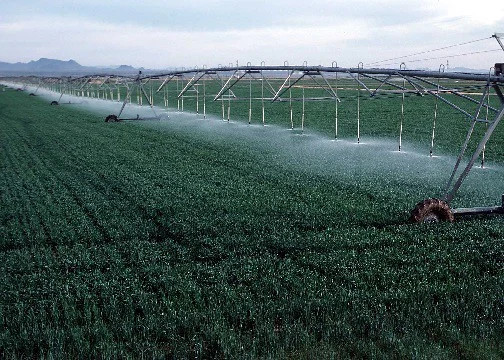
Center-pivot irrigation in commercial agriculture
Vaccines and antibiotics
- Vaccines prevent disease. The standard case is smallpox eradication, declared by the WHO in 1980.
- Antibiotics treat bacterial infections, not viruses. Penicillin, observed by Alexander Fleming in 1928 and mass-produced in the 1940s, is the key example.
These lowered mortality, especially infant and child mortality, and increased life expectancy. One limit is antibiotic resistance.
Big Causal Chains and Why This Topic Matters
A lot of AP questions want the chain, not the isolated fact.
- Medicine lowered death rates, so population grew.
- The Green Revolution increased food supply, so larger populations could survive.
- Birth control lowered fertility in many regions, so the demographic transition advanced.
- Petroleum powered transport and agriculture, and communication technologies coordinated exchange.
- Containerization plus the internet made global supply chains practical.
Key Takeaways
Globalization
Increasing integration of regions through flows of goods, capital, people, information, ideas, and culture; post-1900 technologies greatly increased its speed, scale, and reach
Radio Communication
Wireless transmission that enabled rapid mass broadcasting of news, entertainment, speeches, emergency information, and propaganda across large territories
Cellular Communication
Mobile communication through networks divided into connected cells, allowing calls and data to continue as users move between locations
Technological Leapfrogging
Adopting a newer technology without first building every earlier system, as when regions developed cellular networks without extensive landlines
Internet
A global network of interconnected computer networks that enables rapid digital communication, information sharing, and coordination across borders
Digital Divide
Unequal access to computers, affordable internet service, electricity, and network infrastructure among regions and social groups
Air Travel
Aircraft transportation that reduced intercontinental journeys from weeks to hours and accelerated tourism, migration, business, military movement, and shipment of urgent goods
Shipping Containers / Containerization
Standardized sealed cargo boxes transferred among ships, trains, and trucks without unpacking, lowering labor, time, losses, and shipping costs
Petroleum
Concentrated fossil-fuel energy used in engines, transportation, machinery, and petrochemicals, raising productivity and material output after 1900
Nuclear Power
Electricity generated when controlled nuclear fission produces heat and steam to turn turbines; it supplies large amounts of energy from little fuel
Birth Control / Contraception
Methods that prevent pregnancy, giving women greater control over whether and when to have children and contributing to declining fertility rates
Demographic Transition
Population pattern in which death rates fall before birth rates, causing rapid growth until birth rates also decline and growth slows
Commercial Agriculture
Farming primarily for sale in markets, commonly using specialization, machinery, purchased inputs, irrigation, credit, and distribution networks
Green Revolution
Mid- and late twentieth-century spread of high-yield crops combined with fertilizers, pesticides, irrigation, machinery, research, and credit to raise food production
Norman Borlaug
Agricultural scientist whose disease-resistant, high-yield wheat developed in Mexico became a major model for the Green Revolution
Genetically Engineered Crops
Crops whose genetic material is directly altered to produce traits such as insect, disease, or herbicide resistance
Vaccines
Preventive preparations that train the immune system to recognize a pathogen, reducing illness, transmission, mortality, and disability
Smallpox Eradication
Elimination of smallpox transmission through coordinated global vaccination; the World Health Organization declared the disease eradicated in 1980
Antibiotics
Medicines that kill bacteria or inhibit their growth, making bacterial infections more survivable but not treating viral diseases
Alexander Fleming
Scientist who observed penicillin’s antibacterial effect in 1928; later research and wartime mass production made it a widely available treatment
Penicillin
An early antibiotic whose antibacterial effect Fleming observed in 1928 and that was mass-produced in the 1940s to treat bacterial infections
Antibiotic Resistance
The evolved ability of bacteria to survive antibiotics, encouraged when misuse or overuse selects for resistant strains
Birth Control Pill
A reliable hormonal contraceptive that gave women greater control over whether and when to have children and contributed to declining fertility rates
Notes
Globalization
Increasing integration of regions through flows of goods, capital, people, information, ideas, and culture; post-1900 technologies greatly increased its speed, scale, and reach
Radio Communication
Wireless transmission that enabled rapid mass broadcasting of news, entertainment, speeches, emergency information, and propaganda across large territories
Cellular Communication
Mobile communication through networks divided into connected cells, allowing calls and data to continue as users move between locations
Technological Leapfrogging
Adopting a newer technology without first building every earlier system, as when regions developed cellular networks without extensive landlines
Internet
A global network of interconnected computer networks that enables rapid digital communication, information sharing, and coordination across borders
Digital Divide
Unequal access to computers, affordable internet service, electricity, and network infrastructure among regions and social groups
Air Travel
Aircraft transportation that reduced intercontinental journeys from weeks to hours and accelerated tourism, migration, business, military movement, and shipment of urgent goods
Shipping Containers / Containerization
Standardized sealed cargo boxes transferred among ships, trains, and trucks without unpacking, lowering labor, time, losses, and shipping costs
Petroleum
Concentrated fossil-fuel energy used in engines, transportation, machinery, and petrochemicals, raising productivity and material output after 1900
Nuclear Power
Electricity generated when controlled nuclear fission produces heat and steam to turn turbines; it supplies large amounts of energy from little fuel
Birth Control / Contraception
Methods that prevent pregnancy, giving women greater control over whether and when to have children and contributing to declining fertility rates
Demographic Transition
Population pattern in which death rates fall before birth rates, causing rapid growth until birth rates also decline and growth slows
Commercial Agriculture
Farming primarily for sale in markets, commonly using specialization, machinery, purchased inputs, irrigation, credit, and distribution networks
Green Revolution
Mid- and late twentieth-century spread of high-yield crops combined with fertilizers, pesticides, irrigation, machinery, research, and credit to raise food production
Norman Borlaug
Agricultural scientist whose disease-resistant, high-yield wheat developed in Mexico became a major model for the Green Revolution
Genetically Engineered Crops
Crops whose genetic material is directly altered to produce traits such as insect, disease, or herbicide resistance
Vaccines
Preventive preparations that train the immune system to recognize a pathogen, reducing illness, transmission, mortality, and disability
Smallpox Eradication
Elimination of smallpox transmission through coordinated global vaccination; the World Health Organization declared the disease eradicated in 1980
Antibiotics
Medicines that kill bacteria or inhibit their growth, making bacterial infections more survivable but not treating viral diseases
Alexander Fleming
Scientist who observed penicillin’s antibacterial effect in 1928; later research and wartime mass production made it a widely available treatment
Penicillin
An early antibiotic whose antibacterial effect Fleming observed in 1928 and that was mass-produced in the 1940s to treat bacterial infections
Antibiotic Resistance
The evolved ability of bacteria to survive antibiotics, encouraged when misuse or overuse selects for resistant strains
Birth Control Pill
A reliable hormonal contraceptive that gave women greater control over whether and when to have children and contributed to declining fertility rates
