Topic 4.7 Notes – Changing Social Hierarchies from 1450 to 1750
How Social Hierarchies Changed from 1450 to 1750
Societies still ranked people by class, gender, religion, ethnicity, legal status, and birth. The major change was that expanding states organized these categories more deliberately.
- Governments tied social categories to real consequences. Your religion or ancestry could affect your taxes, access to office, legal privileges, labor duties, and political rights.
- Continuity matters here. Patriarchy stayed strong, elites still dominated, and most people still worked as peasants, serfs, or enslaved laborers.
- The pattern AP loves is continuity and change at the same time.
- States accommodated some groups because they were useful.
- States restricted other groups to show dominance and prevent rebellion.
- Conquest often created new ruling elites.
- Monarchs usually reshaped old elites instead of wiping them out.
How Empires Managed Religious and Ethnic Diversity
Large empires ruled people who looked different, worshipped differently, and spoke different languages. That forced rulers to decide who to include, who to control, and how.
Ottoman Empire
The Ottomans ruled Muslims, Christians, and Jews. They used diversity to strengthen the empire, and the map below helps you see how wide that rule stretched across southeastern Europe, Anatolia, the Middle East, and North Africa.
- The millet system let Christians and Jews run some of their own communal affairs, like worship, schools, and family law, under Ottoman rule.
- This was not equality. Non-Muslims were protected but subordinate, and many paid the jizya, a tax on non-Muslims.
- Diversity helped the empire because minority communities contributed to trade, diplomacy, tax collection, and skilled labor.
- The devshirme took Christian boys from the Balkans, converted them to Islam, and trained them for state service as Janissaries or administrators. That gave the sultan loyal servants not tied to local nobles.
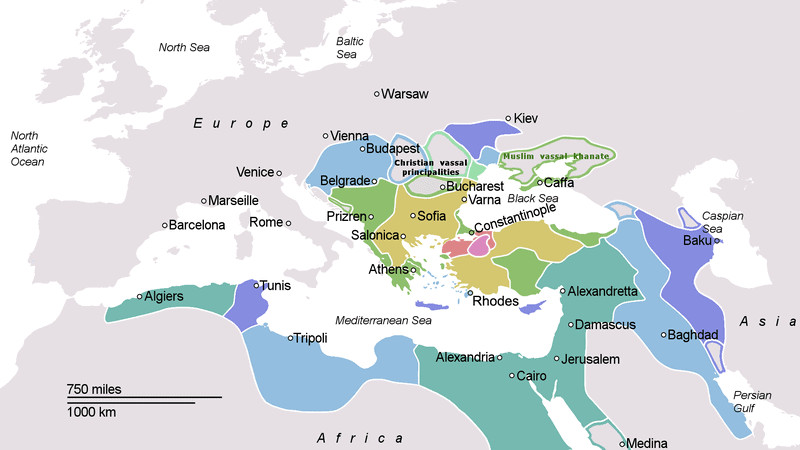
Ottoman Empire at its height
A classic comparison shows two different state strategies. Spain in 1492 and Portugal in 1496-1497 expelled or forced conversion of Jews, but the Ottomans accepted many Sephardic Jews because their skills and trade networks were valuable.
Mughal Empire
The Mughals were Muslim rulers over a mostly Hindu population, so accommodation helped them survive.
- Akbar recruited Hindu Rajputs, used marriage alliances, included them in the mansabdar system, and ended the jizya. This widened support for Mughal rule.
- Aurangzeb later reimposed the jizya in 1679 and stressed Islamic rule more strongly.
This is a great reminder that one empire could shift from accommodation to greater restriction over time.
Qing China
The Qing were Manchus ruling a huge Han Chinese majority after 1644.
- They kept the Confucian bureaucracy and civil service exams, which helped them look legitimate and keep order.
- They still protected Manchu privilege through the Eight Banners and limits on Han-Manchu integration.
- The queue order forced Han men to wear a Manchu hairstyle as a sign of submission.
Accommodation did not mean equality. Suppression did not mean complete exclusion.
New Elites and New Social Categories
Conquest and commerce created new people at the top.
Qing conquest created a new ruling elite
The Manchus became the political and military elite, but they still relied on Han officials. That is conquest creating a new hierarchy without destroying old institutions.
Spanish colonial Americas and the casta system
In Spanish America, ancestry became a major way to rank people.
| Group | General status |
|---|---|
| Peninsulares | Spanish-born elites at the top |
| Creoles | American-born people of Spanish ancestry, wealthy but below peninsulares |
| Mestizos | Mixed European and Indigenous ancestry |
| Mulattoes | Mixed European and African ancestry |
| Zambos | Mixed African and Indigenous ancestry |
- Indigenous peoples often owed tribute and labor.
- Africans and their descendants were often enslaved, though some free Black communities existed.
- Casta paintings showed elite attempts to classify mixed populations into an orderly hierarchy.
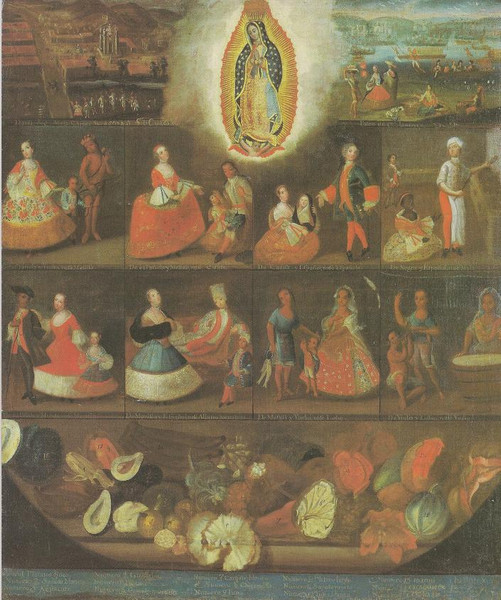
Spanish colonial casta painting
This casta painting turns those social categories into a visual hierarchy, which is exactly the point. Colonial elites tried to sort a mixed society into ranked groups.
British North America
British colonies did not use a formal casta system, but racial hierarchy hardened through hereditary chattel slavery.
- White indentured servitude was temporary.
- African slavery became permanent and inheritable.
Economic change also raised merchants, financiers, plantation owners, mine owners, and colonial officials. In Spanish America, creoles became powerful local elites even when shut out of the top imperial offices.
Old Elites and Stronger States
As monarchs got stronger, old elites often kept wealth but lost independence.
- Ottoman timar holders had land-revenue grants tied to military service. As firearms, Janissaries, and tax farming grew, their influence weakened.
- Russian boyars were hereditary nobles. Ivan IV attacked boyar opposition, and Peter the Great’s Table of Ranks tied elite status more closely to state service. Nobles still kept power over serfs.
- In France, nobles resisted in the Fronde, but Louis XIV used Versailles and royal ceremonies to keep them dependent on court favor.
- England is the big exception. After the Glorious Revolution, elites limited royal power instead of losing influence to the monarch.
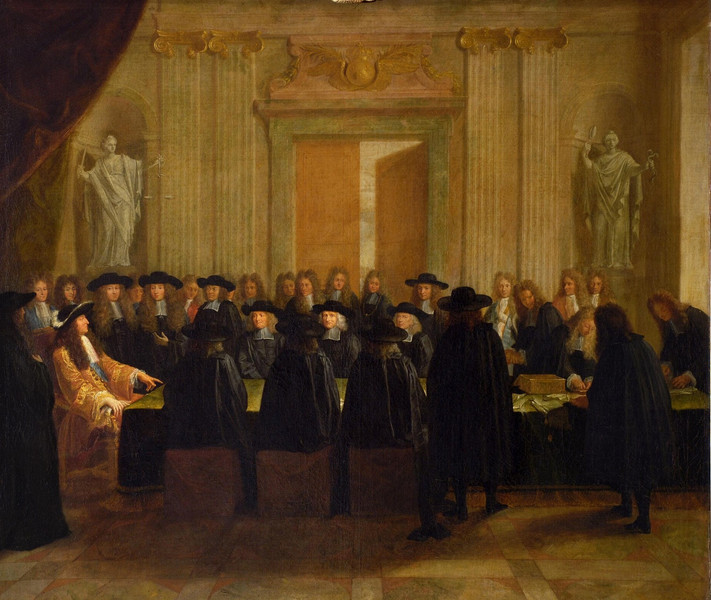
Louis XIV presiding over his council
Key Takeaways
Millet System
Ottoman arrangement granting Christian and Jewish communities limited religious, legal, and communal autonomy under Muslim rule
Jizya
Tax imposed on many non-Muslim adult men in Islamic empires in return for protected but subordinate status
Devshirme
Ottoman recruitment of Christian boys who were converted, educated, and trained for military or administrative service
Janissaries
Elite Ottoman infantry corps that included some Christian boys recruited and converted through the devshirme
Ferdinand and Isabella
Spanish monarchs who ordered practicing Jews to convert or leave Spain in 1492 to promote religious unity
Iberian Expulsion of Jews
Spanish and Portuguese policies of 1492–1497 requiring practicing Jews to convert or leave
Conversos
Jewish converts to Christianity in Iberia who could face suspicion and investigation for continuing Jewish practices
Sephardic Jews
Jews with Iberian roots, many of whom resettled in Ottoman lands after expulsion from Spain and Portugal
Akbar
Mughal emperor who abolished the jizya, allied with Rajputs, and broadly accommodated non-Muslims
Rajputs
Hindu rulers and warriors whom Akbar incorporated into Mughal government through alliances and imperial service
Mansabdar System
Mughal system of ranked military and administrative officials into which Akbar incorporated Muslim and Hindu elites
Aurangzeb
Mughal emperor who reimposed the jizya in 1679 and adopted a more explicitly Islamic style of rule
Manchu Elite under the Qing Dynasty
Minority conquest elite that ruled China while preserving Confucian institutions and reserving important privileges for Manchus
Eight Banners
Privileged Qing military and social organizations that formed a major base of Manchu power
Queue Order
Qing requirement that Han Chinese men wear the Manchu hairstyle as a public sign of submission
Patriarchy
Social system in which men generally dominate formal political, religious, and household authority
Sultanate of Women
Period when Ottoman queen mothers and consorts gained substantial influence through court access, patronage, and dynastic ties
Casta System
Spanish American hierarchy that connected perceived ancestry and birthplace to status, labor obligations, and access to office
Peninsulares vs. Creoles
Peninsulares were Spain-born colonists favored for high offices; creoles were American-born Europeans who formed a wealthy local elite
Casta Paintings
New Spanish paintings that labeled mixed-ancestry families and presented an elite vision of an ordered racial hierarchy
Indentured Servitude vs. Chattel Slavery
White indentured service was temporary, while African chattel slavery became hereditary, permanent, and legally treated people as property
Whiteness
Legally privileged racial category that expanded as colonial law separated free or temporarily bound Europeans from permanently enslaved Africans
Timar
Ottoman grant of land revenue to a sipahi in exchange for military service, not full private ownership of the land
Tax Farming
System in which individuals paid the Ottoman state for the right to collect taxes, reshaping provincial elites as its use increased
Boyars
Russia’s hereditary landowning aristocrats, whose political independence declined as tsars required greater state service
Peter the Great
Russian tsar who required noble service, reorganized administration, and made elite status more dependent on the state
Table of Ranks
Peter the Great’s 1722 system ranking military, civil, and court service and linking advancement more closely to state service
Serfdom in Russia
System increasingly binding peasants to estates and noble authority even as the tsar reduced nobles’ political independence
European Nobility
Hereditary landed elites who retained titles and privileges, though their political influence varied as monarchies centralized
Fronde
French uprisings of 1648–1653 in which nobles and other privileged groups resisted expanding royal authority
Louis XIV
French king who reduced noble independence by controlling court access and relying on royal officials in the provinces
Versailles
Louis XIV’s royal court, where ritual and competition for favor made nobles more dependent on the king
Commercial Elites
Merchants, financiers, plantation owners, miners, and colonial officials enriched by expanding global commerce
Notes
Millet System
Ottoman arrangement granting Christian and Jewish communities limited religious, legal, and communal autonomy under Muslim rule
Jizya
Tax imposed on many non-Muslim adult men in Islamic empires in return for protected but subordinate status
Devshirme
Ottoman recruitment of Christian boys who were converted, educated, and trained for military or administrative service
Janissaries
Elite Ottoman infantry corps that included some Christian boys recruited and converted through the devshirme
Ferdinand and Isabella
Spanish monarchs who ordered practicing Jews to convert or leave Spain in 1492 to promote religious unity
Iberian Expulsion of Jews
Spanish and Portuguese policies of 1492–1497 requiring practicing Jews to convert or leave
Conversos
Jewish converts to Christianity in Iberia who could face suspicion and investigation for continuing Jewish practices
Sephardic Jews
Jews with Iberian roots, many of whom resettled in Ottoman lands after expulsion from Spain and Portugal
Akbar
Mughal emperor who abolished the jizya, allied with Rajputs, and broadly accommodated non-Muslims
Rajputs
Hindu rulers and warriors whom Akbar incorporated into Mughal government through alliances and imperial service
Mansabdar System
Mughal system of ranked military and administrative officials into which Akbar incorporated Muslim and Hindu elites
Aurangzeb
Mughal emperor who reimposed the jizya in 1679 and adopted a more explicitly Islamic style of rule
Manchu Elite under the Qing Dynasty
Minority conquest elite that ruled China while preserving Confucian institutions and reserving important privileges for Manchus
Eight Banners
Privileged Qing military and social organizations that formed a major base of Manchu power
Queue Order
Qing requirement that Han Chinese men wear the Manchu hairstyle as a public sign of submission
Patriarchy
Social system in which men generally dominate formal political, religious, and household authority
Sultanate of Women
Period when Ottoman queen mothers and consorts gained substantial influence through court access, patronage, and dynastic ties
Casta System
Spanish American hierarchy that connected perceived ancestry and birthplace to status, labor obligations, and access to office
Peninsulares vs. Creoles
Peninsulares were Spain-born colonists favored for high offices; creoles were American-born Europeans who formed a wealthy local elite
Casta Paintings
New Spanish paintings that labeled mixed-ancestry families and presented an elite vision of an ordered racial hierarchy
Indentured Servitude vs. Chattel Slavery
White indentured service was temporary, while African chattel slavery became hereditary, permanent, and legally treated people as property
Whiteness
Legally privileged racial category that expanded as colonial law separated free or temporarily bound Europeans from permanently enslaved Africans
Timar
Ottoman grant of land revenue to a sipahi in exchange for military service, not full private ownership of the land
Tax Farming
System in which individuals paid the Ottoman state for the right to collect taxes, reshaping provincial elites as its use increased
Boyars
Russia’s hereditary landowning aristocrats, whose political independence declined as tsars required greater state service
Peter the Great
Russian tsar who required noble service, reorganized administration, and made elite status more dependent on the state
Table of Ranks
Peter the Great’s 1722 system ranking military, civil, and court service and linking advancement more closely to state service
Serfdom in Russia
System increasingly binding peasants to estates and noble authority even as the tsar reduced nobles’ political independence
European Nobility
Hereditary landed elites who retained titles and privileges, though their political influence varied as monarchies centralized
Fronde
French uprisings of 1648–1653 in which nobles and other privileged groups resisted expanding royal authority
Louis XIV
French king who reduced noble independence by controlling court access and relying on royal officials in the provinces
Versailles
Louis XIV’s royal court, where ritual and competition for favor made nobles more dependent on the king
Commercial Elites
Merchants, financiers, plantation owners, miners, and colonial officials enriched by expanding global commerce
