Topic 8.2 Notes – The Cold War
What the Cold War Was
World War II left Britain, France, Germany, Italy, and Japan weakened. The United States and Soviet Union came out as the two superpowers, meaning states that could project military, economic, political, and ideological power around the world. That made the postwar world bipolar.
The Cold War was “cold” because the U.S. and USSR avoided a long direct war with each other. Still, the conflict was violent. They armed allies, backed coups and interventions, and supported opposite sides in wars.
The core divide was ideological:
- United States defended capitalism, private property, markets, representative government, and civil liberties.
- Soviet Union defended authoritarian communism, one-party rule, state control of production, and centralized planning.
One AP nuance matters a lot. Both sides claimed universal ideals, but both were inconsistent:
- The U.S. talked about freedom but sometimes supported anticommunist dictators.
- The USSR talked about equality and liberation but repressed dissent and controlled Eastern Europe.
Why the Wartime Alliance Broke Down
The alliance against Hitler held because both sides needed each other. Once WWII ended, old tensions came back fast.
Long-standing hostility
Suspicion did not begin in 1945. After the 1917 Russian Revolution, Bolshevik leaders called for the overthrow of capitalism, and many capitalist governments saw communism as a threat.
Security goals and Eastern Europe
The USSR wanted a buffer zone in Eastern Europe because Russia had been invaded from the west more than once, especially by Nazi Germany. Soviet leaders saw control there as protection.
The U.S. and Western Europe saw that same control as expansionism. This is the security dilemma. One side’s defensive move looks aggressive to the other.
Soviet-backed communist governments took power in Poland, Hungary, Romania, Bulgaria, and elsewhere. Churchill captured the split in his 1946 Iron Curtain speech, and the map below shows that emerging divide across Europe.
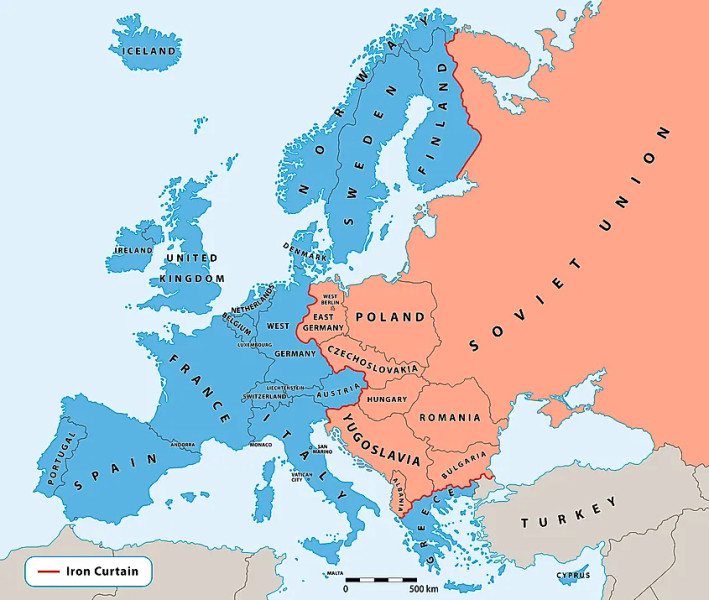
Cold War Europe and the Iron Curtain
Recovery plans and Berlin
The U.S. tried to contain communism in two major ways:
- Truman Doctrine (1947) gave aid to governments resisting communism and launched containment.
- Marshall Plan (1948) gave economic aid to rebuild Western Europe and make communism less appealing.
The USSR blocked Eastern Europe from joining the Marshall Plan and tightened control over its own sphere.
The Berlin Blockade and Berlin Airlift of 1948 to 1949 showed the pattern of the Cold War early. The Soviets blocked land access to West Berlin, and the West answered by flying in supplies instead of starting a direct war.
How the Cold War Operated Around the World
Once the rivalry hardened, it spread through many methods at once:
- Competing blocs with a U.S.-led Western bloc and a Soviet-led Eastern bloc
- Military alliances like NATO and the Warsaw Pact
- Economic aid to win allies
- Proxy wars where each superpower backed opposing sides
- Arms race centered on nuclear weapons
- Espionage through spies and intelligence agencies
- Propaganda through media and culture
- Science, sports, and culture including the Olympics and the Space Race
The Berlin Airlift is a good example of how the Cold War often worked through pressure, logistics, and symbolism instead of direct war.
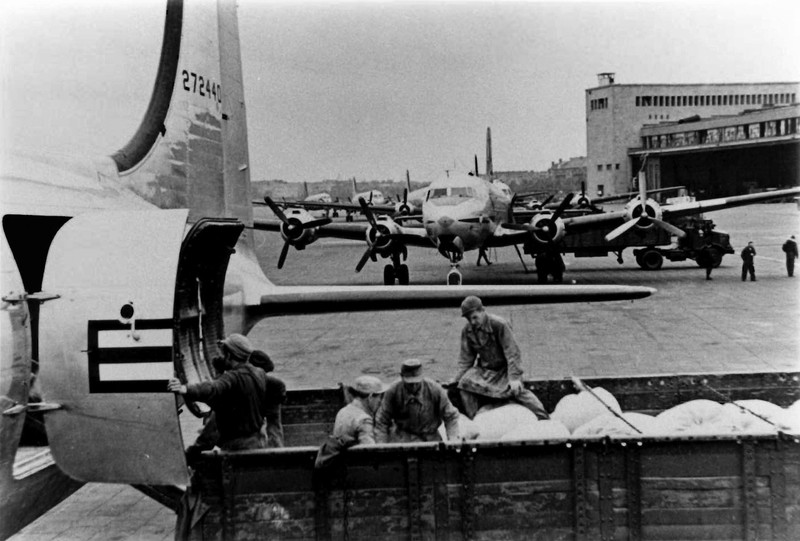
Berlin Airlift unloading supplies
A proxy war was never just the U.S. versus USSR wearing disguises. Local conflicts already had causes like nationalism, class conflict, religion, or land disputes. Cold War money and weapons made them bigger and harder to end.
The nuclear arms race depended on deterrence and mutually assured destruction. If both sides knew a war could destroy both, they were less likely to fight directly.
Propaganda mattered because each side wanted people to believe its system represented the future:
- U.S. message = freedom, elections, religion, consumer goods
- USSR message = equality, industrial growth, antifascism, anti-imperialism
Common contradiction examples show up on tests:
- U.S. claims of freedom were weakened by racial segregation
- Soviet claims of liberation were weakened by censorship, labor camps, and repression
How the Cold War Became Global
As empires collapsed, decolonization created new states in Asia and Africa right when both superpowers were competing for influence. That made regional struggles look like part of a world fight between capitalism and communism.
Still, local leaders had agency. They were not just puppets. Many used Cold War rivalry to gain:
- military aid
- loans
- infrastructure
- weapons
- diplomatic support
This is a common AP move. You need both levels at once. Superpowers saw ideological stakes everywhere, but local leaders often cared more about nationalism, development, or staying in power.
Broad effects included rival blocs, militarized international relations, globalized regional conflicts, development competition through aid, and more censorship and repression at home.
Nonalignment and Alternatives to the Two-Bloc World
Not every country wanted to choose a side. The Non-Aligned Movement tried to avoid formal subordination to either superpower. That did not mean perfect neutrality. Countries could still take aid or cooperate when useful.
Bandung and Belgrade
The roots were at the Bandung Conference in Indonesia in 1955, where 29 Asian and African countries met. Themes included anticolonialism, racism, development, peaceful coexistence, and Afro-Asian solidarity. Sukarno of Indonesia was a key figure.
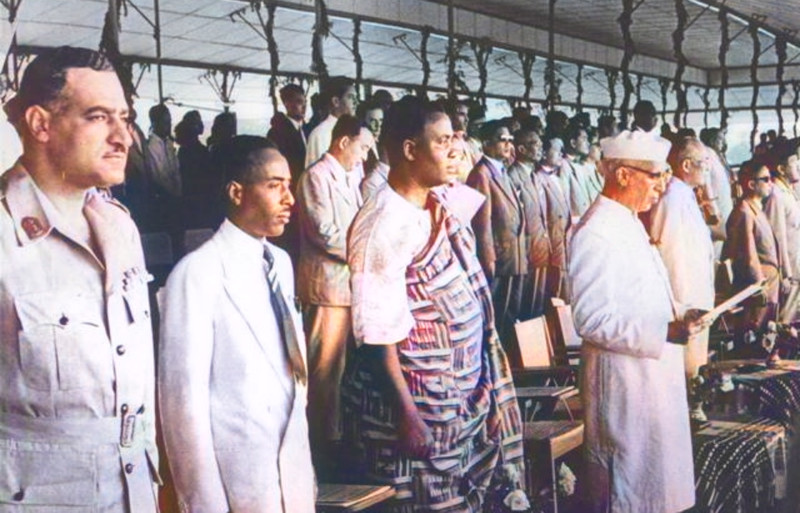
Bandung Conference, 1955
The movement was formally founded at Belgrade in 1961.
Leaders to know
| Leader | Country | What to connect them to |
|---|---|---|
| Jawaharlal Nehru | India | nonalignment and independent foreign policy |
| Josip Broz Tito | Yugoslavia | communist but independent from Soviet control |
| Gamal Abdel Nasser | Egypt | Arab nationalism and nonalignment |
| Sukarno | Indonesia | anti-imperialism and sovereignty after Dutch rule |
| Kwame Nkrumah | Ghana | Pan-Africanism and resistance to neocolonialism |
The movement mattered because it challenged the idea that only U.S.-led capitalism or Soviet communism were possible. Its limits mattered too. Members were diverse, often disagreed, and many leaned toward one superpower anyway.
Key Takeaways
Cold War
Global ideological and geopolitical struggle between the U.S.-led capitalist bloc and Soviet-led communist bloc from 1945 to 1991, without sustained direct war between the superpowers
Superpower
A state able to project military, economic, political, and ideological influence across multiple world regions
Bipolar International Order
A global system in which power is concentrated chiefly in two rival centers, represented after World War II by the United States and Soviet Union
Capitalism
An economic system based primarily on private ownership and markets, linked by the United States to representative government and individual rights
Soviet Communism
State control of major production, centralized planning, and one-party communist rule, presented as a path to equality and liberation from capitalism
Sphere of Influence
A region whose governments are subject to a powerful state's political, economic, or military influence, such as Soviet-dominated Eastern Europe
Security Dilemma
A cycle in which one state's defensive measures threaten another state, provoking responses that make both sides feel less secure
Iron Curtain
Winston Churchill's term for the political, ideological, and military division between Soviet-dominated Eastern Europe and the U.S.-aligned West
Containment
U.S. policy of preventing communism from expanding beyond areas where it was already established rather than directly overthrowing existing communist governments
Truman Doctrine
Harry Truman's 1947 commitment to aid governments threatened by armed minorities or outside pressure, first applied to Greece and Turkey
Marshall Plan
U.S. aid program begun in 1948 to rebuild Western Europe, restore trade, reduce communism's appeal, and strengthen ties to the United States
Berlin Blockade
The Soviet Union's 1948–1949 blockade of land access to the Western-controlled sectors of Berlin
Berlin Airlift
The U.S.-led aerial supply of West Berlin during the 1948–1949 Soviet blockade, continued until the Soviet Union reopened land access
Cold War Blocs: Western Bloc vs. Eastern Bloc
The Western bloc joined the United States and its allies; the Eastern bloc joined the Soviet Union and communist Eastern European governments
Proxy War
A conflict in which superpowers support opposing governments or armed groups instead of fighting each other directly
Nuclear Arms Race
U.S.-Soviet competition to build increasingly large and destructive nuclear arsenals, producing enormous costs, recurring crises, and fear of annihilation
Nuclear Deterrence
Preventing attack by convincing an opponent that aggression would bring devastating nuclear retaliation and possible mutual destruction
Cold War Propaganda
Media and cultural messages used by each bloc to promote its system, condemn its rival, and influence domestic and international audiences
Nonalignment
Maintaining independent judgment and resisting formal subordination to either Cold War bloc, while still allowing cooperation with or aid from either side
Non-Aligned Movement
Movement of states that defended sovereignty, anticolonialism, and independent action rather than formal alignment with either Cold War superpower bloc
Bandung Conference
A 1955 meeting of 29 Asian and African countries that promoted anticolonialism, racial equality, development, peaceful coexistence, and Afro-Asian cooperation
Belgrade Conference
The 1961 meeting at which the Non-Aligned Movement was formally established
Sukarno
Indonesia's first president and an anti-imperialist leader who hosted the Bandung Conference and promoted Afro-Asian cooperation and nonalignment
Kwame Nkrumah
Ghanaian independence leader who promoted Pan-Africanism, nonalignment, state-led development, and resistance to neocolonialism
Pan-Africanism
The movement promoting unity and cooperation among African peoples and states against colonialism, racism, and foreign domination
Neocolonialism
Continued foreign control through economic, financial, or diplomatic influence after a territory has gained formal political independence
Notes
Cold War
Global ideological and geopolitical struggle between the U.S.-led capitalist bloc and Soviet-led communist bloc from 1945 to 1991, without sustained direct war between the superpowers
Superpower
A state able to project military, economic, political, and ideological influence across multiple world regions
Bipolar International Order
A global system in which power is concentrated chiefly in two rival centers, represented after World War II by the United States and Soviet Union
Capitalism
An economic system based primarily on private ownership and markets, linked by the United States to representative government and individual rights
Soviet Communism
State control of major production, centralized planning, and one-party communist rule, presented as a path to equality and liberation from capitalism
Sphere of Influence
A region whose governments are subject to a powerful state's political, economic, or military influence, such as Soviet-dominated Eastern Europe
Security Dilemma
A cycle in which one state's defensive measures threaten another state, provoking responses that make both sides feel less secure
Iron Curtain
Winston Churchill's term for the political, ideological, and military division between Soviet-dominated Eastern Europe and the U.S.-aligned West
Containment
U.S. policy of preventing communism from expanding beyond areas where it was already established rather than directly overthrowing existing communist governments
Truman Doctrine
Harry Truman's 1947 commitment to aid governments threatened by armed minorities or outside pressure, first applied to Greece and Turkey
Marshall Plan
U.S. aid program begun in 1948 to rebuild Western Europe, restore trade, reduce communism's appeal, and strengthen ties to the United States
Berlin Blockade
The Soviet Union's 1948–1949 blockade of land access to the Western-controlled sectors of Berlin
Berlin Airlift
The U.S.-led aerial supply of West Berlin during the 1948–1949 Soviet blockade, continued until the Soviet Union reopened land access
Cold War Blocs: Western Bloc vs. Eastern Bloc
The Western bloc joined the United States and its allies; the Eastern bloc joined the Soviet Union and communist Eastern European governments
Proxy War
A conflict in which superpowers support opposing governments or armed groups instead of fighting each other directly
Nuclear Arms Race
U.S.-Soviet competition to build increasingly large and destructive nuclear arsenals, producing enormous costs, recurring crises, and fear of annihilation
Nuclear Deterrence
Preventing attack by convincing an opponent that aggression would bring devastating nuclear retaliation and possible mutual destruction
Cold War Propaganda
Media and cultural messages used by each bloc to promote its system, condemn its rival, and influence domestic and international audiences
Nonalignment
Maintaining independent judgment and resisting formal subordination to either Cold War bloc, while still allowing cooperation with or aid from either side
Non-Aligned Movement
Movement of states that defended sovereignty, anticolonialism, and independent action rather than formal alignment with either Cold War superpower bloc
Bandung Conference
A 1955 meeting of 29 Asian and African countries that promoted anticolonialism, racial equality, development, peaceful coexistence, and Afro-Asian cooperation
Belgrade Conference
The 1961 meeting at which the Non-Aligned Movement was formally established
Sukarno
Indonesia's first president and an anti-imperialist leader who hosted the Bandung Conference and promoted Afro-Asian cooperation and nonalignment
Kwame Nkrumah
Ghanaian independence leader who promoted Pan-Africanism, nonalignment, state-led development, and resistance to neocolonialism
Pan-Africanism
The movement promoting unity and cooperation among African peoples and states against colonialism, racism, and foreign domination
Neocolonialism
Continued foreign control through economic, financial, or diplomatic influence after a territory has gained formal political independence
