Topic 7.5 Notes – Unresolved Tensions After World War I
How World War I Reshaped Empire Without Ending It
Around 1900, Britain, France, and other Western powers already ruled huge colonial empires, and Japan had become an imperial power too. After World War I, that system got shaken up, but it did not disappear.
- Continuity mattered most. Britain and France kept most of their colonies, and Japan kept Korea and Taiwan.
- Change still mattered. Germany lost all its colonies. The Ottoman Empire lost most of its Arab lands. Those territories were mostly handed to new rulers instead of becoming independent.
- Woodrow Wilson’s self-determination sounded universal, but it was applied mostly in Europe. Colonized peoples in Africa, Asia, the Middle East, and the Pacific usually did not get sovereignty.
- That gap created resentment because colonized peoples had supplied soldiers, labor, food, taxes, and raw materials during the war and expected more political rights afterward.
The exam loves this idea. The postwar settlement redistributed empire more than it abolished empire.
The New Forms of Imperial Control After the War
Empires did not all look the same, so you need the different forms together.
| Form | What it meant | Example |
|---|---|---|
| Colony | Direct rule by an imperial power | British India |
| Mandate | Territory ruled under League of Nations authority, supposedly until self-government | Iraq under Britain |
| Occupation | Foreign military control | Japan in Manchuria before Manchukuo |
| Puppet state | Looks independent on paper, but foreign power controls it | Manchukuo under Japan |
| Sphere of influence / regional bloc | Domination without identical legal rule everywhere | Greater East Asia Co-Prosperity Sphere |
Article 22 of the League Covenant described some peoples as “not yet able to stand by themselves” and called foreign rule a “sacred trust of civilization.” That language shows the paternalistic idea behind empire. It is a strong source for imperial justification, but weak evidence for what colonized peoples actually wanted.
The League of Nations Mandate System
The treaties after the war stripped Germany of its colonies and broke apart Ottoman control in the Arab world. The mandate system presented this as temporary guardianship, but in practice it was usually empire with a new legal label.
Class A
Former Ottoman lands seen as closest to independence.
- Britain got Iraq, Palestine, Transjordan
- France got Syria, Lebanon
Class B
Former German African colonies.
- Britain got Tanganyika
- France got most of Cameroon and Togo
Class C
Ruled almost like part of the mandatory power’s own territory.
- South Africa got German South West Africa
- Japan, Australia, New Zealand got former German Pacific islands
Big winners were Britain and France, with gains also for Japan, Belgium, South Africa, Australia, and New Zealand. The key point is simple. Sovereignty stayed with imperial powers, not local peoples.
Japan’s Expansion After World War I
Japan belongs in this topic as an imperial state, not only as a target of Western pressure.
- Earlier holdings stayed in place. Taiwan was annexed in 1895 and Korea in 1910.
- After the war, Japan gained former German Pacific islands and German rights in Shandong.
Chinese anger over Shandong helped spark the May Fourth Movement in 1919. Shandong returned to China in 1922, but Japanese expansion kept going.
Manchuria crisis
- In 1931, the Mukden incident gave Japan a pretext.
- Japan occupied Manchuria.
- In 1932, it created Manchukuo under Puyi.
- The League condemned this.
- Japan left the League in 1933.
The map shows the Japanese puppet state set up in northeastern China after the occupation.
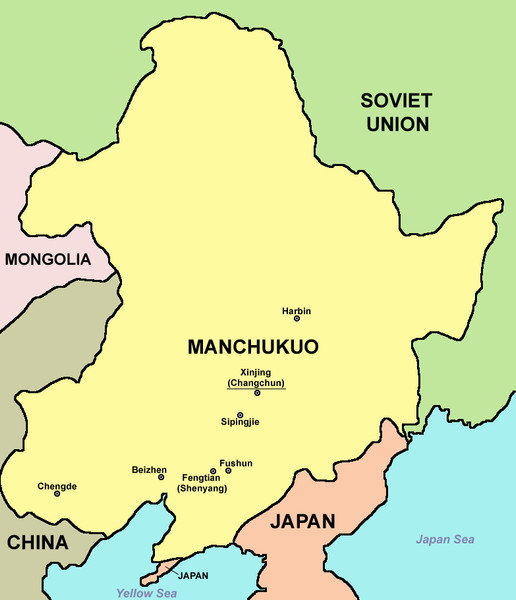
Map of Manchukuo
This showed the League’s weakness and proved that territorial expansion still happened through conquest, not just treaties. Japan later claimed the Greater East Asia Co-Prosperity Sphere would free Asia from Western imperialism, but it actually expanded Japanese control over land, labor, and resources.
Anti-Imperial Resistance Got More Organized
Most interwar resistance did not win independence right away. It still mattered because it built leaders, networks, and mass politics.
India under British rule
The Indian National Congress became a mass anti-colonial movement. The Rowlatt Acts and Amritsar Massacre in 1919 deepened anger. Gandhi promoted satyagraha, or nonviolent resistance.
- Non-Cooperation Movement (1920-1922) used boycotts of British schools, courts, offices, titles, and imports.
- It ended after violence at Chauri Chaura.
- The Salt March in 1930 launched Civil Disobedience and turned a salt tax into a symbol of foreign rule.
French West Africa
French rule depended on taxation, forced labor, racial hierarchy, and the indigénat system. Pan-Africanism and the Pan-African Congresses starting in 1919 challenged empire. Labor strikes also became political resistance, including the 1938 railway strike at Thiès in Senegal.
Imperial borders mostly stayed in place, but resistance became broader, more organized, and more international. That laid groundwork for decolonization after 1945.
Key Takeaways
Woodrow Wilson
U.S. president who promoted national self-determination and the League of Nations, though the postwar settlement applied self-determination selectively
National Self-Determination
The principle that nations should choose their own governments; applied mainly in Europe after World War I while usually denied to colonized peoples
Treaty of Versailles
The 1919 peace treaty that stripped Germany of its colonies, which were redistributed largely as League of Nations mandates
League of Nations
Postwar international organization that supervised mandates but failed to compel imperial withdrawal or stop Japan’s seizure of Manchuria
League of Nations Mandate System / Mandates
Former German and Ottoman territories governed by outside powers for the League under a promise of eventual self-government, but usually administered like colonies
South Seas Mandate
League mandate granting Japan control of former German Pacific islands north of the equator after World War I.
May Fourth Movement
Chinese nationalist movement begun in 1919 that protested the transfer of German privileges in Shandong to Japan and condemned foreign imperialism
Japanese Invasion of Manchuria
Japan’s 1931 occupation of Manchuria after Kwantung Army officers used a railway explosion as a pretext for conquest
Manchukuo
Nominally independent state established by Japan in Manchuria in 1932 under Puyi but effectively controlled as a Japanese puppet state
Puppet State
A nominally independent state whose major political and military decisions are controlled by a foreign power, as Japan controlled Manchukuo
Greater East Asia Co-Prosperity Sphere
Japan’s claimed Pan-Asian bloc that promised liberation from Western imperialism while imposing Japanese military, political, and economic domination
Indian National Congress
Leading Indian nationalist organization that turned resistance to British rule into a mass interwar movement of boycotts, marches, and civil disobedience
Mohandas Gandhi
Indian National Congress leader who organized mass resistance to British rule using satyagraha, noncooperation, and civil disobedience
Satyagraha
Gandhi’s method of nonviolent resistance based on moral opposition to injustice and organized refusal to cooperate with colonial authority
Rowlatt Acts
British laws enacted in India in 1919 that extended emergency powers and permitted detention without trial, provoking widespread protests
Amritsar Massacre
The 1919 killing of hundreds of unarmed Indians by British troops under Reginald Dyer, which severely damaged British legitimacy
Non-Cooperation Movement
Gandhi’s 1920–1922 campaign urging Indians to boycott British institutions, titles, and goods; suspended after violence at Chauri Chaura
Civil Disobedience Movement
Indian nationalist campaign begun in 1930 that openly and nonviolently violated colonial laws, beginning with the Salt March
Salt March
Gandhi’s 1930 march to the Arabian Sea to violate Britain’s salt monopoly, turning an everyday tax into a symbol of colonial injustice
French West Africa
Federation of French colonies that remained under French rule while workers, intellectuals, and political organizers used strikes, associations, and Pan-African networks to resist colonial inequality
Indigénat
French colonial system subjecting African colonial subjects to special regulations and administrative punishments not normally imposed on citizens
Pan-Africanism
Movement asserting shared interests among people of African descent and opposing colonialism and racial discrimination across national boundaries
Pan-African Congresses
International meetings beginning in 1919 that demanded political rights, better labor conditions, education, and movement toward African self-government
Class A Mandates
Former Ottoman territories considered closest to independence, including British mandates in Iraq, Palestine, and Transjordan and French mandates in Syria and Lebanon
Class B Mandates
Former German colonies in Africa governed by mandatory powers under stated restrictions but with extensive foreign political and economic control
Class C Mandates
Former German territories that mandatory powers were permitted to administer almost as parts of their own territory
Notes
Woodrow Wilson
U.S. president who promoted national self-determination and the League of Nations, though the postwar settlement applied self-determination selectively
National Self-Determination
The principle that nations should choose their own governments; applied mainly in Europe after World War I while usually denied to colonized peoples
Treaty of Versailles
The 1919 peace treaty that stripped Germany of its colonies, which were redistributed largely as League of Nations mandates
League of Nations
Postwar international organization that supervised mandates but failed to compel imperial withdrawal or stop Japan’s seizure of Manchuria
League of Nations Mandate System / Mandates
Former German and Ottoman territories governed by outside powers for the League under a promise of eventual self-government, but usually administered like colonies
South Seas Mandate
League mandate granting Japan control of former German Pacific islands north of the equator after World War I.
May Fourth Movement
Chinese nationalist movement begun in 1919 that protested the transfer of German privileges in Shandong to Japan and condemned foreign imperialism
Japanese Invasion of Manchuria
Japan’s 1931 occupation of Manchuria after Kwantung Army officers used a railway explosion as a pretext for conquest
Manchukuo
Nominally independent state established by Japan in Manchuria in 1932 under Puyi but effectively controlled as a Japanese puppet state
Puppet State
A nominally independent state whose major political and military decisions are controlled by a foreign power, as Japan controlled Manchukuo
Greater East Asia Co-Prosperity Sphere
Japan’s claimed Pan-Asian bloc that promised liberation from Western imperialism while imposing Japanese military, political, and economic domination
Indian National Congress
Leading Indian nationalist organization that turned resistance to British rule into a mass interwar movement of boycotts, marches, and civil disobedience
Mohandas Gandhi
Indian National Congress leader who organized mass resistance to British rule using satyagraha, noncooperation, and civil disobedience
Satyagraha
Gandhi’s method of nonviolent resistance based on moral opposition to injustice and organized refusal to cooperate with colonial authority
Rowlatt Acts
British laws enacted in India in 1919 that extended emergency powers and permitted detention without trial, provoking widespread protests
Amritsar Massacre
The 1919 killing of hundreds of unarmed Indians by British troops under Reginald Dyer, which severely damaged British legitimacy
Non-Cooperation Movement
Gandhi’s 1920–1922 campaign urging Indians to boycott British institutions, titles, and goods; suspended after violence at Chauri Chaura
Civil Disobedience Movement
Indian nationalist campaign begun in 1930 that openly and nonviolently violated colonial laws, beginning with the Salt March
Salt March
Gandhi’s 1930 march to the Arabian Sea to violate Britain’s salt monopoly, turning an everyday tax into a symbol of colonial injustice
French West Africa
Federation of French colonies that remained under French rule while workers, intellectuals, and political organizers used strikes, associations, and Pan-African networks to resist colonial inequality
Indigénat
French colonial system subjecting African colonial subjects to special regulations and administrative punishments not normally imposed on citizens
Pan-Africanism
Movement asserting shared interests among people of African descent and opposing colonialism and racial discrimination across national boundaries
Pan-African Congresses
International meetings beginning in 1919 that demanded political rights, better labor conditions, education, and movement toward African self-government
Class A Mandates
Former Ottoman territories considered closest to independence, including British mandates in Iraq, Palestine, and Transjordan and French mandates in Syria and Lebanon
Class B Mandates
Former German colonies in Africa governed by mandatory powers under stated restrictions but with extensive foreign political and economic control
Class C Mandates
Former German territories that mandatory powers were permitted to administer almost as parts of their own territory
