Topic 5.4 Notes – The Second Agricultural Revolution
What the Second Agricultural Revolution Was
This was the British Agricultural Revolution, a prolonged transformation in farming, not one invention. Britain changed land ownership, planting methods, livestock management, and tools, and those changes worked together.
Students mix up the three agricultural revolutions a lot, so keep them separate:
- First Agricultural Revolution = Neolithic domestication and settled farming
- Second Agricultural Revolution = British-era productivity gains tied to industrialization
- Green Revolution = 20th-century high-yield seeds, chemicals, irrigation, and modern machinery
The core APHG idea is simple. Productivity went up, so more food could be produced by a smaller share of the population. The diagram below traces that chain from farm innovation to urbanization and industrialization.

Second Agricultural Revolution cause-and-effect chain
- agricultural innovation
- higher output per land and per worker
- more reliable food supply
- better diets and lower mortality
- population growth and longer life expectancy
- fewer workers needed on farms
- rural-to-urban migration
- factory labor, urbanization, industrialization
The Main Changes in Agriculture
These changes fit together. Enclosure reorganized land, crop rotation improved soil use, new tools improved planting and harvesting, and selective breeding made animals more productive.
Enclosure
- Enclosure consolidated scattered strips and common land into larger privately controlled farms.
- It replaced the open-field system, where families worked narrow strips spread across different fields.
- Enclosed land was marked by hedges, fences, walls, or ditches, but the key idea is private control, not just barriers.
- It mattered because larger farms could set their own schedules, improve drainage, adopt machinery, manage livestock better, and produce more for market sale.
- Socially, many landowners benefited, but some small farmers lost access to common resources and became wage laborers or migrants.
This map helps you see the contrast between scattered strips in the open-field system and a larger enclosed parcel under one owner's control.
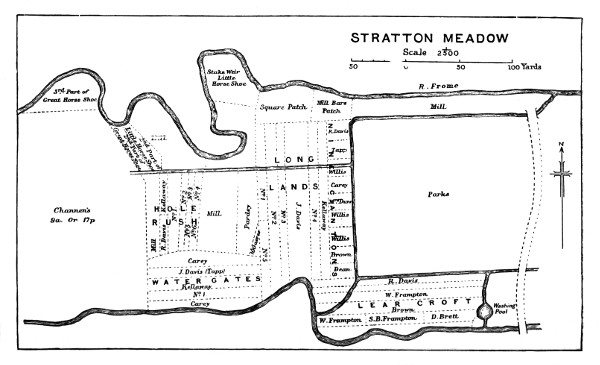
Open-field strips and enclosure
Crop rotation
- Crop rotation reduced the need to leave land fallow.
- The classic example is the Norfolk four-course rotation linked to Charles “Turnip” Townshend:
- wheat
- turnips
- barley
- clover
- Clover restored nitrogen to the soil. Turnips and clover also fed animals through winter.
- More animals meant more manure, which improved soil fertility, so less land sat unused.
Seed drill
- Jethro Tull’s seed drill in the early 1700s planted seeds in rows at even depth and spacing.
- That replaced hand broadcasting, which wasted seed and gave uneven growth.
- Result: better germination and easier weeding.
Selective breeding
- Selective breeding means breeding livestock for desired traits.
- Robert Bakewell is the key figure.
- Farmers selected for size, faster growth, meat, milk, wool, and feed efficiency.
- This is not the same as Neolithic domestication or modern genetic engineering.
Improved tools and mechanization
- Better plows, horse-drawn hoes, harvesting tools, and threshing machines increased efficiency.
- Threshing means separating grain from stalks and husks.
- The cumulative effect mattered most. Farms could work more land and process more harvest with fewer workers.
How Productivity Increased
Enclosure created larger, more manageable, more commercial farms. Crop rotation kept land productive instead of fallow. Fodder crops supported larger herds, and manure improved soil. The seed drill used seed more efficiently. Selective breeding improved livestock output. Mechanization increased output per worker.
The distinction teachers love to test is this:
- Total output increased
- Productivity increased too
- Fewer farm workers could still produce more food
The Demographic and Economic Impacts
A larger, steadier food supply improved nutrition, which helped lower death rates and lengthen life expectancy. Population grew. That does not mean everyone had equal access to food, because poverty and inequality still existed.
Rural labor was released in two ways:
- labor-saving farming meant fewer workers were needed
- enclosure displaced some people from land and common resources
That created rural push factors, including land loss, consolidation, and less need for manual labor. Industrial towns created pull factors, especially factory jobs and wages.
The major result was huge. The Second Agricultural Revolution helped make the Industrial Revolution possible by feeding cities and supplying workers. As more people left farms for towns, urbanization increased.
Reading It on the Exam
If a graph shows farm output or yields rising while the share of people working in agriculture falls, the answer is rising productivity, not agricultural decline.
If population and urbanization rise alongside farm productivity, connect agriculture to:
- better diets and population growth
- labor supply for factories
If you see hedgerows and regular fields, think enclosure. If you see scattered narrow strips, think open-field system before consolidation.
Key Takeaways
Second Agricultural Revolution / British Agricultural Revolution
The seventeenth- to early-nineteenth-century transformation of British agriculture through enclosure, crop rotation, selective breeding, improved planting, and mechanization, which increased food output and supported population growth, industrialization, and urbanization
Enclosure Movement
The consolidation of scattered strips and common lands into larger privately controlled farms, enabling more efficient commercial farming while displacing some rural residents
Crop Rotation
The planned sequence of different crops on the same land to maintain soil fertility, reduce fallow land, and increase output
Seed Drill
A horse-drawn planting device that placed and covered seeds in evenly spaced rows at regular depths, reducing waste and improving germination and labor efficiency
Selective Breeding / Artificial Selection
Controlling the reproduction of animals with desired traits so those traits become more common, increasing livestock productivity and predictability
Agricultural Mechanization
The growing use of improved plows, horse-drawn equipment, threshing machines, and other machinery to cultivate and process more food with fewer workers
Notes
Second Agricultural Revolution / British Agricultural Revolution
The seventeenth- to early-nineteenth-century transformation of British agriculture through enclosure, crop rotation, selective breeding, improved planting, and mechanization, which increased food output and supported population growth, industrialization, and urbanization
Enclosure Movement
The consolidation of scattered strips and common lands into larger privately controlled farms, enabling more efficient commercial farming while displacing some rural residents
Crop Rotation
The planned sequence of different crops on the same land to maintain soil fertility, reduce fallow land, and increase output
Seed Drill
A horse-drawn planting device that placed and covered seeds in evenly spaced rows at regular depths, reducing waste and improving germination and labor efficiency
Selective Breeding / Artificial Selection
Controlling the reproduction of animals with desired traits so those traits become more common, increasing livestock productivity and predictability
Agricultural Mechanization
The growing use of improved plows, horse-drawn equipment, threshing machines, and other machinery to cultivate and process more food with fewer workers
