Topic 2.12 Notes – Effects of Migration
What the Effects of Migration Are
Migration always has two viewpoints. The same movement is emigration from the origin and immigration to the destination. That matters because the effects are different in each place, even though they come from the same flow.
The core idea is bigger than population totals. Migration redistributes:
- labor and workers
- skills and education levels
- money through remittances
- culture through language, religion, food, and customs
- political influence through voting blocs, activism, and diaspora networks
Those effects depend on who moves. Migrants are often selective, especially young adults, so a place can change a lot even if the total number does not seem huge.
- Sending areas may lose working-age adults, face higher dependency burdens, and see rural decline or abandoned farmland.
- Receiving areas may gain workers, become younger, denser, and more urban.
- Population pyramids often show this clearly. Origins may have a missing young-adult bulge, and destinations may have a bigger one.
A common test trap is net migration. A place can have similar inflow and outflow totals and still change a lot if the people arriving and leaving differ in age, sex, education, or jobs. Scale matters too. National change may look small, but a city, border region, or industry can feel huge effects.
Economic Effects on Sending and Receiving Areas
Sending areas
Remittances are money migrants send home. They can help families pay for food, housing, school, health care, or a farm or business. At a larger scale, they bring in foreign exchange and can reduce poverty because that money gets spent again in the local economy.
Remittances also have limits:
- households can become dependent on outside income
- migrant families may pull ahead of non-migrant families, increasing inequality
- land and housing prices can rise
- recessions or immigration crackdowns abroad can suddenly cut the flow
A standard example is the Philippines, which receives major remittance flows from overseas workers.
Brain drain means the loss of highly skilled workers such as doctors, nurses, engineers, and teachers. That weakens services and state capacity in the sending area. Filipino nurses are a classic example. If migrants later return with savings and skills, that can create brain circulation.
Out-migration can also reduce unemployment where jobs are scarce, but it can create shortages in farming or health care and shift gender roles in families left behind.
Receiving areas
Receiving areas gain labor. Migrants often fill shortages in agriculture, construction, domestic work, health care, and tech. In aging societies with low birth rates, they add workers and taxpayers.
They also increase:
- entrepreneurship
- consumer demand
- housing demand
Effects are uneven. Employers may benefit, but some local workers may face competition in certain sectors. Rapid in-migration can also strain schools, housing, transportation, health care, and refugee services. The key nuance is that migrants can contribute taxes and increase service demand at the same time.
Cultural Effects and Transnational Connections
Migration is one of the biggest forms of cultural diffusion because people carry culture with them.
Diasporas and enclaves
A diaspora is a dispersed population that still keeps ties to its homeland. An ethnic enclave is a neighborhood where migrants cluster, often because of chain migration, support networks, or exclusion.
You can see enclaves in:
- businesses and restaurants
- festivals and worship sites
- bilingual signs
- schools and everyday food culture
Multilingual signs like these show how local institutions adapt to serve migrant communities in an ethnic enclave.
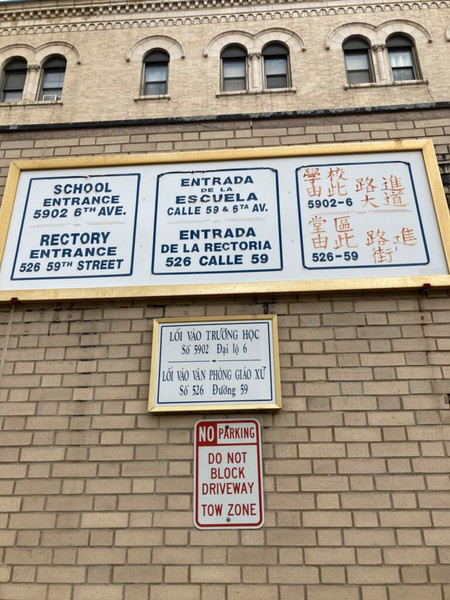
Multilingual signage in an ethnic enclave
Receiving areas often become more diverse, more bilingual, and more culturally mixed. They can also see xenophobia, nativism, discrimination, and pressure to assimilate.
Sending areas may lose language speakers or community participation, but migrants also send back social remittances such as ideas about politics, gender roles, education, and consumption. Return migration can reshape homes, businesses, and expectations.
Two standard examples matter here:
- Great Migration spread and transformed Black culture in northern and western U.S. cities, especially in the Harlem Renaissance.
- Transatlantic slave trade created the African diaspora and long-lasting cultural influence across the Americas.
Political Effects and Historical Examples
Migration also changes power.
In receiving areas, migration can shift representation, public funding, party coalitions, and debates over national identity. Immigrants do not automatically get voting rights, but they can still shape politics through protests, labor groups, and advocacy. Major policy debates include quotas, asylum, deportation, border enforcement, family reunification, and citizenship pathways. In Persian Gulf states, large migrant labor forces often have limited political rights.
In sending areas, emigration can shrink the tax base, electorate, and leadership pool. Diasporas may send campaign money, lobby abroad, vote externally, or support opposition movements. Refugee flows can also trigger border disputes and change ethnic composition.
Historical examples tie everything together. The map below is the Great Migration example, showing major streams out of the South toward northern, midwestern, and western cities.
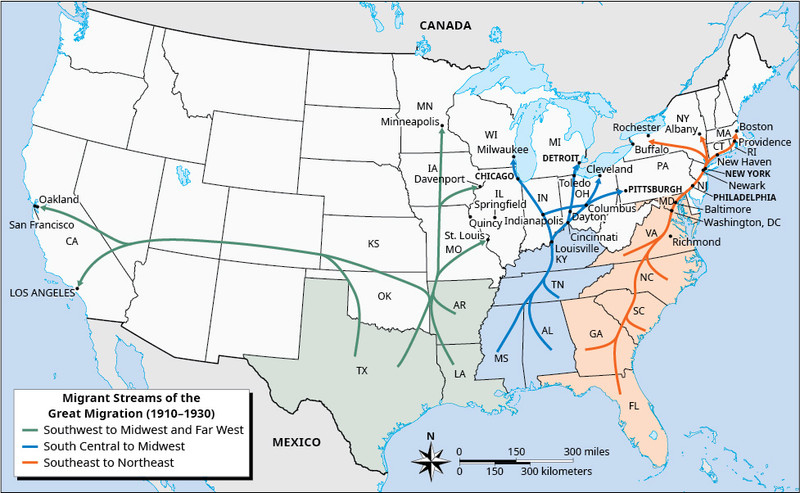
Great Migration migrant streams
- Great Migration
About 6 million African Americans moved from the South to the North, Midwest, and West from about 1916 to 1970. It changed labor systems, encouraged southern farm mechanization, increased Black voting power outside the South, and helped build the base for civil rights politics.
- Transatlantic slave trade
This was forced migration. Africa suffered severe demographic loss, and the Americas built plantation economies on enslaved labor. Its effects lasted for centuries through racial hierarchies, citizenship conflicts, and diaspora culture.
Key Takeaways
Immigration vs. Emigration
Immigration is movement into a destination; emigration is movement out of a place of origin, so one migrant can be both an immigrant and an emigrant
Sending Area (Source Area or Place of Origin) vs. Receiving Area (Destination)
A sending area is the location migrants leave, while a receiving area is the location where they settle
Net Migration
The difference between immigration and emigration; more arrivals produce net in-migration, while more departures produce net out-migration
Migration Selectivity
The tendency for migrants to differ systematically from the overall population by age, sex, education, occupation, income, ethnicity, or legal status
Remittances
Money or other resources migrants send from receiving areas to relatives or communities in their places of origin
Human Capital
The knowledge, training, skills, and productive ability embodied in workers
Brain Drain
The emigration of highly educated, trained, or skilled people, causing a sending area to lose human capital
Brain Gain
The acquisition of skilled labor and human capital through immigration or the return of experienced migrants
Brain Circulation
Repeated migration and the continuing transfer of skills, experience, technology, and connections between origins and destinations
Diaspora
A population dispersed from a homeland whose members retain an identity with, memory of, or connection to that homeland
Ethnic Neighborhood (Ethnic Enclave)
An area where migrants or an ethnic group concentrate, creating distinctive businesses, institutions, languages, and cultural practices
Xenophobia
Fear of or hostility toward people perceived as foreign
Nativism
Preference for the interests and culture of established inhabitants over those of immigrants, often accompanied by support for immigration restrictions
Social Remittances
Ideas, behaviors, skills, and social values transferred by migrants to people in their home communities
Transnational Social and Economic Spaces
Cross-border networks through which migrants and their households maintain economic, cultural, social, and political ties to more than one place
Great Migration
The movement of about six million African Americans from the rural South to northern, midwestern, and western cities from approximately 1916 to 1970, reshaping labor, culture, settlement, and political power
Transatlantic Slave Trade
The forced transportation of millions of Africans to the Americas, producing African demographic losses, plantation labor systems, an African diaspora, and enduring racial and political inequalities
Notes
Immigration vs. Emigration
Immigration is movement into a destination; emigration is movement out of a place of origin, so one migrant can be both an immigrant and an emigrant
Sending Area (Source Area or Place of Origin) vs. Receiving Area (Destination)
A sending area is the location migrants leave, while a receiving area is the location where they settle
Net Migration
The difference between immigration and emigration; more arrivals produce net in-migration, while more departures produce net out-migration
Migration Selectivity
The tendency for migrants to differ systematically from the overall population by age, sex, education, occupation, income, ethnicity, or legal status
Remittances
Money or other resources migrants send from receiving areas to relatives or communities in their places of origin
Human Capital
The knowledge, training, skills, and productive ability embodied in workers
Brain Drain
The emigration of highly educated, trained, or skilled people, causing a sending area to lose human capital
Brain Gain
The acquisition of skilled labor and human capital through immigration or the return of experienced migrants
Brain Circulation
Repeated migration and the continuing transfer of skills, experience, technology, and connections between origins and destinations
Diaspora
A population dispersed from a homeland whose members retain an identity with, memory of, or connection to that homeland
Ethnic Neighborhood (Ethnic Enclave)
An area where migrants or an ethnic group concentrate, creating distinctive businesses, institutions, languages, and cultural practices
Xenophobia
Fear of or hostility toward people perceived as foreign
Nativism
Preference for the interests and culture of established inhabitants over those of immigrants, often accompanied by support for immigration restrictions
Social Remittances
Ideas, behaviors, skills, and social values transferred by migrants to people in their home communities
Transnational Social and Economic Spaces
Cross-border networks through which migrants and their households maintain economic, cultural, social, and political ties to more than one place
Great Migration
The movement of about six million African Americans from the rural South to northern, midwestern, and western cities from approximately 1916 to 1970, reshaping labor, culture, settlement, and political power
Transatlantic Slave Trade
The forced transportation of millions of Africans to the Americas, producing African demographic losses, plantation labor systems, an African diaspora, and enduring racial and political inequalities
