Topic 5.12 Notes – Women in Agriculture
What Women’s Roles in Agriculture Are
Women are involved across the whole agricultural system, not just in field labor. The AP idea here is broader than “women work on farms.”
The four roles you need to know are:
- Production means growing crops and raising animals.
- Processing means turning raw harvests into usable food, like drying, milling, fermenting, preserving, or packaging.
- Distribution means moving and selling food through markets, transport, storage, and trade.
- Consumption means buying, preparing, storing, and allocating food within the household.
The biggest thing students miss is this distinction:
- Doing the work does not automatically mean
- owning the land
- controlling the harvest
- signing the contract
- receiving the income
Geographically, women’s work and power vary by production type, culture, land tenure, migration, technology, and policy. That is how APHG wants you to explain differences.
Women’s Roles Across Different Agricultural Systems
Subsistence and smallholder farming
In many rice-growing regions, women do the labor-intensive fieldwork, especially transplanting and tending young plants by hand.
- Women often plant, weed, harvest, care for small livestock, process crops, and manage home gardens.
- Production and household food security are tightly linked because the same women who grow staple foods often also prepare and divide them.
- In sub-Saharan Africa, women often grow staple food crops and sell in local markets, while men more often control cattle or export crops.
- In South and Southeast Asian rice regions, women commonly transplant, weed, harvest, and process rice. Men more often plow, use machinery, or handle outside transactions.
Cash-crop and plantation agriculture
- Women often work as wage laborers picking, sorting, grading, washing, or packing tea, coffee, fruit, vegetables, and flowers.
- Gendered occupational segregation means women are concentrated in seasonal, lower-paid, labor-intensive jobs, while men more often supervise, transport, manage contracts, or operate machinery.
- On smallholder cash-crop farms, a contract may be in a man’s name even when women do much of the labor.
Livestock and pastoral systems
- Men may herd large livestock or control cattle.
- Women may milk animals, care for young or small livestock, process dairy, prepare hides, or sell dairy products.
- Ownership matters because livestock are stored wealth. A woman may do daily labor without deciding when animals are sold.
Mechanized commercial agriculture
- Mechanization reduces manual labor and makes capital, training, machinery, and ownership more important.
- Women may be owners, managers, technicians, or wage workers, but access to machinery and credit is often unequal.
- Mechanization can lighten women’s workload or remove paid tasks they used to do.
What Shapes Women’s Agricultural Roles
A gendered division of labor assigns tasks by cultural expectations.
- Women are more often associated with staple crops, weeding, processing, nearby markets, and unpaid family labor.
- Men are more often associated with plowing, machinery, transport, wholesaling, and export crops.
Land rights shape everything after that.
- Women may farm land without legally owning it.
- Patrilineal inheritance often weakens women’s land claims.
- Matrilineal systems may strengthen them.
- National law may promise equality, but customary practice may still favor men.
- Joint titling and inheritance enforcement can improve tenure security.
The key chain is worth memorizing: weak land rights → less collateral → less credit → fewer inputs → lower yields and income.
Women also often face less access to seed, fertilizer, irrigation, machinery, transport, extension services, cooperatives, insurance, and subsidies. Household labor like childcare, water collection, cooking, and fuel gathering creates time poverty, which limits farming and paid work.
Production to Consumption and Why It Matters
Women’s role runs through the whole value chain, including visible work in local markets like the produce stall shown here.
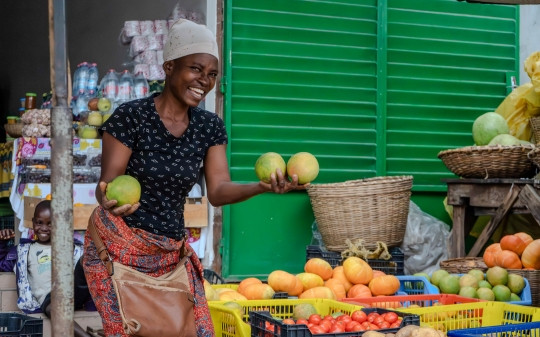
Local produce market vendor
| Stage | Common roles |
|---|---|
| Production | owner, tenant, unpaid family worker, cooperative member, contract grower, wage laborer |
| Processing | threshing, drying, milling, fermenting, preserving, cleaning, packaging |
| Distribution | local retail selling, especially common in West African market systems |
| Consumption | purchasing, preparing, storing, and allocating household food |
A lot of women’s unpaid work gets undercounted in official data. Processing matters because it adds value and can become income through cooperatives or specialty products. Women are often strong in local retail markets but less represented in wholesaling, long-distance transport, storage ownership, and export distribution because those require more capital and mobility. In consumption, control of income matters more than labor alone.
Migration, Policy, and Reading the Data
The feminization of agriculture happens when male out-migration raises women’s share of farm labor and management. Women may become de facto farm managers without gaining legal ownership. Remittances can help buy seed or irrigation, but losing male labor can raise women’s workload.
Environmental stress like drought, flooding, and soil degradation often increases women’s burdens, especially where they already provide food but lack land rights or credit.
Policies that can reduce inequality include equal inheritance, land titles, credit access, extension programs, machinery and irrigation access, cooperatives, transport, childcare, and labor protections. These matter because fewer resource barriers can raise output and food security.
When you read data, separate these measures:
- women’s share of agricultural workers
- share of employed women in agriculture
- total number of women agricultural workers
- women’s land ownership
Those are not interchangeable. A high female labor share does not automatically mean equality. It can reflect poverty, male migration, or limited job alternatives.
Key Takeaways
Gendered Division of Agricultural Labor
Allocation of agricultural crops, tasks, animals, locations, value-chain stages, or compensation according to cultural expectations about women’s and men’s work
Gendered Occupational Segregation
Concentration of women and men in different agricultural jobs, often placing women in seasonal or labor-intensive work and men in permanent, supervisory, or mechanized positions
Agricultural Value Chain / Commodity Chain
The linked stages through which agricultural goods move, including production, processing, transportation, distribution, marketing, and consumption
Land Tenure
The rules and arrangements governing access to and control of land
Access to Land vs. Land Ownership
Access permits someone to use land through family or community arrangements; ownership provides legal title and stronger rights to control, transfer, or use it as collateral
Patrilineal Inheritance
An inheritance system in which property passes primarily through the male line
Matrilineal Inheritance
An inheritance system tracing property or group membership through the female line, potentially strengthening women’s claims without guaranteeing their authority
Secure Land Tenure
Stable, recognized rights to occupy and control land, enabling investment and improving access to collateral, irrigation, and government assistance
Agricultural Extension Services
Programs that provide farmers with information and training about seeds, technology, pests, soils, livestock, and markets
Feminization of Agriculture
An increase in women’s share of agricultural labor or farm-management responsibilities, often associated with male out-migration
Time Poverty
A lack of available time for education, paid work, political participation, or rest because productive and household responsibilities consume it
Notes
Gendered Division of Agricultural Labor
Allocation of agricultural crops, tasks, animals, locations, value-chain stages, or compensation according to cultural expectations about women’s and men’s work
Gendered Occupational Segregation
Concentration of women and men in different agricultural jobs, often placing women in seasonal or labor-intensive work and men in permanent, supervisory, or mechanized positions
Agricultural Value Chain / Commodity Chain
The linked stages through which agricultural goods move, including production, processing, transportation, distribution, marketing, and consumption
Land Tenure
The rules and arrangements governing access to and control of land
Access to Land vs. Land Ownership
Access permits someone to use land through family or community arrangements; ownership provides legal title and stronger rights to control, transfer, or use it as collateral
Patrilineal Inheritance
An inheritance system in which property passes primarily through the male line
Matrilineal Inheritance
An inheritance system tracing property or group membership through the female line, potentially strengthening women’s claims without guaranteeing their authority
Secure Land Tenure
Stable, recognized rights to occupy and control land, enabling investment and improving access to collateral, irrigation, and government assistance
Agricultural Extension Services
Programs that provide farmers with information and training about seeds, technology, pests, soils, livestock, and markets
Feminization of Agriculture
An increase in women’s share of agricultural labor or farm-management responsibilities, often associated with male out-migration
Time Poverty
A lack of available time for education, paid work, political participation, or rest because productive and household responsibilities consume it
