Topic 5.11 Notes – Challenges of Contemporary Agriculture
What Sustainable Contemporary Agriculture Means
Sustainable agriculture means producing enough food now without wrecking the ability to produce food later. That is why AP Human Geography keeps pushing you to think in tradeoffs.
The four dimensions show up in almost every question:
- Environmental sustainability looks at soil fertility, freshwater use, pollution, and biodiversity.
- Economic sustainability asks whether farms can stay profitable and survive rising input costs.
- Social sustainability deals with food access, labor conditions, public health, and whether communities can keep making a living.
- Cultural sustainability includes traditional foods, local crop varieties, and historic agricultural landscapes.
Green Revolution-style intensification boosted yields with seeds, irrigation, fertilizers, and pesticides. Topic 5.11 is more about the newer arguments that came after that success. Who benefits, who pays the costs, and at what scale?
Agricultural Innovations and Their Tradeoffs
Biotechnology and GMOs
Biotechnology is the broad category. It includes genetic engineering, marker-assisted breeding, and tissue culture. GMOs are one part of biotechnology. They are organisms whose genetic material was intentionally altered.
Common GMO traits include:
- Insect resistance such as Bt corn and Bt cotton, which can lower insecticide use.
- Herbicide tolerance, which makes weed control easier and can support reduced tillage.
- Stress tolerance for drought, heat, or salty soils.
- Delayed ripening to reduce spoilage.
- Biofortification such as Golden Rice, engineered for beta-carotene to help with vitamin A deficiency.
The debate is never “GMOs good” or “GMOs bad.”
| Innovation | Benefit | Concern |
|---|---|---|
| Bt crops | less crop loss, less insecticide | resistant insects can evolve; refuges slow this |
| Herbicide-tolerant crops | easier weed control | herbicide-resistant weeds, chemical dependence |
| Golden Rice | better nutrition potential | patents, mistrust, adoption barriers, poverty still matters |
Big concerns include patents, corporate control, farmer dependence, gene flow, and reduced genetic diversity.
Irrigation, fertilizers, pesticides, and biodiversity
Many of these tradeoffs show up most clearly in intensive row-crop farming.
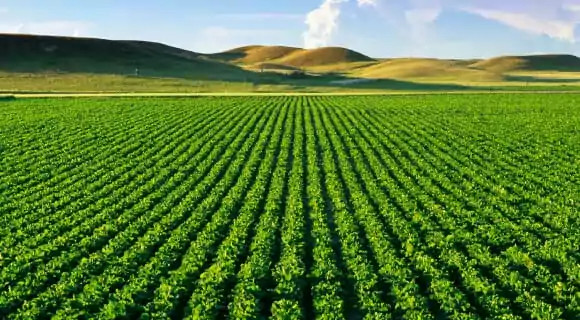
Intensive row-crop agriculture
These raise yields, but each one carries costs:
- Irrigation boosts production in dry areas, but can deplete aquifers and cause salinization when water leaves salt behind.
- Fertilizers replace soil nutrients, but runoff can create algal blooms and water pollution.
- Pesticides reduce crop losses, but can harm non-target species and create resistant pests.
- Integrated pest management mixes monitoring, crop rotation, biological control, and limited chemical use.
- Monoculture and genetic uniformity make farms more vulnerable to pests and disease and reduce biodiversity.
Aquaculture
Aquaculture means raising fish, shellfish, or seaweed under controlled conditions. It is different from commercial fishing, which harvests wild populations.
- Benefits include more protein without needing more cropland and less pressure on some wild fisheries.
- Concerns include waste, disease, antibiotics, escaped farmed fish, habitat loss, and feed made from wild fish.
- Salmon farming gives a predictable supply, but creates waste, parasites, and escape risks.
- Shrimp farming often destroys mangroves.
- Seaweed and shellfish are usually lower-feed systems.
Food Choice Movements and Changing Demand
Alternative production and marketing
- Urban farming includes community gardens, rooftops, and vertical farms. It can improve local access, but land is expensive and scale is limited.
- CSA means consumers pay in advance for seasonal shares. Farmers get capital early, but price and pickup logistics can exclude some households.
- Organic farming restricts many synthetic chemicals and GMOs. It may improve soil practices, but certification costs and higher prices matter.
- Value-added specialty crops such as wine, specialty cheese, preserves, or branded local products help small farms earn more from limited land.
Trade and consumption movements
- Fair trade is common with coffee, cocoa, tea, and bananas. It aims for minimum prices, labor standards, and community premiums. It is about the terms of trade, not distance.
- Local food includes farmers markets, co-ops, and farm-to-school programs. Local does not automatically mean greener, cheaper, or fairer.
- Dietary shifts matter a lot. More meat consumption increases demand for feed grains, grazing land, and water. More plant-forward diets can reduce livestock demand.
Food Access, Distribution, and Why Hunger Still Exists
Food security means reliable access to sufficient, safe, nutritious food.
Its four parts are:
- Availability
- Access
- Utilization
- Stability
A place can have plenty of food and still have hunger. Food insecurity comes from poverty, conflict, crop failure, unemployment, discrimination, and price shocks.
- A food desert is an area with poor geographic access to affordable nutritious food.
- Food insecurity is a household condition of inadequate access.
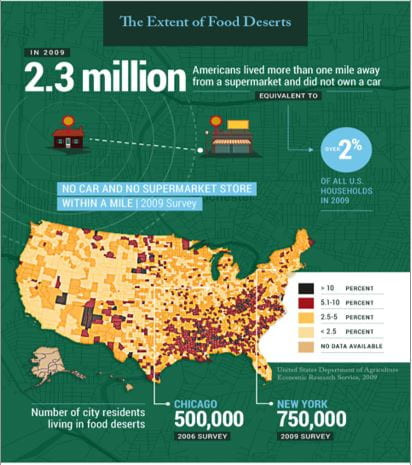
U.S. food desert infographic
Think of the map as a quick example of how access can vary by place, even in a high-income country. Distribution problems also matter. Weak roads, ports, refrigeration, storage, fuel supply, or political stability can keep food from reaching people. Food often goes where people can pay, not where need is greatest. Droughts, floods, freezes, storms, and heat waves make this worse, especially in poorer regions with less ability to adapt.
Land Use, Scale, and Government Influence
Suburbanization converts fertile farmland into housing, roads, and warehouses. Fragmentation raises land prices and taxes and makes farming harder. This connects to bid-rent because urban land users can outbid farmers near cities.
Processing and markets shape production too. Dairies, meatpacking plants, fruit canneries, sugar refineries, and grain storage facilities often pull farmers toward certain crops or livestock systems.
Economies of scale let large farms and processors lower per-unit costs and dominate supply chains. That can lower prices, but it also encourages consolidation, monocropping, and vulnerability to disruptions.
Government policies shape agriculture through subsidies, price supports, tariffs, quotas, crop insurance, conservation rules, GMO labeling, and infrastructure spending. Big examples are U.S. farm subsidies and the EU Common Agricultural Policy. These can stabilize farmers and food supply, but they often benefit large producers most and can encourage overproduction.
Key Takeaways
Agricultural Sustainability
Meeting present food and fiber needs without undermining the environmental resources, economic viability, social well-being, or cultural traditions needed for future production
Biotechnology / Agricultural Biotechnology
Use of organisms, biological processes, or biological materials to alter agricultural production or develop products, including but not limited to genetic modification
Genetically Modified Organism (GMO)
An organism whose genetic material has been intentionally altered through biotechnology to produce a desired trait
Integrated Pest Management (IPM)
Pest control that combines monitoring, biological controls, crop rotation, and limited chemical use instead of relying on one pesticide
Aquaculture
Cultivation of fish, shellfish, aquatic plants, or other aquatic organisms under controlled or partially controlled conditions rather than harvesting wild populations
Urban Farming / Urban Agriculture
Production of food within or immediately around an urban area, including gardens, rooftop farms, greenhouses, and vertical farms
Community-Supported Agriculture (CSA)
A system in which consumers buy seasonal farm shares in advance and receive portions of the harvest while sharing some production risk
Organic Farming
Farming under standards that restrict many synthetic fertilizers, synthetic pesticides, GMOs, and routine use of certain medications while permitting approved inputs
Value-Added Agricultural Product
A farm product altered, processed, packaged, certified, branded, or marketed to increase its value beyond that of the raw commodity
Specialty Crops
Fruits, vegetables, nuts, horticultural products, and other crops sold in differentiated markets rather than as undifferentiated commodities
Fair Trade
A market and certification movement using price, labor, safety, community, and environmental standards to improve conditions for producers and workers
Local-Food Movement
A movement encouraging food production and purchasing within a defined city, metropolitan area, state, or region
Dietary Shifts
Changes in food consumption that alter demand for crops, livestock, land, water, processing, transportation, and distant production regions
Food Security
Reliable physical, social, and economic access to sufficient, safe, nutritious food, involving availability, access, utilization, and stability
Food Insecurity
Limited or uncertain access to sufficient nutritious food, often because of poverty, high prices, conflict, weak distribution, or crop failure
Food Desert
An area whose residents have poor geographic access to affordable, nutritious food, often because of retailer distance, low income, or limited transportation
Food Distribution System
The network of transportation, storage, refrigeration, processing, financing, and retail links that moves food from producers to consumers
Suburbanization
Conversion of rural land at metropolitan edges into housing, roads, commerce, and other urban uses, often consuming and fragmenting farmland
Economies of Scale
Decreases in average cost per unit as production volume rises and fixed costs are spread across more output
Agricultural Subsidy
Government assistance that lowers agricultural production costs or supplements farm income
Price Support
A government policy that establishes or defends a minimum commodity price to protect producer income, sometimes creating surpluses
Tariff
A tax that makes imported agricultural goods more expensive, protecting domestic producers but potentially raising consumer prices
Import Quota
A government limit on the quantity of an agricultural product that may enter a country
Crop Insurance
Insurance that reduces farmers' financial losses from adverse weather, crop failure, or other covered production risks
Location of Processing Facilities and Markets
Access to processors, storage, and buyers shapes what farmers can profitably produce; bulky or perishable inputs favor processing near farms, while rapid-delivery activities may locate near consumers
Notes
Agricultural Sustainability
Meeting present food and fiber needs without undermining the environmental resources, economic viability, social well-being, or cultural traditions needed for future production
Biotechnology / Agricultural Biotechnology
Use of organisms, biological processes, or biological materials to alter agricultural production or develop products, including but not limited to genetic modification
Genetically Modified Organism (GMO)
An organism whose genetic material has been intentionally altered through biotechnology to produce a desired trait
Integrated Pest Management (IPM)
Pest control that combines monitoring, biological controls, crop rotation, and limited chemical use instead of relying on one pesticide
Aquaculture
Cultivation of fish, shellfish, aquatic plants, or other aquatic organisms under controlled or partially controlled conditions rather than harvesting wild populations
Urban Farming / Urban Agriculture
Production of food within or immediately around an urban area, including gardens, rooftop farms, greenhouses, and vertical farms
Community-Supported Agriculture (CSA)
A system in which consumers buy seasonal farm shares in advance and receive portions of the harvest while sharing some production risk
Organic Farming
Farming under standards that restrict many synthetic fertilizers, synthetic pesticides, GMOs, and routine use of certain medications while permitting approved inputs
Value-Added Agricultural Product
A farm product altered, processed, packaged, certified, branded, or marketed to increase its value beyond that of the raw commodity
Specialty Crops
Fruits, vegetables, nuts, horticultural products, and other crops sold in differentiated markets rather than as undifferentiated commodities
Fair Trade
A market and certification movement using price, labor, safety, community, and environmental standards to improve conditions for producers and workers
Local-Food Movement
A movement encouraging food production and purchasing within a defined city, metropolitan area, state, or region
Dietary Shifts
Changes in food consumption that alter demand for crops, livestock, land, water, processing, transportation, and distant production regions
Food Security
Reliable physical, social, and economic access to sufficient, safe, nutritious food, involving availability, access, utilization, and stability
Food Insecurity
Limited or uncertain access to sufficient nutritious food, often because of poverty, high prices, conflict, weak distribution, or crop failure
Food Desert
An area whose residents have poor geographic access to affordable, nutritious food, often because of retailer distance, low income, or limited transportation
Food Distribution System
The network of transportation, storage, refrigeration, processing, financing, and retail links that moves food from producers to consumers
Suburbanization
Conversion of rural land at metropolitan edges into housing, roads, commerce, and other urban uses, often consuming and fragmenting farmland
Economies of Scale
Decreases in average cost per unit as production volume rises and fixed costs are spread across more output
Agricultural Subsidy
Government assistance that lowers agricultural production costs or supplements farm income
Price Support
A government policy that establishes or defends a minimum commodity price to protect producer income, sometimes creating surpluses
Tariff
A tax that makes imported agricultural goods more expensive, protecting domestic producers but potentially raising consumer prices
Import Quota
A government limit on the quantity of an agricultural product that may enter a country
Crop Insurance
Insurance that reduces farmers' financial losses from adverse weather, crop failure, or other covered production risks
Location of Processing Facilities and Markets
Access to processors, storage, and buyers shapes what farmers can profitably produce; bulky or perishable inputs favor processing near farms, while rapid-delivery activities may locate near consumers
