Topic 6.10 Notes – Challenges of Urban Changes
What Urban Change Within a City Is
Earlier urban models explained where neighborhoods tend to be. This topic is about what happens when those neighborhoods change over time.
Urban change means movement within the city of people, capital, services, and political attention. The key pattern is unevenness:
- One neighborhood may gain new housing, retail, and transit investment.
- Another may lose jobs, mortgages, grocery stores, and public services.
- The same city can have reinvestment in one area and abandonment in another.
The causes often work together:
- Suburbanization and white flight pull residents and tax money outward.
- Housing discrimination locks groups into certain neighborhoods.
- Deindustrialization removes jobs and weakens local economies.
- Rapid urbanization can outgrow formal housing supply.
- Redevelopment can improve an area but also raise costs.
- Fragmented government makes metro-wide problems hard to solve.
The effects are also connected: segregation, affordability problems, service gaps, crime and vacancy, environmental injustice, squatter settlements, gentrification, and displacement.
Housing, Segregation, and Uneven Neighborhood Decline
Housing is where urban inequality becomes visible on the map.
- Residential segregation means groups are separated by race, ethnicity, or income across neighborhoods.
- De jure segregation is enforced by law.
- De facto segregation continues in practice even without current laws, often because older discrimination still shapes wealth and housing choices.
Redlining
Redlining was area-based denial of mortgages, insurance, and investment. A classic example is the 1930s residential security maps that graded whole neighborhoods by lending risk.
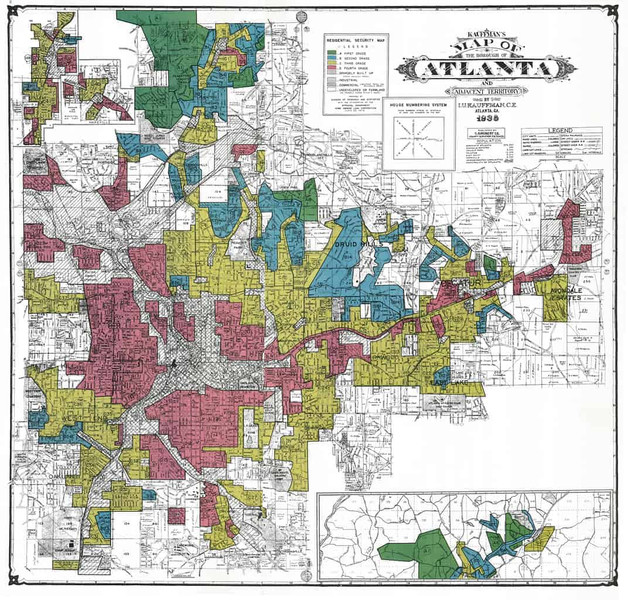
1938 HOLC redlining map of Atlanta
- The HOLC maps in the 1930s labeled many minority neighborhoods as risky.
- That made home loans and investment harder to get.
- Long term, this helped produce lower homeownership, less wealth accumulation, disinvestment, and concentrated poverty.
- The Fair Housing Act of 1968 challenged formal housing discrimination, but the spatial effects lasted.
Blockbusting and white flight
- Blockbusting happened when real-estate agents used racial fear to pressure white homeowners to sell cheaply, then profited from rapid turnover.
- Redlining restricts credit by area. Blockbusting manipulates owners for profit. Students mix these up a lot.
- White flight was the movement of many white, often middle-class residents to suburbs.
- Highways, cars, suburban construction, and federally backed mortgages made that move easier.
- Central cities then lost tax base, which weakened schools, transit, and services.
Affordability and services
- Housing affordability becomes a problem when rents and home prices rise faster than incomes.
- Results include overcrowding, long commutes, homelessness, displacement, and concentration of low-income housing.
- Unequal access to services means some neighborhoods have weaker transit, schools, health care, grocery stores, parks, sanitation, or internet.
- Spatial mismatch means jobs are far from workers, often with poor transit links.
- Food deserts are places with limited access to affordable nutritious food.
Disamenities, Environmental Injustice, and Informal Settlements
Urban decline also shows up through harmful conditions on the landscape.
- A disamenity zone has concentrated negatives like pollution, noise, hazards, or poor services.
- A zone of abandonment has withdrawal of residents and institutions, leaving vacancy and deterioration.
- They can overlap, but they are not the same.
Crime in AP Human Geography is usually explained as a cycle of disinvestment + job loss + vacancies + weak institutions + negative perceptions, not as “poor place = crime.”
Environmental injustice
Environmental injustice means hazards fall disproportionately on disadvantaged groups. Environmental racism is the race-linked version.
- The South Bronx is the standard example.
- Highways, truck traffic, industry, and waste facilities have created health burdens in low-income minority neighborhoods.
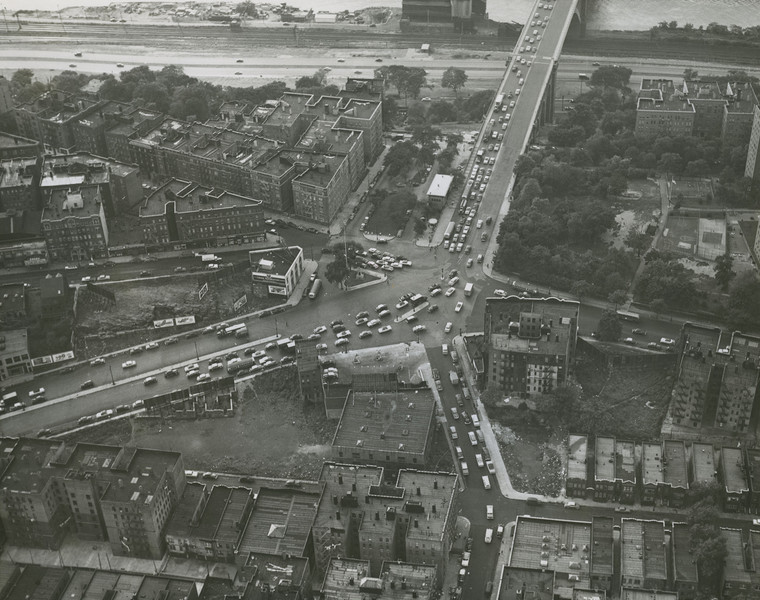
South Bronx environmental injustice
Squatter settlements and land tenure conflict
A squatter settlement or informal settlement is housing built without secure legal title. Rocinha in Rio is a classic example.
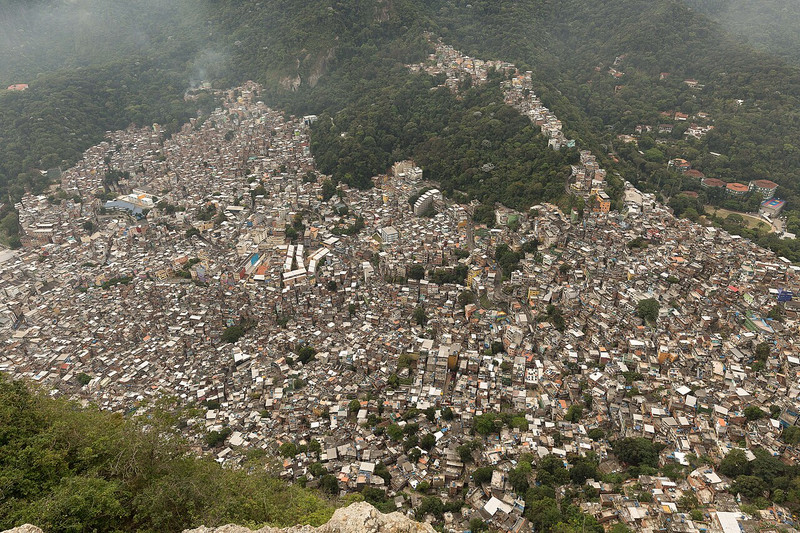
Rocinha informal settlement, Rio de Janeiro
Common traits:
- self-built housing
- irregular street patterns
- limited water, sanitation, or electricity
- hazardous sites
- eviction risk
Land tenure conflict means disputes over ownership, occupancy, eviction, redevelopment, or legal recognition.
Reinvestment, Redevelopment, and Their Trade-Offs
Urban problems can bring responses, but those responses create winners and losers.
- Urban renewal is government-led clearance and redevelopment of “blighted” areas.
- Benefits include new infrastructure, safer buildings, jobs, and higher tax revenue.
- Costs include demolition, forced relocation, loss of affordable housing, and loss of community networks.
- Boston’s West End is the classic example.
- Gentrification happens when higher-income residents and investment move into lower-income or disinvested neighborhoods.
- Signs include renovation, rising rents, new retail, and higher property values.
- Benefits include less vacancy and improved services.
- Costs include direct and indirect displacement and cultural change.
- Difference to remember: urban renewal is usually state-directed; gentrification is broader and often market-driven.
- Inclusionary zoning requires or encourages affordable units in new developments. The goal is to spread affordable housing more widely. The standard example is Montgomery County, Maryland and its MPDU program.
- Local food movements include community gardens, urban farms, farmers’ markets, and co-ops. In Detroit, vacant land has been reused for urban agriculture in response to food deserts and disinvestment.
Why Urban Problems Are Hard to Fix
Cities function as metros, but government is split up.
- Functional fragmentation means different agencies control housing, transit, schools, sanitation, health, and planning.
- Geographic fragmentation means the metro area is divided among city, suburb, county, state, and special districts.
That matters because housing markets, commuting, pollution, and poverty cross boundaries:
- suburbs may block multifamily housing
- central cities may carry heavier service burdens
- transit may be regional, but zoning near stations is local
- wealthy jurisdictions keep stronger tax bases
Urban problems operate at both the neighborhood scale and the metro scale, so solutions are often partial and uneven.
Key Takeaways
Residential Segregation
The spatial separation of racial, ethnic, income, religious, or other population groups into different neighborhoods
De Jure Segregation vs. De Facto Segregation
De jure segregation is imposed or supported by law or official policy; de facto segregation exists in practice without a current law explicitly requiring it
Redlining
Denying or restricting mortgages, insurance, investment, or services to neighborhoods judged undesirable, historically often because of racial or ethnic composition
Blockbusting
A discriminatory real-estate practice that provokes racial or ethnic fears to induce cheap home sales and profitable resales
White Flight
The movement of many white residents from central-city neighborhoods, especially diversifying ones, to suburban areas
Fair Housing Act of 1968
A U.S. law prohibiting discrimination in housing sales, rentals, and financing on specified grounds, including race
Housing Affordability
The ability of households to pay for housing, challenged when rents and home prices rise faster than household incomes
Public Housing
Government-owned rental housing intended for households unable to afford market-rate housing
Spatial Mismatch
A mismatch between the locations of workers and suitable jobs, often intensified by inadequate or unaffordable transportation
Food Desert
An area whose residents have limited convenient access to affordable, nutritious food, especially full-service grocery stores
Disinvestment
The withdrawal or reduction of households, businesses, lenders, capital, or public resources from a place
Disamenity Zone
An urban area where undesirable conditions such as pollution, hazards, noise, or inadequate services are concentrated
Zone of Abandonment
An area where withdrawal by residents, businesses, owners, and institutions has left vacant or deteriorating buildings and lots dominant
Environmental Injustice
The disproportionate exposure of disadvantaged groups to environmental hazards and unequal access to environmental amenities and protections
Environmental Racism
Environmental inequality linked specifically to racial discrimination or racialized political and economic structures
Land Tenure
The rules and arrangements through which people occupy, use, control, rent, or own land
Land-Tenure Conflict
A dispute over rights to occupy, use, control, or own land, often involving residents, governments, or private owners
Tenure Regularization
Granting informal occupants a recognized right or legal title to the land they occupy
Inclusionary Zoning
A land-use policy requiring or encouraging developers to include below-market-rate or affordable units in new residential developments
Local Food Movements
Efforts to produce, distribute, and consume food locally through activities such as urban farms, community gardens, and farmers’ markets
Urban Renewal
Government-directed clearance, rebuilding, or substantial redevelopment of areas considered deteriorated or economically unproductive
Gentrification
Reinvestment and socioeconomic transformation of a lower-income or disinvested neighborhood as higher-income residents and businesses move in
Functional Fragmentation of Government
The division of responsibility for urban functions such as transportation, housing, schools, and utilities among separate agencies and institutions
Geographic Fragmentation of Government
The division of a metropolitan area among multiple states or provinces, counties, municipalities, neighborhood bodies, and special districts
Squatter Settlement
A residential area built without secure legal title to the land, often with self-built housing and limited infrastructure
Notes
Residential Segregation
The spatial separation of racial, ethnic, income, religious, or other population groups into different neighborhoods
De Jure Segregation vs. De Facto Segregation
De jure segregation is imposed or supported by law or official policy; de facto segregation exists in practice without a current law explicitly requiring it
Redlining
Denying or restricting mortgages, insurance, investment, or services to neighborhoods judged undesirable, historically often because of racial or ethnic composition
Blockbusting
A discriminatory real-estate practice that provokes racial or ethnic fears to induce cheap home sales and profitable resales
White Flight
The movement of many white residents from central-city neighborhoods, especially diversifying ones, to suburban areas
Fair Housing Act of 1968
A U.S. law prohibiting discrimination in housing sales, rentals, and financing on specified grounds, including race
Housing Affordability
The ability of households to pay for housing, challenged when rents and home prices rise faster than household incomes
Public Housing
Government-owned rental housing intended for households unable to afford market-rate housing
Spatial Mismatch
A mismatch between the locations of workers and suitable jobs, often intensified by inadequate or unaffordable transportation
Food Desert
An area whose residents have limited convenient access to affordable, nutritious food, especially full-service grocery stores
Disinvestment
The withdrawal or reduction of households, businesses, lenders, capital, or public resources from a place
Disamenity Zone
An urban area where undesirable conditions such as pollution, hazards, noise, or inadequate services are concentrated
Zone of Abandonment
An area where withdrawal by residents, businesses, owners, and institutions has left vacant or deteriorating buildings and lots dominant
Environmental Injustice
The disproportionate exposure of disadvantaged groups to environmental hazards and unequal access to environmental amenities and protections
Environmental Racism
Environmental inequality linked specifically to racial discrimination or racialized political and economic structures
Land Tenure
The rules and arrangements through which people occupy, use, control, rent, or own land
Land-Tenure Conflict
A dispute over rights to occupy, use, control, or own land, often involving residents, governments, or private owners
Tenure Regularization
Granting informal occupants a recognized right or legal title to the land they occupy
Inclusionary Zoning
A land-use policy requiring or encouraging developers to include below-market-rate or affordable units in new residential developments
Local Food Movements
Efforts to produce, distribute, and consume food locally through activities such as urban farms, community gardens, and farmers’ markets
Urban Renewal
Government-directed clearance, rebuilding, or substantial redevelopment of areas considered deteriorated or economically unproductive
Gentrification
Reinvestment and socioeconomic transformation of a lower-income or disinvested neighborhood as higher-income residents and businesses move in
Functional Fragmentation of Government
The division of responsibility for urban functions such as transportation, housing, schools, and utilities among separate agencies and institutions
Geographic Fragmentation of Government
The division of a metropolitan area among multiple states or provinces, counties, municipalities, neighborhood bodies, and special districts
Squatter Settlement
A residential area built without secure legal title to the land, often with self-built housing and limited infrastructure
