Topic 7.4 Notes – Women and Economic Development
What Gender Parity in Economic Development Means
This topic asks a very specific question. As economies develop, do women and men end up more equal in economic life?
- Gender parity means equal outcomes or representation in one measured area, like school enrollment, wages, labor-force participation, or seats in government.
- Equality is broader. It means equal rights and opportunities overall.
- Equity is about fairness in access and treatment. If barriers affect women more, equity means removing those barriers.
That distinction shows up on the AP exam a lot. A country can have parity in one area and still have inequality in others.
Economic development often improves women’s lives because it can expand access to:
- education and job training
- paid work
- personal income
- credit and banking
- decision-making in households and communities
The important qualifier is that more women working does not automatically mean equal pay, equal promotion, or equal power.
A common piece of evidence is the Gender Inequality Index. The map below shows that lower inequality is concentrated in much of Europe, North America, and Australia, with higher inequality in parts of sub-Saharan Africa, South Asia, and the Middle East.
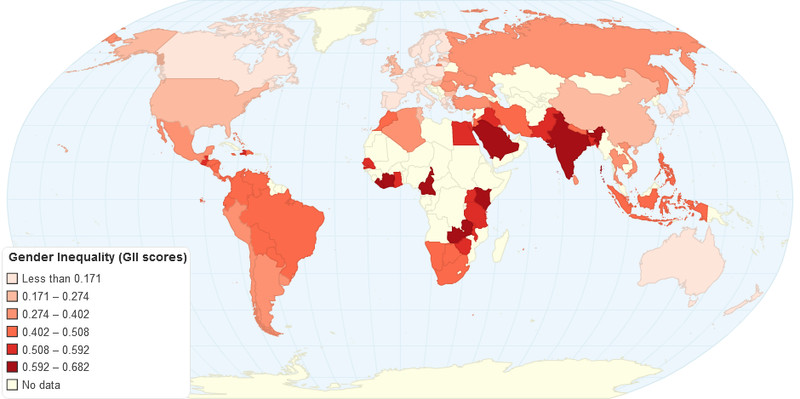
Gender Inequality Index world map
A strong AP argument sounds like this: economic development has pushed societies toward gender parity, but progress is uneven and incomplete.
How Women’s Economic Roles Change as Countries Develop
Women do important economic work at every development level. What changes is the kind of work, whether it is visible, and whether it is paid.
| Development level | Common roles for women |
|---|---|
| Lower-income agrarian economies | subsistence farming, unpaid family labor, water or fuel collection, home production, informal work |
| Early industrializing economies | factory work in textiles, garments, food processing, electronics assembly |
| More developed service economies | professional, technical, managerial, health, education, and government jobs |
The pattern you want to remember is:
- unpaid or uncounted labor shifts toward paid employment
- work shifts from the primary sector to the secondary and tertiary sectors
- more schooling leads to more training and job options
- earning income can increase women’s bargaining power at home
That often changes households too. Women with more income and education often have more say over spending, marriage, fertility, children’s education, and health care. This is one reason development is often linked to later marriage, lower fertility, and better maternal and child health.
Why More Workforce Participation Does Not Equal Equality
Labor-force participation means the share of working-age women who are employed or looking for work. It shows market involvement, not equal treatment.
Wage inequality
The gender pay gap is the difference in average earnings between women and men. It can come from:
- different occupations
- lower pay in female-dominated jobs
- fewer promotions
- caregiving interruptions
- more part-time or informal work
- discrimination
Occupational segregation
- Horizontal segregation means women and men cluster in different job types.
- Vertical segregation means women are underrepresented in top leadership, even in the same field.
Informal and unpaid work
Women are often concentrated in informal employment like domestic service, street vending, home-based work, and family businesses. These jobs are often insecure, unregulated, and missing benefits.
Women also do a huge share of unpaid care work such as child care, eldercare, cooking, and cleaning. When paid work gets added on top of that, it creates a double burden.
Women may also have less access to land, property, credit, transportation, digital tools, and legal protection. So workforce growth can happen without true equality.
How Women’s Paid Work and Microloans Can Improve Development
Paid work can increase independence and household income. That creates a common development cycle:
- Education and development expand work opportunities.
- Women earn income and gain skills.
- Families spend more on food, health care, and education.
- Healthier, better-educated families support long-term development.
A microloan is a small loan for someone who lacks collateral, credit history, or access to banks. These matter for women because formal lending systems often exclude them.
Microloans can fund:
- livestock
- tools
- tailoring
- food processing
- retail inventory
- small farm businesses
Bangladesh and the Grameen Bank
The classic case is Bangladesh. Muhammad Yunus began experimental lending in 1976, which grew into the Grameen Bank. It offered small, often collateral-free loans, mostly to women. Group lending helped replace traditional collateral, and borrower meetings became a key part of the model.
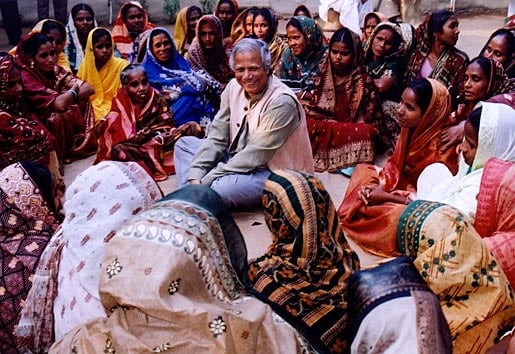
Muhammad Yunus meeting with Grameen Bank borrowers
Microloans can improve living standards, but they have limits. Debt risk, high interest, too many similar businesses, weak local demand, or male control of the loan can reduce their impact. They help locally, but they do not fix discrimination or weak infrastructure by themselves.
Reading the Patterns and Making the Argument
Common indicators include female labor-force participation, wages, literacy, education, political representation, fertility, and the Gender Inequality Index.
When you read a map or graph, stick to what the data actually measure. A labor-force map does not show pay equity. A literacy graph does not prove equal employment opportunity.
Patterns are uneven within countries too:
- urban vs rural
- formal vs informal sector
- wealthy vs poor households
- younger vs older generations
Data can also undercount subsistence work, unpaid family labor, and informal work.
Key Takeaways
Gender Parity
Equal representation or outcomes for women and men in a specified area, such as enrollment, employment, wages, or political representation
Gender Equality
The condition in which rights, responsibilities, opportunities, and treatment do not depend on gender
Gender Equity
Fairness in access, treatment, and resource distribution, including removing barriers that disproportionately affect one gender
Labor-Force Participation
The share of the working-age population that is employed or actively seeking employment
Gender Pay Gap
The difference between women's and men's earnings, reflecting factors such as occupations, hours, caregiving, advancement, and discrimination
Occupational Segregation
The concentration of women and men, or other groups, in different types or levels of employment
Horizontal Segregation
The concentration of women and men in different occupations or economic sectors
Vertical Segregation
The concentration of women in lower-ranking positions and their underrepresentation in management and leadership
Informal Employment
Work outside many government regulations, taxation systems, and labor protections, often lacking contracts, benefits, and reliable earnings
Unpaid Care Work
Uncompensated child care, eldercare, cooking, cleaning, and other household labor that supports households and economies
Double Burden
The combined responsibility of paid employment and a continuing disproportionate share of unpaid household labor
Microloan
A small loan to a borrower who may lack the income, credit history, or collateral required by a conventional bank, often used to start or expand a small business
Microfinance
Financial services for underserved borrowers, including microloans, savings, insurance, payment services, and financial education
Grameen Bank
A Bangladeshi institution developed from Muhammad Yunus's 1976 project that made small, often collateral-free and group-based loans primarily to poor women
Notes
Gender Parity
Equal representation or outcomes for women and men in a specified area, such as enrollment, employment, wages, or political representation
Gender Equality
The condition in which rights, responsibilities, opportunities, and treatment do not depend on gender
Gender Equity
Fairness in access, treatment, and resource distribution, including removing barriers that disproportionately affect one gender
Labor-Force Participation
The share of the working-age population that is employed or actively seeking employment
Gender Pay Gap
The difference between women's and men's earnings, reflecting factors such as occupations, hours, caregiving, advancement, and discrimination
Occupational Segregation
The concentration of women and men, or other groups, in different types or levels of employment
Horizontal Segregation
The concentration of women and men in different occupations or economic sectors
Vertical Segregation
The concentration of women in lower-ranking positions and their underrepresentation in management and leadership
Informal Employment
Work outside many government regulations, taxation systems, and labor protections, often lacking contracts, benefits, and reliable earnings
Unpaid Care Work
Uncompensated child care, eldercare, cooking, cleaning, and other household labor that supports households and economies
Double Burden
The combined responsibility of paid employment and a continuing disproportionate share of unpaid household labor
Microloan
A small loan to a borrower who may lack the income, credit history, or collateral required by a conventional bank, often used to start or expand a small business
Microfinance
Financial services for underserved borrowers, including microloans, savings, insurance, payment services, and financial education
Grameen Bank
A Bangladeshi institution developed from Muhammad Yunus's 1976 project that made small, often collateral-free and group-based loans primarily to poor women
