Topic 3.3 Notes – Continuities and Changes to Economic Practice and Development
How Europe’s Market Economy Expanded Between 1648 and 1815
A market economy means production aimed more at sale, profit, prices, and demand than at simple subsistence or small local exchange. This grew out of the earlier Commercial Revolution and Atlantic trade, but now markets reached deeper into everyday life.
What changed:
- Commercial farming expanded. More landowners and farmers grew crops or raised livestock for urban and regional markets.
- Wage labor spread. More people worked for pay under private contracts instead of mainly through customary village or manorial obligations.
- Rural manufacturing grew. Households made goods for faraway markets, especially textiles.
- Credit and investment mattered more. Trade and production needed loans, insurance, and ways to move money safely.
What stayed the same:
- Europe remained mostly rural and agricultural.
- States still used regulation and mercantilist policies. This was not full laissez-faire capitalism.
- Guilds and local restrictions still existed in many towns.
- Serfdom remained strong in central and eastern Europe.
That exam line is huge. The best answer is always change plus continuity.
How Agriculture Became More Productive and More Commercial
Most farming still used the open-field system. Peasants worked scattered strips, shared common lands, and often followed three-field rotation, leaving one field fallow each year. That system supported village life, but it limited innovation and left many peasants vulnerable to bad harvests.
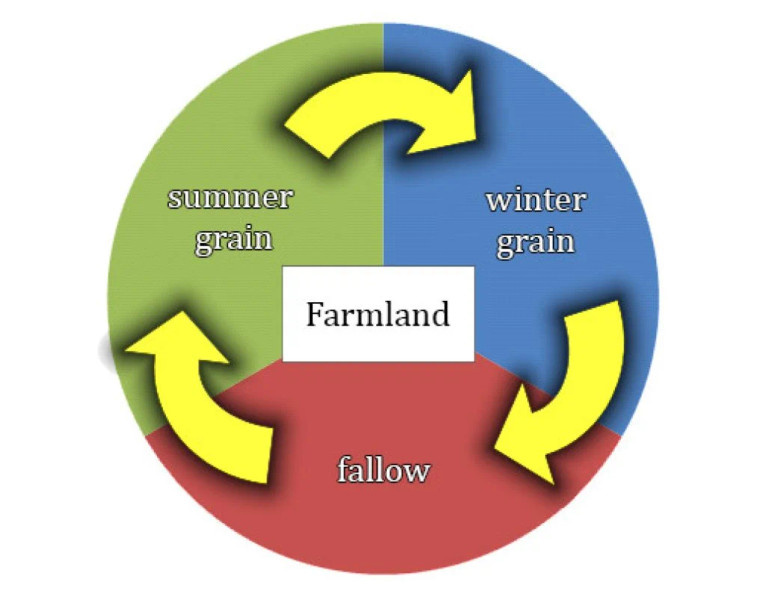
Three-field crop rotation
Major improvements
- Dutch drainage and reclamation created polders, drained land protected from water. Dutch farming was intensive and market-oriented.
- British four-course crop rotation used crops like wheat, turnips, barley, and clover. This cut fallow land, improved soil fertility, fed more animals, and raised yields.
- Enclosure in England combined scattered strips and commons into private farms, often through Parliament. This made experimentation easier but hurt many smallholders and cottagers who lost common rights.
- Jethro Tull developed the seed drill, which planted seeds more efficiently.
- Robert Bakewell used selective breeding to improve livestock.
From there, agricultural change sped up as farmers reduced fallow land, improved planting methods, and reorganized land for more efficient production.
Crops from the Americas
- Potato became especially important in northern, central, and eastern Europe.
- Maize mattered in southern and eastern Europe.
- Both increased calories from the same land and helped support population growth.
More food meant more people. More people meant a larger labor force and more consumers. Agriculture also became more tied to markets, since farmers could now produce more for sale.
How Labor and Production Shifted Beyond Traditional Controls
Older economies were full of restrictions. Guilds controlled entry, quality, methods, and prices. Towns had monopolies and tolls. In the countryside, manorial obligations and serfdom limited mobility.
“Increasingly freed” means these controls were weakened or bypassed, not erased.
The putting-out system
This is the standard example of proto-industrialization.
- A merchant supplied raw materials like wool or flax.
- Rural households spun, wove, or finished the product at home.
- The merchant collected the goods and sold them in wider markets.
Why it spread:
- Merchants got cheaper labor and avoided guild rules.
- Peasant families earned cash alongside farming.
- Women and children did much of this work.
Limits:
- Production was scattered and hard to supervise.
- Quality varied.
- This was not factory production.
Regional contrast
- Western Europe had more tenants, wage earners, and freer labor.
- Eastern Europe kept the second serfdom, even as landlords sold grain on the market.
How Banking, Insurance, and Public Credit Made Growth Possible
As markets expanded, Europe needed better financial tools.
| Institution or practice | What it did | Why it mattered |
|---|---|---|
| Banks | Turned private savings into loans | Financed trade, business, and governments |
| Bills of exchange | Moved credit without hauling specie | Made long-distance trade safer and easier |
| Joint-stock practices | Pooled capital and spread risk | Supported larger ventures |
| Marine insurance | Protected against shipwreck, piracy, damaged cargo | Made merchants more willing to invest |
A standard example is Lloyd’s of London, linked to marine insurance.
Stronger property rights and contract enforcement also mattered. In Britain after the Glorious Revolution, limits on arbitrary royal power made lenders more confident that property would be protected from confiscation and that debts would be respected.
Bank of England
Founded in 1694, the Bank of England pooled private capital and lent it to the state. It helped issue notes, support public credit, and let the government borrow more reliably. That linked finance, state power, war-making, and commercial expansion.
Why This Topic Matters
These developments reinforced one another:
- More food led to population growth
- More people meant more labor and demand
- More rural labor helped expand merchant production
- More trade created more need for credit, banking, and insurance
By 1815, Europe had a deeper market economy, but it was still agrarian, unequal, regulated, and regionally uneven.
Key Takeaways
Market Economy
An economy in which production responds chiefly to prices and demand, with private capital, contracts, credit, wage labor, and commercial exchange allocating resources
Agricultural Revolution
The gradual, uneven adoption of new land use, cultivation, livestock, and farm-management practices that increased agricultural productivity, especially in Britain and the Netherlands
Open-Field System
A village farming system in which peasant households cultivated scattered strips in common fields and shared access to communal grazing and resources
Three-Field Rotation
A traditional rotation in which one field grew winter grain, one grew a spring crop, and one remained fallow to restore fertility
Subsistence Agriculture
Farming chiefly to feed the producing household rather than to sell goods in a market
Polders
Tracts of Dutch land reclaimed from marshes or the sea through dikes, canals, pumps, and drainage
Enclosure
The consolidation of scattered strips and common lands into compact, privately controlled farms, encouraging investment while displacing some customary users
Jethro Tull
English agricultural innovator associated with the seed drill, which planted seeds in regular rows at controlled depths and reduced waste
Robert Bakewell
English agriculturalist who used selective breeding to produce livestock with desired traits such as greater size and rapid weight gain
Commercial Agriculture
Farming organized increasingly for sale in regional, urban, or international markets rather than only for household or village consumption
Craft Guilds
Urban associations that restricted entry into trades and regulated production methods, quality, working conditions, and sometimes prices
Second Serfdom
The continuation or intensification of serfdom in central and eastern Europe, where landlords compelled bound peasants to produce marketable surpluses
Putting-Out System / Domestic System / Cottage Industry
Decentralized production in which merchants supplied raw materials to rural households, paid them for processing goods, and sold the finished products
Proto-Industrialization
The expansion of decentralized manufacturing for distant markets before mechanized factory production
Banks
Institutions that accepted deposits, facilitated payments and currency exchange, made loans, and redirected accumulated savings into investment
Investment Capital / Venture Capital
Accumulated private wealth directed into loans, businesses, trade, government borrowing, or other potentially profitable ventures
Bills of Exchange
Paper credit instruments that enabled merchants to transfer funds over long distances without transporting coin
Insurance
A financial arrangement in which payment of a premium transfers specified commercial risks to an insurer who compensates covered losses
Secure Property Rights
Predictable legal protection of ownership and contracts against arbitrary seizure, encouraging lending, investment, and long-term improvements
Public Credit
A government’s capacity to borrow reliably because lenders trust its taxation, laws, and commitment to repay its debts
Funded Public Debt
Government debt maintained as a continuing national obligation, with investors receiving interest backed by dependable public revenue
Bank of England
A bank founded in 1694 through a private loan to the English government that accepted deposits, issued notes, extended credit, and organized public borrowing
Financial Revolution
The seventeenth- and eighteenth-century expansion of banking, insurance, investment markets, and public credit that mobilized private capital on a larger scale
Crop Rotation
The planned alternation of crops, including turnips and clover, to preserve soil fertility, reduce fallow, support more livestock, and raise agricultural output
Potato
An American crop increasingly cultivated especially in northern, central, and eastern Europe that supplied many calories per acre and grew in soils unsuitable for some grains
Maize
An American crop increasingly cultivated in parts of southern and eastern Europe as food for people and livestock, enlarging the food supply
Notes
Market Economy
An economy in which production responds chiefly to prices and demand, with private capital, contracts, credit, wage labor, and commercial exchange allocating resources
Agricultural Revolution
The gradual, uneven adoption of new land use, cultivation, livestock, and farm-management practices that increased agricultural productivity, especially in Britain and the Netherlands
Open-Field System
A village farming system in which peasant households cultivated scattered strips in common fields and shared access to communal grazing and resources
Three-Field Rotation
A traditional rotation in which one field grew winter grain, one grew a spring crop, and one remained fallow to restore fertility
Subsistence Agriculture
Farming chiefly to feed the producing household rather than to sell goods in a market
Polders
Tracts of Dutch land reclaimed from marshes or the sea through dikes, canals, pumps, and drainage
Enclosure
The consolidation of scattered strips and common lands into compact, privately controlled farms, encouraging investment while displacing some customary users
Jethro Tull
English agricultural innovator associated with the seed drill, which planted seeds in regular rows at controlled depths and reduced waste
Robert Bakewell
English agriculturalist who used selective breeding to produce livestock with desired traits such as greater size and rapid weight gain
Commercial Agriculture
Farming organized increasingly for sale in regional, urban, or international markets rather than only for household or village consumption
Craft Guilds
Urban associations that restricted entry into trades and regulated production methods, quality, working conditions, and sometimes prices
Second Serfdom
The continuation or intensification of serfdom in central and eastern Europe, where landlords compelled bound peasants to produce marketable surpluses
Putting-Out System / Domestic System / Cottage Industry
Decentralized production in which merchants supplied raw materials to rural households, paid them for processing goods, and sold the finished products
Proto-Industrialization
The expansion of decentralized manufacturing for distant markets before mechanized factory production
Banks
Institutions that accepted deposits, facilitated payments and currency exchange, made loans, and redirected accumulated savings into investment
Investment Capital / Venture Capital
Accumulated private wealth directed into loans, businesses, trade, government borrowing, or other potentially profitable ventures
Bills of Exchange
Paper credit instruments that enabled merchants to transfer funds over long distances without transporting coin
Insurance
A financial arrangement in which payment of a premium transfers specified commercial risks to an insurer who compensates covered losses
Secure Property Rights
Predictable legal protection of ownership and contracts against arbitrary seizure, encouraging lending, investment, and long-term improvements
Public Credit
A government’s capacity to borrow reliably because lenders trust its taxation, laws, and commitment to repay its debts
Funded Public Debt
Government debt maintained as a continuing national obligation, with investors receiving interest backed by dependable public revenue
Bank of England
A bank founded in 1694 through a private loan to the English government that accepted deposits, issued notes, extended credit, and organized public borrowing
Financial Revolution
The seventeenth- and eighteenth-century expansion of banking, insurance, investment markets, and public credit that mobilized private capital on a larger scale
Crop Rotation
The planned alternation of crops, including turnips and clover, to preserve soil fertility, reduce fallow, support more livestock, and raise agricultural output
Potato
An American crop increasingly cultivated especially in northern, central, and eastern Europe that supplied many calories per acre and grew in soils unsuitable for some grains
Maize
An American crop increasingly cultivated in parts of southern and eastern Europe as food for people and livestock, enlarging the food supply
