Topic 3.7 Notes – Absolutist Approaches to Power
What Absolutism Was
An absolute monarchy claimed sovereign power without being under a parliament, regional estates, nobles, or an independent church. The ruler claimed the last word on law, taxes, justice, war, diplomacy, the military, and often religion too.
The usual justification was divine right. Kings said their authority came from God, not from the people. Jacques-Bénigne Bossuet gave the classic defense of this idea. He argued that monarchy was sacred and resistance to the king violated God’s order.
That did not mean kings could do anything they wanted. Absolutism is better understood as state-building.
- Monarchs still ran into custom and local privilege.
- They still needed money, and finance was often their biggest weakness.
- They still faced local resistance from provinces, courts, nobles, and towns.
What absolutist rulers tried to build:
- Royal bureaucrats and trained officials who answered to the crown
- Central taxation to fund the state directly
- Standing armies and navies under state control
- Control over courts, provinces, and churches
- Court culture that made nobles depend on the monarch for favor
- Mercantilism, meaning economic regulation for state power
- Weak representative bodies, since assemblies could limit the ruler
The social pattern matters a lot on tests. Monarchs cut down nobles’ independent political power, but they usually protected noble status, privilege, and tax exemptions.
How French Absolutism Worked Under Louis XIV
France got to Louis XIV through earlier Bourbon rulers who had already strengthened the crown.
- Henry IV restored order after the French Wars of Religion.
- The Edict of Nantes gave limited toleration to Huguenots.
- Richelieu under Louis XIII weakened noble and Huguenot political independence.
- Intendants extended royal power into the provinces.
- The Fronde (1648-1653) convinced Louis XIV that nobles and disorder were dangerous.
Louis XIV’s personal rule after 1661 became the textbook example of absolutism, and his image was part of that message.
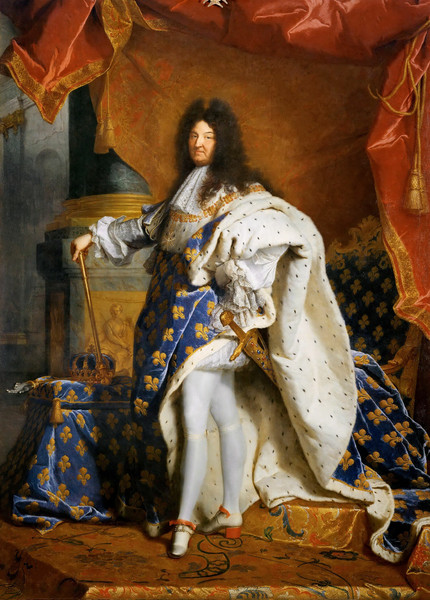
Louis XIV in coronation robes
Versailles and the nobility
Versailles was political theater. Louis drew nobles into court life, where status depended on etiquette, offices, pensions, and access to him. This kept nobles busy competing for favor instead of building independent power.
Administration
Intendants enforced royal policy in the provinces. Louis also relied on councils staffed by trained officials and robe nobility, not just old warrior aristocrats. The Estates-General was not called from 1614 to 1789, which shows how little national representation mattered under French absolutism.
Colbert and mercantilism
Jean-Baptiste Colbert used mercantilism to strengthen the monarchy.
- Tariffs protected French goods
- Royal manufactures increased production
- Infrastructure like roads and canals improved trade
- A stronger navy and chartered companies supported empire and war
The goal was state revenue and military strength, not free markets.
State-controlled military
Louvois helped create a large, disciplined standing army. Officers were often noble, but the army served the state, not private noble armies.
Religious uniformity
In 1685, the Edict of Fontainebleau revoked the Edict of Nantes. Huguenots were persecuted, and many fled France. Louis gained religious uniformity but lost skilled workers.
France came closest to true absolutism, but limits remained. War, debt, noble tax exemptions, and venal offices all kept full centralization from happening.
Other Absolutist Claims and Their Limits
Some rulers sounded absolutist without fully building an absolutist state.
- James I of England defended divine right and royal prerogative, but Parliament, common law, and the local gentry limited him. He matters as a case of absolutist theory without absolutist success.
- Spain under Philip II, III, and IV had strong Catholic monarchy and dynastic authority, but Spain was a composite monarchy. Different regions kept their own laws and privileges.
- Under Philip IV, Olivares tried to centralize burdens.
- Resistance led to the Catalan Revolt and Portugal breaking away.
The pattern is simple. Claiming absolute power was easier than actually centralizing a state. France came closest. England and Spain show the limits.
Russian Absolutism Under Peter and Catherine
Russia took absolutism in a more coercive direction. Peter the Great borrowed Western methods to strengthen autocracy, not to copy constitutional government.
- The Great Embassy (1697-1698) exposed Peter to shipbuilding, military techniques, and technology.
- He expanded the army and built a navy.
- In the Great Northern War, victory at Poltava (1709) and the Treaty of Nystad (1721) made Russia a major Baltic power.
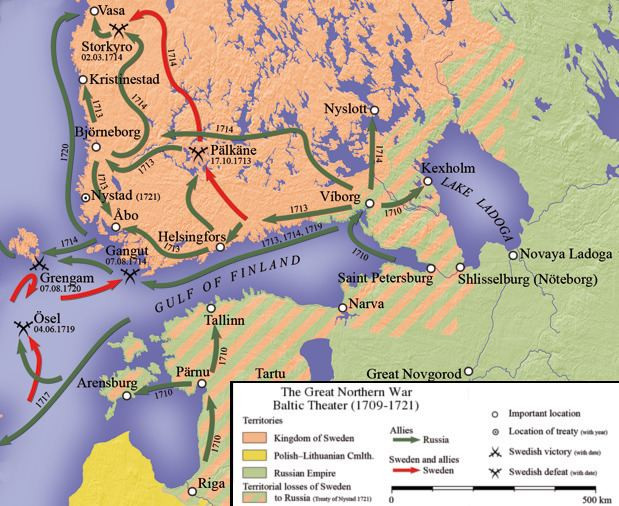
Great Northern War in the Baltic
- The Table of Ranks (1722) tied status to state service.
- The Holy Synod replaced the patriarchate in 1721, putting the Orthodox Church under state control.
- Peter promoted Western-style education through technical schools, foreign experts, and the Russian Academy of Sciences, and he pushed Western fashion on elites through Western dress, including the beard tax.
- St. Petersburg, founded in 1703, symbolized Russia’s “window to the West” and the tsar’s power to force change.
Catherine the Great continued westernization from above. She spoke with Enlightenment thinkers, but she kept autocratic rule. After Pugachev’s Rebellion, she relied more on nobles, and the Charter to the Nobility (1785) confirmed their privileges.
The key connection is the same as in France. The state got stronger, but aristocratic hierarchy stayed in place.
Key Takeaways
Absolutism
Monarchical rule claiming final sovereign authority over law, taxation, justice, the military, foreign policy, and religion without constitutional subordination to representative institutions
Divine Right
Doctrine that monarchs received authority from God, were accountable to God rather than their subjects, and could not legitimately be removed by popular action
Jacques-Bénigne Bossuet
French bishop who defended monarchy as sacred, paternal, absolute, and rational, making resistance to the king contrary to divine political order
Fiscal-Military State
A government organized to collect regular revenue and mobilize the troops, supplies, and administration required for permanent armed forces and sustained warfare
Henry IV
French Bourbon king who restored royal authority after the Wars of Religion and issued the Edict of Nantes in 1598
Edict of Nantes
Henry IV's 1598 decree granting limited rights to French Huguenots while preserving Catholicism as France's established religion
Duke of Sully
Henry IV's chief minister, who promoted agriculture and infrastructure and restored French royal finances after the Wars of Religion
Venality of Office
The sale and inheritance of government offices, which tied wealthy officeholders to the crown but limited royal control by making offices private property
Nobles of the Robe vs. Nobles of the Sword
The robe nobility gained status through judicial or administrative office, whereas the older sword nobility derived status from hereditary landholding and military tradition
Cardinal Richelieu
Louis XIII's chief minister, who weakened fortified Huguenot and noble power and expanded royal administration through intendants
Intendants
Crown-appointed French commissioners who supervised provincial justice, policing, finance, taxation, and administration while monitoring local institutions and hereditary nobles
The Fronde
Revolts of 1648–1653 in which magistrates and nobles challenged royal fiscal and administrative policies, ultimately failing and shaping Louis XIV's distrust of independent elites
French Parlements
Sovereign law courts, including the Parlement of Paris, that registered royal edicts but were not representative legislatures like the English Parliament
Louis XIV (The Sun King)
French king whose personal rule from 1661 to 1715 expanded royal control over administration, finance, the military, religion, and elite politics
Versailles
Louis XIV's palace and governmental center, where court ritual, patronage, and competition for royal favor made ambitious nobles politically dependent on the king
Estates-General
France's representative assembly of clergy, nobility, and the Third Estate, which the monarchy did not summon between 1614 and 1789
Jean-Baptiste Colbert
Louis XIV's controller-general of finances who used mercantilist regulation, manufacturing, infrastructure, commerce, and naval expansion to strengthen the French state
Mercantilism
State-directed economic policy seeking greater exports, fewer imports, accumulated bullion, protected manufacturing, and expanded commerce to increase national power and revenue
Marquis de Louvois
Louis XIV's war minister, who improved French military recruitment, supply, discipline, promotion, uniforms, barracks, and recordkeeping
Edict of Fontainebleau
Louis XIV's 1685 decree revoking the Edict of Nantes, outlawing Protestant worship and prompting approximately 150,000 to 200,000 Huguenots to flee France
James I
English king from 1603 to 1625 who asserted divine-right monarchy and broad prerogative but remained constrained by Parliament, common-law courts, and financial dependence
Royal Prerogative
The sphere in which an English monarch claimed authority to act without prior parliamentary authorization
Philip II
Spanish Habsburg king who governed from Madrid through royal councils and defended Catholic uniformity, but ruled territories retaining distinct laws and privileges
Composite Monarchy
A monarchy consisting of multiple territories that shared a ruler while retaining distinct laws, privileges, and political institutions
Philip III
Spanish king from 1598 to 1621 who delegated substantial authority to royal favorites, illustrating the monarchy's reliance on intermediaries
Philip IV
Spanish king from 1621 to 1665 whose efforts to centralize military and fiscal burdens under Olivares provoked major regional resistance
Validos
Royal favorites to whom Spanish Habsburg kings delegated substantial governing authority
Count-Duke of Olivares
Philip IV's valido who attempted to distribute Spain's military and financial burdens more evenly, provoking resistance including revolt in Catalonia and Portugal
Peter the Great
Russian tsar who used coercive westernization to reorganize the military, bureaucracy, church, education, economy, and elite culture while strengthening autocracy
Russian Westernization
State-directed adoption of selected Western military, administrative, scientific, industrial, educational, and elite cultural practices to strengthen Russian autocracy
Great Embassy
Peter the Great's 1697–1698 journey through Western Europe to study technology, shipbuilding, military organization, and commerce and recruit foreign specialists
Great Northern War
War of 1700–1721 in which Peter modernized Russia's forces, defeated Sweden, gained eastern Baltic territory, and established Russia as a major European power
St. Petersburg
Peter's western-style Baltic capital, founded in 1703 and built through state coercion to serve as Russia's window to the West
Table of Ranks
Peter's 1722 system dividing military, civil, and court service into fourteen grades and linking noble status and advancement to service to the tsar
Service Nobility
A privileged landholding nobility expected to earn rank and advancement through military or administrative service to the ruler
Holy Synod
Church governing body created by Peter in 1721 to replace the Moscow patriarchate and place the Russian Orthodox Church under secular state supervision
Russian Academy of Sciences
State-sponsored scientific institution founded by Peter in 1724 to transfer Western scientific learning into Russia
Catherine II (Catherine the Great)
Russian empress from 1762 to 1796 who continued westernization and administrative expansion while preserving autocracy and relying on a privileged nobility
Legislative Commission
Consultative body summoned by Catherine in 1767 to consider legal reform but which failed to produce a new Russian law code
Pugachev Rebellion
Massive Cossack and peasant uprising of 1773–1775 after which Catherine relied more heavily on nobles to preserve order
Charter to the Nobility
Catherine's 1785 charter confirming Russian nobles' corporate status and privileges, including exemption from compulsory state service and corporal punishment
Notes
Absolutism
Monarchical rule claiming final sovereign authority over law, taxation, justice, the military, foreign policy, and religion without constitutional subordination to representative institutions
Divine Right
Doctrine that monarchs received authority from God, were accountable to God rather than their subjects, and could not legitimately be removed by popular action
Jacques-Bénigne Bossuet
French bishop who defended monarchy as sacred, paternal, absolute, and rational, making resistance to the king contrary to divine political order
Fiscal-Military State
A government organized to collect regular revenue and mobilize the troops, supplies, and administration required for permanent armed forces and sustained warfare
Henry IV
French Bourbon king who restored royal authority after the Wars of Religion and issued the Edict of Nantes in 1598
Edict of Nantes
Henry IV's 1598 decree granting limited rights to French Huguenots while preserving Catholicism as France's established religion
Duke of Sully
Henry IV's chief minister, who promoted agriculture and infrastructure and restored French royal finances after the Wars of Religion
Venality of Office
The sale and inheritance of government offices, which tied wealthy officeholders to the crown but limited royal control by making offices private property
Nobles of the Robe vs. Nobles of the Sword
The robe nobility gained status through judicial or administrative office, whereas the older sword nobility derived status from hereditary landholding and military tradition
Cardinal Richelieu
Louis XIII's chief minister, who weakened fortified Huguenot and noble power and expanded royal administration through intendants
Intendants
Crown-appointed French commissioners who supervised provincial justice, policing, finance, taxation, and administration while monitoring local institutions and hereditary nobles
The Fronde
Revolts of 1648–1653 in which magistrates and nobles challenged royal fiscal and administrative policies, ultimately failing and shaping Louis XIV's distrust of independent elites
French Parlements
Sovereign law courts, including the Parlement of Paris, that registered royal edicts but were not representative legislatures like the English Parliament
Louis XIV (The Sun King)
French king whose personal rule from 1661 to 1715 expanded royal control over administration, finance, the military, religion, and elite politics
Versailles
Louis XIV's palace and governmental center, where court ritual, patronage, and competition for royal favor made ambitious nobles politically dependent on the king
Estates-General
France's representative assembly of clergy, nobility, and the Third Estate, which the monarchy did not summon between 1614 and 1789
Jean-Baptiste Colbert
Louis XIV's controller-general of finances who used mercantilist regulation, manufacturing, infrastructure, commerce, and naval expansion to strengthen the French state
Mercantilism
State-directed economic policy seeking greater exports, fewer imports, accumulated bullion, protected manufacturing, and expanded commerce to increase national power and revenue
Marquis de Louvois
Louis XIV's war minister, who improved French military recruitment, supply, discipline, promotion, uniforms, barracks, and recordkeeping
Edict of Fontainebleau
Louis XIV's 1685 decree revoking the Edict of Nantes, outlawing Protestant worship and prompting approximately 150,000 to 200,000 Huguenots to flee France
James I
English king from 1603 to 1625 who asserted divine-right monarchy and broad prerogative but remained constrained by Parliament, common-law courts, and financial dependence
Royal Prerogative
The sphere in which an English monarch claimed authority to act without prior parliamentary authorization
Philip II
Spanish Habsburg king who governed from Madrid through royal councils and defended Catholic uniformity, but ruled territories retaining distinct laws and privileges
Composite Monarchy
A monarchy consisting of multiple territories that shared a ruler while retaining distinct laws, privileges, and political institutions
Philip III
Spanish king from 1598 to 1621 who delegated substantial authority to royal favorites, illustrating the monarchy's reliance on intermediaries
Philip IV
Spanish king from 1621 to 1665 whose efforts to centralize military and fiscal burdens under Olivares provoked major regional resistance
Validos
Royal favorites to whom Spanish Habsburg kings delegated substantial governing authority
Count-Duke of Olivares
Philip IV's valido who attempted to distribute Spain's military and financial burdens more evenly, provoking resistance including revolt in Catalonia and Portugal
Peter the Great
Russian tsar who used coercive westernization to reorganize the military, bureaucracy, church, education, economy, and elite culture while strengthening autocracy
Russian Westernization
State-directed adoption of selected Western military, administrative, scientific, industrial, educational, and elite cultural practices to strengthen Russian autocracy
Great Embassy
Peter the Great's 1697–1698 journey through Western Europe to study technology, shipbuilding, military organization, and commerce and recruit foreign specialists
Great Northern War
War of 1700–1721 in which Peter modernized Russia's forces, defeated Sweden, gained eastern Baltic territory, and established Russia as a major European power
St. Petersburg
Peter's western-style Baltic capital, founded in 1703 and built through state coercion to serve as Russia's window to the West
Table of Ranks
Peter's 1722 system dividing military, civil, and court service into fourteen grades and linking noble status and advancement to service to the tsar
Service Nobility
A privileged landholding nobility expected to earn rank and advancement through military or administrative service to the ruler
Holy Synod
Church governing body created by Peter in 1721 to replace the Moscow patriarchate and place the Russian Orthodox Church under secular state supervision
Russian Academy of Sciences
State-sponsored scientific institution founded by Peter in 1724 to transfer Western scientific learning into Russia
Catherine II (Catherine the Great)
Russian empress from 1762 to 1796 who continued westernization and administrative expansion while preserving autocracy and relying on a privileged nobility
Legislative Commission
Consultative body summoned by Catherine in 1767 to consider legal reform but which failed to produce a new Russian law code
Pugachev Rebellion
Massive Cossack and peasant uprising of 1773–1775 after which Catherine relied more heavily on nobles to preserve order
Charter to the Nobility
Catherine's 1785 charter confirming Russian nobles' corporate status and privileges, including exemption from compulsory state service and corporal punishment
