Topic 1.1 Notes – Contextualizing Renaissance and Discovery
Europe Around 1450 Was a Mix of Change and Continuity
You want to picture Europe in 1450 as both old and new at once. It was not medieval in exactly the same way as 1200, and it was not yet the Europe of strong nation-states, science, and global empires.
- Christianity still shaped daily life, education, politics, and morality. People understood the world through a Christian framework.
- Most people were peasants living in villages and working agriculture. Seasons, harvests, rent, and local obligations mattered more than ideas from Florence.
- Social hierarchy stayed strong. Nobles, clergy, peasants, merchants, artisans, and the urban poor all had unequal status and different privileges.
- Political authority was layered. Kings did not rule alone. Nobles, towns, representative bodies, and the church all held power too.
That mixed setting is the key pattern. The Renaissance and overseas exploration did not suddenly replace the Middle Ages. They grew out of this world.
Classical Learning Changed Scholarship, Values, and Art
The Renaissance began with a stronger revival of classical learning, meaning Greek and Roman texts were recovered, studied in original languages, and compared carefully.
Humanism
The main intellectual movement was humanism. Humanists studied the studia humanitatis:
- Rhetoric for persuasive speaking and writing
- History for understanding human actions over time
- Moral philosophy for how to live well
- Poetry and classical literature for style and wisdom
Humanists cared about eloquence, civic participation, and moral judgment. They usually did not reject Christianity. Many thought classical learning could strengthen Christian life.
Philology
Humanists also used philology, close study of language and texts. The classic example is Lorenzo Valla, who proved the Donation of Constantine was a forgery by showing its Latin came from a later period. That mattered because it showed scholarship could challenge accepted authority.
New values and observation
This revival encouraged:
- Individualism: more attention to talent, fame, and achievement
- Secularism: more interest in politics, status, and worldly life, even inside a religious society
- Observation of nature: artists and scholars increasingly studied the human body and natural world directly instead of relying only on inherited authorities
That habit of observation helped prepare the way for later science.
Renaissance art
Renaissance art put these ideas into visible form:
- Naturalism and realistic human bodies
- Proportion and balance
- Emotion and individuality
- Perspective to create depth
- Classical influence from Greece and Rome
Art also served goals beyond beauty. It showed power, devotion, wealth, and legitimacy.
| Patron | Why they sponsored art |
|---|---|
| Medici family in Florence | displayed wealth, status, and political influence |
| City governments | expressed civic pride and authority |
| Princes and monarchs | linked themselves to glory and prestige |
| Popes in Rome | promoted Christian authority and papal power |
Know Leonardo da Vinci and Michelangelo as major Renaissance examples. Raphael's School of Athens is another classic image of Renaissance ideals, especially classical learning, naturalistic figures, and linear perspective.
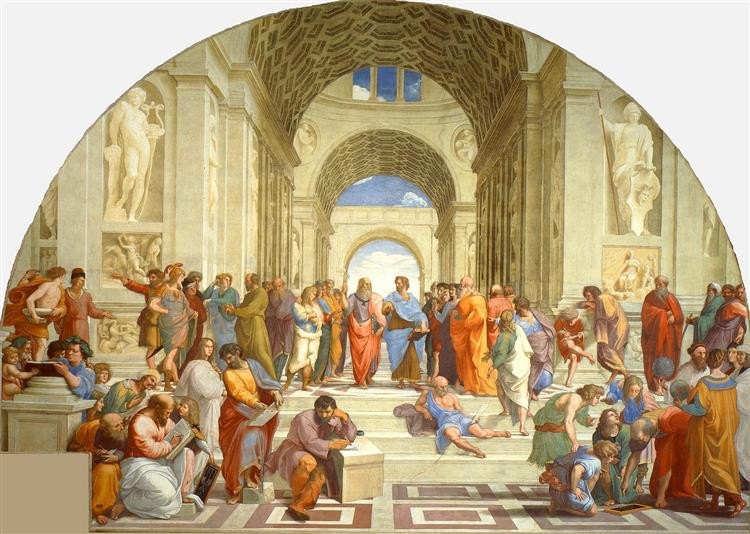
Raphael, School of Athens
Commercial Growth Expanded but Agrarian Hierarchy Stayed Strong
Economic change was real, but it did not erase the old rural order.
- Commercial capitalism meant more trade, banking, credit, private investment, and profit-seeking.
- This was especially strong in Italian city-states and northern Europe.
- Merchants and bankers gained wealth and influence. The Medici are the standard example because they were both bankers and patrons.
- Agricultural capitalism began to appear too. Some land was worked for market sale and profit, not just subsistence.
At the same time:
- Most Europeans still farmed for a living
- The village and manor still organized rural life
- Nobles still drew power from land and inherited privilege
New elites rose, especially merchants, lawyers, and royal officials. Old nobles stayed important, and new wealth often blended into old privilege through land purchases and marriage. On tests, this usually shows up as change plus continuity, not one replacing the other.
Stronger States and Overseas Exploration Grew Together
As commerce grew, some rulers tried to build stronger states. Sovereignty meant claiming supreme authority in a territory. Political centralization meant tighter control over taxes, courts, armies, and officials.
- France, England, Castile, and Aragon moved toward stronger monarchy
- Italy and the Holy Roman Empire stayed fragmented
- Rulers increasingly used secular law and Roman law traditions to govern
Italian rivalry also encouraged practical thinking about politics, which later connects to Machiavelli.
Exploration came from several motives working together:
- Commercial: direct access to spices, gold, and luxury goods; bypass middlemen
- Religious: spread Christianity, find allies, continue struggle against non-Christian powers
- Political: prestige, territory, tax revenue, and rivalry with other states
Geography mattered here.
- The Ottoman conquest of Constantinople in 1453 changed eastern trade conditions, though trade did continue.
- Italian city-states dominated Mediterranean commerce.
- Portugal and Spain faced the Atlantic, which made oceanic expansion easier.
Know these examples. The map traces the Portuguese route down Africa and across the Indian Ocean, alongside the Spanish westward Atlantic route.
- Prince Henry the Navigator backed Portuguese exploration.
- Ferdinand and Isabella unified Spain enough to support expansion.
- Columbus, 1492 sailed west for Spain.
- Vasco da Gama reached India by sailing around Africa.
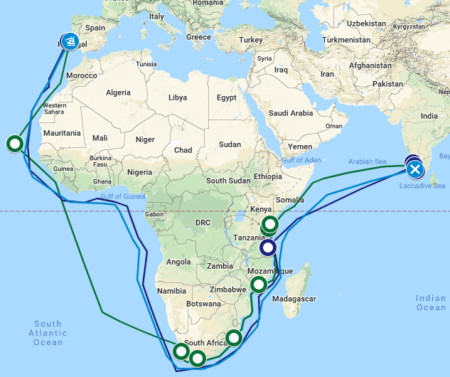
Portuguese and Spanish exploration routes
How Renaissance and Discovery Connect
These were not separate stories.
- Commercial wealth paid for artists, scholars, governments, and voyages.
- Political competition pushed rulers to sponsor both patronage and exploration.
- Classical learning and observation encouraged new ways of studying texts, people, and the physical world.
- Stronger states had the money and administration to fund expansion.
- Religion linked both movements. Renaissance art often served Christian purposes, and exploration often mixed profit with missionary goals.
The biggest idea in this topic is simple. The Renaissance and Age of Discovery came from the same Europe, a Europe changing fast but still carrying strong medieval structures.
Key Takeaways
Early Modern Era
The transitional period between medieval Europe and the modern industrial and political age, beginning around 1450
Revival of Classical Learning
Renewed study of Greek and Roman texts in their original languages as models for education, ethics, politics, rhetoric, and art
Humanism
A Renaissance educational and scholarly movement centered on classical language, history, moral philosophy, rhetoric, poetry, and literature
Studia Humanitatis (Humanities)
The humanist curriculum of grammar, rhetoric, poetry, history, and moral philosophy based largely on classical texts
Philology
Critical study of a text’s language, manuscript variations, and historical setting to determine its meaning and authenticity
Individualism
Renaissance interest in distinctive personalities, talents, reputations, and achievements, especially among educated and elite people
Secularism
Heightened attention to worldly life, politics, wealth, reputation, and human affairs without necessarily rejecting religion
Patronage
The commissioning and financing of art or scholarship by individuals or institutions for personal, political, civic, or religious purposes
Capitalism
Economic activity organized around private investment, profit, markets, credit, and the accumulation of capital
Commercial Capitalism
Profit-oriented economic activity based on merchants, trade, banking, finance, credit, and urban markets
Agricultural Capitalism
The production of crops or livestock for market sale and profit rather than solely for household or local subsistence
Subsistence Agriculture
Farming in which households produce primarily for their own use and local obligations rather than for market profit
Manor
A landed estate and system of obligations connecting peasants and landlords through rents, dues, or labor services
Sovereignty
Supreme political authority within a territory, increasingly claimed by kings and princes over rival local and institutional powers
Political Centralization
The process by which rulers placed taxation, justice, administration, and military power more consistently under central government control
Composite State (Composite Monarchy)
A state whose ruler governed multiple territories that retained different laws, privileges, languages, and institutions
Sovereign State
A territorially based state claiming authority over law and government independently of competing universal powers such as pope or emperor
Secular Systems of Law
Legal systems based increasingly on state authority, territorial jurisdiction, public order, and practical governance rather than solely on church authority
Age of Discovery
The period of sustained European maritime exploration, conquest, settlement, and commercial expansion beginning in the late fifteenth century
Contextualization
Identify a broader historical condition, describe it with specific evidence, and connect it directly to the development being explained
Notes
Early Modern Era
The transitional period between medieval Europe and the modern industrial and political age, beginning around 1450
Revival of Classical Learning
Renewed study of Greek and Roman texts in their original languages as models for education, ethics, politics, rhetoric, and art
Humanism
A Renaissance educational and scholarly movement centered on classical language, history, moral philosophy, rhetoric, poetry, and literature
Studia Humanitatis (Humanities)
The humanist curriculum of grammar, rhetoric, poetry, history, and moral philosophy based largely on classical texts
Philology
Critical study of a text’s language, manuscript variations, and historical setting to determine its meaning and authenticity
Individualism
Renaissance interest in distinctive personalities, talents, reputations, and achievements, especially among educated and elite people
Secularism
Heightened attention to worldly life, politics, wealth, reputation, and human affairs without necessarily rejecting religion
Patronage
The commissioning and financing of art or scholarship by individuals or institutions for personal, political, civic, or religious purposes
Capitalism
Economic activity organized around private investment, profit, markets, credit, and the accumulation of capital
Commercial Capitalism
Profit-oriented economic activity based on merchants, trade, banking, finance, credit, and urban markets
Agricultural Capitalism
The production of crops or livestock for market sale and profit rather than solely for household or local subsistence
Subsistence Agriculture
Farming in which households produce primarily for their own use and local obligations rather than for market profit
Manor
A landed estate and system of obligations connecting peasants and landlords through rents, dues, or labor services
Sovereignty
Supreme political authority within a territory, increasingly claimed by kings and princes over rival local and institutional powers
Political Centralization
The process by which rulers placed taxation, justice, administration, and military power more consistently under central government control
Composite State (Composite Monarchy)
A state whose ruler governed multiple territories that retained different laws, privileges, languages, and institutions
Sovereign State
A territorially based state claiming authority over law and government independently of competing universal powers such as pope or emperor
Secular Systems of Law
Legal systems based increasingly on state authority, territorial jurisdiction, public order, and practical governance rather than solely on church authority
Age of Discovery
The period of sustained European maritime exploration, conquest, settlement, and commercial expansion beginning in the late fifteenth century
Contextualization
Identify a broader historical condition, describe it with specific evidence, and connect it directly to the development being explained
