Topic 6.9 Notes – Institutional Responses and Reform
How Industrialization Expanded the State
Industrialization packed huge numbers of people into cities faster than housing, water, sewers, and policing could keep up. Private charity and laissez-faire ideas worked poorly against problems that were collective, like epidemics or unsafe neighborhoods.
- Urban problems piled up together:
- overcrowding and unsafe housing
- polluted water and weak sewage systems
- disease like cholera and typhoid
- crime, unrest, and fear of radical politics
Liberalism changed
Early classical liberalism trusted limited government, free markets, private contract, and laissez-faire. That made sense when liberals were fighting old aristocratic controls. In industrial cities, though, “freedom” looked different. Workers had weak bargaining power, children stayed uneducated, and disease spread across class lines.
New liberalism argued that freedom required state help removing barriers like ignorance, illness, and extreme poverty. T. H. Green is the key thinker here. He argued that real liberty meant the ability to actually live freely, not just freedom from government interference.
Conservatives could support reform too. They often wanted stability more than equality.
Bismarck’s example
Bismarck showed how reform could come from above to protect the state.
- 1883 sickness insurance
- 1884 accident insurance
- 1889 old-age and disability insurance
He was not becoming a socialist. He wanted workers loyal to the German Empire and less attracted to socialism.
The larger pattern
This is the rise of the modern administrative state. Governments gathered data, hired experts, created boards, enforced rules, raised taxes, and delivered services people used every day.
Urban Reform and Public Health
Public health reform usually followed the same path. Someone investigated conditions, the public got alarmed, lawmakers passed acts, and then a bureaucracy enforced them for years.
A famous example is John Snow’s map of the 1854 cholera outbreak in London, which helped connect disease to a contaminated water source rather than vague bad air.
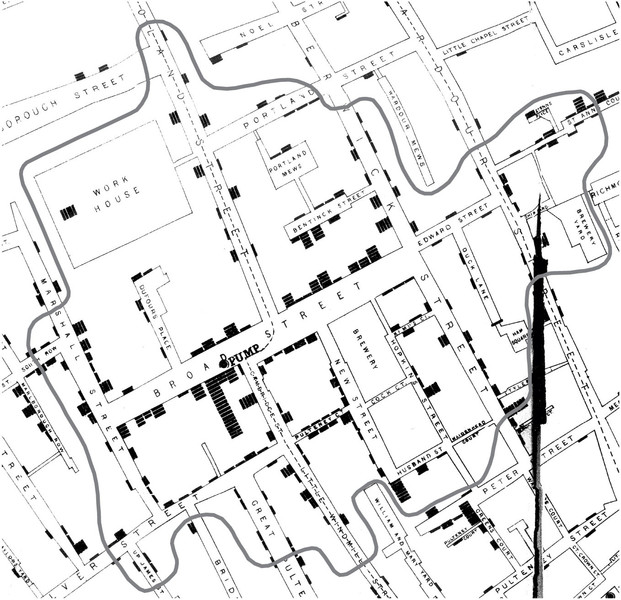
John Snow’s map of the 1854 Broad Street cholera outbreak
Industrial cities had contaminated water, piled-up waste, and overcrowded housing. Miasma theory blamed bad air, which was scientifically wrong, but it still pushed useful sanitation work like cleaning streets and building sewers. Later germ theory gave stronger scientific support.
Edwin Chadwick and Britain
Edwin Chadwick used statistics and investigation in his 1842 Report on the Sanitary Condition of the Labouring Population to connect disease to environment. He pushed for drainage, sewers, clean water, and centralized oversight.
British examples you should know:
- Public Health Act of 1848 created a national framework for local health boards.
- John Snow linked cholera to contaminated water in the 1854 Broad Street pump case.
- The Great Stink of 1858 forced Parliament to act when sewage in the Thames became unbearable.
- Joseph Bazalgette built London’s major sewer system.
- Public Health Act of 1875 strengthened and expanded sanitation duties.
- Housing of the Working Classes Act of 1890 let local authorities clear unhealthy housing and build better housing.
Urban modernization also included public lighting, paved streets, waste collection, trams, railways, undergrounds, parks, and slum clearance. Municipal socialism meant local governments owned or regulated services like water, gas, electricity, and transit.
Haussmannization and the Remaking of Cities
Paris became the clearest example of urban redesign used for both improvement and control. A contemporary map makes the change easy to spot, with the new boulevards cutting across the older street pattern.
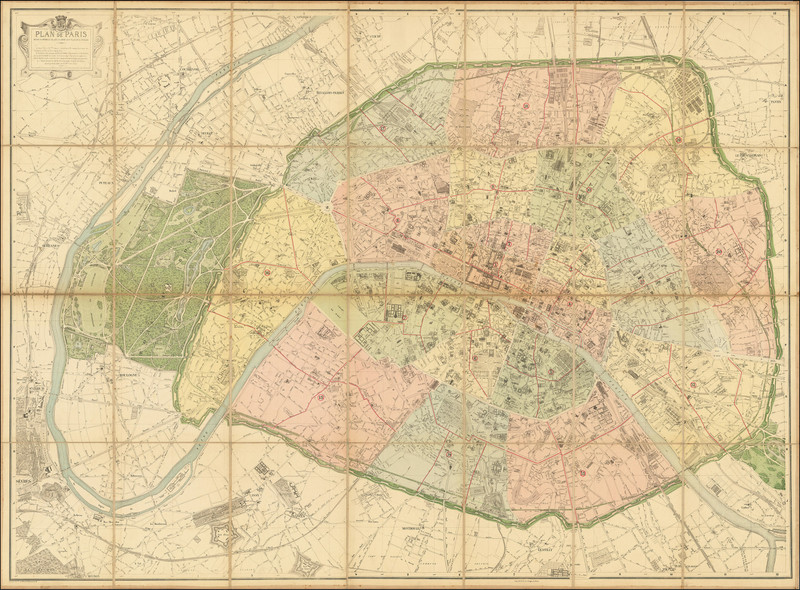
Haussmann-era map of Paris
Under Georges Haussmann, working for Napoleon III from 1853 to 1870, Paris got:
- broad boulevards instead of narrow medieval streets
- expanded sewer and water systems
- gas lighting
- parks like Bois de Boulogne and Bois de Vincennes
- uniform building façades
- stronger links between rail stations, commercial centers, and government buildings
The motives came together. These changes improved sanitation and traffic, supported business, showed imperial grandeur, and made revolt harder by preventing barricades and helping troop movement.
The costs mattered too:
- poor residents were displaced
- rents rose
- class segregation increased
- critics attacked the debt and authoritarian planning
Police, Prisons, and Schools as Tools of Order
States answered industrial change with institutions that shaped behavior, not just infrastructure.
Police
The Metropolitan Police Act of 1829 created London’s modern police force under Robert Peel. “Bobbies” or “Peelers” used preventive patrols, uniforms, defined jurisdictions, and bureaucracy. Governments wanted safety, but they also wanted to watch strikes, riots, and radical politics.
Prisons
Older prisons were overcrowded and corrupt. Elizabeth Fry pushed reform, especially for women prisoners. New prisons emphasized sanitation, classification, religious instruction, and rehabilitation. Pentonville Prison used the separate system, isolating prisoners. The humanitarian language was real, but the discipline could be harsh.
Schools
Compulsory education served three linked goals: order, nationalism, and economic growth.
- schools taught punctuality, obedience, literacy, numeracy, and civic loyalty
- they spread a national language and identity
- they prepared workers and officials for industrial society
Prussia was an early model. In Britain, the Elementary Education Act of 1870, compulsory attendance in 1880, and free elementary schooling in 1891 expanded access. In France, the Ferry laws made primary education free in 1881 and compulsory and secular in 1882, which weakened Church control.
Why Reform Happened and Why It Matters
Reform came from pressure below and action above. Journalists, doctors, engineers, statisticians, philanthropists, labor movements, and political parties exposed urban misery and demanded change. Epidemics and slum reports shaped public opinion fast.
Motives overlapped:
- humanitarian concern
- public health
- economic efficiency
- nationalism
- fear of socialism and revolution
- stronger administrative control
Reforms stayed uneven. Wealthier areas often got benefits first, taxes and regulations faced resistance, slum clearance did not guarantee affordable housing, and schools could suppress regional languages and religious traditions.
The main pattern is the one AP Euro cares about most. Industrialization helped create a state that protected people more, but also reached further into everyday life.
Key Takeaways
Administrative State
A state that gathers information, employs experts, enforces regulations, and provides continuing public services through specialized agencies
Laissez-Faire
The principle that government should interfere as little as possible in markets, contracts, and individual economic activity
New Liberalism
Later nineteenth-century liberalism holding that sanitation, education, and limited welfare could increase people’s practical capacity to exercise freedom
Bismarck’s Social Insurance Legislation
German sickness, accident, old-age, and disability insurance enacted in 1883–1889 to protect workers, build loyalty, and weaken socialism
Sanitary Reform
Government action to combat urban disease through clean water, sewers, drainage, street cleaning, ventilation, and waste removal
Miasma Theory
The incorrect belief that foul-smelling air from decaying matter caused disease; it nevertheless encouraged cleaning, drainage, and sewer construction
Public Health Act of 1848
British law that created a General Board of Health and permitted local health boards, though much local action remained optional
Public Health Act of 1875
British law requiring local authorities to address drainage, sewage, water supplies, street cleaning, and housing conditions
John Snow’s Broad Street Pump Investigation
Snow’s 1854 tracing of a London cholera outbreak to a contaminated water pump, providing evidence that cholera spread through water
Great Stink of 1858
The intolerable odor of sewage in London’s Thames that prompted political action and the sewer network designed under Joseph Bazalgette
Housing Reform
Government regulation of construction, condemnation of unsafe buildings, slum clearance, and eventual authorization of public housing
Housing of the Working Classes Act of 1890
British law empowering local authorities to clear unhealthy districts and construct working-class housing
Municipal Socialism
Local government ownership or regulation of essential services such as water, gas, electricity, and transportation
Modern Police Forces
Permanent, salaried, trained, and bureaucratically supervised forces using regular patrols to prevent crime, enforce regulations, and monitor disorder
Prison Reform
The nineteenth-century effort to replace arbitrary, unhealthy confinement with regulated penitentiaries emphasizing classification, discipline, moral reform, and rehabilitation
Elizabeth Fry
British prison reformer who promoted sanitation, education, religious instruction, prisoner classification, and protection from abuse, especially at Newgate
Separate System
A penitentiary method that isolated prisoners to prevent mutual corruption and encourage reflection and penitence
Compulsory Public Education
Tax-supported required elementary schooling intended to promote public order, national identity, literacy, and economic productivity
Elementary Education Act of 1870
British law creating elected school boards to provide elementary schools where voluntary education was inadequate
Ferry Laws
French laws that made primary education free in 1881 and compulsory and secular in 1882 under the Third Republic
Edwin Chadwick
British utilitarian administrator who promoted centralized sanitation, clean water, sewers, and waste removal as cheaper ways to prevent disease and poverty
Report on the Sanitary Condition of the Labouring Population of Great Britain (1842)
Chadwick’s statistical report linking high mortality among workers to overcrowding, contaminated water, and inadequate drainage
Modern Urban Infrastructure
Publicly supported water, sewage, lighting, roads, transportation, waste collection, and parks that made expanding industrial cities healthier and more functional
Haussmann’s Reconstruction of Paris (Haussmannization)
Napoleon III’s 1853–1870 rebuilding of Paris under Haussmann with boulevards, utilities, parks, and uniform buildings, modernizing the city while aiding state control and displacing poorer residents
Metropolitan Police Act of 1829
British law associated with Robert Peel that created London’s salaried, uniformed civilian police to prevent crime through regular patrols
Notes
Administrative State
A state that gathers information, employs experts, enforces regulations, and provides continuing public services through specialized agencies
Laissez-Faire
The principle that government should interfere as little as possible in markets, contracts, and individual economic activity
New Liberalism
Later nineteenth-century liberalism holding that sanitation, education, and limited welfare could increase people’s practical capacity to exercise freedom
Bismarck’s Social Insurance Legislation
German sickness, accident, old-age, and disability insurance enacted in 1883–1889 to protect workers, build loyalty, and weaken socialism
Sanitary Reform
Government action to combat urban disease through clean water, sewers, drainage, street cleaning, ventilation, and waste removal
Miasma Theory
The incorrect belief that foul-smelling air from decaying matter caused disease; it nevertheless encouraged cleaning, drainage, and sewer construction
Public Health Act of 1848
British law that created a General Board of Health and permitted local health boards, though much local action remained optional
Public Health Act of 1875
British law requiring local authorities to address drainage, sewage, water supplies, street cleaning, and housing conditions
John Snow’s Broad Street Pump Investigation
Snow’s 1854 tracing of a London cholera outbreak to a contaminated water pump, providing evidence that cholera spread through water
Great Stink of 1858
The intolerable odor of sewage in London’s Thames that prompted political action and the sewer network designed under Joseph Bazalgette
Housing Reform
Government regulation of construction, condemnation of unsafe buildings, slum clearance, and eventual authorization of public housing
Housing of the Working Classes Act of 1890
British law empowering local authorities to clear unhealthy districts and construct working-class housing
Municipal Socialism
Local government ownership or regulation of essential services such as water, gas, electricity, and transportation
Modern Police Forces
Permanent, salaried, trained, and bureaucratically supervised forces using regular patrols to prevent crime, enforce regulations, and monitor disorder
Prison Reform
The nineteenth-century effort to replace arbitrary, unhealthy confinement with regulated penitentiaries emphasizing classification, discipline, moral reform, and rehabilitation
Elizabeth Fry
British prison reformer who promoted sanitation, education, religious instruction, prisoner classification, and protection from abuse, especially at Newgate
Separate System
A penitentiary method that isolated prisoners to prevent mutual corruption and encourage reflection and penitence
Compulsory Public Education
Tax-supported required elementary schooling intended to promote public order, national identity, literacy, and economic productivity
Elementary Education Act of 1870
British law creating elected school boards to provide elementary schools where voluntary education was inadequate
Ferry Laws
French laws that made primary education free in 1881 and compulsory and secular in 1882 under the Third Republic
Edwin Chadwick
British utilitarian administrator who promoted centralized sanitation, clean water, sewers, and waste removal as cheaper ways to prevent disease and poverty
Report on the Sanitary Condition of the Labouring Population of Great Britain (1842)
Chadwick’s statistical report linking high mortality among workers to overcrowding, contaminated water, and inadequate drainage
Modern Urban Infrastructure
Publicly supported water, sewage, lighting, roads, transportation, waste collection, and parks that made expanding industrial cities healthier and more functional
Haussmann’s Reconstruction of Paris (Haussmannization)
Napoleon III’s 1853–1870 rebuilding of Paris under Haussmann with boulevards, utilities, parks, and uniform buildings, modernizing the city while aiding state control and displacing poorer residents
Metropolitan Police Act of 1829
British law associated with Robert Peel that created London’s salaried, uniformed civilian police to prevent crime through regular patrols
