Topic 9.5 Notes – Postwar Nationalism, Ethnic Conflict, and Atrocities
What Postwar Nationalism and Ethnic Conflict Were
Nationalism means a people who see themselves as a nation should have political unity, sovereignty, or self-government. After World War II, that idea kept mattering even as Western Europe moved toward integration.
A few distinctions matter a lot here:
- Ethnic nationalism defines the nation through ancestry, language, religion, and shared historical memory.
- Civic nationalism defines the nation through citizenship and political participation.
- Separatism means trying to leave an existing state and form a new one. That is one form of nationalism, not all nationalism.
- Autonomy, devolution, and federalism are ways states can ease nationalist pressure without breaking apart.
- autonomy = a region controls some internal affairs
- devolution = the central government transfers powers downward
- federalism = power is constitutionally divided between national and regional governments
- Irredentism means claiming land outside your state because your nation sees it as historically or ethnically theirs.
The exam loves this distinction. Nationalism did not always lead to violence. It could end in compromise, elections, terrorism, civil war, or genocide.
Why Nationalism Turned Violent After World War II
Europe’s borders did not neatly match where ethnic groups actually lived, so minorities were stuck inside states dominated by others. During the Cold War, communist regimes often froze these tensions through repression instead of solving them. After 1989, that lid came off.
A map of central and southeastern Europe helps you keep the main flashpoints in view, especially the Balkans where several postwar conflicts turned violent.
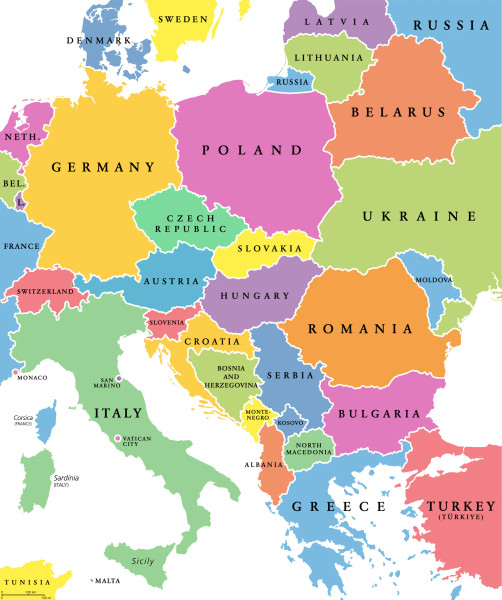
Political map of central and southeastern Europe
Here’s the recurring pattern:
- Central authority weakens.
- Rival leaders claim to represent different national groups.
- Each group fears becoming a minority under another group’s rule.
- Armed forces fight over disputed land.
- Civilians are expelled or killed to change who lives there.
- Refugees, revenge, and foreign involvement deepen the crisis.
Economic crisis made this worse. Unemployment and unequal development gave leaders someone to blame. Propaganda and selective history turned old grievances into fear.
Violence was never automatic. Czechoslovakia split peacefully in the 1993 Velvet Divorce. Belgium used federalism. Northern Ireland reached the Good Friday Agreement.
Major Postwar Nationalist and Separatist Conflicts
Northern Ireland
Partition left six northern counties in the UK. Unionists were mostly Protestant and wanted to stay British. Nationalists/republicans were mostly Catholic and wanted unity with Ireland.
- Catholics faced discrimination in housing, jobs, and representation.
- The Troubles lasted from the late 1960s to 1998.
- Main actors were the Provisional IRA, loyalist paramilitaries, and British forces.
- Bloody Sunday in 1972 became a symbol of British violence against Catholic protesters.
- The Good Friday Agreement in 1998 created power-sharing and sharply reduced violence.
Basque separatism and ETA
The Basques had a distinct language and identity. Franco repressed regional cultures, which helped radicalize separatism.
- ETA used bombings and assassinations for independence.
- Democratic Spain later gave the Basque region broad autonomy.
- ETA ended armed activity in 2011 and dissolved in 2018.
Flemish nationalism in Belgium
Belgium split between Dutch-speaking Flanders and French-speaking Wallonia, with bilingual Brussels in between.
- Flemish movements pushed for language rights and autonomy.
- Belgium mostly handled this through reform, not war.
- It became a federal state in 1993.
Chechnya
Chechnya was a distinct Muslim region in Russia’s North Caucasus with a long memory of repression, especially Stalin’s 1944 deportation.
- It declared independence in 1991.
- First Chechen War 1994 to 1996
- Second Chechen War began in 1999
- Russia used brutal repression, and Moscow eventually restored control.
The Breakup of Yugoslavia and Mass Atrocities
Yugoslavia was a multinational federation held together by Josip Broz Tito. After Tito died in 1980, economic crisis and weaker communist legitimacy let nationalism surge.
Slobodan Milošević pushed Serbian nationalism and cut Kosovo’s autonomy. Slovenia and Croatia declared independence in 1991. Bosnia followed in 1992.
Bosnia became the worst case because Bosniaks, Serbs, and Croats lived mixed together. That made clean separation impossible, so armed groups tried to make territory ethnically pure through ethnic cleansing.
- methods included expulsion, rape, camps, destruction of homes and mosques, and murder
- the siege of Sarajevo showed civilian suffering and international failure
- at Srebrenica in 1995, Bosnian Serb forces under Ratko Mladić killed more than 8,000 Bosniak men and boys in a UN safe area. Courts ruled this genocide.
In Kosovo from 1998 to 1999, Serbian/Yugoslav forces destroyed villages and expelled or drove out over 800,000 Kosovo Albanians.
Mass Atrocity Terms and International Response
Mass atrocity is the broad category. It includes genocide, crimes against humanity, war crimes, and ethnic cleansing.
- Ethnic cleansing = removing a population from territory
- Genocide = intent to destroy a national, ethnic, racial, or religious group in whole or in part
That distinction matters in Bosnia. Many campaigns were ethnic cleansing across territory. Srebrenica specifically was genocide.
The international response was uneven:
- UN peacekeeping in Bosnia was weak and failed at Srebrenica.
- NATO air strikes in Bosnia in 1995 helped produce the Dayton Accords.
- NATO intervened in Kosovo in 1999, which raised the question of state sovereignty vs humanitarian intervention.
- The International Criminal Tribunal for the former Yugoslavia prosecuted leaders for genocide, war crimes, and crimes against humanity.
- Milošević was tried but died before verdict.
- Radovan Karadžić and Ratko Mladić were convicted.
Big effects included refugee flows, demographic change, hardened ethnic divisions, a larger post-Cold War role for NATO, and the growing idea that sovereignty does not excuse atrocities.
Key Takeaways
Postwar Nationalism
The persistence or revival after 1945 of movements seeking national unity, autonomy, independence, territorial expansion, or ethnic homogeneity
Ethnic Nationalism vs. Civic Nationalism
Ethnic nationalism bases nationhood on ancestry, language, religion, and memory; civic nationalism bases it on shared citizenship and political participation
Separatism
An effort by a regional or national community to leave an existing state and form an independent political unit
Autonomy
A region’s authority over some internal affairs while it remains part of a larger state
Devolution
The transfer of powers from a central government to regional institutions
Federalism
A constitutional division of authority between a national government and regional governments
Irredentism
An effort to annex territory outside a state because it is considered historically or ethnically part of the nation
Ethnic Conflict
Political struggle organized around ethnic identity, often intensified by collapsing institutions, disputed territory, fear, and elite manipulation
The Troubles (Late 1960s–1998)
The violent Northern Ireland conflict among republicans, unionists, paramilitaries, and British forces that caused more than 3,500 deaths
Unionists vs. Nationalists and Republicans in Northern Ireland
Mostly Protestant unionists favored remaining in Britain, while mostly Catholic nationalists and republicans sought equal treatment and eventual union with Ireland
Provisional Irish Republican Army (IRA)
A republican paramilitary organization that used bombings, assassinations, and guerrilla warfare to try to end British rule in Northern Ireland
Bloody Sunday (1972)
The killing of 14 civil rights demonstrators by British soldiers in Derry, which intensified the Northern Ireland conflict
Good Friday Agreement (1998)
The settlement that largely ended the Troubles through power sharing, Irish cooperation, and consent over Northern Ireland’s constitutional status
ETA (Basque Homeland and Liberty)
A Basque separatist organization founded in 1959 that used terrorism for independence, ended armed activity in 2011, and dissolved in 2018
Flemish Nationalism
A movement for Dutch-language rights and greater Flemish autonomy or independence that Belgium managed largely through federal reform
Chechen Separatism
The movement for independence of predominantly Muslim Chechnya from Russia following the weakening and collapse of Soviet authority
First Chechen War (1994–1996)
Russia’s unsuccessful initial war against Chechen independence, ending with Russian withdrawal and unstable de facto Chechen independence
Second Chechen War
The war beginning in 1999 in which Russian forces reestablished control over Chechnya through extensive military operations and repression
Mass Atrocity
Large-scale violence against civilians, including genocide, crimes against humanity, war crimes, and ethnic cleansing
Ethnic Cleansing
The deliberate removal of an ethnic, national, or religious population from a territory to make it more homogeneous or secure political control
Genocide
Acts committed with intent to destroy, in whole or in part, a national, ethnic, racial, or religious group as such
Crimes Against Humanity
Widespread or systematic attacks directed against a civilian population
War Crimes
Serious violations of the laws governing armed conflict for which individuals, including commanders and political leaders, may be prosecuted
Breakup of Yugoslavia
The violent dissolution of a multiethnic communist federation after 1991 as weakened authority and competing nationalisms produced territorial wars
Josip Broz Tito
Yugoslavia’s communist leader, whose authoritarian rule balanced its republics and suppressed aggressive nationalism until his death in 1980
Slobodan Milošević
Serbian leader who mobilized Serbian nationalism, reduced provincial autonomy, supported Serb territorial projects, and later faced trial at the ICTY.
Bosnian War (1992–1995)
War among Bosnian government, Serb, and Croat forces in which territorial nationalism produced mass ethnic cleansing and atrocities against civilians
Siege of Sarajevo (1992–1996)
The nearly four-year Bosnian Serb siege that subjected Sarajevo’s civilians to shelling and sniper fire
Srebrenica Massacre / Srebrenica Genocide (1995)
The Bosnian Serb murder of more than 8,000 Bosniak men and boys in a UN safe area, later legally recognized as genocide
Dayton Accords (1995)
The agreement ending the Bosnian War while preserving Bosnia as one state divided mainly into Bosniak-Croat and Serb self-governing entities
Kosovo Liberation Army (KLA)
An ethnic Albanian insurgent organization that fought Serbian rule in Kosovo during the 1990s
Kosovo War (1998–1999)
Conflict in which Serbian and Yugoslav forces displaced Kosovo Albanians until NATO intervention forced their withdrawal and placed Kosovo under international administration
NATO Intervention in Kosovo (1999)
An air campaign without explicit UN Security Council authorization intended to halt the expulsion of Kosovo Albanians
Kosovo Independence (2008)
Kosovo’s declaration of independence from Serbia, which Serbia rejected and which received divided international recognition
Humanitarian Intervention
Outside military action intended to protect civilians from mass abuse, even when it challenges the sovereignty of the state involved
International Criminal Tribunal for the Former Yugoslavia (ICTY)
The UN tribunal created in 1993 to prosecute individuals for genocide, crimes against humanity, and war crimes committed in the Yugoslav conflicts
Radovan Karadžić
Bosnian Serb political leader convicted by the ICTY of genocide at Srebrenica and other crimes
Ratko Mladić
Bosnian Serb military commander whose forces carried out the Srebrenica genocide and who was later convicted by the ICTY.
NATO Intervention in Bosnia
The 1995 NATO air strikes against Bosnian Serb positions that helped create the conditions for the Dayton Accords
Notes
Postwar Nationalism
The persistence or revival after 1945 of movements seeking national unity, autonomy, independence, territorial expansion, or ethnic homogeneity
Ethnic Nationalism vs. Civic Nationalism
Ethnic nationalism bases nationhood on ancestry, language, religion, and memory; civic nationalism bases it on shared citizenship and political participation
Separatism
An effort by a regional or national community to leave an existing state and form an independent political unit
Autonomy
A region’s authority over some internal affairs while it remains part of a larger state
Devolution
The transfer of powers from a central government to regional institutions
Federalism
A constitutional division of authority between a national government and regional governments
Irredentism
An effort to annex territory outside a state because it is considered historically or ethnically part of the nation
Ethnic Conflict
Political struggle organized around ethnic identity, often intensified by collapsing institutions, disputed territory, fear, and elite manipulation
The Troubles (Late 1960s–1998)
The violent Northern Ireland conflict among republicans, unionists, paramilitaries, and British forces that caused more than 3,500 deaths
Unionists vs. Nationalists and Republicans in Northern Ireland
Mostly Protestant unionists favored remaining in Britain, while mostly Catholic nationalists and republicans sought equal treatment and eventual union with Ireland
Provisional Irish Republican Army (IRA)
A republican paramilitary organization that used bombings, assassinations, and guerrilla warfare to try to end British rule in Northern Ireland
Bloody Sunday (1972)
The killing of 14 civil rights demonstrators by British soldiers in Derry, which intensified the Northern Ireland conflict
Good Friday Agreement (1998)
The settlement that largely ended the Troubles through power sharing, Irish cooperation, and consent over Northern Ireland’s constitutional status
ETA (Basque Homeland and Liberty)
A Basque separatist organization founded in 1959 that used terrorism for independence, ended armed activity in 2011, and dissolved in 2018
Flemish Nationalism
A movement for Dutch-language rights and greater Flemish autonomy or independence that Belgium managed largely through federal reform
Chechen Separatism
The movement for independence of predominantly Muslim Chechnya from Russia following the weakening and collapse of Soviet authority
First Chechen War (1994–1996)
Russia’s unsuccessful initial war against Chechen independence, ending with Russian withdrawal and unstable de facto Chechen independence
Second Chechen War
The war beginning in 1999 in which Russian forces reestablished control over Chechnya through extensive military operations and repression
Mass Atrocity
Large-scale violence against civilians, including genocide, crimes against humanity, war crimes, and ethnic cleansing
Ethnic Cleansing
The deliberate removal of an ethnic, national, or religious population from a territory to make it more homogeneous or secure political control
Genocide
Acts committed with intent to destroy, in whole or in part, a national, ethnic, racial, or religious group as such
Crimes Against Humanity
Widespread or systematic attacks directed against a civilian population
War Crimes
Serious violations of the laws governing armed conflict for which individuals, including commanders and political leaders, may be prosecuted
Breakup of Yugoslavia
The violent dissolution of a multiethnic communist federation after 1991 as weakened authority and competing nationalisms produced territorial wars
Josip Broz Tito
Yugoslavia’s communist leader, whose authoritarian rule balanced its republics and suppressed aggressive nationalism until his death in 1980
Slobodan Milošević
Serbian leader who mobilized Serbian nationalism, reduced provincial autonomy, supported Serb territorial projects, and later faced trial at the ICTY.
Bosnian War (1992–1995)
War among Bosnian government, Serb, and Croat forces in which territorial nationalism produced mass ethnic cleansing and atrocities against civilians
Siege of Sarajevo (1992–1996)
The nearly four-year Bosnian Serb siege that subjected Sarajevo’s civilians to shelling and sniper fire
Srebrenica Massacre / Srebrenica Genocide (1995)
The Bosnian Serb murder of more than 8,000 Bosniak men and boys in a UN safe area, later legally recognized as genocide
Dayton Accords (1995)
The agreement ending the Bosnian War while preserving Bosnia as one state divided mainly into Bosniak-Croat and Serb self-governing entities
Kosovo Liberation Army (KLA)
An ethnic Albanian insurgent organization that fought Serbian rule in Kosovo during the 1990s
Kosovo War (1998–1999)
Conflict in which Serbian and Yugoslav forces displaced Kosovo Albanians until NATO intervention forced their withdrawal and placed Kosovo under international administration
NATO Intervention in Kosovo (1999)
An air campaign without explicit UN Security Council authorization intended to halt the expulsion of Kosovo Albanians
Kosovo Independence (2008)
Kosovo’s declaration of independence from Serbia, which Serbia rejected and which received divided international recognition
Humanitarian Intervention
Outside military action intended to protect civilians from mass abuse, even when it challenges the sovereignty of the state involved
International Criminal Tribunal for the Former Yugoslavia (ICTY)
The UN tribunal created in 1993 to prosecute individuals for genocide, crimes against humanity, and war crimes committed in the Yugoslav conflicts
Radovan Karadžić
Bosnian Serb political leader convicted by the ICTY of genocide at Srebrenica and other crimes
Ratko Mladić
Bosnian Serb military commander whose forces carried out the Srebrenica genocide and who was later convicted by the ICTY.
NATO Intervention in Bosnia
The 1995 NATO air strikes against Bosnian Serb positions that helped create the conditions for the Dayton Accords
